Microorganisms invisible to the naked eye are essential for fermented products. And soil is teeming with all kinds of these microorganisms. To learn more about these microorganisms and the soil, we spoke with Dr. Kanazawa Shinjiro, a leading expert in soil research and author of Soil Book. Microorganisms expend energy converting white raw biomaterials into organic matter. They expend so much energy in fact, that at research sites, natural fermentation can boost composting temperatures to nearly 90 degrees Celsius. In this article, guided by Dr. Kanazawa, we explore the deep connections between soil and fermentation.
The soil that nurtures life is a mere 18 centimeters deep
“In the context of the earth’s history, the emergence of soil is a relatively recent phenomenon,” explains Dr. Kanazawa Shinjiro. “About 400 million years ago, cyanobacteria started producing oxygen through photosynthesis, thereby supplying oxygen to seawater and the atmosphere. As oxygen also gradually spread out over land, soil finally began to emerge. Lichens and mosses first appeared on the ground, followed by ferns. Once soil had formed, peat accumulated, and fern forests expanded and gymnosperms started to grow.”
Dr. Kanazawa emphasizes the figure 18 centimeters.
“The layer of soil necessary for crop growth is a mere 18 centimeters deep. This thin topsoil layer stores carbon, nitrogen, and minerals that sustain the cycle of life. Almost all of the food humans need to live relies on this 18-centimeter layer. If we were ever to lose this topsoil, humanity would not survive,” Dr. Kanazawa says emphatically.
He goes on to note that the speed at which nature produces new soil is exceedingly slow.
“It takes hundreds of years to form just one centimeter of soil. Yet, the reality is that this topsoil is rapidly disappearing due to overcultivation and excessive use of chemical fertilizers.
“One poignant example of what can go wrong is the Dust Bowl, which took place in the 1930s in the American Midwest. Overcultivation compounded by drought caused topsoil to be blown away by the wind, leading to the collapse of vast farmlands. Huge clouds of dust crossed the Appalachian Mountains and struck major cities as far as Washington and New York. In the wake of this crisis, recognition of the importance of soil conservation led to the development of no-plowing farming.
“Preserving natural environments is essential to protecting topsoil. For the earth to remain healthy, maintaining the circulation of matter and substances is vital. Forests are the very source of life because they are reservoirs of clean water.
“Japan is one of the most forested countries in the world, ranking third globally in terms of forest coverage. Living in harmony with forests, the Japanese people have constructed a way of life within the cycle of fallen leaves decomposing and organic matter returning to the soil. However, if unrestricted cultivation and reliance on chemical fertilizers continue, our position is by no means secure.”
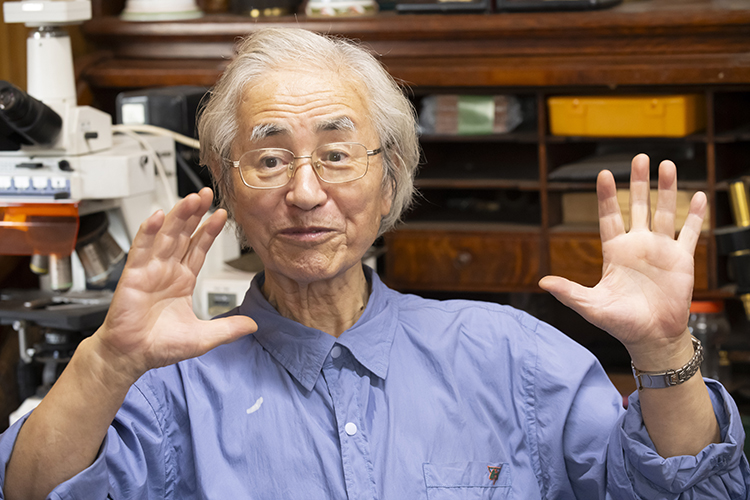
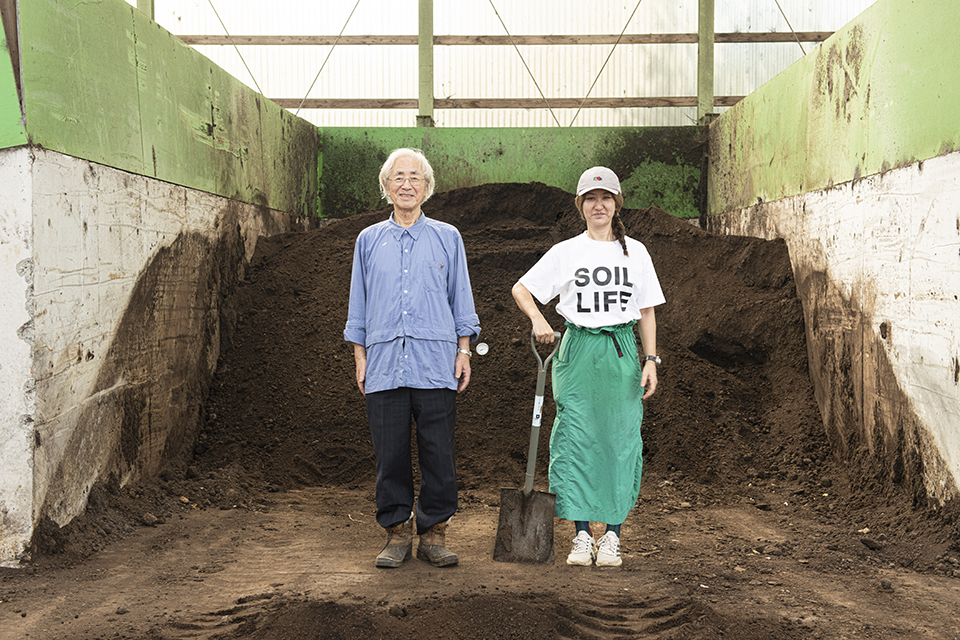
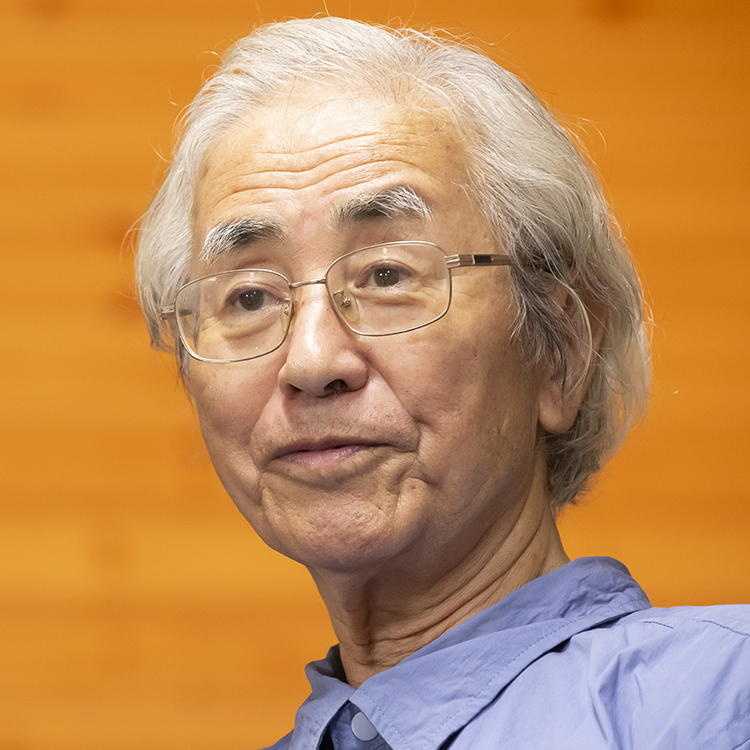
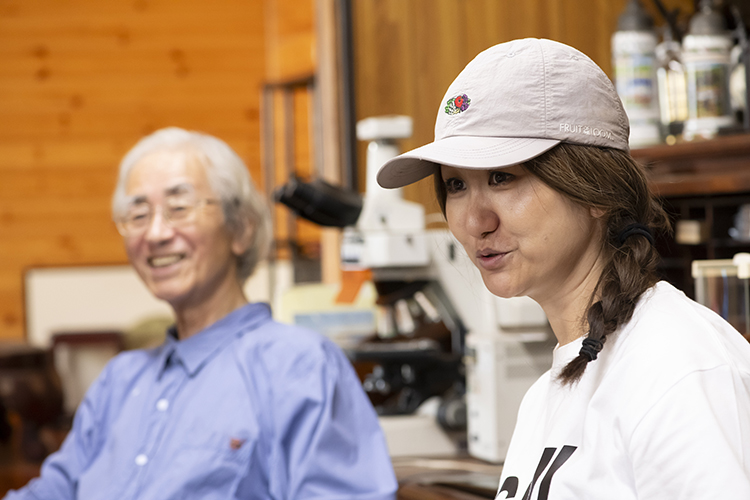
Left: Dr. Kanazawa Shinjiro, who has researched soil for over half a century.
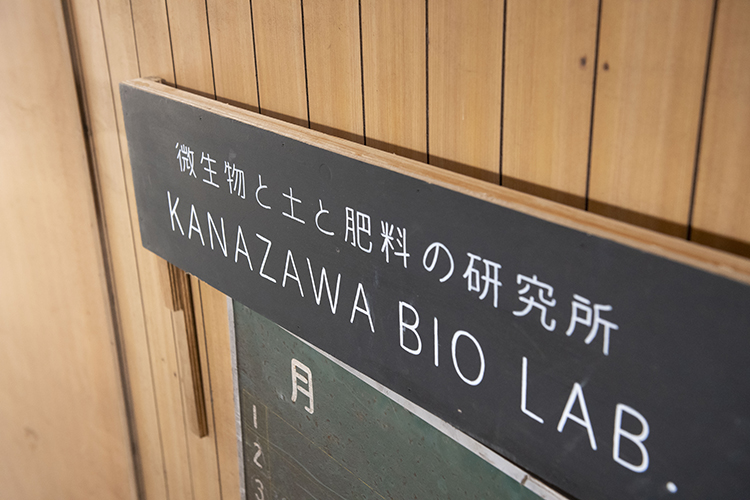
Right: His research base is the Kanazawa Bio Laboratory, which he heads.
Soil nurtures food, and food nurtures soil — everything exists within this cycle
“Vegetables grown in soft, black soil develop strong roots and rich flavors. On the other hand, the very same seeds planted in poor soil will have unreliable yields. This difference is attributable to the power of the soil. As someone fascinated by soil and microorganisms, one of my missions is to continuously nurture and enrich the precious 18 centimeters of topsoil that sustains life.”
Dr. Kanazawa’s activities aren’t limited to analyses in the lab. He prepares compost for organic agricultural production, verifies microbial activity, and listens attentively to the ‘voice’ of the soil.
“We use all kinds of byproducts for composting. These include tofu residue, malt residue from beer production, coffee grounds, rice bran, oyster shells, bamboo fibers, and irregularly shaped mushrooms. Normally, these byproducts would simply be discarded. But when we return these food-industry byproducts back to the soil, new crops grow again, and they eventually return as food to our tables. This is nature’s cycle.”
Dr. Kanazawa’s goal is to return locally generated organic matter to the land where it originated.
“By circulating food waste, which used to be incinerated or landfilled, within a region through a local composting system, we eliminate waste and the need for incineration. It also reduces transportation and processing costs. Moreover, crops grown with that land’s organic matter develop a flavor unique to that specific soil. Ultimately, this ensures soil security and fosters a movement to cultivate local foods and cuisine that harnesses the power of the land.”
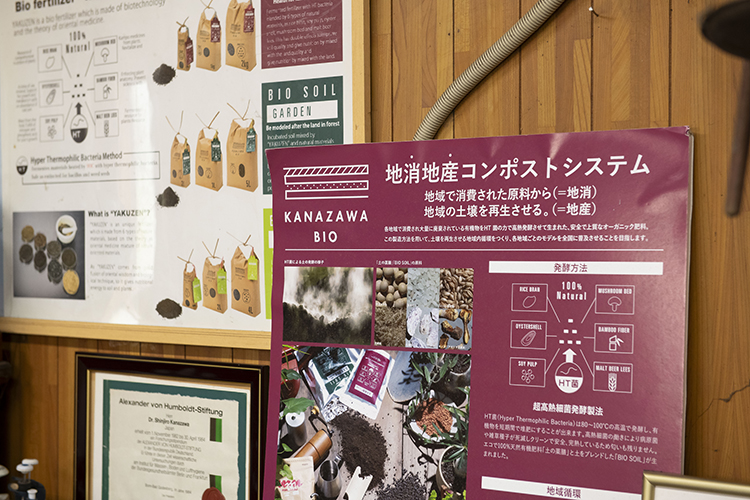
Left: Local composting systems are circular mechanisms that return locally produced byproducts to the soil to regenerate the region’s soil.
Right: Dr. Nakazawa and his daughter, Satoko, who assists his research and field work. They work together on composting systems.
Microbial activity drives high-temperature fermentation, which takes place at 90 degrees Celsius
At the fermentation site Dr. Kanazawa oversees, steam rises from mounds of compost in production. (The mounds are lumps of organic matter that are gradually transforming into fully matured compost.) You can feel the heat radiating from the mounds even as you approach. If you stick your hand in, it’s very hot. A thermometer reads nearly 90 degrees Celsius.
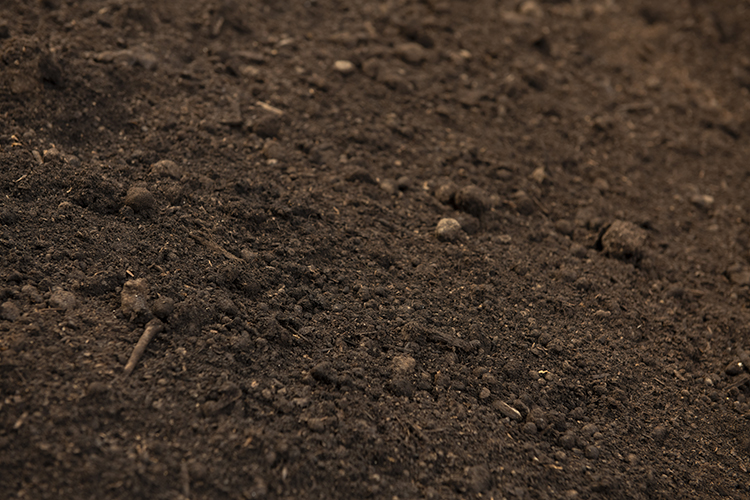
“The compost materials start out being pure white, but their color gradually changes because of the workings of the microorganisms. Eventually, the materials transform into fine black soil, which is known as humus. For every 10-degree increase in temperature, the rate of material decomposition roughly doubles. This means the microorganisms here are exceptionally active.
“The benefit of high-temperature fermentation is the elimination of pathogens. Harmful bacteria like E. coli and plant pathogens, as well as parasites and weed seeds, are destroyed at temperatures above about 70 degrees Celsius. However, some hyper-thermophilic bacteria survive even at 100 degrees Celsius, and they are the bacteria that vigorously advance decomposition. Fermentation continues after the pathogens are eliminated, transforming the organic matter into humus. As a result, even the remains of microorganisms are completely decomposed, creating a safe and clean organic fertilizer.”
Touching the compost reveals another surprising quality. It’s not moist, but unexpectedly fine and powdery. Warmed by the fermentation’s heat, a gentle warmth spreads from the palm of your hand. Fully matured compost has no odor.
“That is a sign of healthy fermentation, where microorganisms work while intaking plenty of air. Without sufficient air, the process turns into putrefaction, whereas adding oxygen leads to aerobic fermentation. At this site, safe, clean living fermentation is taking place, not putrefaction.”
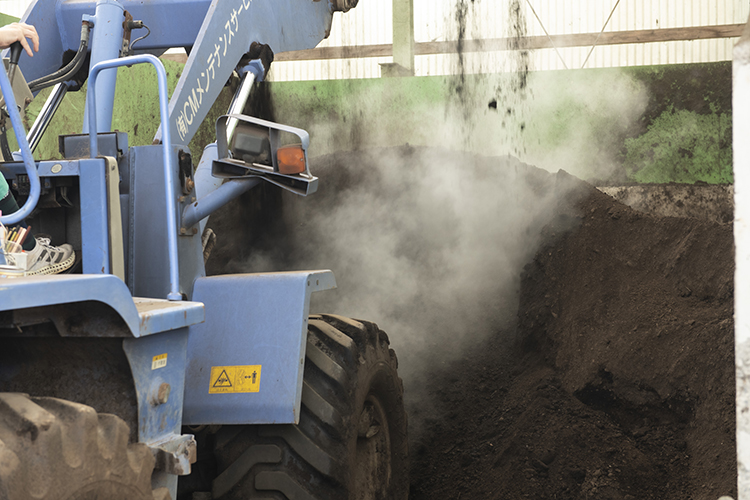
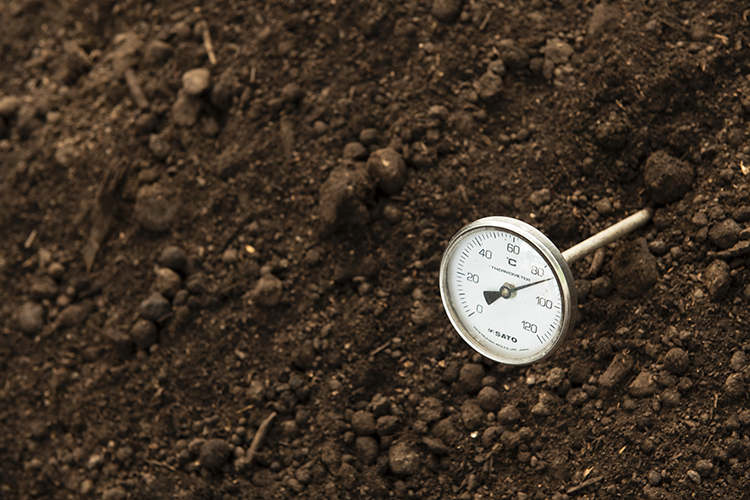
Left: Water vapor billows up like steam at a hot spring from the mound of fermenting matter.
Right: The thermometer reads nearly 90 degrees Celsius. The heat generated by the fermentation process maintains surprisingly high temperatures inside the compost.
Humans just need to harness what nature’s principles teach us
Looking on at this living fermentation with kind eyes, Dr. Kanazawa describes nature’s principles.
“Composting is not something humans created; composting is about harnessing the workings of nature. Humans do not raise or cultivate the microorganisms. Microorganisms have always existed, functioning in the natural world. All we need to do is prepare the conditions so these microorganisms can maximize their power.
“Composting involves all kinds of bacteria (microorganisms): bacteria that take in carbon, bacteria that dissolve phosphorus, bacteria that suppress pathogens. Each has its own role, working together in balance. It’s like a micro-sized society.
“Nature is far more intricately put together than humans imagine. This is why, rather than us adding something to nature, it’s more important to think about how to utilize nature effectively.”
Dr. Kanazawa’s words show a deep reverence for nature. Human intervention should be minimal, and nature’s own principles should take center stage. This perfectly encapsulates his approach to research.
The diversity and activities of microorganisms enrich the soil
“Nature’s principles are sustained by countless microorganisms. When we observe composting at our site, we see microbial activity that is astonishingly diverse.
“Byproducts like rice bran, tofu refuse, and malt lees are a perfect feast for microorganisms. Because these byproducts are rich in nutrients and easy to break down, microbial activity surges when these are added to the compost. Combining various kinds of byproducts activates a greater diversity of microorganisms, which in turn produces richer, fully matured compost.”
He goes on to describe the incredible workings of microorganisms.
“Microorganisms that consume the byproducts break them down while absorbing carbon and nitrogen. Through this process, they release large amounts of carbon dioxide that aids plant photosynthesis. Furthermore, they attach to and retain the negative ions in the final compounds of soil organic matter [humus], leaving it in a positively charged state. This state allows plants to more readily absorb a wide range of minerals. Additionally, composting concentrates microorganisms that suppress pathogens, playing a role in enhancing the soil’s immunity.”
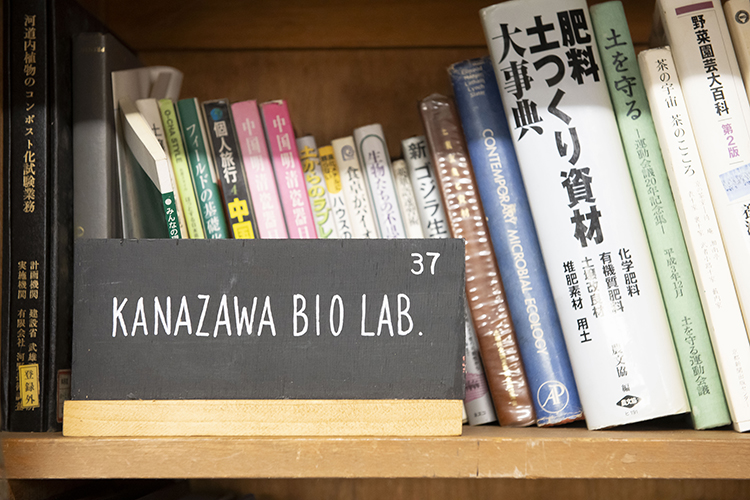
The lab’s bookshelves are lined with books on soil
Dr. Kanazawa says that for fermenting bacteria (microorganisms), even pathogens are a delicious feed.
“In short, these microorganisms break down pathogens, converting the pathogens into their constituent nutrients while suppressing their activity. This is why healthy soil can be produced through microbial power alone without pesticides.
“From the perspective of fermentation, pathogens are decomposed as part of fermentation’s inherent cycle, eventually becoming nutrients for plants, microorganisms, and small organisms. Pathogens are transformed into the sustenance that nurtures the next life. Each life is connected by other lives. Preserving this cycle is what sustains nature.”
This mechanism of lives supporting life, as explained by the doctor, overlaps with the fermented foods we encounter daily. Miso, soy sauce, and nuka-zuke pickles develop their deep flavors because diverse microorganisms like koji mold, lactic acid bacteria, and yeast coexist and work together.
“In the world of soil, all kinds of microorganisms fulfill their separate roles, sustaining the cycle of life. And it is precisely this microbial diversity that produces the richness and safety of the soil.”
What is often considered waste actually empowers microorganisms, eventually leading to the production of rich, healthy crops and enhanced umami flavors. This is the true value of soil.
‘Good’ black soil is the key to raising delicious crops
“Growing nutritious food requires ‘good’ soil,” says Dr. Kanazawa. But that raises the question: What is ‘good’ soil?
“Good soil is soil with abundant humus and a color that is nearly black. The compost that I make eventually turns into black soil. What makes this type of soil good is that it retains nutrients and moisture longer and strengthens plants from the roots up. Humus carries a negative charge, so it attracts and binds positively charged minerals like calcium and magnesium. Humus functions like a magnet attracting iron.
“These bonds prevent minerals from being washed away by rainwater, so they stay in the soil, allowing crops to absorb all the nutrients they need over time. Crops grown in soil containing lots of humus develop deeper flavors and richer aromas. In effect, truly delicious crops start from good soil.”
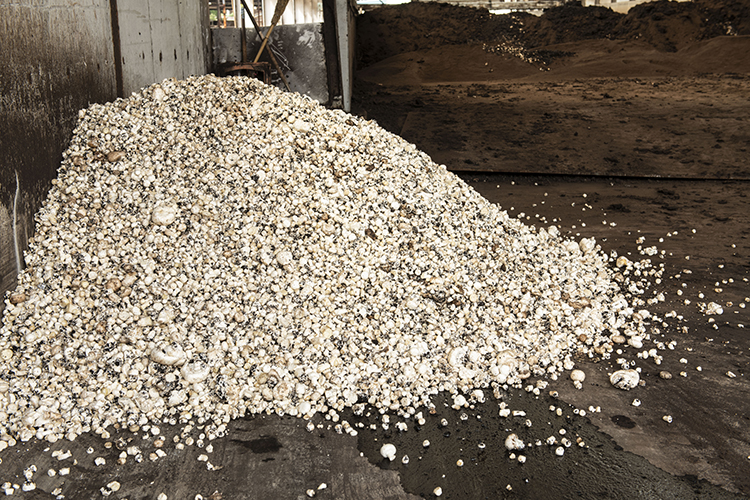
Left: Mushrooms that failed to meet specifications are used for composting. Fermentation begins with the composting ingredients in a pure white state.
Right: As the fermentation progresses, the compost turns black. The change in color produced by microorganisms is the very cycle of life.
What Healing Soil Food teaches us: A cycle that brings health to nature and humans
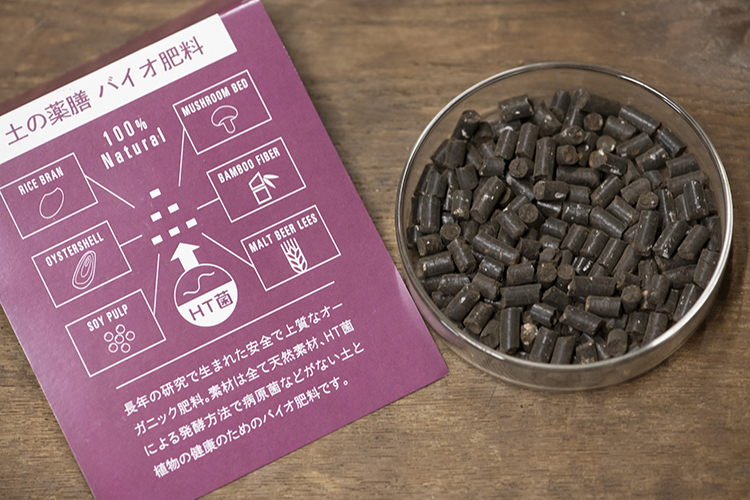
“Healthy soil nurtures robust crops, and eating those crops regulates the human body. I’ve dubbed this cycle Healing Soil Food. I gave it this name because it’s like the soil itself is healing food that forms the foundation of our diet. Just as with fermented foods, a world that is both delicious and good for the body extends to the soil.”
Dr. Kanazawa practices the concept of Healing Soil Food at his tea plantation.
“Tea plants naturally prefer strongly acidic soil with a pH of 5 to 6. Excessive use of nitrogen-rich chemical fertilizers, however, degrades the root environment, causing the harvested tea to lose aroma and umami. Most of the tea produced in Japan relies on pesticides and chemical fertilizers. But by switching to organic methods, we can return to the richly fragrant tea reminiscent of pre-war times. Using fully matured compost to condition the soil not only improves the conditions in the tea fields but also restores the very functionality of the tea itself.”
Experiments with fully matured compost independently developed by the doctor have proven the soil’s regenerative power. In experiments, in just a year after introducing Healing Soil Food, depleted soil showed signs of recovery. And after three years, the soil had become almost unbelievably fertile.
“Tea grown in the soil I produced has a completely different aroma and taste. I was astonished the first time I tasted it. With this soil, tea leaves can be harvested four to five times a year. Despite being organic, there’s almost no insect damage, and the yields are unchanged.
“Tea grown with the aid of chemical fertilizers has little aroma and a weak flavor, whereas tea leaves grown with fully matured organic fertilizer have far more depth and will release flavor over repeated brewings. This tea has a refreshing sweetness with deep body and is rich in both catechin and minerals. In fact, it has functionality that rivals medicinal herbs. The power of the soil is what brings out the tea’s true aroma and flavor.”
Because of this fact, Dr. Kanazawa warns, “Overusing chemical fertilizers disrupts the microbial balance, depletes the soil, and weakens crops. Safeguarding the health of our soil is nothing less than protecting the abundance of our food.”
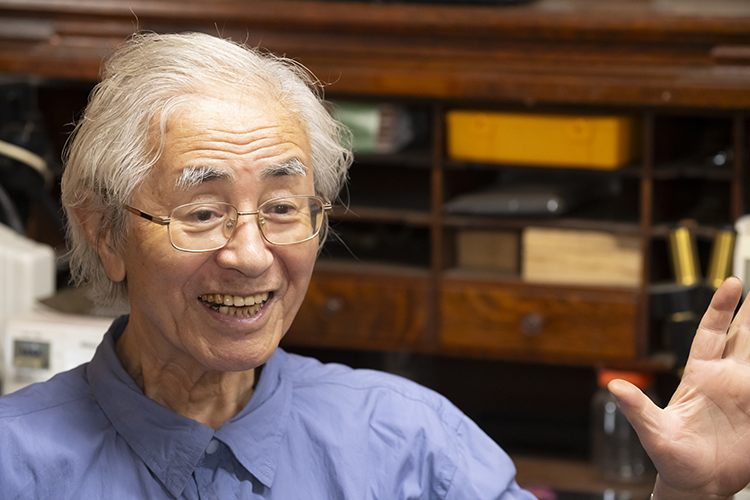
Left: “You can’t see the true nature of soil by staying cooped up in a lab,” says Dr. Kanazawa. An avid tea lover, he often travels to his own tea plantation in Kyushu.
Right: Healing Soil Food, his brand of organic fertilizer, was developed after many years of research.
The soil of the future will be produced from an awareness of nurturing and protecting the soil
Dr. Nakazawa says his approach and thinking have changed as his research has progressed over the years.
“Maintaining the health of soil leads directly to more delicious crops. What I say in my research I have confirmed in practice. If you just analyze data in a lab, you will not see the true nature of soil. Only by actually making compost, touching it, and experiencing fermentation’s power firsthand can you understand how microorganisms live. Microorganisms are nature’s decomposers, circulating matter. Even though somehow it is deemed dirty, the soil right beneath our feet is the foundation of the cycle of life.
“You don’t need to be a farmer with lots of farmland. Even a small plot, as tiny as a floor cushion, is enough. What matters is the awareness of protecting the soil. Even on a small scale, properly nurturing the soil can influence the surrounding environment. When these small influences are stacked up, they become a significant force.
“Just a planter on your balcony is fine. Simply grow your favorite flowers or vegetables. Growing vegetables in a home garden or community garden also acts to nurture the soil. Experiencing the cycle of life in these ways changes how we approach food and nature.”
Dr. Kanazawa’s words contain both the warning of a researcher and a solid hope for the future.