The Miwa district of Nara Prefecture — home to Ohmiwa Shrine, one of the oldest Shinto shrines in Japan — is considered the birthplace of saké brewing, as saké deities have been enshrined in the area since antiquity. Mount Miwa, the sacred object of Ohmiwa Shrine, is also called Mount Mimuro, with mimuro literally meaning “the origin of saké”. Even as far back as the Manyoshu anthology of Japanese classical poetry, compiled sometime after 759, umazake [delicious saké] was used as an epithet for Miwa, which further reinforces Miwa’s deep historical connection to saké.
Nestled in this historically rich land of Miwa, the long-established brewery Imanishi Shuzo has been making saké for 360 years. In the spring of 2025, the company opened a new brewery named Miwa Densho Kura [meaning Miwa Heritage Brewery]. We spoke with brewery master Tsuruta Atsushi about their dedication to brewing fine saké and the attractions of Miwa Densho Kura.
The brewery’s 14th-generation owner pours his passion into bodai-moto brewing in Miwa, the birthplace of saké brewing
Founded in 1660, Imanishi Shuzo is the only remaining brewery making saké today in the Miwa district of Nara.
When Imanishi Masayuki, the brewery’s 14th-generation owner, inherited the business at the age of 28, the brewery was in dire straits. Fighting for the brewery’s very survival, he pushed ahead with reforms, such as improving product quality and implementing a brand strategy, while maintaining the brewery’s traditions. As a result of his moves, Imanishi Shuzo won five consecutive gold medals at the Annual Japan Saké Awards. After scooping up awards at many other competitions as well, Imanishi Shuzo’s rapid rise became a hot topic in the industry.
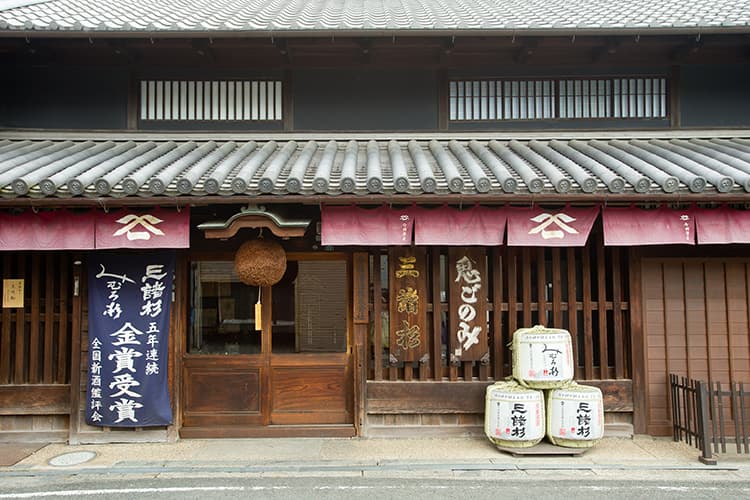
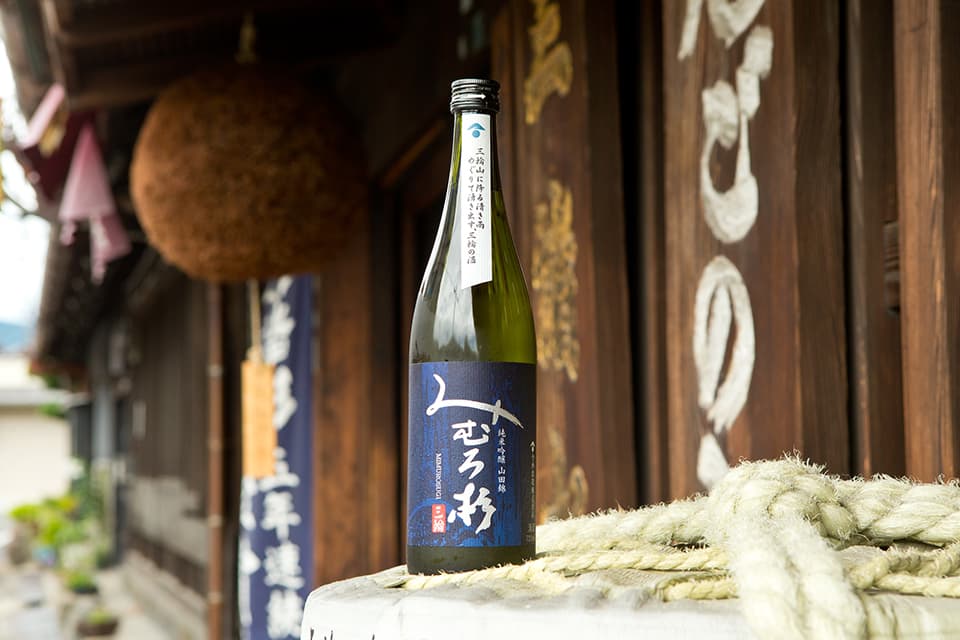
Imanishi Shuzo’s main brewery with a cedar ball hanging from the eaves. The cedar ball signals that new saké is ready. The verdant green ball gradually turns brown over the course of a year. The brewery crafts a new cedar ball each year with cedar from Mount Miwa, the sacred mountain of Ohmiwa Shrine, which is deeply revered by saké brewers nationwide as the deity of saké brewing.
The 14th-generation owner launched a new brand named Mimurosugi written with hiragana characters.
“Our brand Mimurosugi written with kanji characters has been around since the brewery’s founding and is distributed only within Nara. The brand Mimurosugi written with hiragana characters was devised by the 14th-generation owner based on the concept of ‘drinking Miwa’. Our aim is to deliver pure-tasting saké that blossoms with a gentle aroma and the fresh, rich umami flavor of rice.”
In developing this new line of saké products, one of the challenges was undertaking bodai-moto brewing, a traditional brewing method. We asked what this method involves.
“Bodai-moto brewing is Japan’s oldest method of making shubo [the seed mash or mother of saké]. The method originated at Shoryaku-ji Temple in Nara during the mid-Muromachi period (1336 to 1573). It uses soyashi-mizu — water infused with raw rice to cultivate lactic acid bacteria — as the brewing water for the shubo. Soyashi-mizu suppresses the growth of bacteria that interfere with the yeast, allowing the alcohol fermentation to proceed predictably. Considered the prototype of modern saké production techniques, bodai-moto brewing creates a deeply flavorful saké in which the refreshing acidity from the lactic acid fermentation harmonizes with the robust umami.
“Our Bodai-Moto series of Mimurosugi products was developed by updating this traditional, ultra-natural brewing technique for the modern era.”
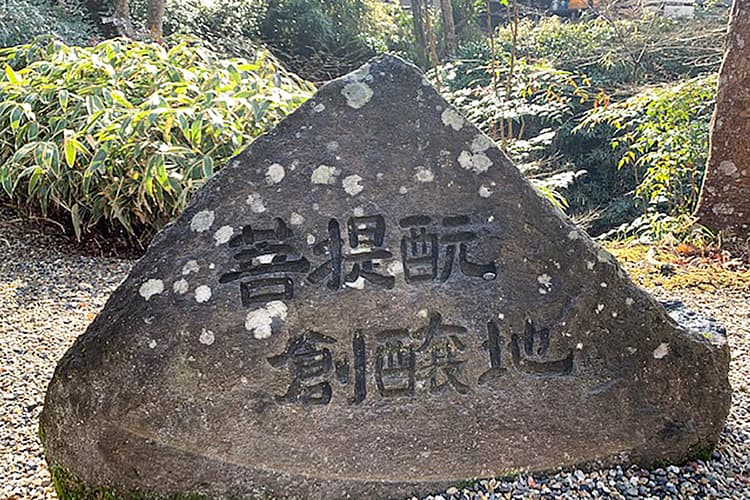
A stone monument at Shoryaku-ji Temple, considered the birthplace of saké. Visitors to Shoryaku-ji can watch shubo being prepared on the temple grounds each January during the Bodai-Moto Saké Festival.
It’s amazing to think that over 500 years ago, during the Muromachi period, people without modern scientific knowledge were able to harness the workings of fermentation and establish this brewing technique. Some 25 years ago, a number of Nara-based saké breweries joined forces to unravel the secrets of bodai-moto brewing.
“A project was started in 1996 to revive Shoryaku-ji’s saké, which had stop being produced. Several breweries in the prefecture, including Shoryaku-ji itself and our brewery, got involved. With the cooperation of the Nara Prefectural Institute of Industrial Technology (now the Nara Prefectural Institute of Industrial Development), we went through many iterations over several years to revive the brewing technique and the saké.
“Even now, over 25 years later, each of the breweries takes a share of the shubo prepared annually at Shoryaku-ji. Although starting with the same shubo, each brewery adds its own character during the brewing process. Previously, only Shoryaku-ji was permitted to use the term bodai-moto. But in 2021, the decision was made to allow the use of the trademark by other breweries. This allowed us to carry out our own bodai-moto brewing and develop our Bodai-Moto series.”
The breweries’ collaborative action to revitalize local Nara saké has been a success. The young generation of brewers today has inherited the tradition and is taking steps to pass it on to the next. These new brewers remain committed to traditional methods — even more so because Nara is the birthplace of saké brewing, while stamping their own distinctive character on their saké. The 14th-generation owner of Imanishi Shuzo is especially obsessed with fermenting mash in kioke [wooden vats].
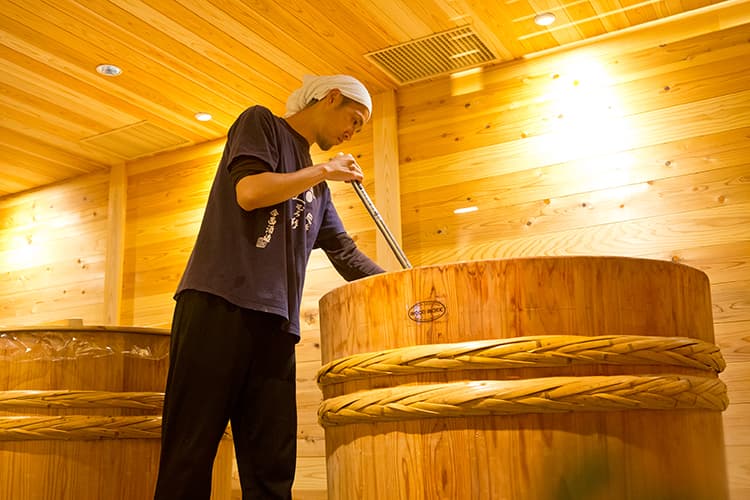
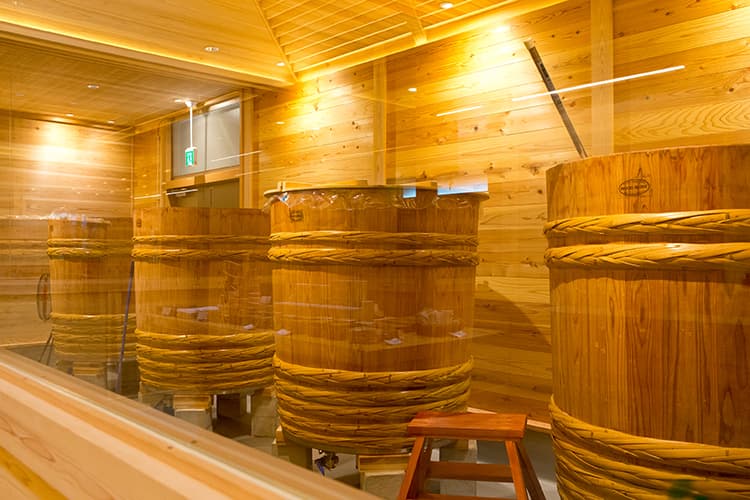
Fermentation is underway in new kioke made with Yoshino cedar at the Miwa Densho Kura brewery. Some of the kioke at the main brewery are as much as three times larger than these.
“Even as recent as a generation ago, breweries of all kinds used kioke for brewing saké and soy sauce. But as the times changed, they switched to enamel tanks for easier hygiene management.
“The goal of Imanishi Shuzo in its 14th generation is brewing saké in a way that can only be done in Miwa. This is why we insist on traditional kioke, specifically those made with Yoshino cedar, which has deep ties to Miwa, for brewing saké with the oldest of techniques. Fermenting the mash in kioke adds more flavor and aroma complexity to the saké, resulting in a deeper, more profound taste, by means of the tannins in the wood and the activity of the microorganisms that inhabit the vats.”
Imanishi’s brewing philosophy of pure, proper saké brewing takes no shortcuts in the pursuit of ever-higher quality
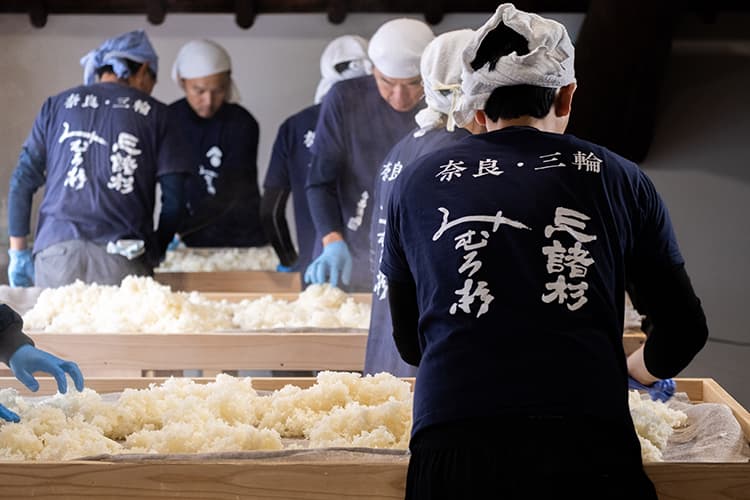
Workers cool off freshly steamed rice to adjust its temperature for the next stage
Imanishi Shuzo’s brewing motto is pure, proper saké brewing. Given this philosophy, we wanted to know what, in practice, the brewery prioritizes.
“We aim to pay tribute to the flawless purity of Miwa through our saké. As brewers, we judge every step of the brewing process by whether it is ‘proper’. For example, the purpose of washing rice is to remove the bran. While it may be more efficient to wash large amounts of rice at once, not all of the bran will be removed. This is why we wash rice in batches of ten kilograms at a time to ensure all the bran is removed. In ways like these, we prioritize quality and believe this method is the proper choice, even if it requires more time and effort.”
We asked whether the rice and water used to make the saké also originate from Miwa.
“Our brewing water is water that flows from underneath Mount Miwa and springs up in our brewery’s well. The water is slightly soft, which creates a gentle mouthfeel. For rice, we use Yamada Nishiki cultivated by contract farmers, along with Tsuyuhakaze and Nanatsuyu. We own rice fields as well and have been practicing circular agriculture for the past five years, growing rice using Mimurosugi saké lees as fertilizer.”
Imanishi Shuzo practices saké brewing that truly embodies Miwa’s climate, culture, and history.
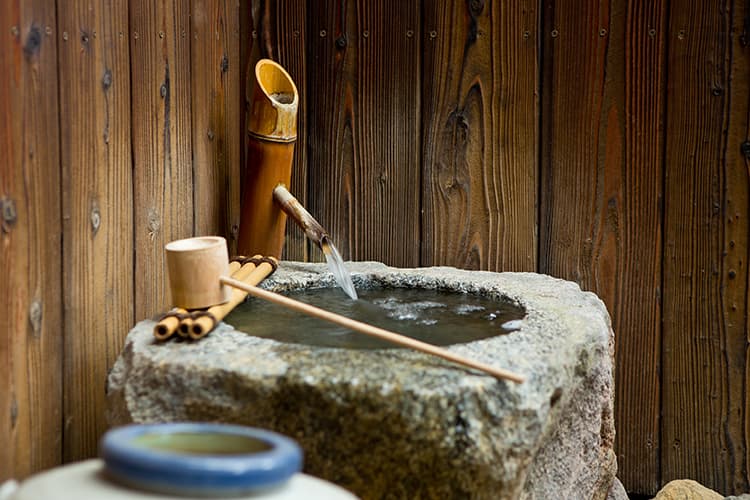
Underground water from Mount Miwa has flowed continuously for over 360 years at the brewery’s well. The well at Sai-Jinja Shrine, an auxiliary shrine in the Ohmiwa shrine complex, also fills with water that flows from underneath Mount Miwa. This water is well-known as a cure-all for illnesses if drunk.
Opening Miwa Densho Kura to brew saké and to foster a community
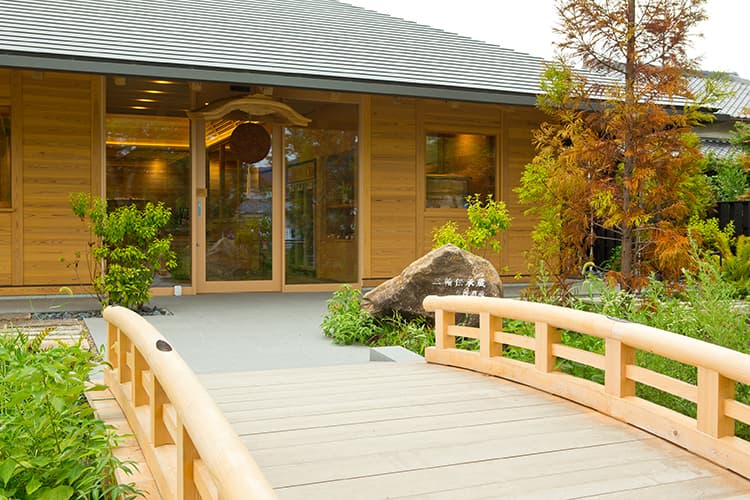
Imanishi Shuzo recently opened a new saké brewery called Miwa Densho Kura in April 2025 along the road leading to Ohmiwa Shrine. Both the exterior and interior are made with Yoshino cedar, which fills the air with its refreshing scent. Kioke, koshiki [rice steaming vats], and other equipment are installed inside the building. If the timing is right, visitors can watch the brewing process through glass windows.
“The reason we have been able to brew saké here continuously for 360 years is Miwa’s abundant natural resources and the support of the local community. The 14th-generation owner, out of a sense of gratitude, built Miwa Densho Kura as a place to pass on Miwa’s history, culture, and local character to the next generation, to connect people, and to bring vitality to the town. Our hope is that, even as it functions as a working brewery, it will become an attraction that draws lots of visitors to Miwa. In time, we plan to hold events and workshops here too.”
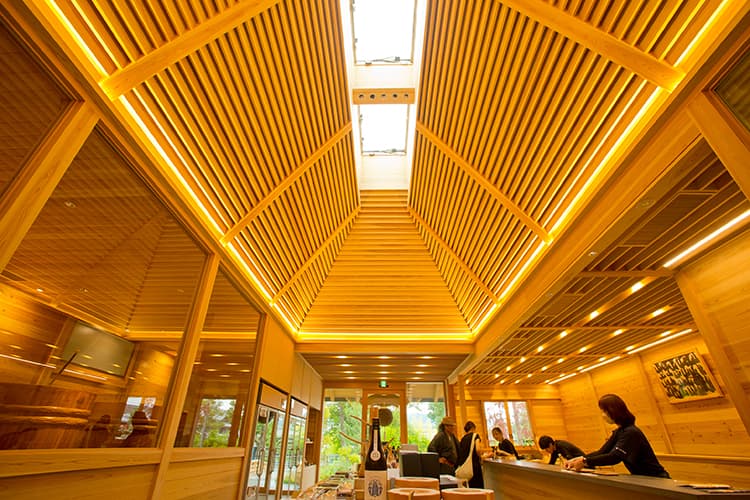
Left: The vaulted ceiling and fixtures were constructed in the azekura-zukuri style, a local traditional building method that dates back to the Nara period (710 to 794). All wood used in the construction of the building is Yoshino cedar from Sakurai, the primary city in Miwa and well-known as the City of Lumber. The wood construction regulates the humidity inside the structure naturally.
Right: Brewing using kioke requires precise temperature control and the honed skills of master brewers. Saké brewing mainly takes place during the colder months. The brewing process runs from about October through to the following June.
Tsuruta also told us about the meticulous brewing process made possible with the new Miwa Densho Kura brewery.
“All the saké brewed here is made exclusively with rice grown in Nara, produced with the bodai-moto method, and fermented in Yoshino cedar kioke. The batch sizes are smaller than at our main brewery, resulting in limited production runs of about 700 to 800 bottles per label. These limited-run products are available only at Miwa Densho Kura. They are genshu [undiluted] saké, aged for a longer time at low temperatures, resulting in an alcohol content of 13 percent. Despite the lower alcohol content, we brew these saké products to bring out all of the rice’s natural umami. This produces mellow, light-tasting saké in which you can really savor the rice’s richness.”
Saké enthusiasts, in particular, are irresistibly drawn to saké brewed at Miwa Densho Kura because it can’t be obtained at liquor stores or online. The label designs prominently feature motifs like cedar trees, snakes, and rabbits that are closely associated with Miwa and use traditional Nara colors like entan [a bright orange red called red lead after the color of red lead oxide] and aoni [a dark green tinged with yellow]. The elegant designs fuse the culture of the ancient capital of Nara with a modern sensibility.
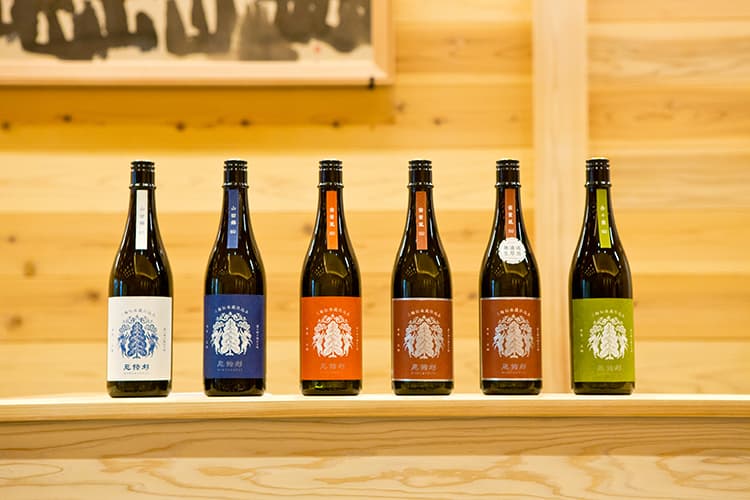
The two bottles on the left are made with Yamada Nishiki rice, the three in the center with Tsuyuhakaze, and the one on the right with Nanatsuyu. Even when brewed from the same rice variety, the rice-polishing ratios — 50, 60, and 65 in this case — are varied to give each saké a distinct taste.
“There’s a counter in the brewery where you can sample the saké products brewed at Miwa Densho Kura. The saké is served in special saké cups designed so the aromas bloom splendidly.”
The Densho Kura Saké special starts from 660 yen (tax included) for 90 mL of saké served with yawaragi-mizu [water to cleanse the palate]. The Miwa Saké special starts from 1,100 yen (tax included) and adds a small appetizer. For either special, you select your saké from the day’s list of available labels. Ordering multiple Densho Kura Saké specials is recommended, as you can taste and compare saké made with different rice-polishing ratios and rice varieties.
Note that the prices vary depending on the saké selected.
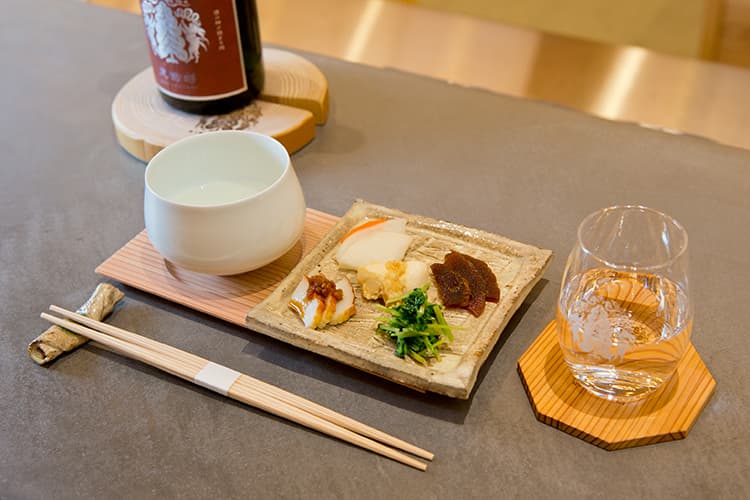
The side appetizer for the Miwa Saké special is selected from the day’s appetizers. All the appetizers are connected to Imanishi Shuzo’s saké brewing in some way. The photo shows the Assorted Appetizers Platter. On the day of our visit, the platter consisted of daikon radish and carrots pickled in salted koji, mozzarella dressed with miso, homemade Nara-zuke pickles, salted koji namul with pea sprouts, and kamaboko fish cake with soy sauce koji.
“Saké brewing is only complete when the saké reaches the drinker. For our 14th generation, carrying out this entire process in Miwa holds great significance. Miwa Densho Kura is an important venue for brewers like us to convey our passion for saké. Seeing customers enjoy our saké inspires us to brew even better saké.”
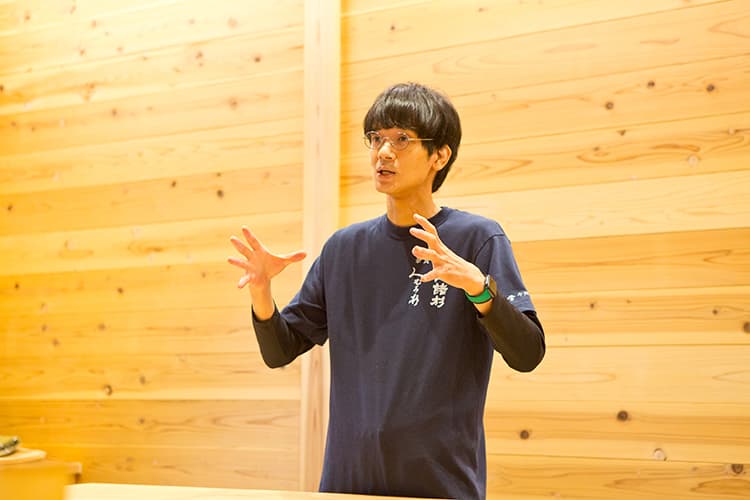
Brewery master Tsuruta Atsushi takes most of the images and videos posted on the brewery’s official Instagram and Facebook accounts. His photos of the brewery’s products set against the natural beauty of Miwa are quite impressive.
“I want to see Miwa to remain a vibrant place 100 or 200 years into the future.”
Miwa Densho Kura embodies the passion of Imanishi Masayuki, the 14th-generation owner, who was born and raised in Miwa and who continues the family business on the same land it was founded. We look forward to the next innovations from Imanishi as he continues to elevate traditional saké brewing amid the abundant blessings of Miwa.