Health Benefits of Miso Soup and the Power of Fermentation
Mar 22,2019
Miso soup is a staple of Japanese cuisine and one of the flagbearers of the healthy diet that Japan is renowned for. Miso soup offers such excellent nutrition that even Dr. Koizumi Takeo, a leading expert in fermentation science,says he eats it every day without fail. But what is it about our familiar miso soup that makes it so good for us?
Oda Haruna, a Fermentation Meister from Marukome Co., Ltd.’s Public Relations Department, helps us get to the bottom of this question while explaining the benefits of miso soup, describing how to get the most nutrition from it, and addressing concerns about its salt content.
Hearty miso soups are recommended, because those extra ingredients provide a nutrition boost
Most people have an understanding that miso soup is good for them. But what exactly are the benefits of having miso soup as part of your daily routine?
“I think one major benefit is that, in addition to the nutrients in the miso itself, you can boost the soup’s nutritional value by adding various combinations of ingredients. There’s really no end to the ingredients you can add, from vegetables and seaweed like wakame to meat and more.
“Taking vegetables as just one example, nearly all kinds, including vegetables like broccoli, asparagus, and tomatoes from the West, go well with miso soup. The soup’s ability to make any ingredient taste delicious is also part of its appeal.”
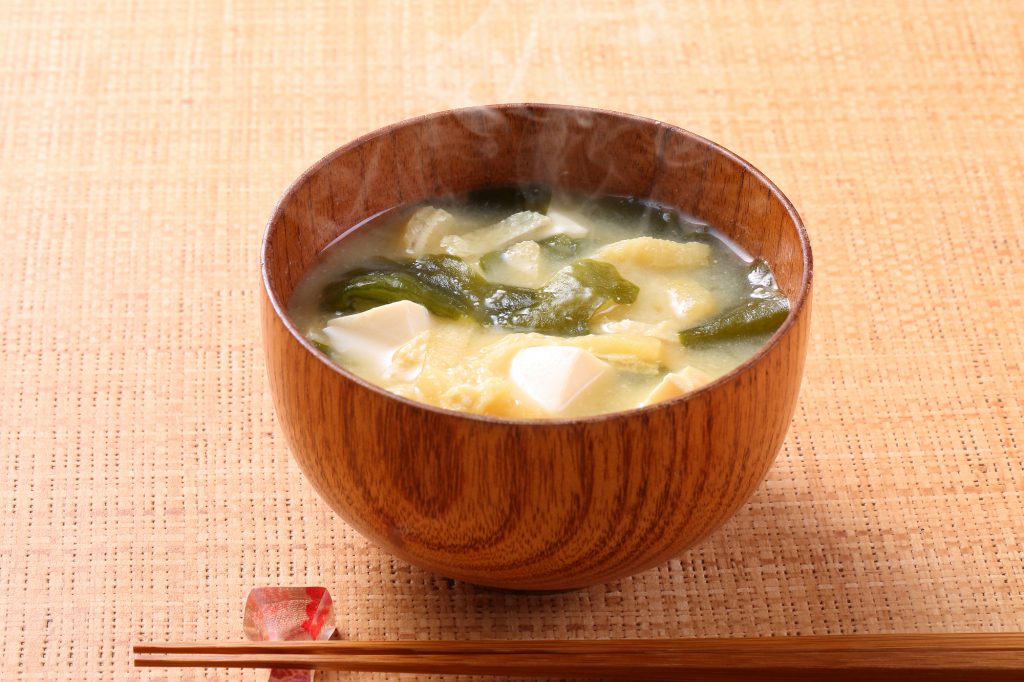
Despite its close association with Japanese cuisine, miso soup is blessed with an inclusiveness that embraces virtually all ingredients. Given that the types of nutrients and health benefits you can receive vary depending on the ingredients you add, miso soup can be considered a near-universal health food with infinite possibilities.
“A great way to pair miso soup with a Western meal is to add in some butter, milk, or soy milk. The low-effort simplicity of miso soup is also fantastic. When you can’t decide whether to simmer something or to stir-fry it, you can toss it into miso soup and be finished in no time. A hearty miso soup packed with ingredients means even a plain meal of one soup and one dish won’t be lacking anything nutritionally. Plus, it’s a huge relief not having to plan a multi-dish meal. [laughs] I recommend it for people too busy to spend much time cooking.
“Another thing is that when you boil vegetables, many of their nutrients leach into the broth. With miso soup, however, you eat the broth as well, meaning you get all of the vegetables’ nutrients. This is another tangible benefit of miso soup.”

Should I be worried about the salt content of miso soup?
Do you have the impression that miso soup is high in salt? Some people, especially those watching their salt intake because of high blood pressure or other medical conditions, consciously avoid eating too much miso soup because of this. But in actuality, how concerned should we be about the salt content of miso soup?
“Compared to other dishes, miso soup is not that particularly high in salt. It’s true that miso itself contains about 10 to 13 percent salt, and consuming large amounts of it undiluted could lead to excessive salt intake. However, when dissolved in hot water, one bowl contains just over one gram of salt. So there’s no need to be overly concerned. This amount of salt is far lower than dishes like curry or ramen noodle soup. I think having about three bowls of miso soup a day is perfectly fine.”
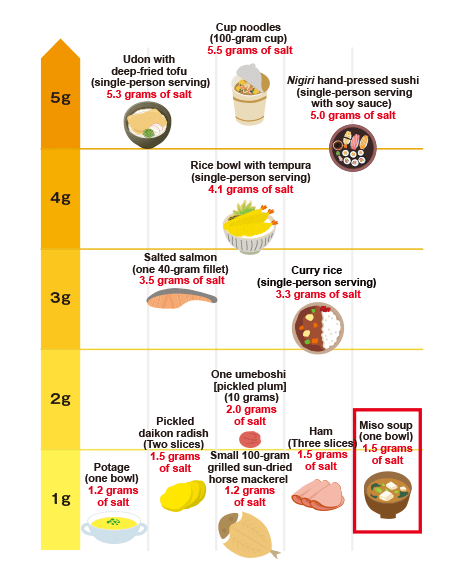
Source: This illustration was prepared from Let’s Reduce Salt Intake (A Message from the Salt Reduction Committee to the General Public) and Tips for Salt Reduction and Foods / Dishes High in Salt, The Japanese Society of Hypertension
It’s a welcome fact that we don’t need to worry too much about the salt content of miso soup. Oda also has good news that people concerned about salt should definitely know.
“There’s a nutrient called potassium that helps flush out excess salt from the body. Potassium is especially abundant in seaweed like wakame and sea lettuce. Wakame is a classic miso soup ingredient. So if you’re concerned about salt, you should definitely use seaweed in your soup. Seaweed is often sold dried, making it quick and easy to add in a little anytime. For the coming warm months, I highly recommend bamboo shoot and wakame miso soup.”
Bamboo shoots are also rich in potassium. It’s a good idea to include high-potassium ingredients in your regular repertoire of miso soup toppings.
Swap a cup of coffee for a cup of miso soup
We next asked Oda for tips on making delicious miso soup and for things to watch out for.
“The most important thing is to not let the miso soup boil. The flavor of miso comes from the alcohol produced by the yeast. Boiling unfortunately causes the alcohol to evaporate, which lessens the flavor’s intensity. The moment the soup just starts to boil, known as niebana, is when you should turn down the heat.
“Miso soup tastes its best right after turning off the heat, so I recommend not overheating it and having it fresh, rather than making it ahead of time. If you’re having it for breakfast, prepare the broth and boil the ingredients the night before. Then, in the morning, just heat until the miso dissolves. This makes preparation much easier.”

This is sensible advice, but the reality for busy people today is that we want to catch just a little bit more sleep in the mornings and go to bed just a little earlier when tired at night. Many people get by with a cup of coffee in the morning and skip breakfast altogether before heading out.
“Definitely some people find making a single bowl of miso soup too much trouble or don’t want more dishes to wash. For these situations, I recommend ready-to-use dashi-infused miso that just needs hot water, or preparing miso balls* ahead of time. And keeping a few dried ingredients like wakame or green onions on hand increases your topping options. Plus, there are plenty of convenient miso products available that just need hot water, so these make great choices too.”
*See this article for a recipe on making miso balls.
Enjoy Miso Soup Outdoors: Easy Miso Balls for Your Hike
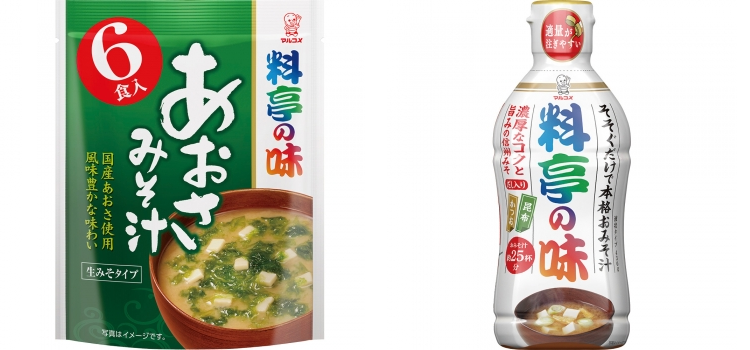
Left: Instant Ryotei No Aji Miso Soup with Aosa Seaweed [Value Pack]. Right: Ekimiso Ryotei No Aji — a liquid-type miso that contains dashi. With either, just add hot water to make miso soup.
If you’ve been getting by with just a cup of coffee in the morning, switching to a bowl of miso soup could improve your nutritional balance. Oda recommends storing miso in the freezer if you live alone, eat out often, or don’t use much miso. Be especially careful during the hot summer months, as miso is very likely to turn brown and lose its flavor. While browning doesn’t affect its nutritional value, it does diminish the taste, so take note.
Miso soup is a healthy, all-purpose food item that’s easy to prepare and goes with nearly all ingredients and dishes. By incorporating it deftly into your routine, you can aim for a healthier lifestyle.
Source: Miso Health Promotion Committee