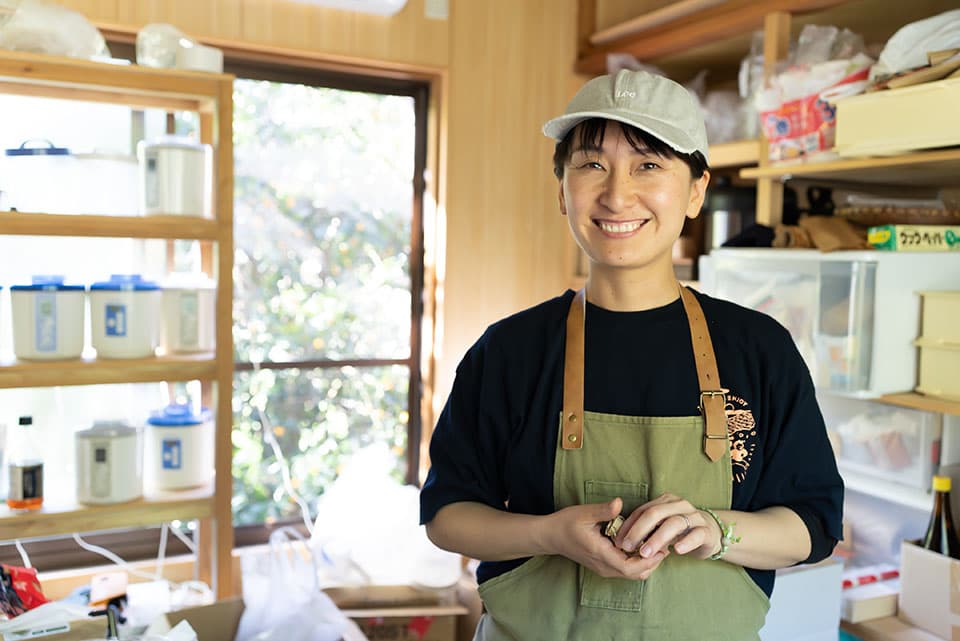
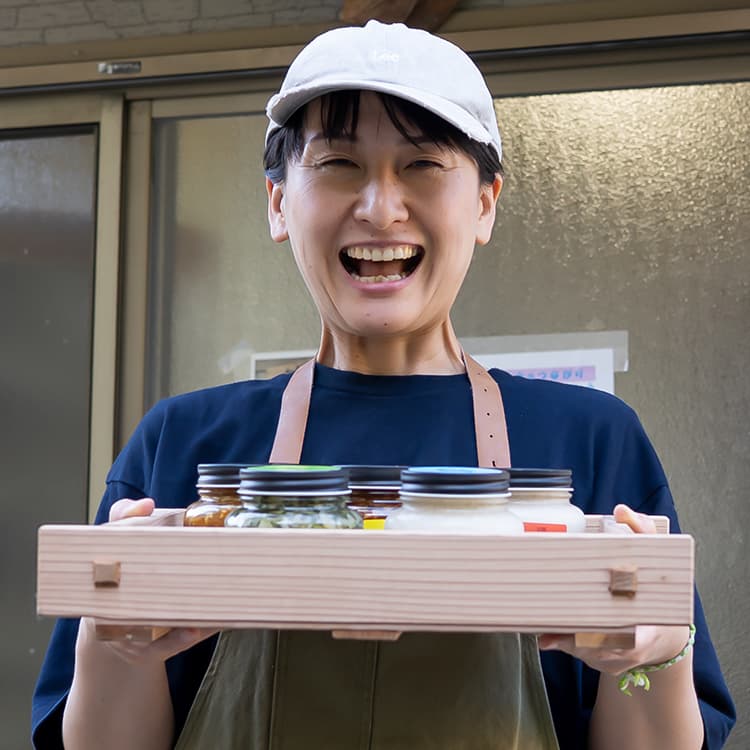
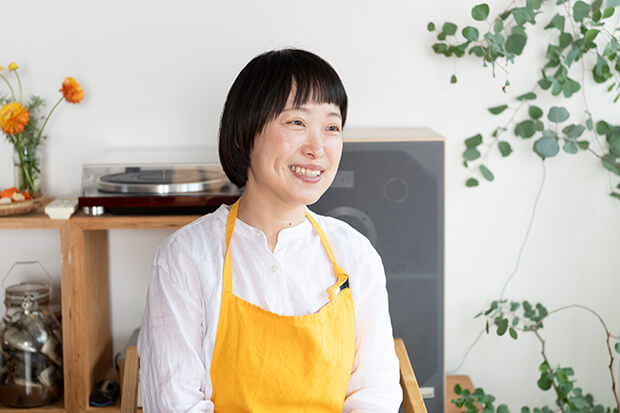
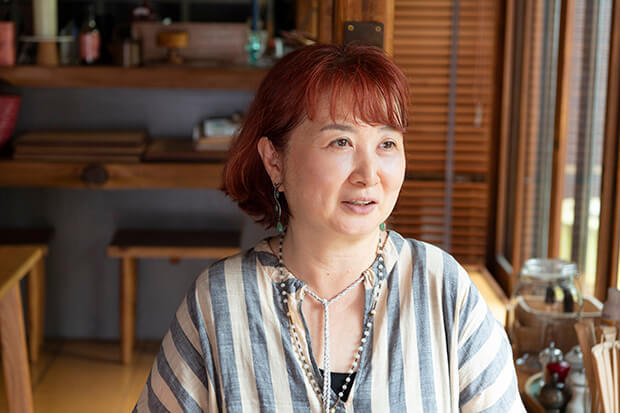
The sea unfolds before your eyes, and the terraced mountainsides are planted with mandarin trees. A cheerful voice calls from a minitruck to passersby on the street. It’s fermented food chef Otani Rie, who has taken over Kaachan Kobo (“Mom’s Workshop”) in Akehama in the city of Seiyo, Ehime Prefecture, on the island of Shikoku. We asked Rie, the mother of four children, how she came to be a champion of fermented seasonings and fermented foods.
Coming down with Graves’ disease in high school got me thinking seriously about health and food.
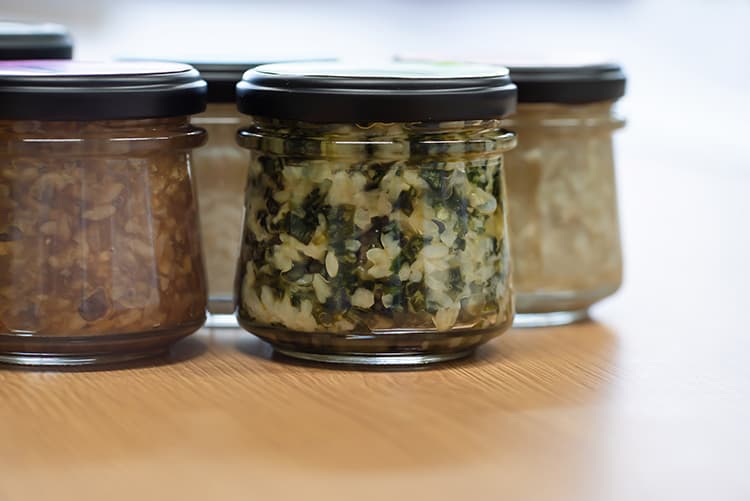
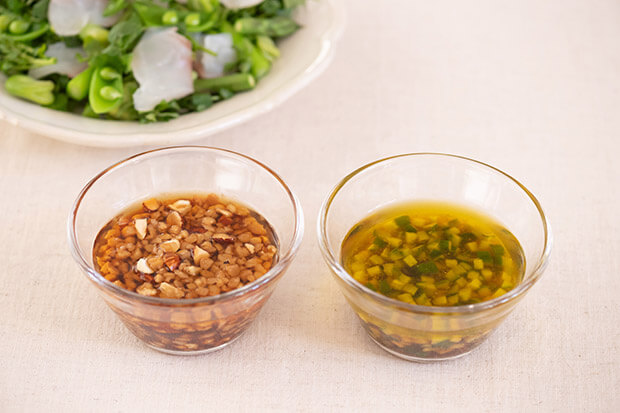
“These are salted koji and soy sauce koji. This one’s onion koji. This is Chinese chives and salt koji, and here’s yakiniku (Korean barbecue) sauce koji. Go ahead, give each a try.”
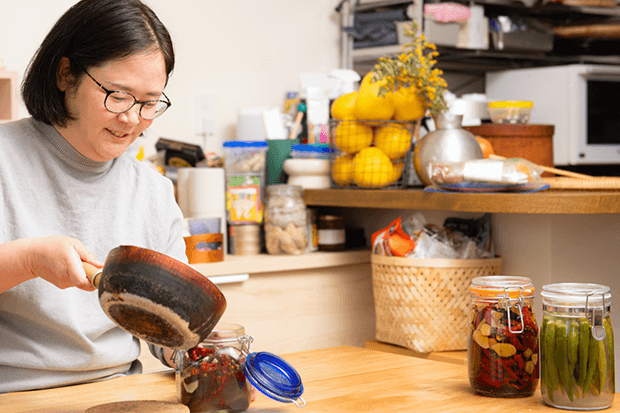
With these words, Otani Rie hands us a set of koji (rice malt) based seasonings she made herself at her culinary studio, Kaachan Kobo. Each has its own flavor profile, and all are bursting with umami. “Wow, these are delicious!” we can’t help exclaiming.
“Aren’t they? They’re a simple way to perfect the flavor. Just put them on tofu or mix them with other ingredients, or add them to stir-fries or soup. They enhance the taste, and they’re good for you too. These seasonings really are handy,” says Rie with a big smile.
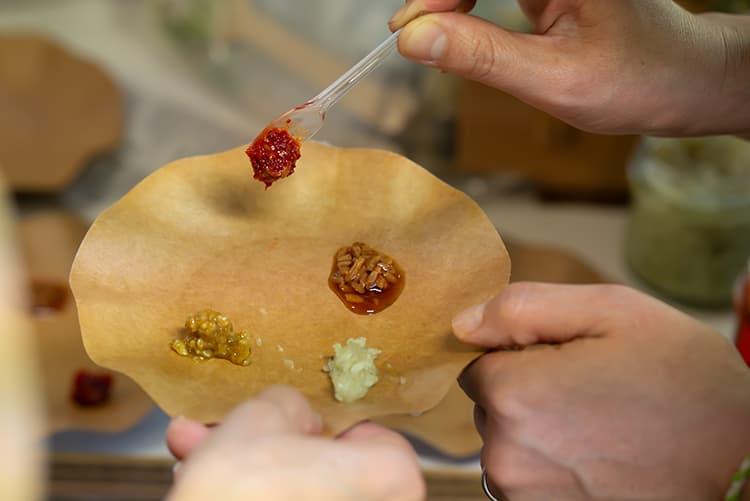
“Koji can be used to make a wide range of fermented seasonings,” says Rie.
A native of Akehama in the city of Seiyo, Ehime Prefecture, Rie married in Osaka and planned on spending the rest of her life there. But then in 2021 she returned to her old home and started a new career as a fermented food chef. We kicked off by asking how she became interested in fermented foods.
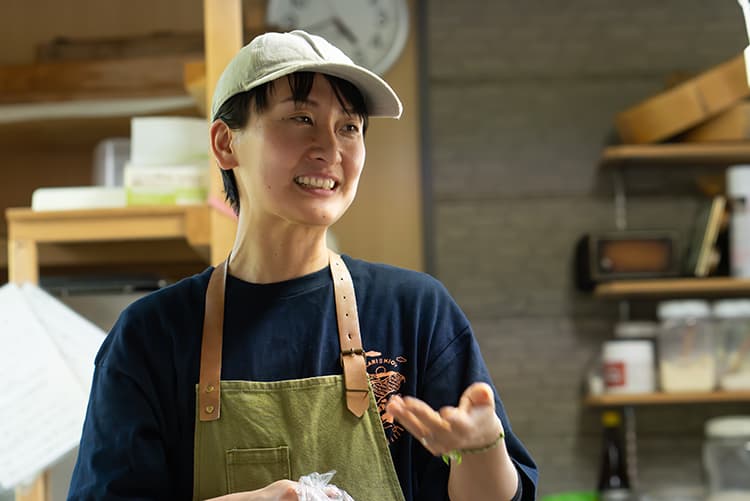
“I first discovered fermented foods about seven years ago. Having worked as a licensed cook, I’ve always loved cooking. When I made fermented seasonings myself using koji, I fell in love with the taste. Not only that, they made an obvious difference to my health. I felt better physically. Soon I was hooked on fermented seasonings.”
Rie describes herself as a health freak. She’s more passionate about food than anyone.
“It all started when I came down with an illness called Graves’ disease in second year of high school. For two years the doctor prohibited me from attending phys. ed. classes. I agonized over how to get better and regain my health. In the process, I became increasingly interested in food.”
On discovering fermented seasonings, Rie started using them in her everyday meals. Sometimes she would hold fermented food cooking classes for friends. What cemented her faith in fermented seasonings was the change she observed in the condition of her oldest daughter Koharu, previously a sickly child.
“She was three when I first started using fermented seasonings. Until then, she was constantly coming home from preschool with colds and other bugs. She was always missing school with a fever. Every six months we’d get a postcard showing her hospital visits, and it would have this long list of hospitals. But then one day the postcard arrived, and it was only two lines long. When I saw it, I thought to myself, ‘Huh? She’s stopped going to the hospital lately. I wonder why.’ Then my husband said, ‘Maybe it’s the koji.’ And I thought, ‘That’s it for sure!’ She stopped coming home from preschool with colds, I realized, right around the time we started using fermented seasonings in our family cooking. I guess that brought home to me how effective fermented seasonings are in getting your body in optimal condition.”
After that, Rie used fermented seasonings more than ever in her home cooking. She also began encouraging other people in her life to incorporate fermented foods into their diet.
When you’re in optimal condition on the inside, you have the drive to do more.
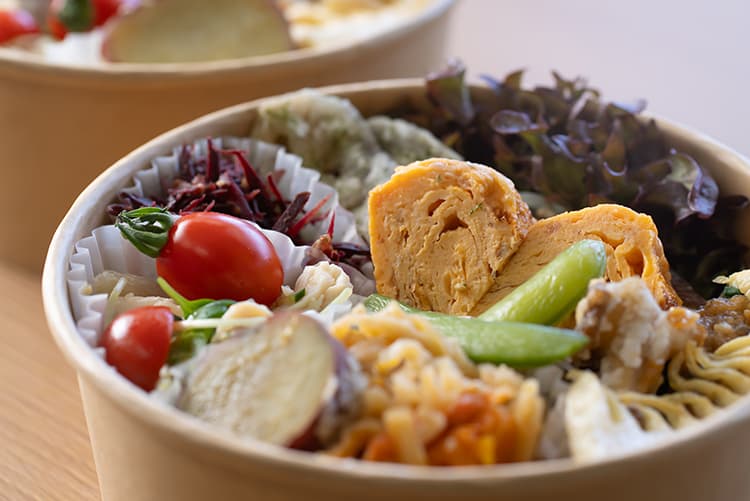
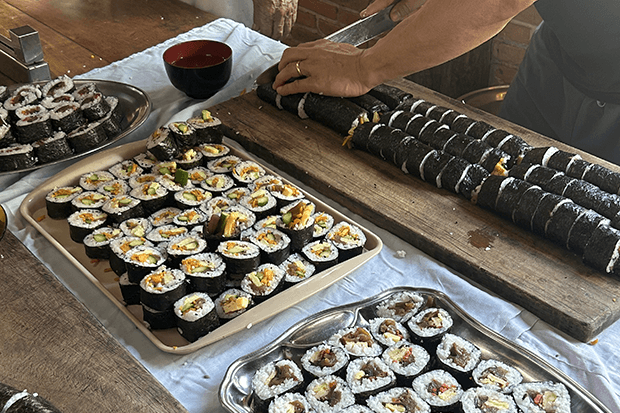
A blaze of colors: the bento lunchbox Rie made specially for us. It was packed with items prepared using fermented seasonings, including locally produced vegetables and other ingredients with salted koji.
“My husband’s brother’s wife couldn’t have cared less about food. She was a hairdresser, and she would eat at irregular times. She only ever ate stuff that was quick and easy to make, so her skin was a mess. I was really concerned about her. I racked my brains for ways to get her to eat healthy meals. I really thought hard. I figured I’d be the happiest person in the world if only she’d start cooking with fermented seasonings.”
Rie didn’t immediately advise her to do so in so many words, however. Instead, she kept hinting at the advantages of fermented seasonings, lowering the bar as far as she could.
“You can tell someone how great something is until you’re blue in the face, but if they’re not interested, they’re just not going to listen. So I thought I’d get her interested in food by inviting her over to our place and serving her stuff I’d made. Eventually she started asking, ‘What’s this?’ ‘What’s that?’ Then gradually, very gradually, I began telling her about the koji I used in my cooking.”
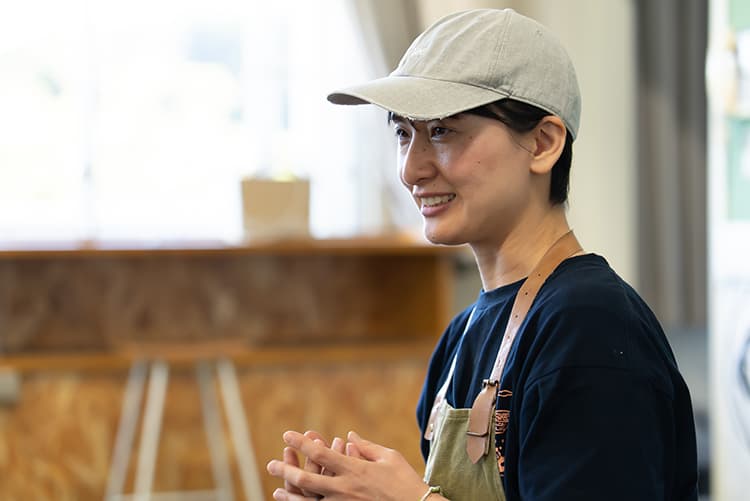
Today, Rie’s sister-in-law religiously makes koji seasonings and uses them in her cooking.
“It took three long years [laughs]. But deep inside I felt strongly that no matter how long to took, it would be worth it as long as she got into the habit of staying healthy by eating right. So I went about it step by step. I would tease out her thoughts on food and offer her advice — like, ‘What do you think of this?’ I did that over and over. Meanwhile, my husband’s brother became fond of dishes made with koji, and he would request them for meals, telling my sister-in-law he wanted to eat such-and-such. Eventually she took the plunge and started cooking real meals. Now she makes fermented seasonings at home and keeps a regular stock of them.
“This experience got me thinking seriously about how to convince others to treasure food and get them wanting to make fermented seasonings themselves. I also think it made me very good at pushing the right buttons to motivate people.”
Why was Rie so determined to tell others about fermented seasonings? Part of the answer lies in her own life experience.
“I think the environment in which I grew up has something to do with it. My parents didn’t get on very well, and they would have big arguments at mealtimes. That made mealtimes really tough for me to get through. On the other hand, when I thought seriously about my own health, the question of food was unavoidable. Thanks to that experience, I know how people feel who, for whatever reason, find it difficult to get excited about food. That’s why I’m more committed than anyone to helping people live healthier lives by making cooking as painless as possible.”
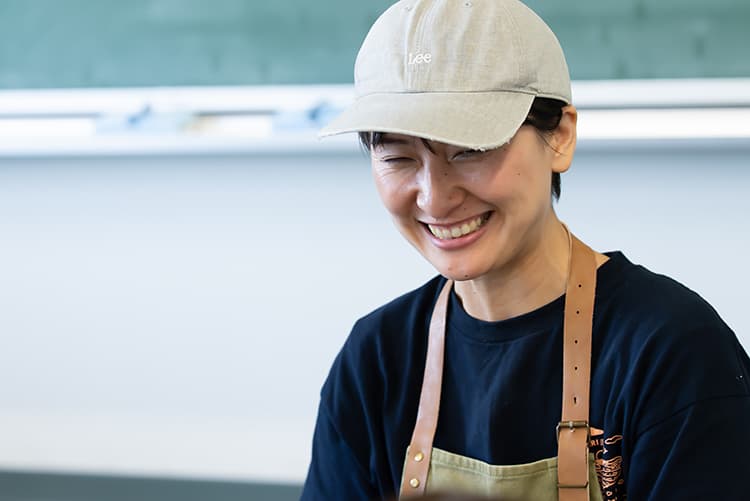
Another thing that has had a significant influence on Rie is her own past coming to terms with herself in the course of meeting new people.
“I was, until a certain point in my life, a champion giver-upper. But meeting new people and forming new connections enabled me to take fresh stock of myself, and gradually the blur came into focus. Finally, I managed to grant myself permission to be happy. I became determined to lead the best life I could. Anyone can get back to being their true self. I know that for a fact, because I succeeded in doing it myself. The first thing you need to do is get yourself in optimal condition on the inside by eating right. When you’re in optimal condition on the inside, you have the drive to do more. You feel like maybe you have what it takes.”
Cooking should be easy for everyone!
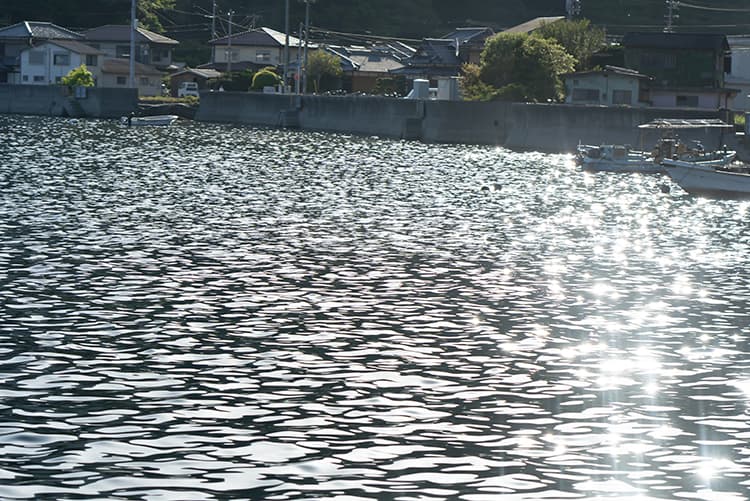
A turning point came in Rie’s life around the time her sister-in-law mastered the art of using fermented seasonings. The subject came up of moving to Akehama, where she’d been born and raised. This talk was triggered by the torrential rains that struck western Japan in 2018. Rie’s parents ran a mandarin orchard, which was severely damaged by the rains.
“My parents were getting on, and it would have been hard to restore the orchard, since there was no one in the family to take it over. I reckoned that I would never be able to eat those mandarins again. Then my husband offered to take over the orchard. I was genuinely amazed. My husband had a job in Osaka, and that’s where his folks live. At first, I thought he had to be kidding. But he was dead serious. I love Akehama, because it’s where I was brought up, and I was thrilled that I would be going home.”
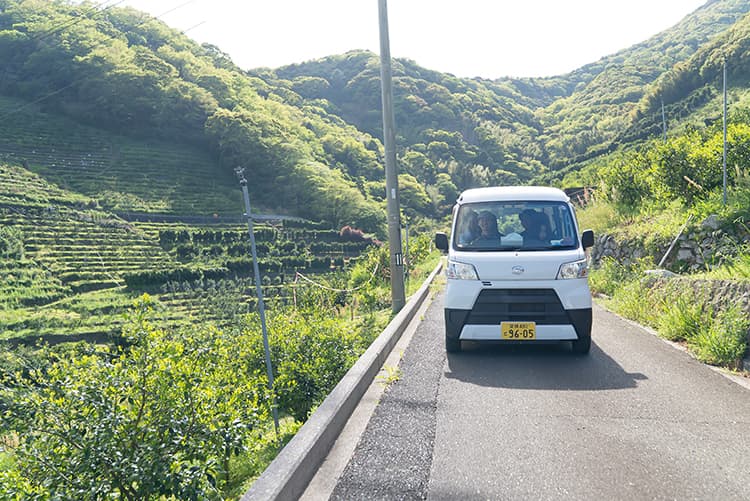
The wonderful thing about Akehama, says Rie, is the kindness and warmth of its people. The locals promptly greet her when they notice her passing in her minitruck.
Two years after the torrential rains, and just before her oldest daughter enrolled in primary school, Rie and her family moved back to Akehama. There she arranged to borrow a processing facility used by the local women’s association. She took over the place and started holding workshops there under the name Kaachan Kobo, teaching people about fermented seasonings.
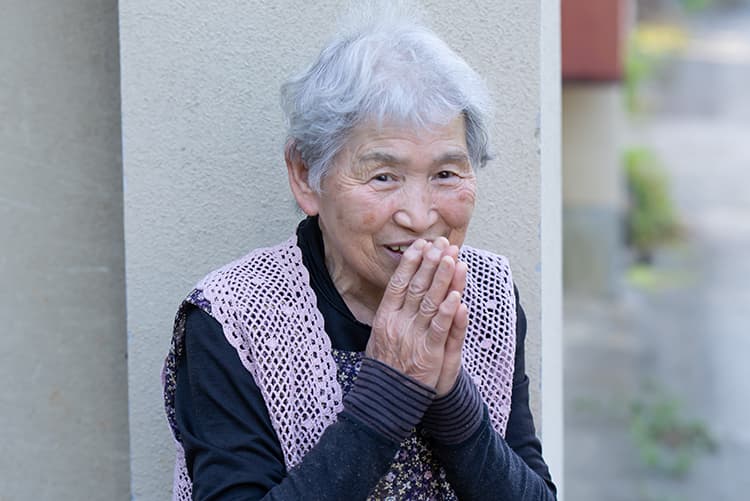
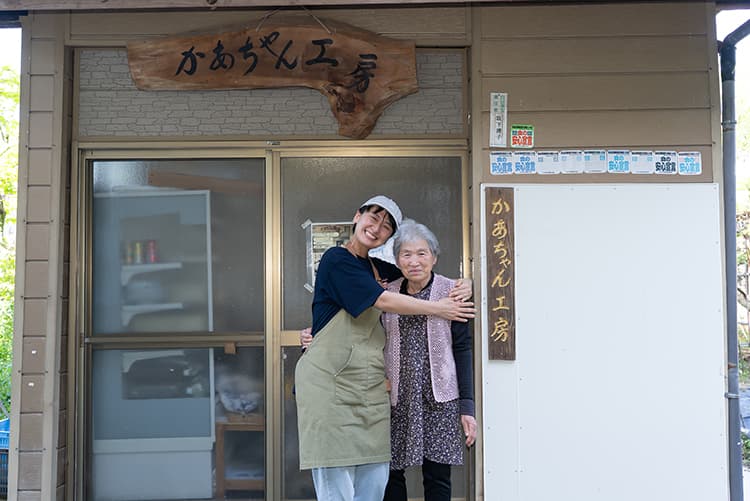
Sakashita Kiyoko, whom Rie affectionately calls Kiyo. Kiyo, who originally ran the processing facility, told Rie, “It’s all your now! You can use it as you like.” Thus Kaachan Kobo got a new lease on life.
“My job is to make cooking fun for people who hate it, to get them so excited they can’t wait to start cooking. There are people who just can’t stand being in the kitchen. But food is with you for life, right? You eat three meals a day, 365 days a year. Yet if you don’t like cooking, it’s sheer agony, especially if you’re a mom. You’re torn between the feeling it’s all for your kids and the fact it’s pure torture. I really want people to get out of that rut.”
Rie’s own personal experience has convinced her of the importance of home cooking. She wants it to be easy to prepare meals you know are safe. After all, home cooking doesn’t taste anything like restaurant food.
“People who dislike cooking have little confidence in what they make. Pouched foods are easy to use, but many people feel guilty about using them. They want to steer clear of additives if they can. If that sounds like you, then you should use koji seasonings. Just drizzle some on your food or put it in your soup, and the flavor will turn out perfectly. Now that’s a weight off your mind. People who actually attend my workshops are amazed. ‘Wow!’ they say. ‘Just adding this enhances the flavor this much?’ I once taught a woman in her seventies, and she said, ‘I wish I’d known sooner that cooking can be this easy.’”
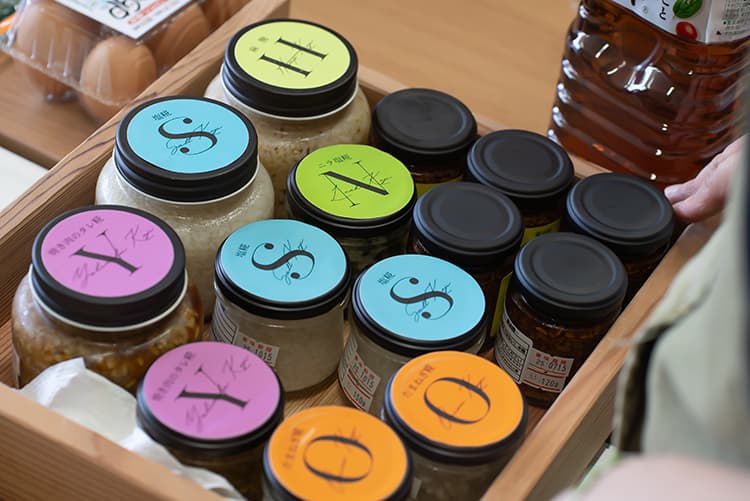
The fermented seasonings Rie makes
Not only does Rie hold workshops herself. She also hopes that once participants learn how to make fermented seasonings, they’ll spread their wonders to others.
“I can only make a finite amount of seasonings to sell, and I can only reach so many people myself. That’s why it’s important to come up with the easiest possible way to make fermented seasonings, so people will think to themselves, ‘Let’s start making them today.’ For that reason, I’m creative in how I get the message across. I try to keep it as plain and simple as possible and make it motivational. Then, once people have memorized the technique, I tell them that they’re the instructors now, and it’s their turn to teach their neighbors and the special people in their lives. That way the technique can be passed on to people who I’m unable to engage with directly myself. It’s like delegating the task. Fermented seasonings will, I hope, thus gradually catch on. If everyone made them, cooking would be easier for everyone. And what could be better than that? Take a weight off your mind. Just add fermented seasonings, and that’s it. I want more people to know that.”
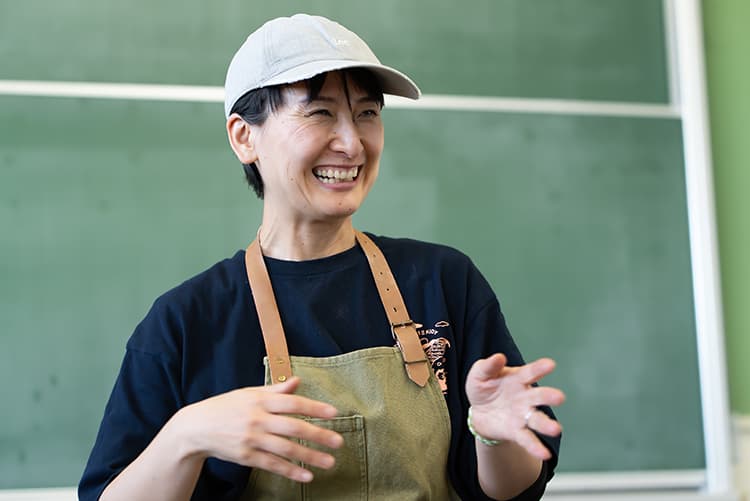
Rie is committed to helping more people get into top mental and physical condition by heartily enjoying their meals. Today, she teaches the magic of fermented seasonings to some three hundred people a year. She has bigger dreams as well.
“One day, I’d like to open a retreat here in my beloved Akehama. There’s still much more I want to accomplish,” she says, smiling from ear to ear.