Koji Seasonings at Cozy Cafe & Bar BEYOND
Aug 28,2025
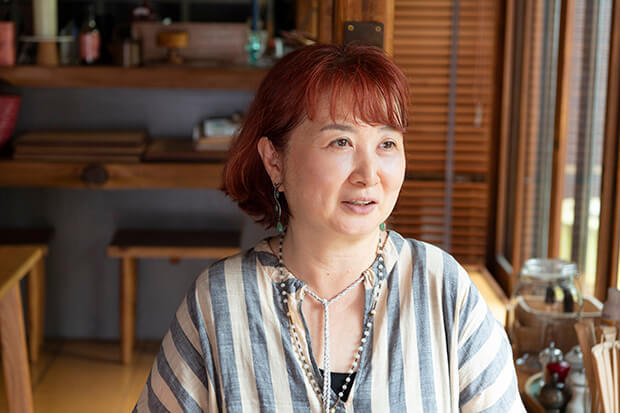
Cozy Cafe & Bar beyond is a relaxed, homelike café that prides itself on dishes that feature homemade koji malt seasonings. The café, which opened in September 2023, is just a short walk from the JR Ibaraki train station in the lush, green Hokusetsu area, easily accessible from Osaka and Kyoto. Its nutritionally balanced, body-nourishing meals appeal to a wide range of ages, and the number of repeat customers is steadily growing. Wanting to know the secret to its popularity, we spoke with the couple running the café, Kikugawa Takeru and Ayaka.
Homemade koji seasonings are the key to deliciousness, as koji fosters more complex and deeper umami flavors
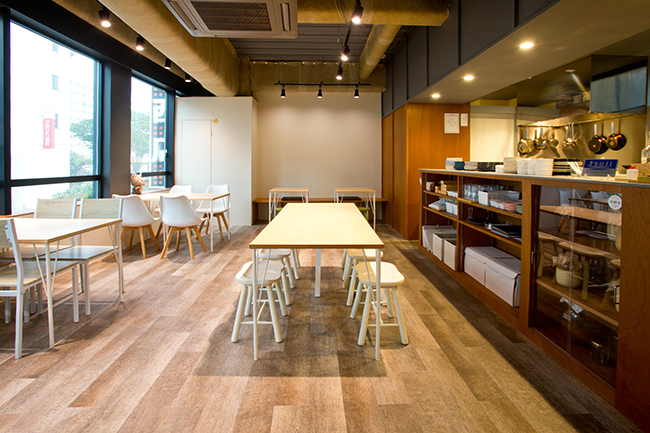
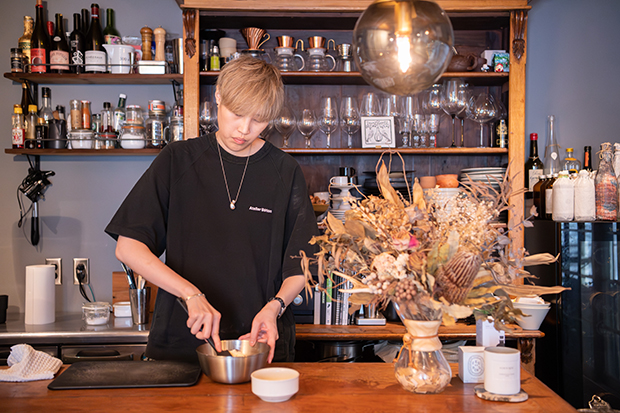
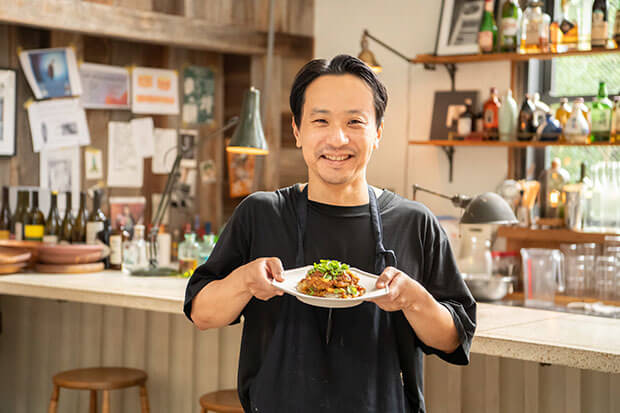
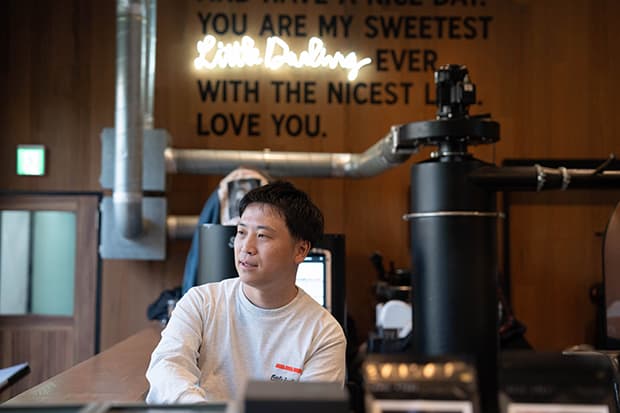
The interior is bright and pleasant, with light streaming in through large windows. The shelves behind the counter are lined with jars of fermenting koji seasonings.
“All the koji seasonings we use in our restaurant are homemade and additive-free,” says Takeru. “The fermentation process boosts their umami flavor components, and when used in cooking, the seasonings bring out the natural deliciousness of the ingredients. For example, even something as ordinary-looking as karaage [Japanese fried chicken] tastes more complex and flavorful when marinated with our koji seasonings.”
And indeed, when you taste it, you are inundated by a wave of flavors.
“We always have seven or eight types of koji seasonings on hand. The five essentials are salted koji, soy sauce koji, garlic koji, ginger koji, and onion koji. Today, we also have tomato koji and dashi stock koji, but beyond our staple seasonings, what we make changes depending on the season and ingredient availability. Occasionally, we will make seasonings like consommé koji, curry koji, and Chinese-style koji. Since each seasoning has a distinct flavor, my wife and I brainstorm ideas for what dishes to create and we experiment with ideas nearly every day.”
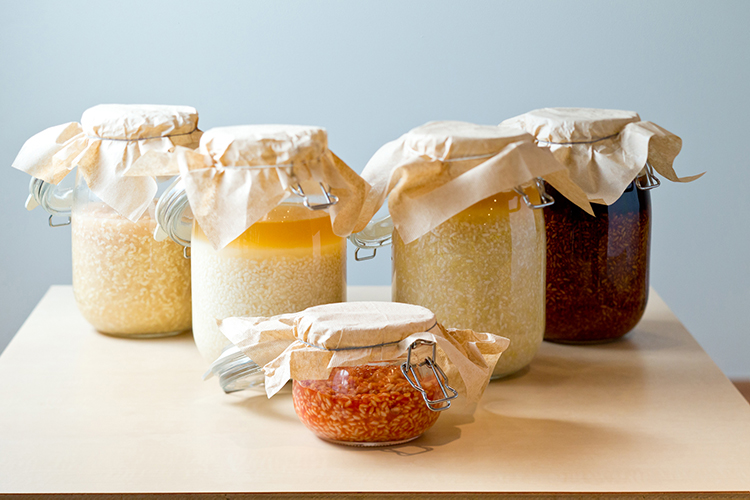
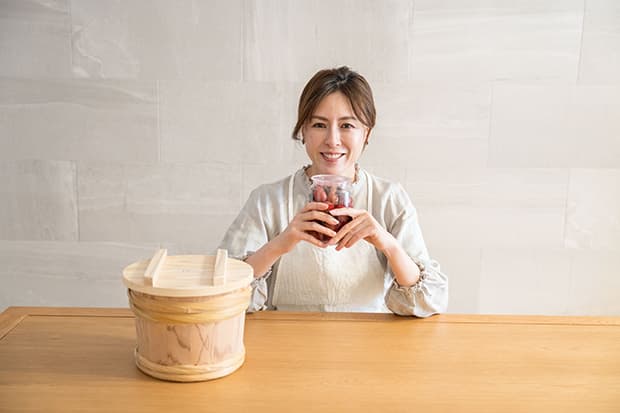
Some of the café’s koji seasonings in the process of fermenting. From the left, onion koji, salted koji, tomato koji, ginger koji, and soy sauce koji.
The Kikugawas also sell their koji seasonings by weight, due to demand from their regular customers. (The seasonings available vary by the day and the amounts for purchase also vary, depending on the café’s own needs.) The seasonings are mainly sold to customers who bring in their own empty jars, but the café also stocks seasonings in mini 30 mL containers for people who want to try out a small amount. This service is perfect for those who want to incorporate koji into their diet, but who find making seasonings from scratch a bit daunting.
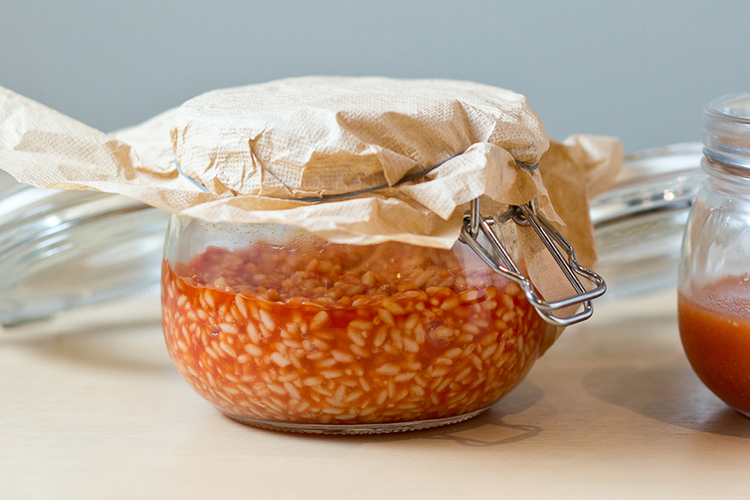
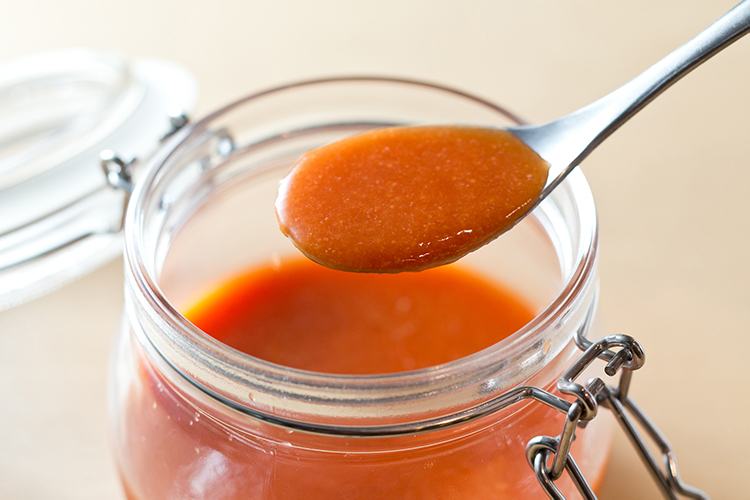
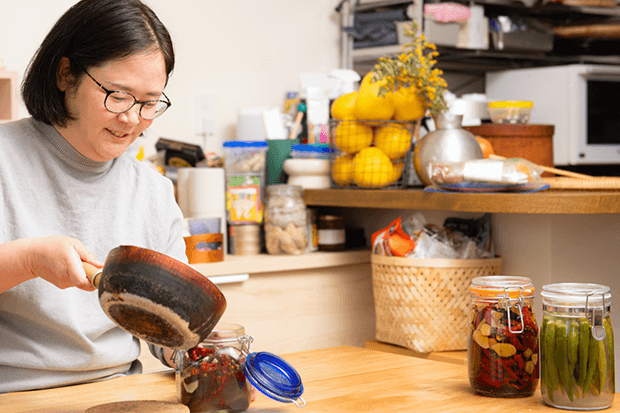
Koji seasonings take between 10 days and two weeks to complete the fermentation process, depending on the type. Once they are ready, mixing them in a blender creates a smooth, creamy texture. Tomato koji is shown in the photos.
What you eat nurtures your health: Using the power of fermented foods to promote a healthy gut microbiome
What sparked the Kikugawas’ fascination with koji?
“It started when my mother-in-law took a koji workshop, inspiring my wife to take it too. She was impressed by how delicious the onion-soy sauce koji dressing tasted at the workshop and recreated it at home. From there, we both got increasingly drawn into the world of koji. Before opening our café, and especially during the pandemic, we realized just how important it is to maintain a healthy gut microbiome and proper immune function. This made us want to serve healthy foods all the more.”
The saying “you are what you eat” sums up the Kikugawas’ philosophy on food and diet. In other words, the food you eat is what nurtures your health. This commitment extends beyond koji seasonings. They select domestic ingredients and source vegetables that are either pesticide-free or low-pesticide from trusted producers. They construct their menu around seasonal ingredients and serve highly nourishing dishes every day that energize the body from the inside out.
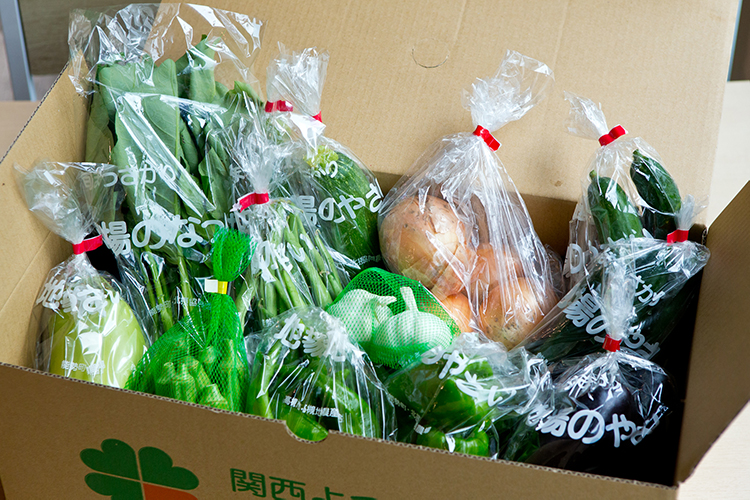
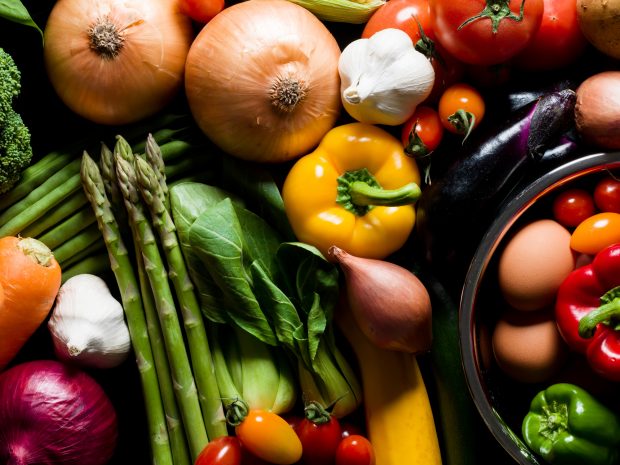
At a glance, the freshness of vegetables sourced from local Kansai farmers is obvious. Seasonal vegetables have richer flavors, and simple cooking brings out their deliciousness.
“Many regular customers tell us how great they feel the day after eating at our café,” says Ayaka. “Hearing stories like that is really delightful. We have noticed changes in our health as well, as we’ve continued our koji lifestyle. My husband used to catch the flu like clockwork every year, but since starting our koji-centric diet, he stopped getting it. Now he rarely catches even a cold. And I’ve gotten more compliments from customers about how clear my skin is. I think the reasons are our improved gut health from our koji-centric diet, that we eat plenty of vegetables, and our good digestion.”
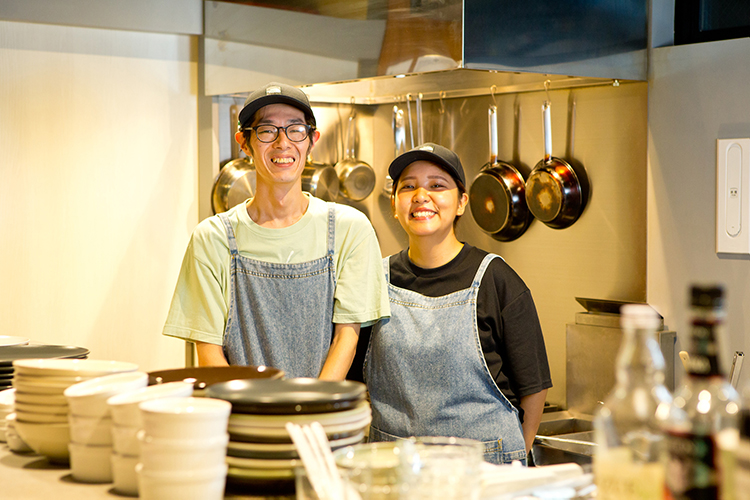
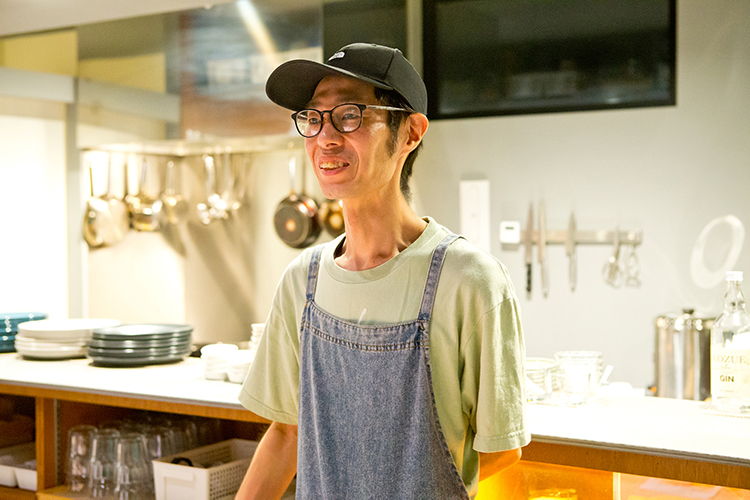
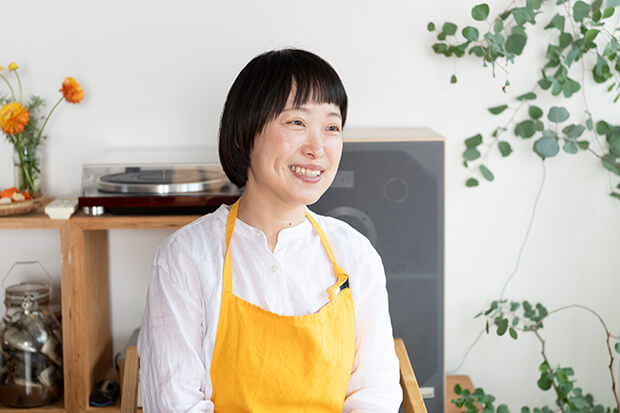
The beaming smiles of the Kikugawas, whose cooking and plating are perfectly in sync
Simple and delicious lunch plates, packed with the charm of koji foods, that you’ll want to eat again and again
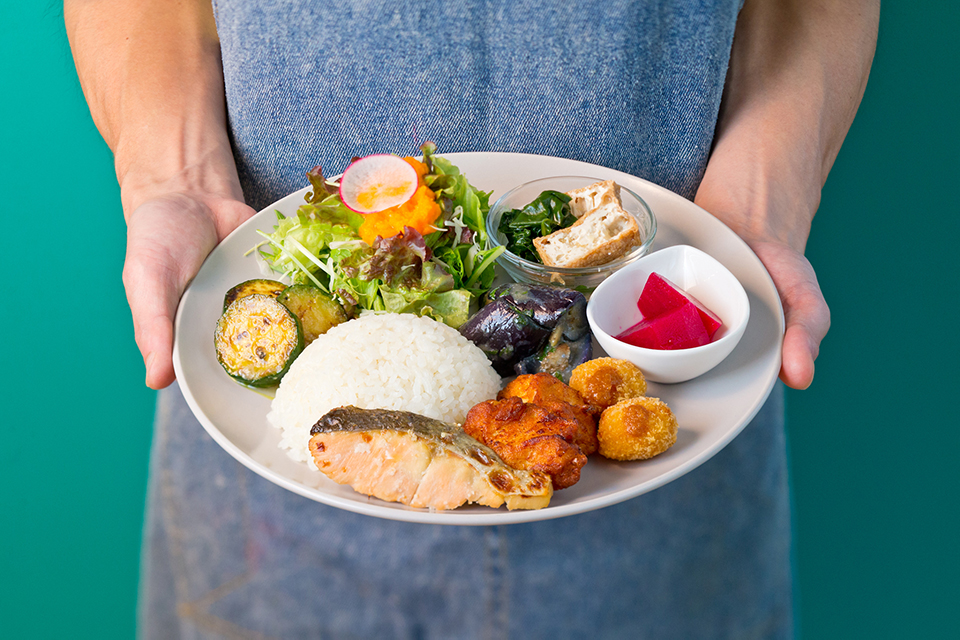
The café’s top recommendation is the Beyond One-Soup, Eight-Dish Homemade Koji Lunch. This lunch set menu features salted koji rice, one soup, and three regular dishes. (The soup is koji soup; the two main dishes are domestic chicken karaage marinated in four koji seasonings and grilled salmon in salted koji; and the side dish is a vegetable salad with koji dressing.) Completing the eight dishes are five Kyoto-style obanzai side dishes using various koji seasonings. The plate lunch is colorful, packed with vegetables, and nutritionally balanced. The obanzai dishes change daily, so it’s exciting to discover new flavors on each visit. Due to customer demand, the café now offers the lunch set menu to go. The takeout version is called Beyond Box and does not include the soup. It can be ordered in the evenings as well as during lunch.
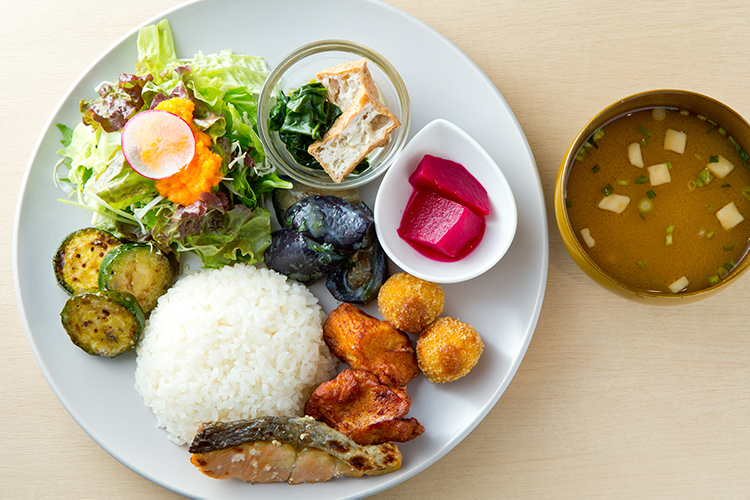
The five obanzai dishes on the day of our visit, clockwise from the left: grilled marinated zucchini, boiled Malabar spinach, pickled beets, mini pumpkin croquettes, and in the center, eggplant stir-fried with perilla and miso.
The domestic chicken karaage marinated in four koji seasonings is especially popular with customers. Marinated in salted koji, soy sauce koji, garlic koji, and ginger koji, the karaage has a robust flavor that goes perfectly with rice.
“While being good for your health is important, satisfaction is key too,” says Takeru. “Our technique of combining four types of koji seasonings creates karaage with a rich, pronounced umami. And the enzymes produced by the koji mold help tenderize the meat.”
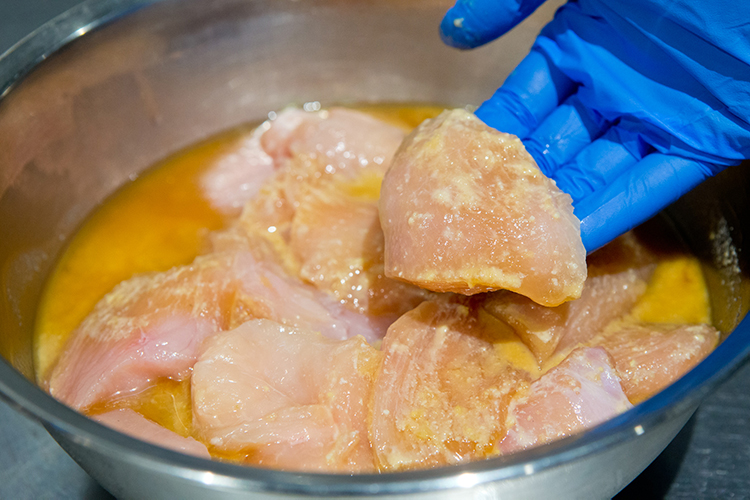
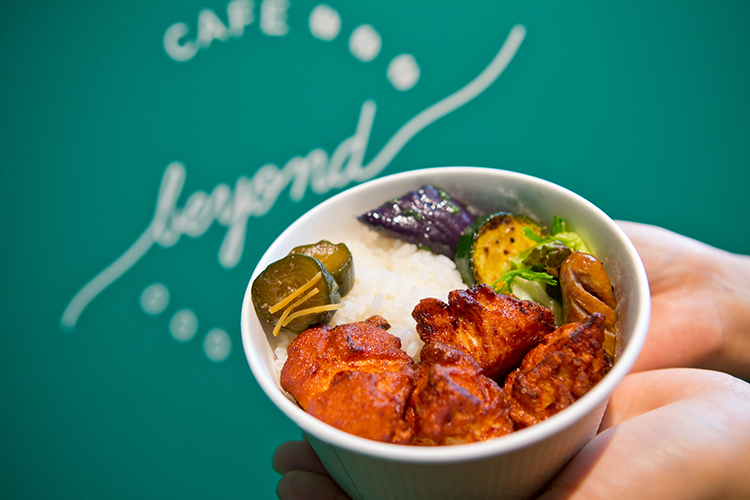
Left: Chicken pieces are coated with four koji seasonings for a tender, juicy texture. Right: The takeout lunch box with the domestic chicken karaage marinated in four koji seasonings is the most popular. (Other lunch boxes feature ginger pork or steamed chicken as the main dish.)
Another enjoyable in-store lunch option is the Special Plate, which includes salted koji rice and four dishes. In addition to the main dish and a vegetable salad with koji dressing, this special comes with two obanzai dishes made using koji seasonings. The main dish on the day of our visit was deep-fried horse mackerel. It was served with a tartar sauce packed with vegetables and made using salted koji. The sauce is light-tasting, and the texture of the vegetables adds a nice accent.
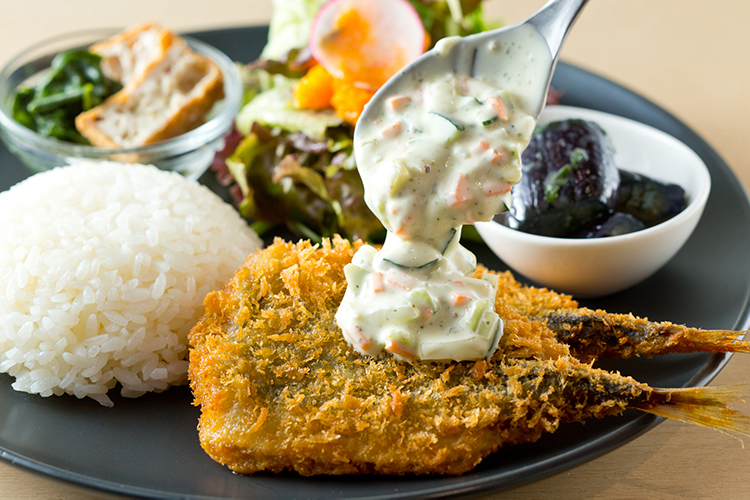
The light-tasting tartar sauce has lots of vegetables but contains no boiled eggs, so you can enjoy it without feeling guilty
“We consciously put together our menus with the idea of keeping up people’s well-being in all seasons,” says Ayaka. “For example, during the hot summer period, we use ingredients that help beat fatigue, and we adjust our seasonings to make our dishes more appealing when people’s appetites wane. We share behind-the-scenes stories about our menus and nutritional insights on our Instagram account. Definitely check them out.”
Our aim is to continue to make food that people want the people close to them to eat
“A customer in her 30s who visited our café later brought her mother. She said, ‘The food here is so delicious and healthy, that I wanted my mom to try it.’ And for the same reason, some of our regular older customers bring along their children. When people want their beloved family members to also eat our food, that makes us happier than anything. As the saying goes: ‘What you eat nurtures your health.’ Our customers seem to be getting a sense of what we have long cherished, and this circle is growing. We want to remain a cozy place where you can casually enjoy koji-based dishes with excellent health performance.”