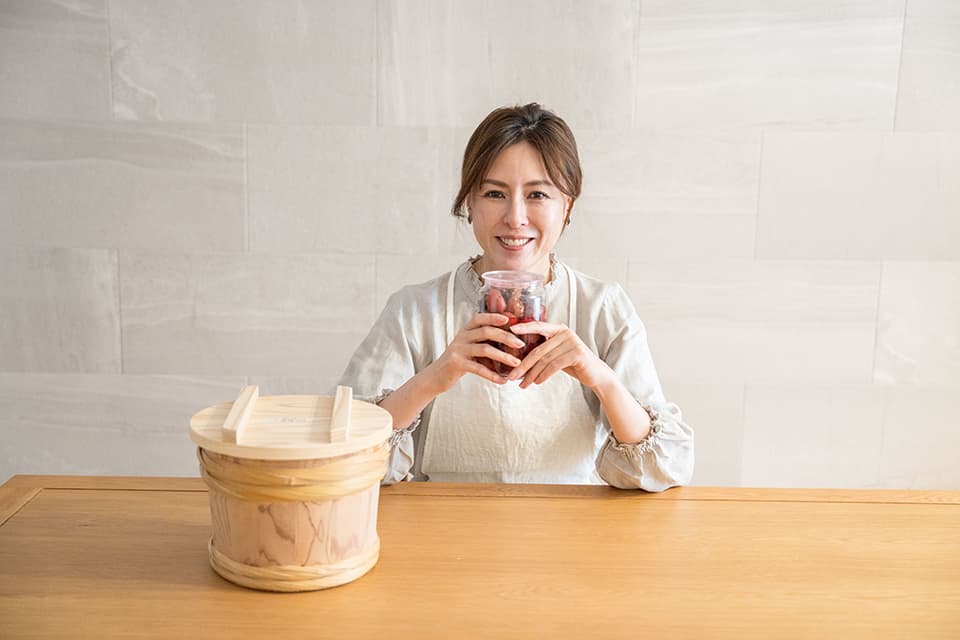
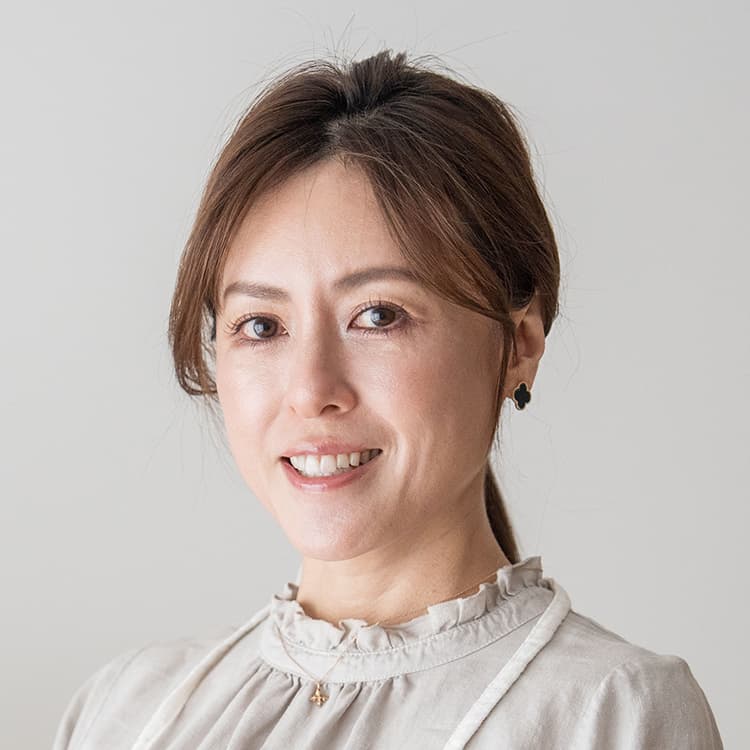
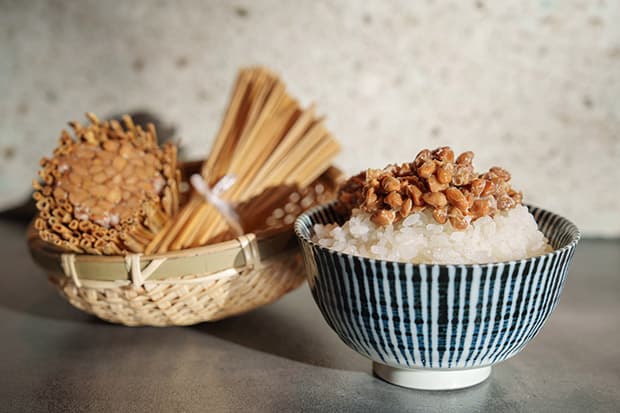
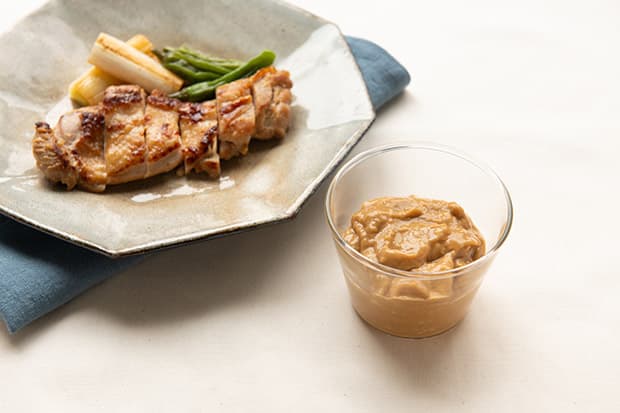
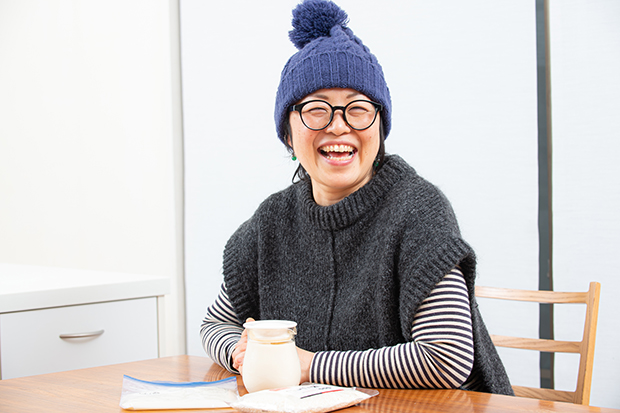
One day, her intestines suddenly stopped functioning. Her stomach swelled and hives broke out all over her body. Even walking was painful. What pulled her physical condition back from the brink were fermented foods, says Okouchi Shiho. Captivated by familiar seasonings like miso and soy sauce she’d known since childhood, Okouchi began studying fermentation again, making her own fermented foods, and even visiting producers around the country. Today, leading a life surrounded by homemade fermented foods, she says, “I feel better both mentally and physically than I did in my 40s. Fermentation, I believe, contains a soothing wisdom that helps my future self.” We spoke with her about her fermentation lifestyle and tips for incorporating fermentation into everyday meals.
Learning, on the frontlines of sports nutrition, that food is the science of activating the body
“Antibiotics were the cause of a terrible strain on my intestines.”
Okouchi suffered from fevers, hives, and severe abdominal pain and bloating. Her stomach swelled so much it looked as if she were pregnant and led to two emergency hospitalizations. She says, “the only solution was to regulate my intestines themselves and not rely on medication.” This realization was the turning point that got her to dive into studying about gut and intestinal health and to take another look at fermented foods.
Okouchi’s engagement with food is actually a continuation of a much longer story.
“I had been managing the meal plans for my partner, who was a pro athlete.
“That’s also why, at the age of 22, I enrolled in the culinary program at the Kagawa Nutrition University, where I received a thorough education in nutritional science and hygiene.”
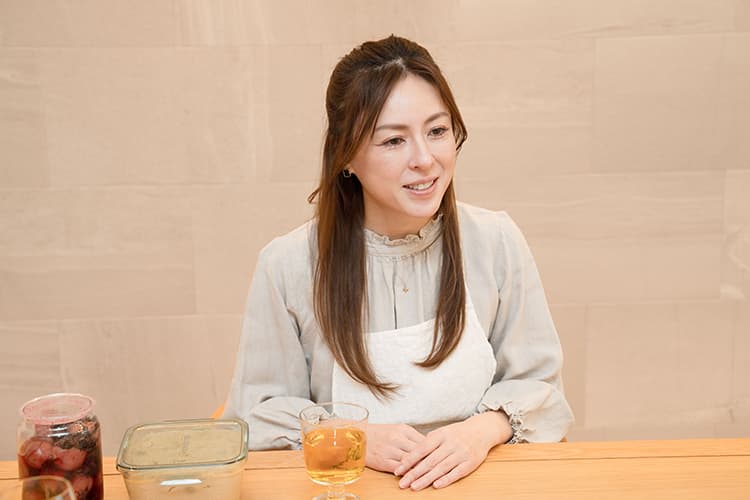
Okouchi says that experiencing firsthand that “you are what you eat” is what drove her to study everything she could about fermented foods
After getting married, Okouchi moved to the United States. The diet in an unfamiliar land took a heavy toll on her body.
“There were so many high-fat foods there, and I couldn’t find the foods that suited me that I’d taken for granted in Japan. My inflammation and fatigue just wouldn’t go away.”
She learned from sports nutrition experts about the importance of how you eat your food, and she became acutely aware that food is the science of activating your cells. She would bring along a rice cooker on road trips and make rice balls with pickled ume plums or salmon flakes.
“Just having Japanese foods made a world of difference for my mind and body. I experienced firsthand how the way you eat changes the amount of energy generated, even with the same amount of exercise.”
Because she understood this relationship between food and the body, when her intestines began causing problems, her instincts naturally turned toward restoring her body through food.
Miso, soy sauce, and koji rice malt are the unsung heroes that have long sustained the health of Japanese people
While studying the inner workings of the intestines, Okouchi became fascinated with fermentation. She attended the Fermented Food College in Kanazawa for a year, studied natural fermentation under the tutelage of a Korean instructor, and began visiting breweries and koji makers all over the country.
“Miso, soy sauce, mirin rice wine, vinegar. All Japanese seasonings trace back to koji mold, right? Koji mold is also Japan’s national fungus, with no exact equivalent anywhere else in the world. When I learned that, it made perfect sense: ‘Of course these seasonings are the best fit for the Japanese constitution.’”
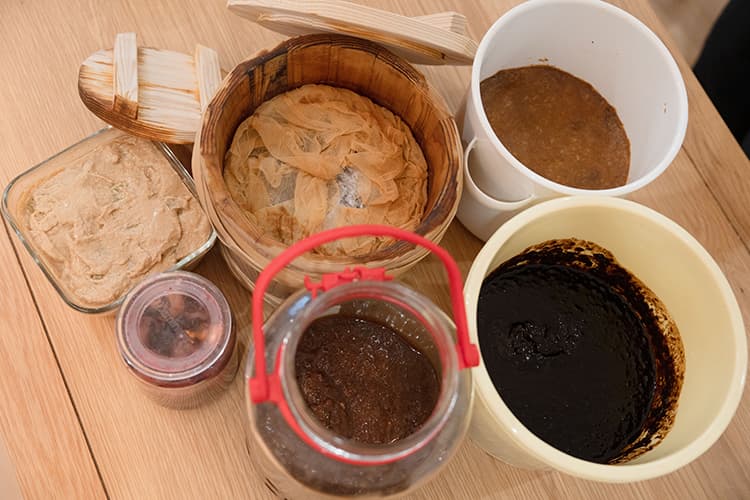
Okouchi made all these seasonings herself, including miso, soy sauce, hishio [a paste-like soy sauce byproduct], and pickled ume plums
Of these seasonings, Okouchi considers miso to be the ultimate seasoning.
“Fermentation breaks down the soybean molecules into smaller molecules, making its nutrients easier to absorb. For women, miso is an efficient way to get isoflavones, which support hormonal balance. And research from Hiroshima University suggests that miso is a detox food ingredient that helps excrete radioactive substances from the body. The more you learn about miso, the more amazed you’ll be by this seasoning.”
Okouchi believes the presence of fermented soybeans might explain why menopausal symptoms were virtually nonexistent among Japanese women in the past.
“People back then consumed fermented soybeans little by little every day through miso soup and simmered dishes. Even with limited meat and dairy products available to them, they could cross mountains and carry heavy loads. I believe fermented seasonings were what sustained them throughout such heavy physical labor.”
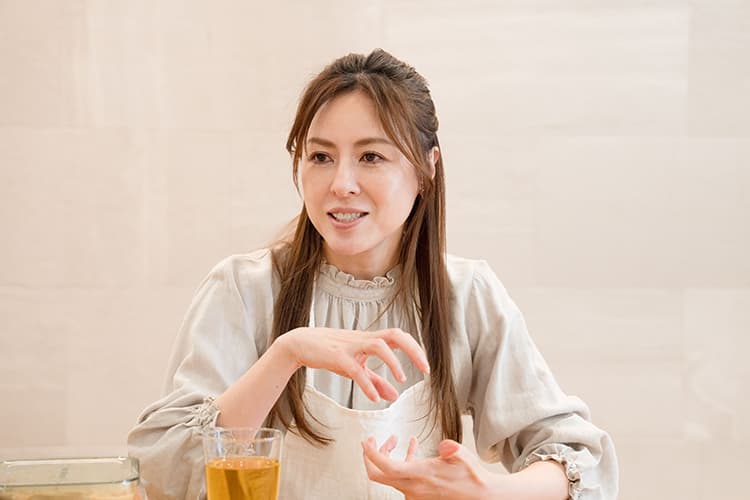
“People tend to worry about the salt concentration of miso,” says Okouchi. “But excess salt consumption is not a concern with a bowl of miso soup that uses miso fermented with natural salt. In fact, miso contains so much goodness that to not have it would be a shame.”
Preparing homemade miso for my future self a year from now
Okouchi’s kitchen is lined with all kinds of fermented foods, including miso in the making, miso aged for two years, raw soy sauce, hishio, and ume syrup.
“I like to let my miso age for at least a year. I really enjoy the sense of preparing miso for my future self a year from now. When it is aged for two years, the umami flavor and aroma deepen even more, and the miso apparently reaches its most nutritionally rich stage.”
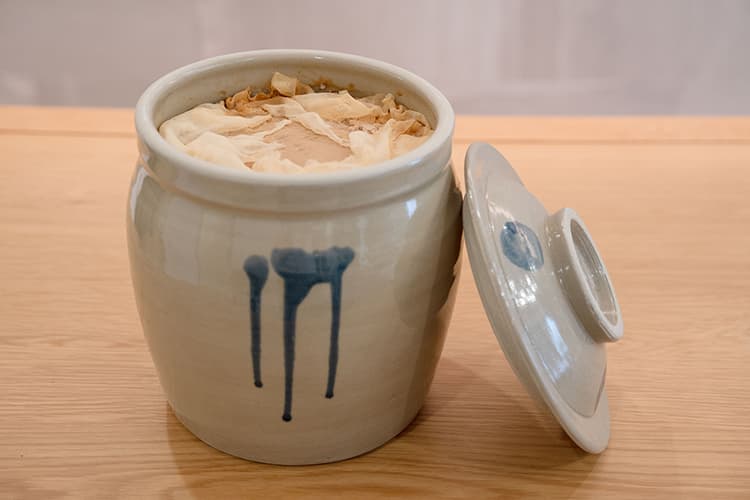
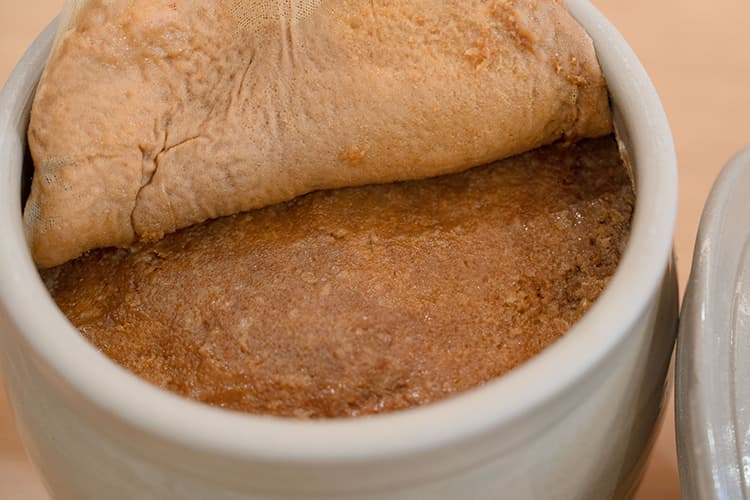
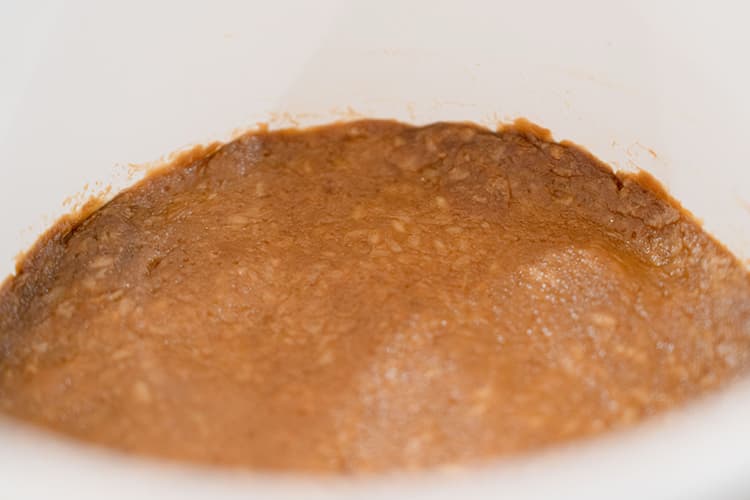
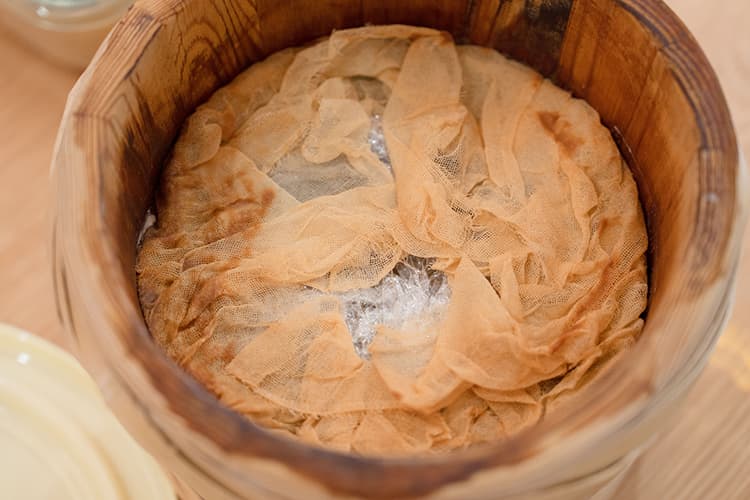
Removing the lid releases the wonderful aroma of miso. Okouchi ferments her homemade miso in jars, enamelware, wooden tubs, and other types of containers.
Okouchi also showed us her hishio, the base for both soy sauce and miso.
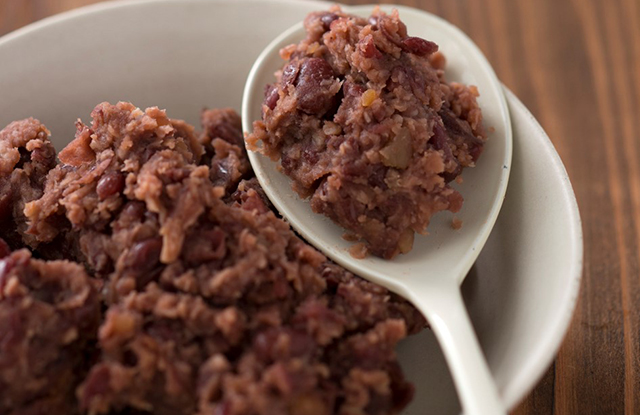
“If you were to press this hishio, you’d get soy sauce, and you can use the solid portions in the same way as miso. If you turn it into a paste by blending it in a mixer, it becomes a genuinely all-purpose fermented seasoning, good for garnishing vegetables, using as a dressing, or marinating fish.”
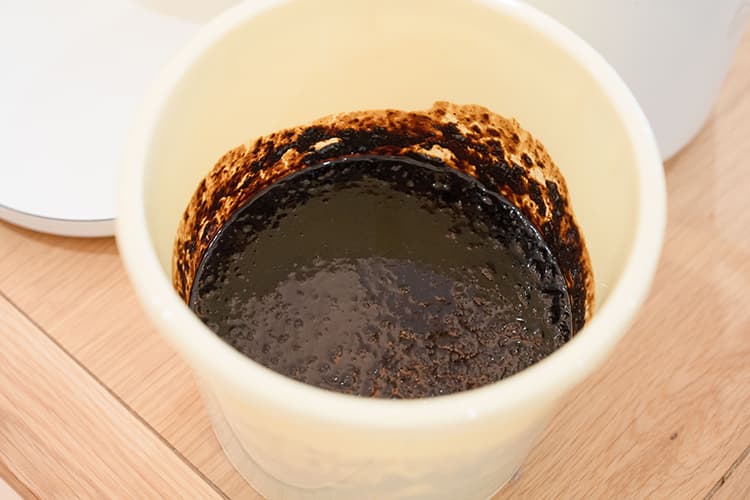
Hishio contains highly concentrated umami components. Hishio, even without straining, can be used as a substitute for soy sauce.
When ume season arrives, preparing ume plums is another joy that adds color to her life.
“I always make ume syrup and pickled ume, but I experiment with new recipes each year. This year, I tried making a craft-cola type of ume syrup by adding cinnamon and cloves to the syrup. It tastes really good when mixed with carbonated water. Making it with just the right amount of sweetness for my body is something you can only do when you make it yourself.”
Whether miso, soy sauce, hishio, or working with ume plums, fermentation and time are what bring them to fruition. Okouchi’s kitchen is itself filled with the kindness and abundance of fermentation.
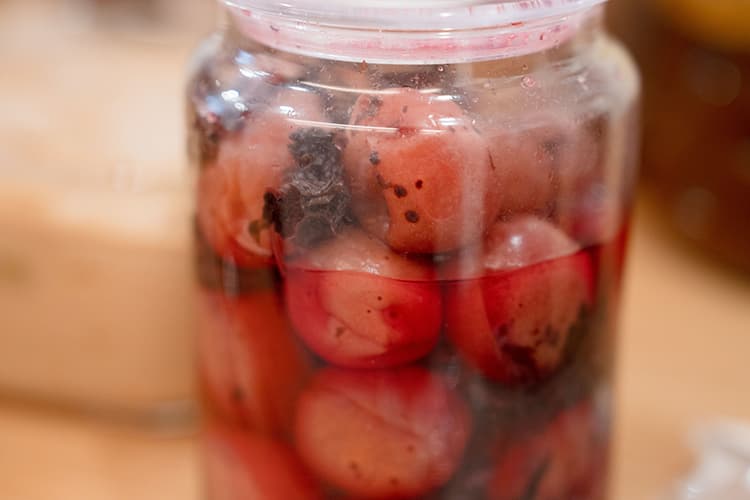
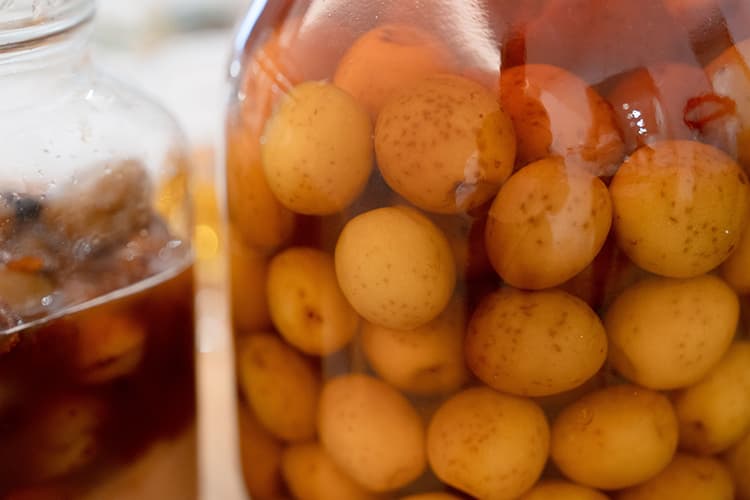
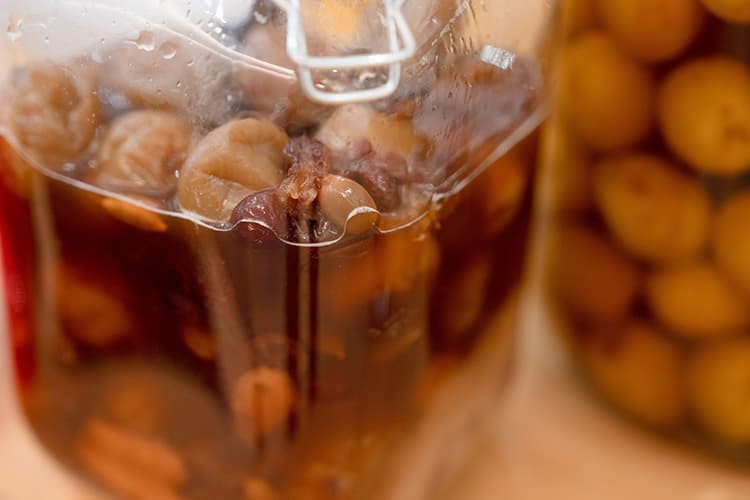
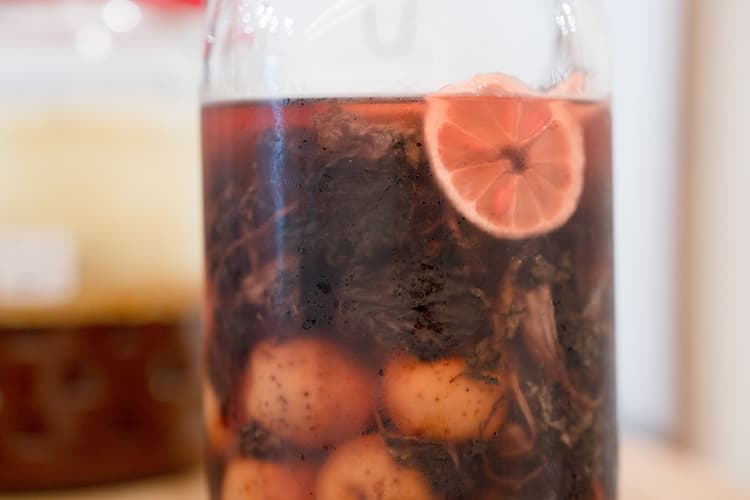
Even slightly misshapen fruits are endearing. Okouchi’s pickled ume and ume syrup, made with naturally farmed ume plums, capture the very scent of the season inside the jars.
Designing how one ages through fermentation
Okouchi started adopting fermented foods into her life seriously about 10 years ago. She is now approaching her mid-50s.
“I have absolutely no menopausal symptoms. In fact, I feel more energetic than I did in my 30s. (laughs) Of course, everyone is different, but I truly feel that the right food can make aging a little easier.”
There is a deep-seated notion in Japan that aging is a hardship. It brings on anxieties about pain, discomfort, and losing one’s mobility. This is why Okouchi wants to design how she will age while she is still healthy.
“The number of people in Japan 60 and older is only going to keep growing. I want to propose a way of growing older that isn’t a hardship. Rather, it’s about staying light and agile even as you age. I firmly believe that the wisdom of fermented foods will be a powerful ally in achieving this.”
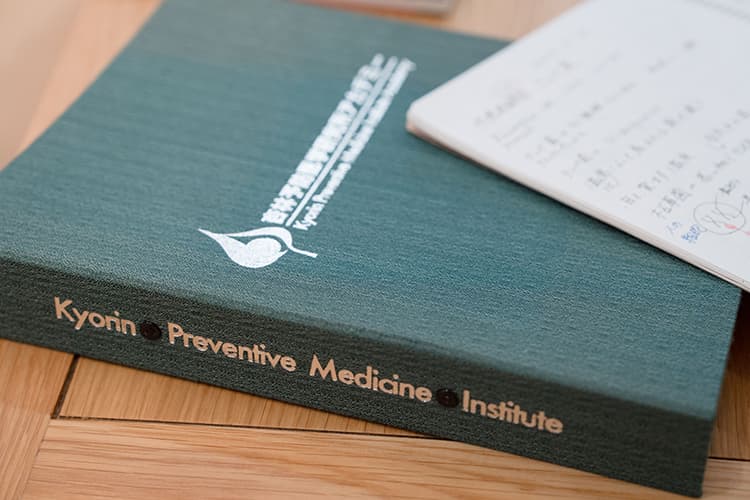
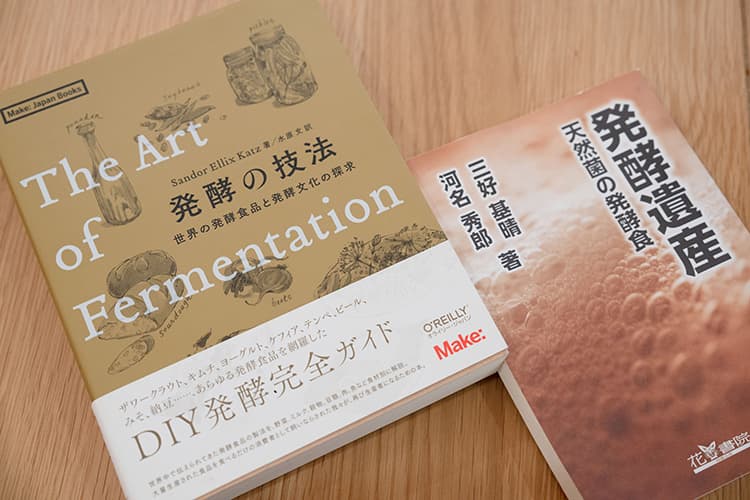
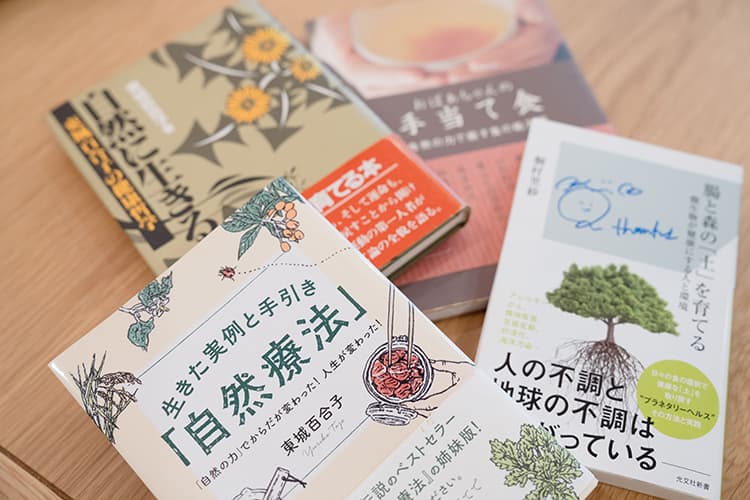
“Fermentation is a world in which the more you learn, the more there is to discover,” says Okouchi. Each time she looks through her books and her packed notebooks, she finds new insights.
What I want to convey in my classes is the joy of living with microbes
Inspired by the positive reactions to her miso-making Instagram Live sessions, Okouchi has started in-person fermentation classes.
“My classroom is a bit like a dojo training hall. (laughs) The soybeans are precooked, but mashing them is all done by hand. Everyone gets drenched in sweat and ends up with sore muscles the next day.”
Despite the strenuous work, everyone develops a special attachment to the miso they’ve prepared with their own hands.
“When I open a tub of miso that’s been aging for a year, I get really nervous, wondering ‘How did it turn out?’ The process of nurturing fermentation feels like it enriches life itself. The waiting time is an important part of this process too.”
Okouchi’s classes are more than just making miso. Equally important is the lecture time, when students learn about the mechanisms of fermentation and how microbes work.
“Fermentation isn’t just a cooking technique; it’s proper science. How koji mold functions, why miso is good for your body, and how it helps your gut — knowing these things before you eat makes your miso taste even better.”
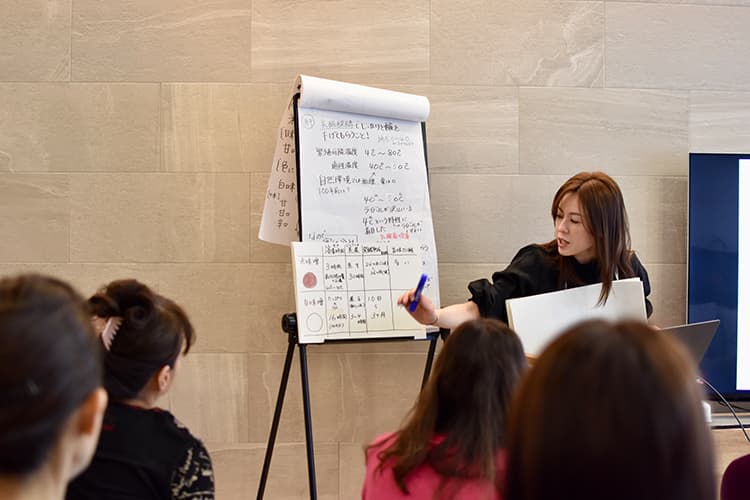
Participants in Okouchi’s classes range from young mothers to physicians studying presymptomatic conditions. People of all ages and backgrounds sit side-by-side learning about fermentation.
Looking to the future with the artisans who maintain Japan’s fermentation culture
While studying fermentation, Okouchi began traveling to meet the artisans who produce koji, miso, and soy sauce.
“Since I’m teaching others how to ferment foods, I felt I needed to understand who makes the koji and other core ingredients and the environment where these ingredients are produced. In visiting these locations, I learned that the survival of many places, even century-old breweries, is very precarious.”
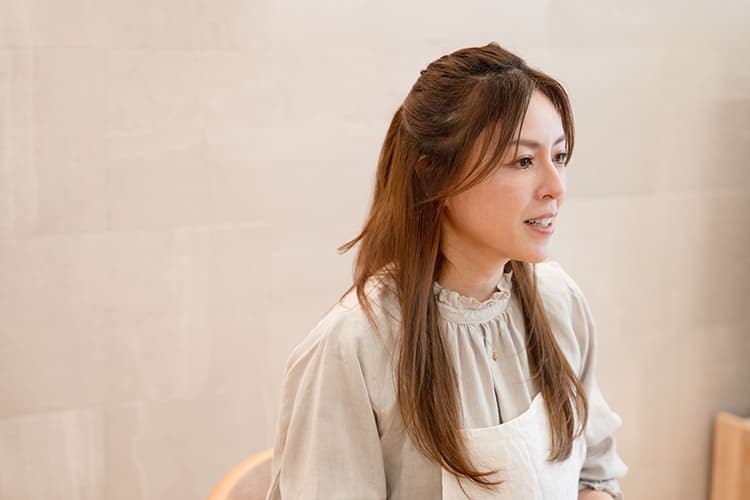
“The more I’ve learned about fermentation, the more I realize just how priceless the work of these artisans is,” says Okouchi
“I heard about one soy sauce brewer who realized how amazing his father’s soy sauce was only after leaving home. So he re-enrolled at an agricultural university in order to carry on the brewery’s business. When I hear stories like this, it strengthens my resolve to pass on these tastes and culture to the next generation.”
Okouchi also notes that the number of people overseas interested in Japanese fermentation are on the rise.
“People overseas understand fermentation in more detail than young Japanese people, in many cases. When we hold events on Japanese fermentation, participants from other countries often ask more questions. I think this is exactly why we need more go-betweens like me.”
Include a little fermentation even on the busiest days
Okouchi ended our visit by sharing ways to continue to incorporate fermentation in your diet, even on busy days.
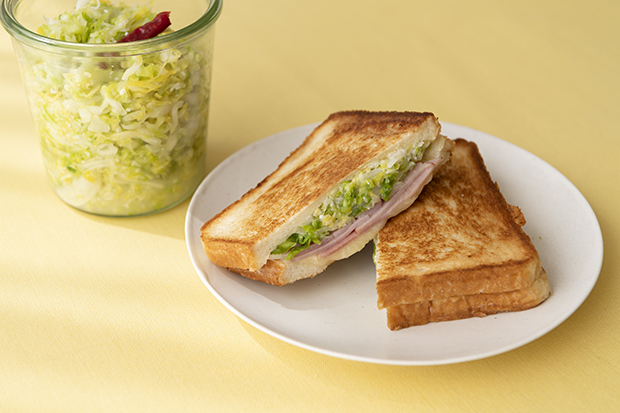
“You don’t have to try to change everything at once. Starting with just a bowl of miso soup is perfectly fine. Store miso balls in your fridge, chop up some nuka-zuke pickles to use as a seasoning, or try mixing hishio into your salad. Using salted koji in place of salt is also easy. Just these little bits of fermentation are enough; your body will respond.”
When your gut is healthy, your mind follows. Okouchi’s words carry real weight because she’s experienced this firsthand with her own body.
“I look at fermentation like a gift to your future self. The miso you make today will help you a year from now. And that bowl of miso soup today connects to your vitality ten years down the line. I’d be delighted if people continue to enjoy fermentation while thinking in this way.”