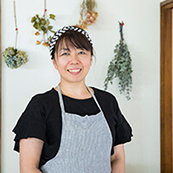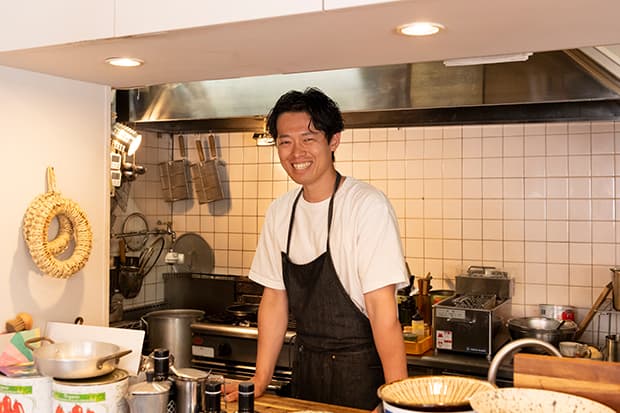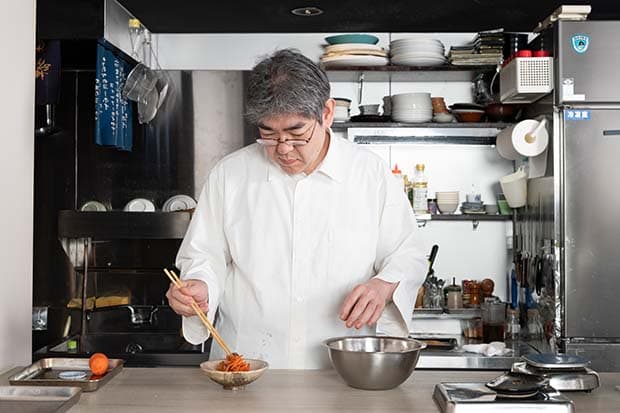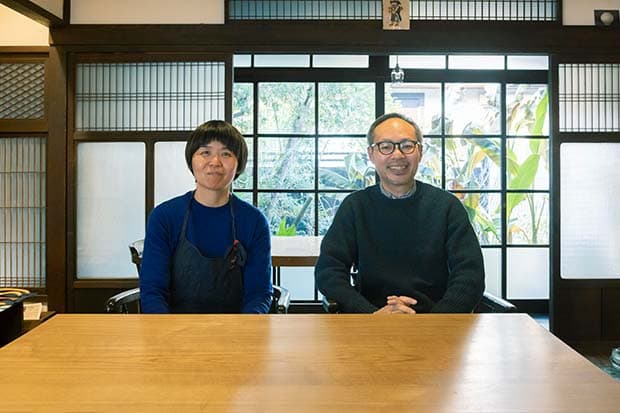
Traditional Japanese dried foods are indispensable to Japanese home cooking. But many people probably think twice about using them. They find them a bother to reconstitute and aren’t sure how to prepare them. Culinary expert Narusawa Masako, however, goes out of her way to incorporate dried foods into her everyday meals.
“I find them particularly handy for my daughter’s bento. She’s now in high school, and she loves good old-fashioned Japanese food. Dried foods keep well in their own right, and dishes prepared with them like kiriboshi daikon (dried daikon strips) and simmered hijiki seaweed can be kept in the fridge for later. Dishes made ahead with dried foods still taste delicious a day or two later.” The best thing about dried foods is that they’re bursting with umami. And the fact is, they’re easy to work with too. You only need a little seasoning to perfect the flavor; no dashi (stock) required.
“The flavors of the ingredients come through loud and clear, and sun-dried foods taste of the sun. They’re high in nutritional value, and the flavor intensifies with every chew! Eating dried foods leaves you feeling refreshed all over.”
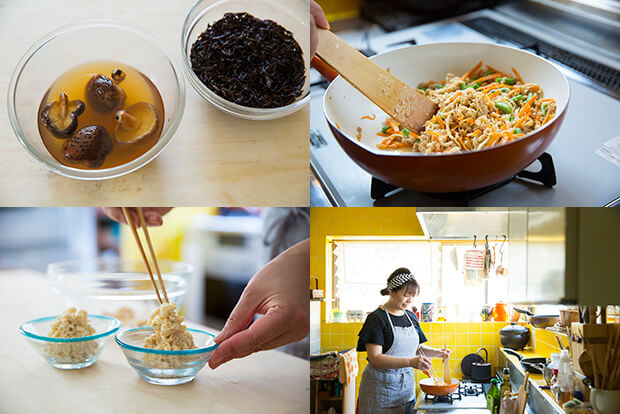

Narusawa Masako’s tips on dried foods and how to use them
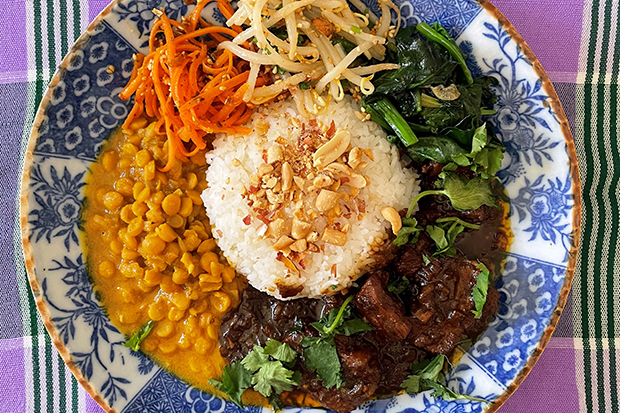
Masako features dried foods in a tremendous variety of dishes. She uses them in omelets, pancakes, and Japanese-style dry curry, not to mention your basic nimono (the generic term for simmered foods). She even combines them with gochujang for a spicy Korean twist. In her hands, dried foods are transformed into a wide range of dishes: Japanese, Western, Chinese, ethnic, you name it.
“While never forgetting the basics, I’m constantly imagining what ingredients would taste good together as I cook. Dried daikon strips and freeze-dried tofu go incredibly well with tomato sauce, surprising though it may seem! Part of the fun of dried foods is being able to discover new flavors by constantly experimenting.”
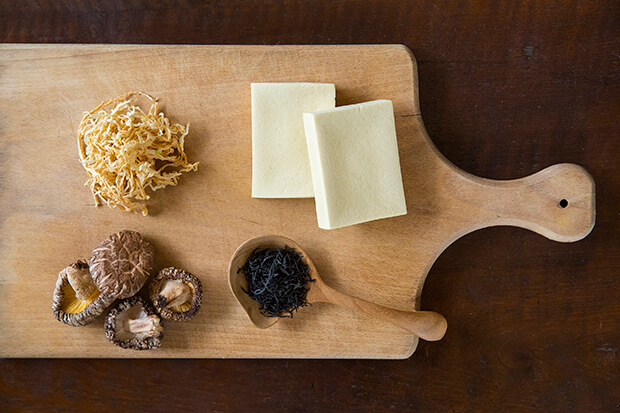
Reconstituting dried foods is often seen as a tricky task, but it’s easy once you get the hang of it. “Soak dried foods in as little water as possible so they don’t lose their umami. It’s better to give dried shiitake mushrooms plenty of time to rehydrate, since the water they’re soaked in can then be used as dashi. The trick, though, is not to soak them for longer than necessary,” Masako explains. First, here’s a refresher on how to reconstitute three dried foods — hijiki seaweed, dried shiitake mushrooms, and Koya-dofu (freeze-dried tofu) — and use them in your cooking.
<Hijiki>
Hijiki seaweed is widely used in salads, sunomono (vinegared dishes), and rice cooked with savory ingredients. Combined with cottage cheese, it also makes a delicious filling for omelets. It increases in volume when soaked in water, so be careful not to reconstitute too much.
[How to reconstitute]
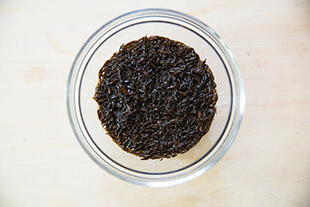
Rinse lightly and place in a bowl. Pour on plenty of water and let soak for 5 minutes.
[Serving suggestion]

●Hijiki pancake
A savory pancake made by mixing hijiki reconstituted in sugar-free yogurt into the batter. First reconstitute the hijiki by soaking in yogurt for 20 minutes. Then combine with stiff-peaked meringue, egg yolks, flour, and baking powder and cook. Serve with cream cheese, dry-cured ham, smoked salmon, or whatever salty sides you prefer.
<Dried shiitake>
Dried shiitake mushrooms are a fantastic ingredient. They’re rich in umami, and the water they’re soaked in makes a great dashi. Use the mushrooms themselves in simmered dishes like amani and Chikuzen-ni. Use the liquid you’ve soaked them in as broth for udon and soba.
[How to reconstitute]
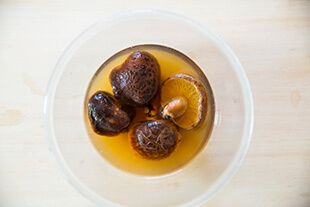
Remove any dirt from the underside of the caps and elsewhere by quickly rinsing in plain water. Place in a bowl and pour on just enough water to submerge the mushrooms. Let soak for at least half a day. Giving them more time to soak better brings out the umami.
[Serving suggestion]
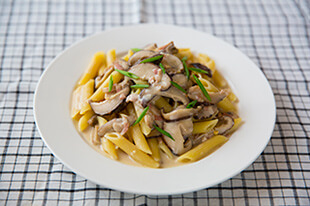
●Creamy pasta with dried shiitake mushrooms
A highly flavorful pasta that lets nothing go to waste, even the liquid the mushrooms are soaked in. Slice the rehydrated shiitake, including the stems, and stir-fry with bacon. Add flour, milk, and the liquid to make the sauce, plus miso for a subtle twist, and toss with boiled pasta. Dried shiitake mushrooms transform your everyday creamy pasta into a profound taste experience.
<Koya-dofu (freeze-dried tofu)>
Koya-dofu is typically served in one of two ways. It can be simmered in a lightly flavored dashi in the form of fukume-ni, giving it a plump, fluffy texture. Or it can be simmered in dashi and bound with egg in the form of tamago toji. Another great way to eat it is miso dengaku style: glazed with sweet miso on one side and grilled golden brown.
[How to reconstitute]
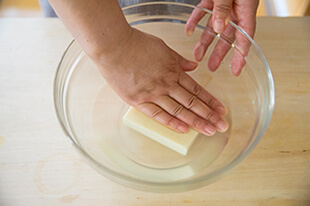
Place the tofu in a bowl and soften by soaking in plenty of water. Remove and press the entire slab down with the palm of your hand until you’ve squeezed out the moisture, then return to the bowl. Repeat several times, changing the water when it turns murky. Repeat several times. When the water no longer turns murky, press gently between your hands and squeeze out the moisture.
[Serving suggestion]
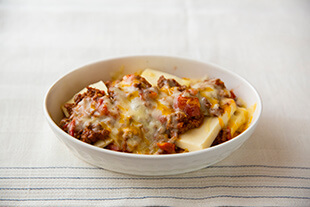
●Koya-dofu baked in meat sauce
Koya-dofu usually ends up being a sidekick to something else, but prepared this way, it becomes a main dish in its own right. Make the meat sauce by stir-frying mixed ground beef and pork with diced tomatoes and lightly simmering. Reconstitute the Koya-dofu in water and cut into three thin, equal slices. Alternately layer the sauce and tofu slices. Top with cheese and bake for a hearty, filling dish!
A classic recipe for dried daikon strips — and some creative twists worth remembering!
Alongside hijiki, dried shiitake, and Koya-dofu, another well-known Japanese dried food worth learning how to use is kiriboshi daikon — dried daikon strips. Masako’s kiriboshi daikon recipes range from a comfortingly familiar nimono to a truly unique dish that will bring variety to your dining table. Why not have a go at them yourself?
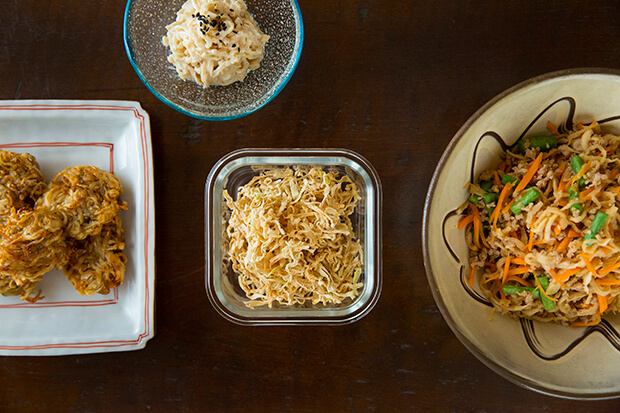
<Kiriboshi daikon nimono>
Packed with ground chicken and other ingredients, this simmered dish will be the star of the meal! It’s a cinch to prepare even if you’re new to Japanese dried foods. You simply mix all the ingredients and seasonings in a pan and make it in one go.
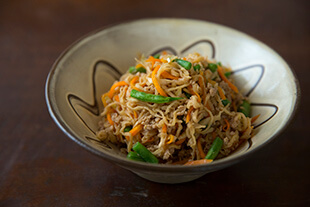
[Ingredients for 2 servings]
40 g kiriboshi daikon (dried daikon strips)
100 g ground chicken
½ carrot
5 green beans
<Additional ingredients>
1 tbsp. ea. sesame oil and cane sugar
2 tbsp. soy sauce
½ cup water
[How to reconstitute]
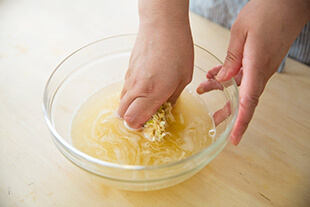
Soak the dried daikon strips in plenty of water and clean thoroughly. Change the water when it becomes murky and keep cleaning until it no longer turns murky.
[Instructions]
1.Reconstitute the dried daikon strips in water and squeeze gently to remove any excess moisture. Cut the carrot into thin strips and slice the green beans to 2 cm lengths.
2.Place the reconstituted daikon strips in a pot or deep frying pan along with the carrots, green beans, and additional ingredients. Mix well with a wooden spatula or the like.
3.Turn on the stove and set the heat to medium. Simmer while stirring with the spatula so the ingredients absorb the moisture.
<Kiriboshi daikon and chirimenjako tempura>
A tempura made by deep-frying dried daikon strips with chirimenjako (dried baby sardines). Both are rich in umami, eliminating the need for seasonings. This crunchy dish is a delight to bite into. Every chew fills your mouth with flavor.
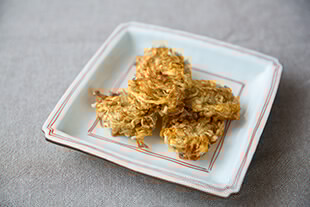
[Ingredients for 2 servings]
30 g kiriboshi daikon (dried daikon strips)
<Additional ingredients>
30 g chirimenjako (dried baby sardines)
1 tbsp. white sesame seeds
3 tbsp. flour
Deep frying oil, as needed
[Instructions]
1.Reconstitute the dried daikon strips in water and squeeze gently to remove the excess moisture, then chop into large pieces.
2.Place in a bowl and mix with the additional ingredients.
3.Heat the frying oil to 160℃. Form the mixture from Step 2 into rounds and deep-fry until crisp.
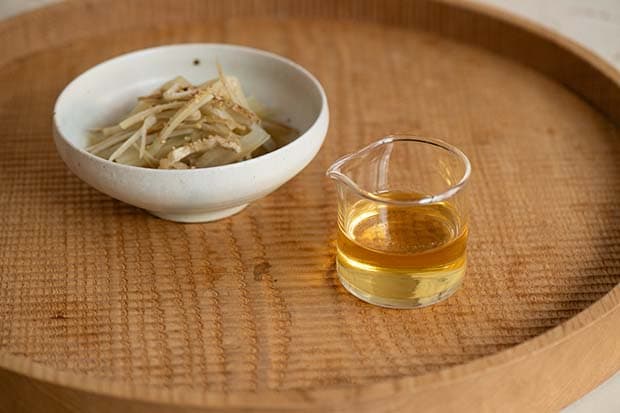
<Kiriboshi daikon reconstituted in yogurt>
A unique dish made with dried daikon strips reconstituted in yogurt instead of water. The miso added as a subtle twist beautifully complements the yogurt. After all, they’re both fermented! A perfect side for a meal or snack with a drink.
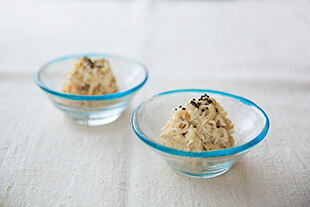
[Ingredients for 2 servings]
20 g kiriboshi daikon (dried daikon strips)
100 g sugar-free yogurt
1 tsp. miso
Pinch of black sesame seeds
[Instructions]
1.Reconstitute the dried daikon strips by placing them in a bowl with the yogurt, blending them together, and leaving to sit for 15 minutes.
2.Once the daikon strips soften, add the miso and mix in.
3.Dish up and sprinkle with black sesame seeds to finish.
●The featured miso
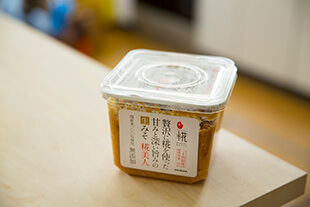
<Plus Koji Additive-Free Koji Bijin>
A popular item in the Plus Koji series, this additive-free miso is made with 100% domestically grown Japanese rice and generous amounts of rice koji. It lets you enjoy the natural sweetness of miso and its rich umami notes. Click here for details