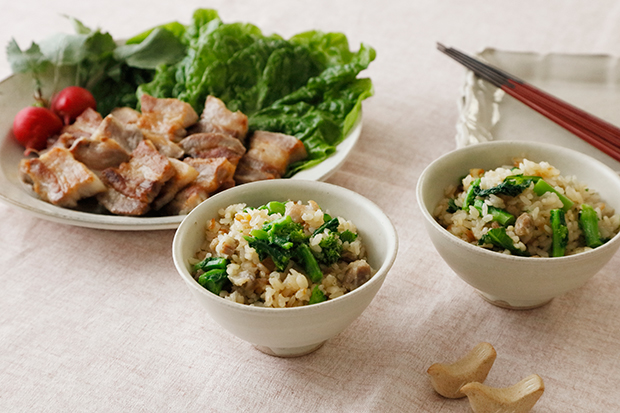
Salted pork: A fantastic meal-prep ingredient for your daily meals.
Salted pork has gained the spotlight lately as a delicious way to make pork keep longer. Many skilled cooks regard it as a go-to meal-prep meat. Confectionery and culinary expert Morisaki Mayuka is one of them.
“Whenever I buy a slab of pork at a good price, I salt it. That makes the pork taste delicious and keep longer, yet it’s dead easy to do. Above all, salted pork can be adapted for all kinds of dishes, which makes it really handy to have in the fridge,” says Mayuka. Because it’s so straightforward — the only seasoning required is salt — it can be used in just about any cuisine: Japanese, Western, Chinese, you name it. That’s the beauty of it. And there are countless ways to enjoy it depending on how you slice it.
“The simplest way to serve it is by boiling the entire slab and then slicing it. I’ll often grill it after I slice it and serve it samgyeopsal-style wrapped in leafy greens. Or I’ll dice it and cook it with rice or use it as a topping on noodles, or chop it into small pieces and add it to a stir-fry. Even the liquid the pork has been boiled in can be used as stock for soup. Salted pork really is incredibly versatile.”
If you’ve already decided what you’re going to make with your pork, Mayuka suggests adding herbs, spices, or other ingredients of your choice to the coarse salt you use to cure it. Making pot-au-feu? Add rosemary and thyme. Making buta no kakuni simmered pork? Add ginger. Because salted pork can be adapted to whatever comes to mind, it makes a big difference to your everyday meal prep. If you’ve never tried making it before, now’s the time!
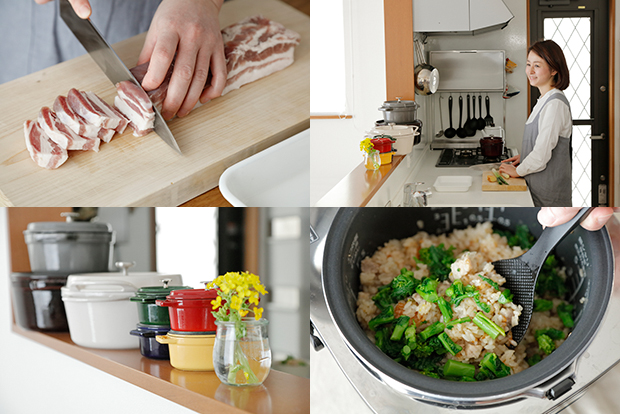

Three great things about salted pork according to Morisaki Mayuka!
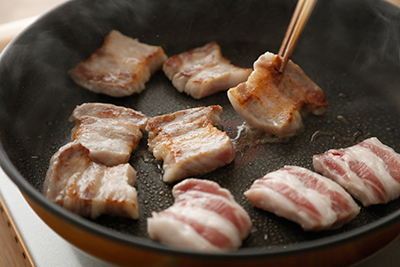
(1) It tastes considerably better than regular pork.
When pork is salted, it matures over time. It develops more umami and becomes firmer, enhancing the flavor. Simply cut it into easy-to-eat slices, cook it golden brown on both sides, and garnish it with your favorite leaf greens, and you have a wonderful treat!
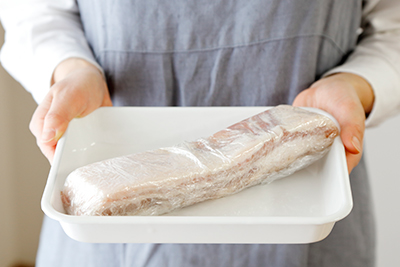
(2) It keeps longer.
Another great thing about salted pork is that it keeps longer than it would otherwise. It can be kept in the fridge for about a week, so you can slice off just as much as you’re going to use and salt the rest. The pork will continue releasing moisture until the third day, so replace the plastic wrap with clean wrap once a day.
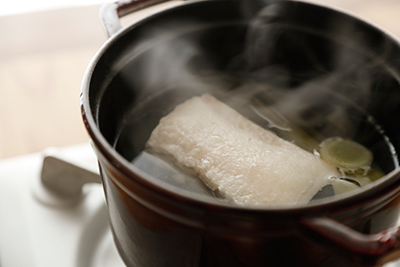
(3) It can be adapted for various dishes.
Salted pork is a real lifesaver. It can be used in all kinds of dishes, whether Japanese, Western, or Chinese. Boil it in a block. Cut it into slices and grill. Cook it with rice or add it to a stir-fry. And don’t forget the liquid it’s boiled in either, which becomes infused with the umami of the pork. Use it as stock for soup or broth for udon or ramen.
Basic technique for making salted pork
Once you have a block of pork, it’s a good idea to salt it while it’s still fresh. It starts to taste considerably saltier on the third day after being cured, so lightly rinse it and wipe dry before cooking. Salted pork can be made with either pork belly, which is highly versatile, or with pork collar.
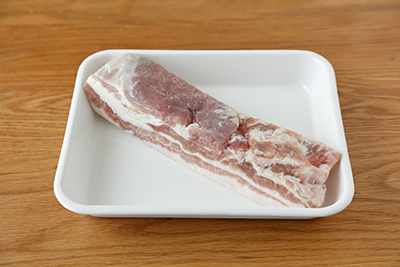
[Ingredients for an easy-to-prepare batch]
450–500 g pork belly (in a block)
1 tbsp. coarse salt*
*3–4% of the pork’s weight.
[Instructions]
【1】Pat the pork dry with a paper towel, then rub all over with coarse salt.
【2】Wrap in plastic wrap so that no air gets in, then let sit at least overnight in the fridge.
Keeps in the fridge for a week. It will continue to release moisture for the first three days, so it’s a good idea to replace the plastic wrap during storage.
Delicious variations
Variation 1: Instead of 1 tablespoon of coarse salt, use 2 tablespoons of shio koji (salted rice malt).
Variation 2: Add your favorite spices and herbs to the coarse salt — coarse-ground black pepper, rosemary, thyme, ground Japanese pepper, etc.
<Rice with salted pork and nanohana greens>
A filling rice dish made with cubes of salted pork. It combines salted pork with shoyu koji, both of which are bursting with umami goodness, creating a delicious meal with a minimum of seasonings. The trick is to mix in the fresh nanohana greens after the rice is cooked: they add a nice dash of color.
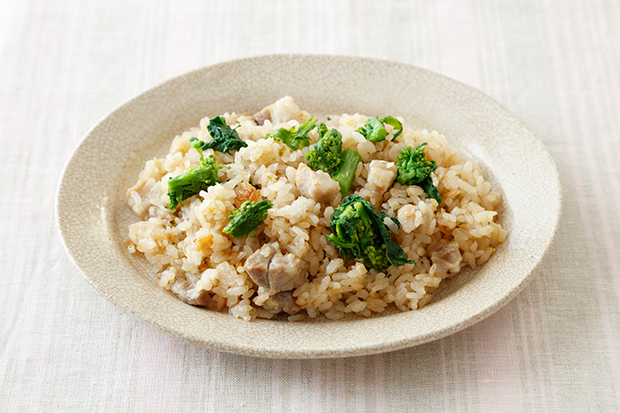
[Ingredients for an easy-to-prepare batch]
150 g salted pork
2 go (approx. 360 ml) uncooked rice
1 naganegi long onion
1 knob ginger
½ bunch nanohana greens
(Flavoring ingredients)
2 tbsp. shoyu koji (rice malt fermented with soy sauce)
1 tbsp. sake
Oil, as needed
Pinch of salt
[Instructions]
【1】Wash the rice, transfer to a colander, and let sit for at least 30 minutes. Dice the salted pork into 1 cm cubes. Mince the naganegi long onion and ginger.
【2】Grease and heat a frying pan, then stir-fry the naganegi and ginger over low heat. Once fragrant, add the pork and stir-fry over medium heat. Remove once golden-brown.
【3】Place the rice, 360 cc of water, and the flavoring ingredients in the rice cooker and give them a mix. Spread the ingredients from Step 2 on top and cook immediately.
【4】As the rice is cooking, boil the nanohana greens in salted water, then remove to a colander. Once they cool slightly, squeeze out the moisture and cut to 2 cm lengths.
【5】Once the rice is cooked, taste and adjust the flavor with salt. Add the nanohana greens and give everything a quick mix, then serve.
●The featured shoyu koji
<Plus Koji Shoyu Koji>
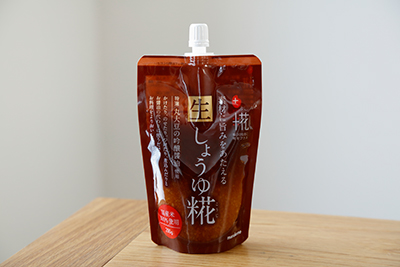
A natural tasting condiment made from koji produced with Japanese rice and ginjo soy sauce made from whole soybeans. Use instead of your regular soy sauce for sophisticated umami flavor and sweetness that will elevate your cooking.
Plus Koji Shoyu Koji
<Amazake tantan noodles with salted pork>
The soup in which these noodles are served is made using cooking liquid infused with the umami of salted pork. Combining amazake, doubanjiang, miso, and soy sauce, it has a wonderfully complex flavor. It’s so good, in fact, that you’ll want to down it all! The noodles are topped with filling chunks of salted and boiled pork, making for a most satisfying dish.
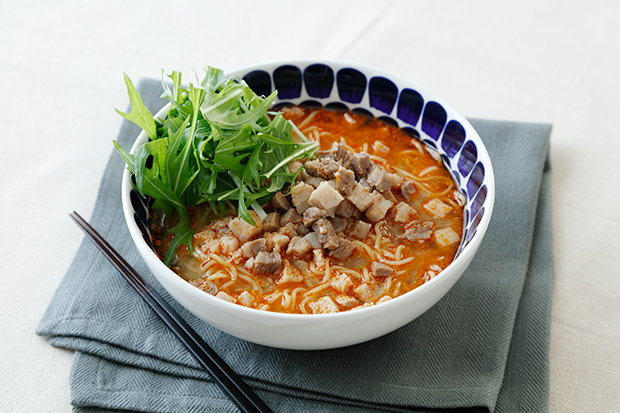
[Ingredients for 2 servings]
200 g salted pork
2 portions Chinese wheat noodles
1 naganegi long onion (the green part)
1 knob ginger
1 clove garlic
1 bunch mizuna
½ tbsp. ea. sesame oil and doubanjiang (chili bean paste)
(Additional ingredients)
200 cc koji amazake
½ tbsp. ea. soy sauce and blended miso
2 tbsp. ground white sesame seeds
[Instructions]
【1】Cut the ginger into thin slices and peel and crush the garlic. Chop the mizuna to 4 cm lengths.
【2】Place the salted pork, neganegi long onions, ginger, and garlic in a pan with 800 cc of water and heat. Once the water comes to a boil, turn the heat to low and let boil for about 40 minutes.
【3】Pierce the pork skin with a bamboo skewer. Once soft enough for the skewer to pass through easily, place a colander and two paper towels on a bowl, then strain the ingredients from Step 2. Reserve 500 cc of the cooking liquid. (If the fat bothers you, skim off the white blobs that rise to the surface once the liquid cools.)
【4】 Once the boiled pork has cooled slightly, dice it into 5 mm cubes. Heat the sesame oil in a frying pan and quickly stir-fry the pork so that the oil coats it. Add the doubanjiang and continue to stir-fry until fragrant. Now add the cooking liquid reserved in Step 3 and the additional ingredients and mix together. Bring to the boil.
【5】In a separate pan, bring a generous amount of water to a boil, then cook the noodles as indicated on the package. Drain and transfer to a bowl. Add the soup from Step 4 and top with the mizuna.
●The featured amazake
<Plus Koji Koji-Amazake LL 1000 ml>
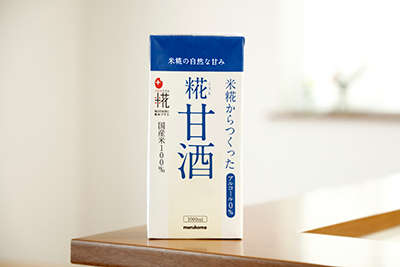
Undiluted amazake that tastes delicious even drunk on its own. The enzymes in the rice and rice koji give it a natural sweetness by breaking down starch. Containing 0% alcohol, it’s safe even for small children to drink and bursting with nutrients. Available in both a large-sized 1000 ml carton and a 125 ml single-serve size.
Plus Koji Koji-Amazake LL 1000 ml