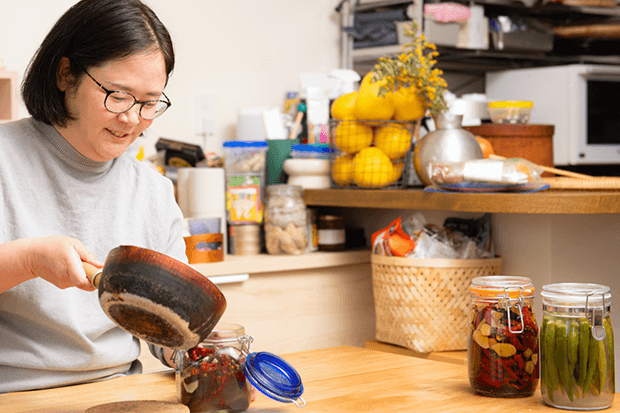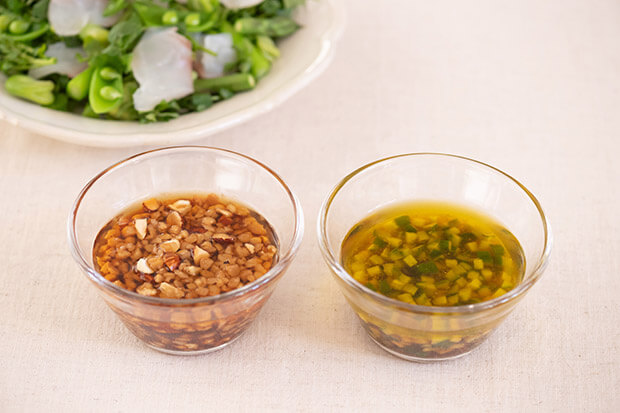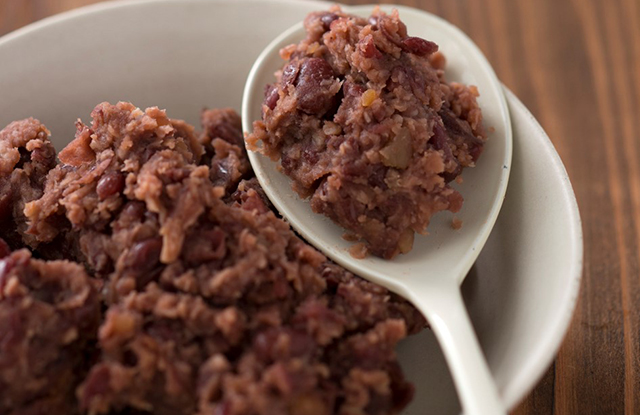
Aemono is a traditional Japanese food preparation technique in which pre-prepped ingredients are dressed in a seasoning such as sesame seeds, tofu, or miso. Such “dressed dishes” — which is what aemono literally means — have long been an indispensable part of Japanese cuisine. They’re also among the staples of the repertoire of culinary expert Nakagawa Tama, whose daily meals consist almost exclusively of Japanese dishes.
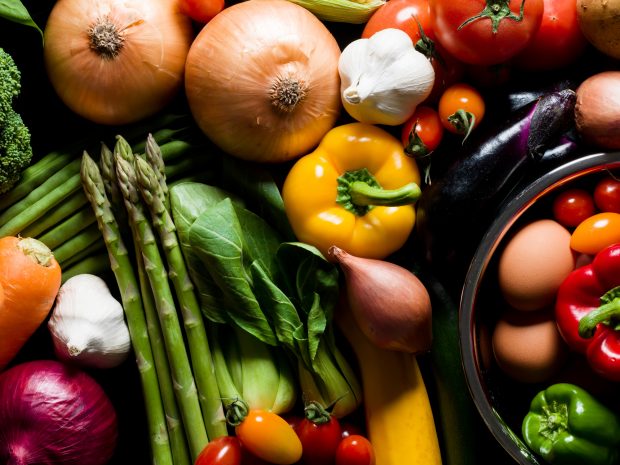
“At our home, aemono isn’t served in small bowls but heaped up on a large dish in the middle for the whole family to share. A single aemono made with seasonal vegetables brings the mood of the changing seasons to the dining table. Seasonal vegetables are high in nutrition, plus they have a rich, fresh, juicy flavor. They make a delicious enough aemono on their own; but add some strips of boiled chicken tenderloin, say, and you have a dish filling enough to play a starring role in your meal. It may not quite be the main dish, but it certainly makes a most enjoyable side.”
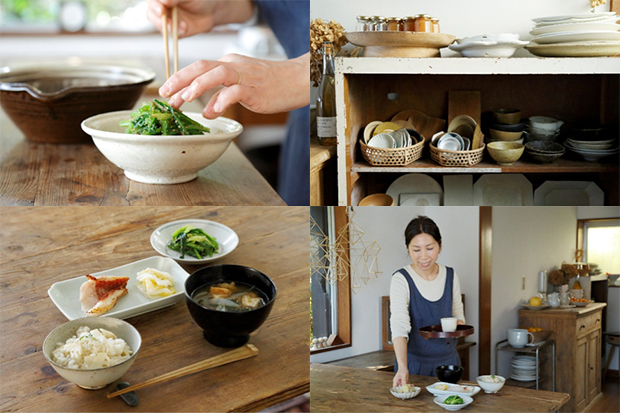

Making aemono draws on several basic culinary techniques.
Making aemono involves boiling, cutting, and dressing. These are all basic culinary techniques, but precisely because they’re so simple, they affect the way the finished dish turns out all the more. The most common way to botch aemono is to make it too soggy. “Be sure to squeeze all the moisture from the ingredients before dressing them. Another key to avoiding sogginess is not to overboil the ingredients or run them in too much cold water. Leaf vegetables in particular become soft and mushy when you overboil them and retain too much moisture. The heat will continue to penetrate even after they’re taken out of the boiling water, so be methodical: have a colander and cold water at hand.”
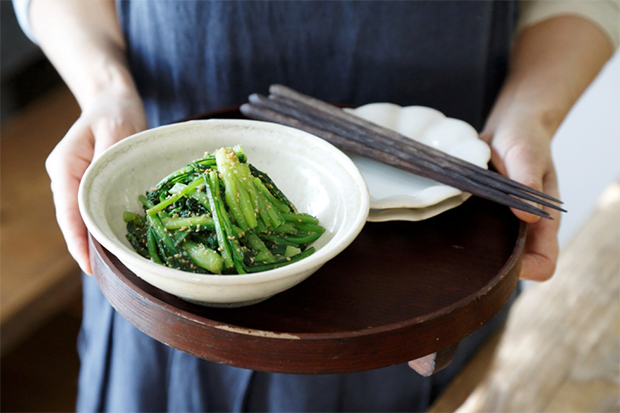
Here Tama imparts the basics of making aemono, taking as an example one common form of the dish: komatsuna no goma-ae or Japanese mustard spinach dressed with sesame seeds. She also shares several seasonal aemono recipes. A little extra effort is all it takes to turn your boring everyday aemono into a delicious treat.
●Komatsuna no goma-ae: mustard spinach dressed with sesame seeds
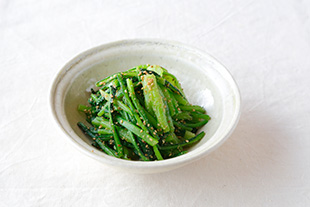
Ingredients for 2 servings
1 bunch komatsuna (Japanese mustard spinach)
Enough water to half submerge the komatsuna (1.5–2 liters)
1½–2 tsp. salt
1 tbsp. toasted white sesame seeds
Seasoning ingredients
1 tsp. usukuchi (“light”) soy sauce, or if unavailable, koikuchi (“dark”) soy sauce
1 tsp. cane sugar
Instructions
【1】Wash off the dirt between the komatsuna stalks. If difficult to remove, separate the stalks before washing.
【2】Pour the water in the pan and heat over medium heat. Once it comes to the boil, add the salt and stir in. Submerge the komatsuna stalks in the water and boil.
【3】After 30 seconds, put the leaves in as well and boil for a further 20 seconds, then remove into a colander. Quickly dip in cold water, then spread out on the colander to cool.
【4】Coarsely grind the sesame seeds in a suribachi (pottery mortar). Next add the seasoning ingredients and mix in well.
【5】Once the komatsuna cools, thoroughly squeeze out the moisture and cut into 4–5 cm bite-sized pieces. Squeeze out the moisture once more, then add to the ingredients from Step 4 and toss well.
<Six tips for making this aemono taste great>
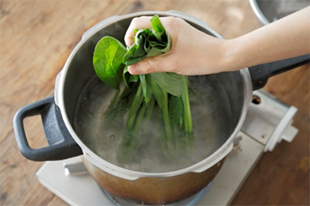
Put the komatsuna stalks in the boiling water first.
With leaf vegetables like komatsuna, boil the stalks and leaves for different lengths of time. Using a large pan, boil enough water to half submerge the komatsuna, and put the stalks in the water first, holding the leaves in your hand. Be careful not to overboil them!
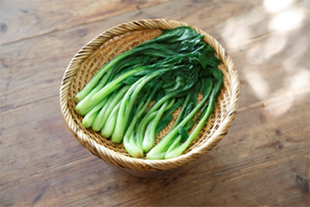
Spread the stalks out on a colander to let them cool.
The heat will continue to penetrate the komatsuna even after it’s taken out of the boiling water. After dipping it in cold water, therefore, spread it out flat on a colander to let it cool. Space the stalks out so they’re not on top of each other. That way they’ll cool faster, and you’ll prevent the heat from penetrating further.
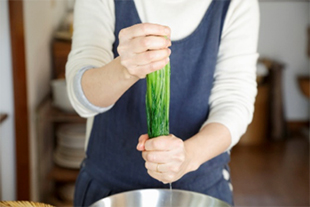
Squeeze out all the moisture.
One reason that aemono turns out soggy is failing to squeeze all the excess moisture from the boiled ingredients. Squeeze the komatsuna with both hands before cutting it.
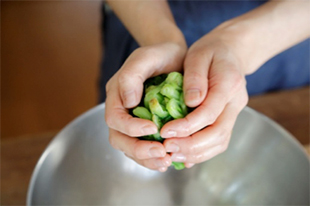
Squeeze out the moisture again after cutting.
You may think you’ve wrung out the komatsuna enough, but it will still release plenty of water when you cut it. Squeeze it out once more after cutting it into bite-sized pieces.
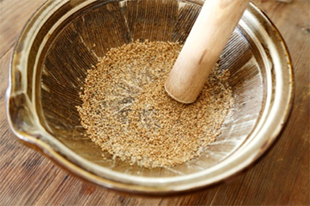
Only partially grind the sesame seeds so they retain their crunchiness.
Don’t grind the sesame seeds for the dressing too finely. They’re best partially ground. Not only do they retain their crunchiness that way; they also cling better to the komatsuna. For a richer aroma, quickly toast the seeds in a small pan before grinding.
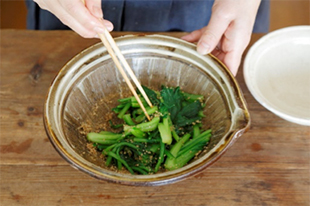
Dress the komatsuna immediately before eating.
Once dressed, the komatsuna will release water and become soggy, so avoid dressing it until immediately before eating. Make sure it’s cooled completely first. If using in a bento lunch box, sprinkle some katsuobushi (dried skipjack tuna flakes) on top to absorb the moisture.
Nakagawa Tama’s favorite aemono recipes
●Jagaimo no ume-ae: Potato dressed with pickled ume
A delightfully crunchy potato treat. It fills your mouth with the refreshingly sour taste of umeboshi (pickled ume), making it the perfect side to a substantial main dish. Add young Japanese pepper leaves to give it an aroma of spring.
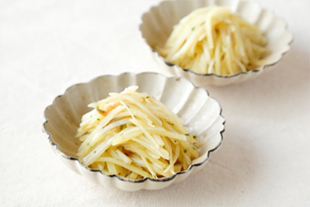
Ingredients for 2 servings
2 potatoes
1 umeboshi (pickled ume fruit)
500 cc water
½ tsp. salt
10 young Japanese pepper leaves (kinome)
1 tsp. usukuchi (“light”) soy sauce
Instructions
【1】Peel and julienne the potatoes. Soak in water for 5 minutes and drain.
【2】Pour the water in the pan and heat over medium heat. Once it comes to the boil, add the salt and stir in. Quickly blanch the potatoes, then remove into a colander and drain.
【3】Pit the umeboshi and pound the flesh into a paste. Chop the Japanese pepper leaves and thoroughly mix into the soy sauce. Toss with the ingredients from Step 2.
<Helpful tips>
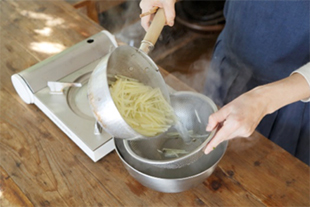
Blanch the potatoes just enough that they soften slightly, so they retain their crunchiness. For a crunchier texture, use a chewy variety of potato such as May Queen or new potatoes rather than the Danshaku potatoes common in Japan.
●Haru no shira-ae: Spring vegetables dressed with tofu
An unsweet version of shira-ae — mashed tofu salad — with a dollop of wasabi for an extra twist. The smooth, creamy tofu dressing is almost like a dip. Once you’ve mastered how to make it, you can enjoy it with different seasonal vegetables throughout the year.
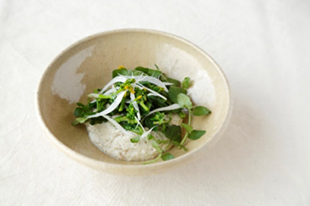
Ingredients for 2 servings
½ bunch nanohana greens
Early-season onions (sliced) to taste
Watercress to taste
500 cc water
½ tsp. salt
½ block momen (firm) tofu
Seasoning ingredients
1 tbsp. toasted and ground sesame seeds (white)
½ tbsp. usukuchi (“light”) soy sauce
½ tsp. wasabi
Pinch of salt
Instructions
【1】Pour the water in the pan and heat over medium heat. Once it comes to the boil, add the salt and stir in. Submerge the nanohana stalks in the water and boil.
【2】After 30 seconds, put the flowers in as well and boil for a further 30 seconds, then remove into a colander. Quickly dip in cold water, then spread out on the colander to cool. Squeeze out the moisture, cut into bite-size pieces, and squeeze out the moisture again.
【3】Put the tofu into a colander and mash it by hand. Drain thoroughly, then knead well in a suribachi (pottery mortar) until smooth.
【4】Add the seasoning ingredients and mix in well. Dish up and top with the nanohana greens from Step 2, the early-season onions, and the watercress (cut to bite size).
<Helpful tips>
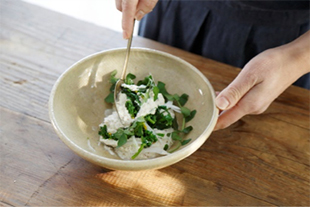
It’s a good idea to serve the vegetables on top of the mashed tofu and only mix everything together when you actually eat. Let the colors of the vegetables delight the eye. Presented on a large plate, this aemono makes a splendid treat for guests.