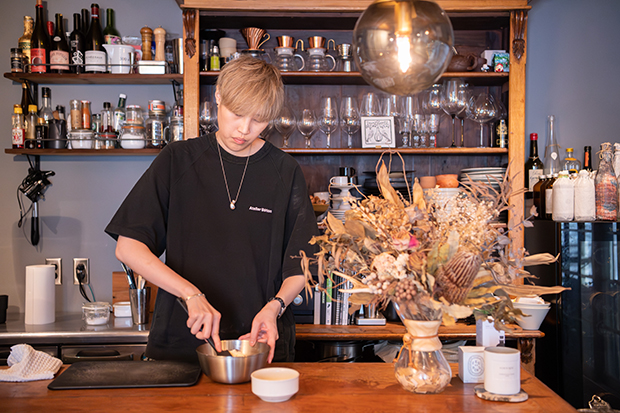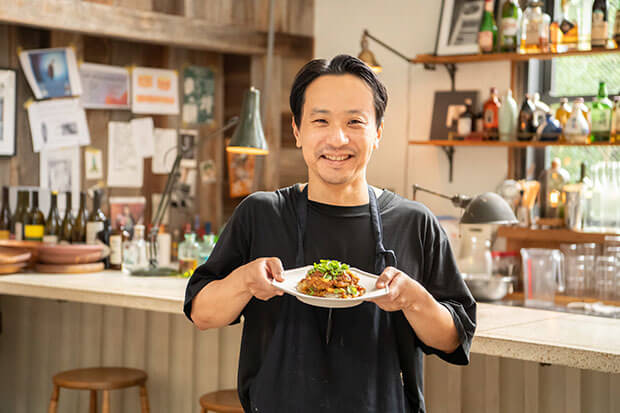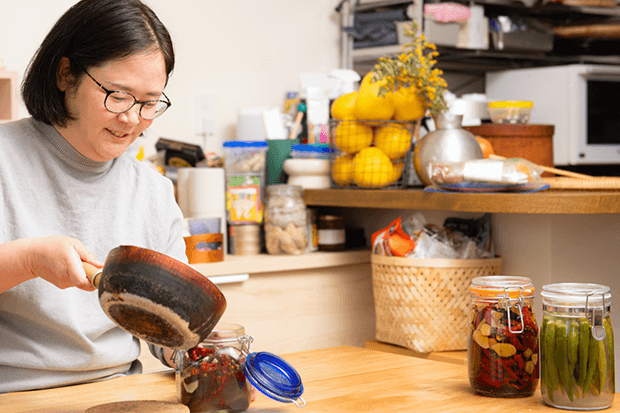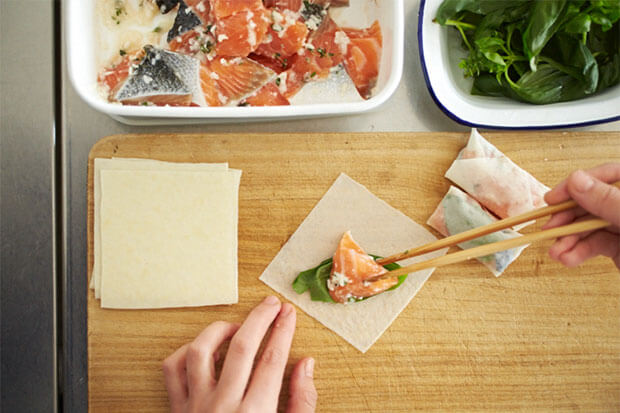
Minai Kinuko pursues a busy culinary career while raising her five-year-old daughter.
“Making meals is a lot easier now that my daughter is older and can eat the same foods as grown-ups. Our daily meals consist mainly of Japanese food. We’re Japanese after all, and I want to teach her what real dashi, or Japanese stock, tastes like. Besides, dishes served with simple seasonings like good old-fashioned miso and soy sauce really do taste good.”
Because of the simplicity of the seasonings she uses, Kinuko believes in the importance of prepping ingredients in advance. She removes meat and fish from the package on the day she buys them. Then she wipes off any excess moisture with a paper towel and lightly salts them.
“Simply salting them makes all the difference to the flavor and keeps them moister. If you leave them in the package, they lose moisture by the next day and change color. Salting makes them keep longer. Meat and fish preserve their taste for longer if you wrap them tightly in plastic wrap after salting them so they don’t come in contact with air.”


Enrich your daily meals by prepping ingredients that can be used across different dishes.
If you’ve already decided what to make and for what purpose, completing the appropriate preparations in advance ensures that the task of making the meal goes smoothly.
“I’ll marinate a thick slab of pork, say, in miso. I’ll marinate fish in salted koji. I’ll also pre-season them with soy sauce, garlic, or herbs. As long as they’re properly seasoned, you can simply keep them in a clean storage container. No need to use plastic wrap. Take pork marinated in miso, for example. I can cut it into bite-size pieces and stir-fry it with vegetables for my little girl, and I can use it as is to make a filling sauté for my meat-loving husband. Prepping ingredients that can be used across different dishes allows you to accommodate each family member’s wants.”
Here Kinuko shares two advance prep techniques — one for meat and one for fish — along with a recipe incorporating each. Why not take advantage of these handy menu suggestions to bring smiles to your family’s dining table, even on the busiest days?
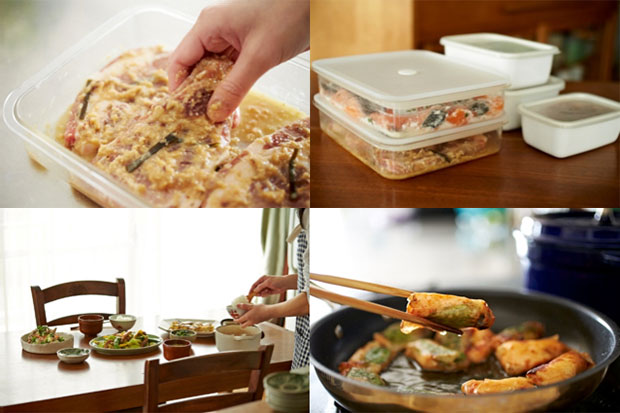
Minai Kinuko’s advance prep instructions & recipe for meat
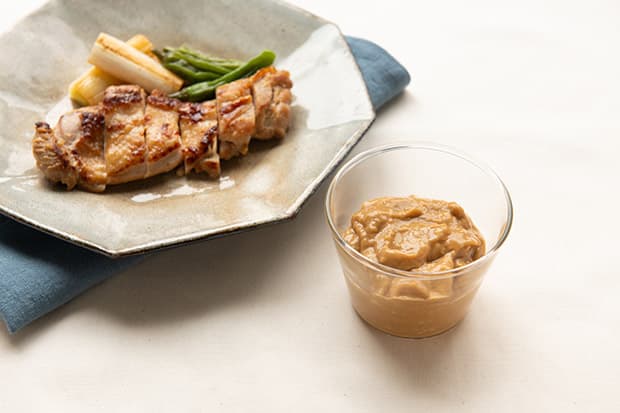
<Pork marinated in sweet miso>
This pork marinated in a miso-based sauce is tender and bursting with umami goodness. You can cook it as is to make a main dish that goes wonderfully with white rice!
Ingredients for an easy-to-prepare batch
3 120 g pork chops for tonkatsu breaded pork cutlet
1 5×5 cm sheet of kombu (dried kelp) for dashi (stock)
Seasoning ingredients
50 g miso (Plus Koji Additive-Free Koji Bijin)
1 tbsp. ea. sake, soy sauce, mirin (sweet cooking sake), and sugar
30 g grated apple
½ tbsp. grated ginger
Instructions
【1】Score the pork. Quickly wet the kombu to soften it, then cut into thin strips.
【2】In a storage container, combine the pork with the seasoning ingredients and marinate for 10 minutes to overnight.
Keeps for 4–5 days in the fridge.
●Serving suggestions
Miso burns easily, so when eating the pork as is, the trick is to place it in a greased frying pan and slowly cook it over low heat. It also tastes great coated with flour or potato starch and deep-fried until crisp.
●Next, a recipe made with pork marinated in sweet miso:
<Stir-fried vegetables with pork marinated in miso>
For a nutritious, filling dish, slice the marinated pork into thin strips and stir-fry with vegetables. Because the pork is already seasoned, all you need is a little salt to perfect the flavor. A cinch to prepare!
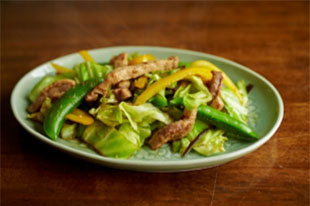
Ingredients for 2 servings
1–2 pork chops marinated in sweet miso
3 cabbage leaves
½ yellow bell pepper
6 pods of snap peas
1 tsp. vegetable oil
Pinch of salt
Instructions
【1】Slice the pork into 1.5 cm widths. Cut the cabbage into bite-size pieces and the bell pepper into thin strips. Remove the stems and strings from the snap peas.
【2】Heat oil in a frying pan over medium heat. Add the marinated pork and stir-fry. Add the vegetables and continue stir-frying. Pour 1–2 tbsp. water around the pan and adjust the flavor with salt.
● The miso used for advance prep:
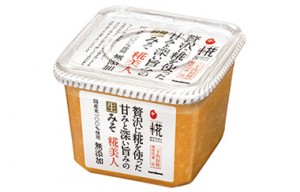
<Plus Koji Additive-Free Koji Bijin>
A popular item in the Plus Koji series, this additive-free miso is made with 100% domestically grown Japanese rice and generous amounts of rice koji. It lets you enjoy the natural sweetness of miso and its rich umami notes.Plus Koji Additive-Free Koji Bijin
Minai Kinuko’s advance prep instructions & recipe for fish
<Salmon marinated in salted koji with herbs>
Salted koji, a seasoning that brings out the ingredients’ flavor, and thyme, which imparts an elegant aroma, are here combined with unsalted salmon. The beauty of this prepped salmon is its versatility: it goes equally well in Japanese and Western dishes.
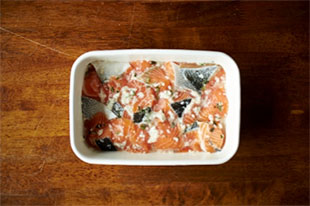
Ingredients for an easy-to-prepare batch
4 slices unsalted salmon
2 sprigs thyme
Seasoning ingredients
3 tbsp. Plus Koji Shio Koji
½ tsp. grated garlic
Pinch of pepper
Instructions
【1】Cut the salmon into bite-size pieces. Remove the leaves of the thyme.
【2】Combine all the ingredients in a storage container and marinate for 10 minutes to overnight.
Keeps for 3–4 days in the fridge.
●Serving suggestions
Sauté this salmon as is in the frying pan; fry it in flour, egg, and breadcrumbs; or poach it acqua pazza-style with seafood. Another great idea: put it on pizza dough and bake.
●Next, a recipe made with salmon marinated in salted koji with herbs:
<Fried salmon rolls>
This recipe is super simple. All you do is wrap the prepped salmon in spring roll wrappers and deep-fry. The spicy, refreshing aroma of basil adds a nice twist.
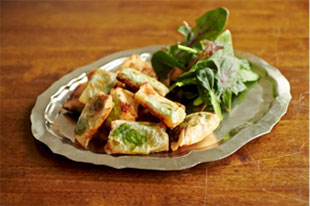
Ingredients for an easy-to-prepare batch
12 bite-size slices of salmon marinated in salted koji with herbs
3 spring roll wrappers
12 basil leaves
Deep frying oil as require
Baby greens to taste
Instructions
【1】Cut each spring roll wrapper into quarters.
【2】Place a basil leaf and a slice of salmon on one of the wrappers and wrap. Repeat for the rest.
【3】Heat 2–3 cm of frying oil over medium heat in a frying pan. Add the rolls with the seam side facing down and fry until both sides are golden-brown. Dish up with baby greens.
●The shio koji used for pre-preparation:
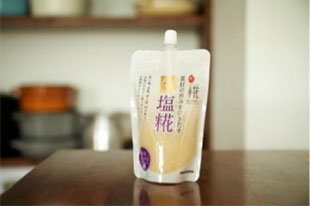
<Plus Koji Shio Koji>
A fresh shio koji (salted rice malt) that brings out the best in the ingredients. This all-purpose seasoning can be used in place of salt in nimono (simmered dishes), aemono (dressed dishes), and stir-fries. With its natural umami flavor, it takes delicious to a new level! Plus Koji Shio Koji