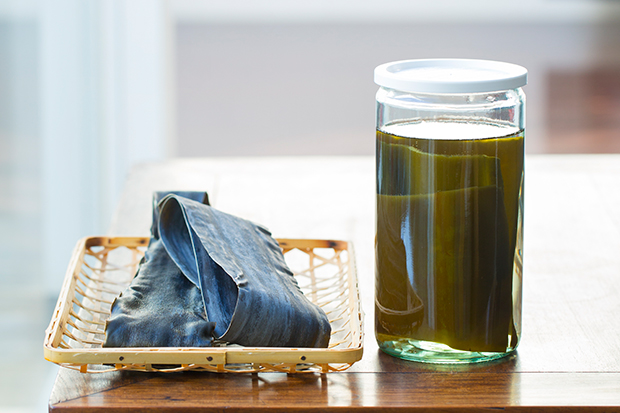
Dashi, or stock, is the cornerstone of Japanese cuisine. But you might find it a bother to prepare every day when you’re constantly on the run. In that case, you might want to try cold-brewed dashi. It’s so easy to make. No need to prep ingredients in advance or keep adjusting the heat. All you do is soak kombu (kelp) in cold water. Yet cold-brewed dashi has a purity and depth of flavor that the store-bought variety lacks.
“I refer to cold-brewed kombu dashi as kombu-sui (kelp water). Making dashi by brewing it cold rather than using hot water brings out much more umami.” So says culinary expert Yamawaki Riko.
“Kombu-sui is rich in the umami compound glutamic acid, so it delivers excellent flavor even with less salt and oil. Besides Japanese foods, it can also be used in Western, Chinese, and ethnic dishes, depending on the ingredients you combine it with. The left-over kombu can be added to make-ahead meals or nimono (simmered dishes) or used as a bed for fish simmered in broth. Kombu-sui is a godsend in so many ways, both for your meal planning and for your health.”
Here we ask Riko how to make great-tasting kombu-sui. She also shares some of her own original recipes featuring it.
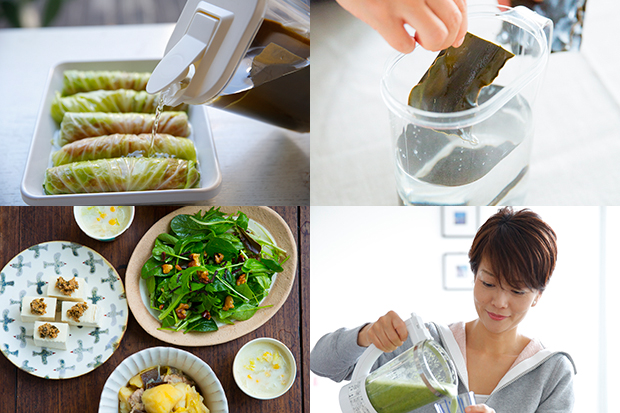

<The three keys to making great-tasting kombu-sui>
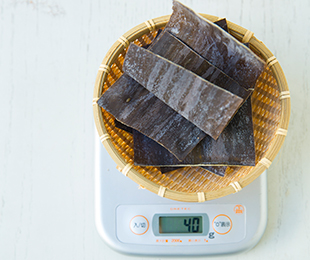
(1) Don’t skimp on the kombu. Prepare as much as required.
To ensure the kombu-sui tastes good, it’s important to use the right amount of kombu for the amount of water. Until you internalize the process, remember how much kombu is called for and weigh it.
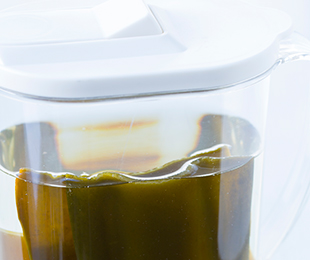
(2) Let the kombu soak at least overnight.
Be sure to soak the kombu overnight (for at least 8 hours) to extract enough umami. If you prepare the dashi after dinner, you can use it the next morning.
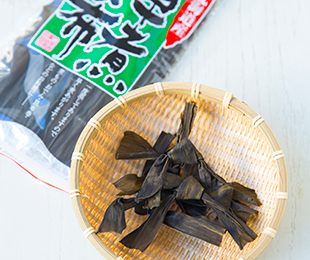
(3) Be sure to use kombu that’s specifically for dashi.
The quick-cooking kombu used in nimono and tsukudani isn’t well suited to making dashi. Use kombu that’s specifically designed for dashi. It doesn’t matter what variety it is: Rausu kombu, Rishiri kombu, Makombu, or whatever.
How to make kombu-sui that will transform your everyday meals
Kombu-sui is simple to make and has a straightforward taste. Keep a supply of it in the fridge, and you’ll be able to put together a great-tasting meal in no time, even on the busiest days. Here we share the recipes for your basic kombu-sui and for kombu and vegetable dashi, a variation on kombu-sui enhanced with the umami of vegetables. Why not incorporate both into your everyday cooking?
【Your basic kombu-sui】
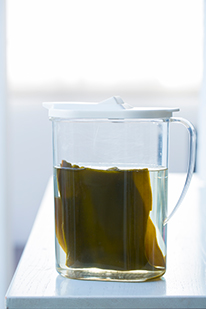
〔Ingredients for an easy-to-prepare batch〕
Approx. 40 g kombu (kelp) for dashi (2–3 15×7 cm strips)
1.5 liters water
[Preparation]
Quickly wipe off or rinse the surface of the kombu. Immerse in cold water and leave in the fridge for 8–15 hours. In winter, you can leave it in a cool spot instead.
[Storage]
Keeps in the fridge for 3 days. Both the left-over kombu and the kombu-sui can also be kept in the freezer.
【A variation on kombu-sui: Kombu and vegetable dashi】
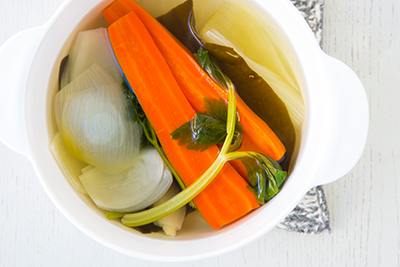
〔Ingredients for an easy-to-prepare batch〕
1–1.5 liters kombu-sui (kombu and all)
½–1 carrot
½ onion
½ celery
[Preparation]
Cut the carrot lengthwise into halves and peel the onion. Place all the ingredients in a pan and cook over very low heat for about 40 minutes. Remove the vegetables and kombu.
[Storage]
Keeps in the fridge for 3 days. The dashi can also be kept in the freezer
Yamawaki Riko’s favorite recipes made with kombu-sui
Using kombu-sui gives familiar home dishes a new and exciting flavor. Here are three of Riko’s kombu-sui recipes: for a main dish to accompany rice, a side dish, and a pasta.
<Cabbage rolls>
Despite being seasoned with nothing but kombu-sui, soy sauce, and mirin, these cabbage rolls are bursting with umami thanks to the magic of kombu-sui. They’re rolled into long cylinders, which halves the work involved in making them — another reason they get top marks. Dish them up after slicing them in two, or let everyone cut their own.
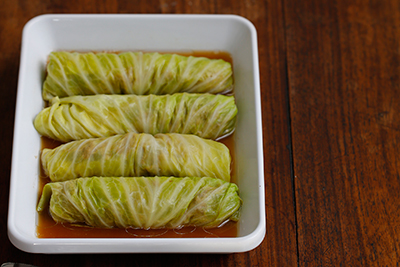
〔Ingredients for 4–5 servings〕
300 g mixed ground beef and pork
5 outer leaves of cabbage
1 egg
1 tsp. ea. salt and potato starch
(Seasoning ingredients)
¾ cup kombu-sui
1 tsp. soy sauce
1 tbsp. mirin (sweet cooking sake) or regular sake
〔Instructions〕
【1】Add the salt to the ground meat and knead well until sticky. Add the egg and potato starch and mix in well. Soak the cabbage leaves in boiling water for 5–6 minutes after removing the stem end.
【2】Divide the meat filling into 5 equal portions and shape each into a cylinder. Wrap each cylinder in a cabbage leaf (wiping off any moisture first). Make each roll about 15 cm long.
【3】Arrange the rolls in a heat-proof dish with the seam side facing down and pour over the seasoning ingredients. Wrap loosely in plastic wrap and microwave at 500 watts until heated through, about 10 minutes.
<Soymilk soup with napa cabbage and corn>
Soymilk soup warms body and soul, making it a welcome treat in the chilly months ahead. Napa cabbage is rich in the umami compound glutamic acid, and combining it with kombu-sui greatly boosts its umami. It also goes well with the flavor of cheese, creating a warm, comforting taste.
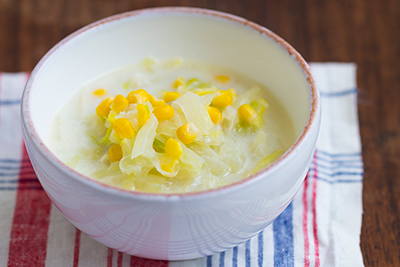
〔Ingredients for 2 servings〕
⅙ head napa cabbage
200 g whole kernel corn
1 cup kombu-sui
10 g butter
½ tsp. salt
Pinch of black pepper
½ cup soymilk
2 slices processed cheese
〔Instructions〕
【1】Chop the napa cabbage into 1 cm chunks.
【2】Place the butter in a pan and melt. Add the napa cabbage and corn and stir-fry. Salt and pepper and add the kombu-sui. Once it comes to the boil, cover with a lid and simmer until the napa cabbage becomes soft, about 15 minutes.
【3】Add the soymilk and turn the heat to low. Tear the cheese slices into pieces and add.
<Kombu and cheese penne>
An exquisite no-frills pasta dish in which umami plays the starring role. It features kombu and vegetable dashi — kombu-sui to which vegetables have been added. Boiling the pasta in this dashi lets it soak up the umami of the kombu and vegetables. The cooking liquid is then reused when tossing the pasta, further enhancing its umami.
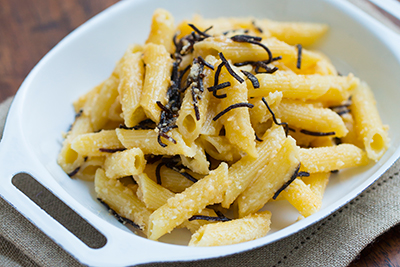
〔Ingredients for an easy-to-prepare batch〕
200 g penne or another short pasta
1½ cups kombu and vegetable dashi
(Additional ingredients)
15 g shio kombu (salted kelp)
50 g Parmigiano Reggiano
〔Instructions〕
【1】Place the pasta in a pan and add just enough kombu and vegetable dashi to cover it. Boil over medium heat.
【2】Boil the pasta for the time indicated on the package, making sure the dashi continues to just cover it. Reserve 3 tablespoons of the cooking liquid.
【3】 Place the boiled pasta, the reserved cooking liquid, and the additional ingredients in a bowl and toss well.
So there you have it — Yamawaki Riko’s kombu-sui recipes. Don’t let the fact that kombu-sui is a form of dashi scare you. The trick to working with it is simply to use it as you would water. Riko, for example, used boiled kombu-sui to make Japanese tea, or runs it through the blender with vegetables or fruits to make a smoothie.
Kombu-sui is an easy way to enrich your meals and make them healthier. Why not give it a try?