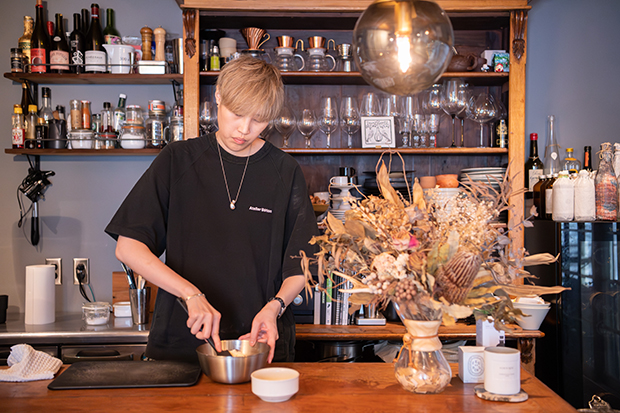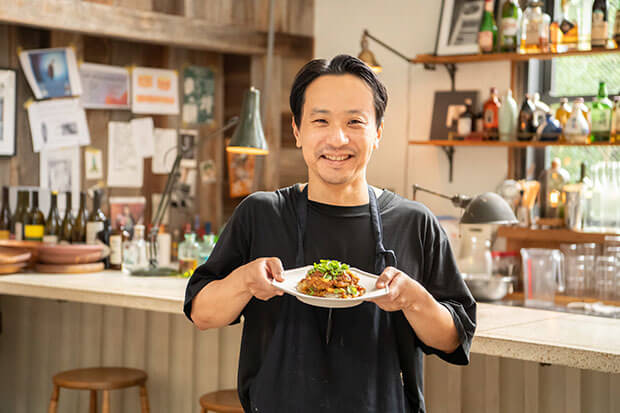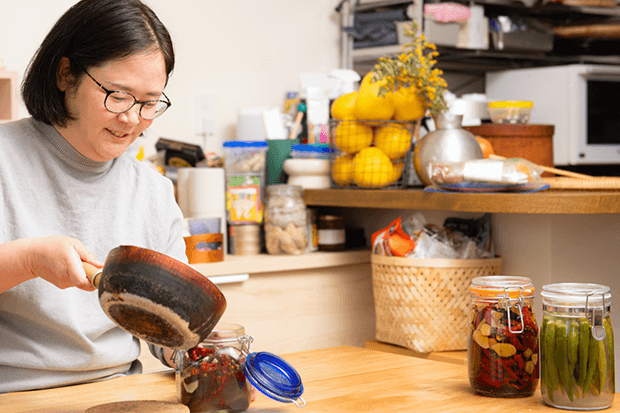
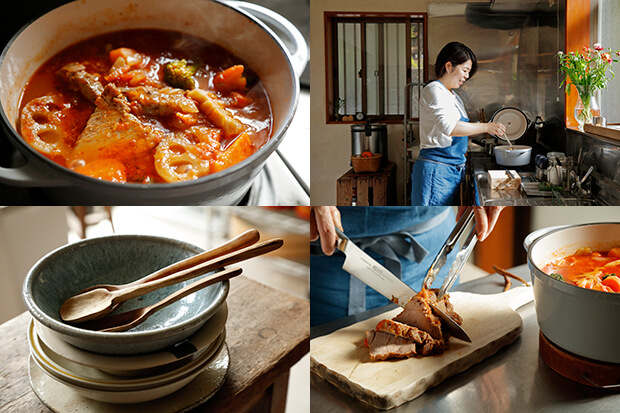
As winter arrives in full force, this is the season when you crave a steaming hot meal. Stews, especially, are a winter staple. They’re a smart choice in that they offer so many advantages. “I often make stews — a simple pot-au-feu, salted pork simmered with vegetables, chicken wings simmered with daikon. I don’t slap them together in a hurry when I’m busy with other things; I make them when I’ve got time to concentrate. And I make a huge batch. But while stews take time, they don’t actually involve that much effort. Another thing I love about stews is that once they cool, the flavor really comes together, so they’re delicious to eat the next day as well.” So says culinary expert Ebata Kumiko.
In essence, Kumiko’s stews combine ingredients that release umami with ingredients that soak it up. The umami drawn out during simmering infuses the other ingredients — and the broth — with plenty of flavor. Moreover, the simple seasoning of her stews makes them highly versatile. They can be used in a wide variety of dishes, just like a dashi bursting with umami goodness.
Here we ask Kumiko what makes stews such a smart choice. She also shares two of her favorite stew recipes, along with ideas for repurposing them.

Three reasons that make stew a smart choice
(1) Just leave it on the stove, and it will turn out delicious.
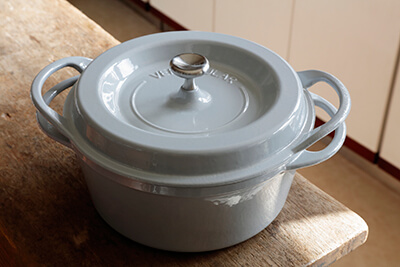
Heat and time are the two inputs that give a stew its flavor. Once you’ve put it on the stove, there’s nothing further to do. It will simmer away on its own until it tastes delicious. The best type of cookware to use for stew is a heavy pot that retains heat well and slowly but steadily heats the ingredients. Besides gradually drawing out the umami, a heavy pot also has the advantage of staying hot after you turn off the element, letting you cook with the residual heat.
(2) As long as it’s simply seasoned, it can be repurposed on the second and third day.
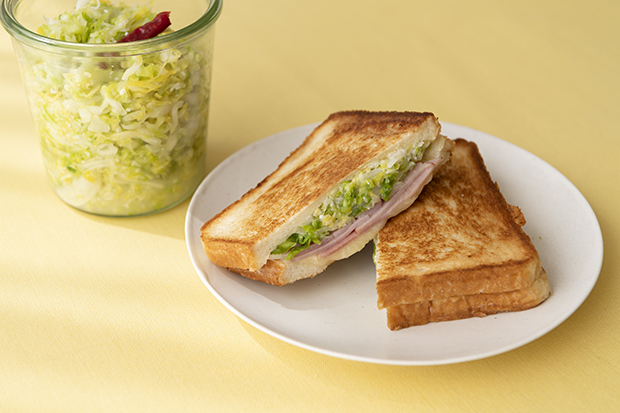
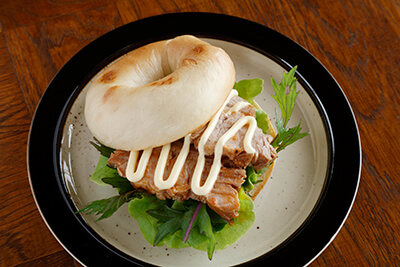
A stew tastes excellent as is, of course, but there’s also another great thing about it. As long as it’s seasoned simply, it can easily be repurposed. Because it’s already a finished dish, you can add other ingredients and seasonings to vary the flavor so it’s enjoyable until the end. You can even use it to make a scrumptious sandwich. Simply cut the pork or chicken into bite-sized pieces, then place it between two slices of bread with your favorite vegetables.
(3) Because it’s freezer-friendly, it helps with long-term meal planning.
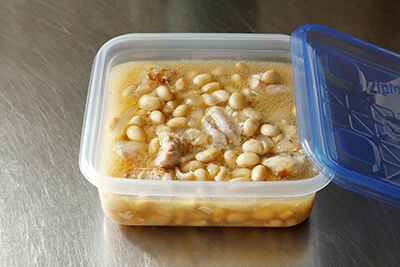
A well-stocked freezer helps with prepping meals on busy days. Stew can be kept in the freezer, so even if you’re pressed for time, all you have to do is heat it up, and presto! You have one more dish for your meal. When freezing stew, transfer it to a storage container with the broth to prevent the ingredients from drying out, and finish it up within two weeks. Before reheating, let it thaw in the fridge or at room temperature, then transfer it to a saucepan. Cutting large chunks into small pieces before freezing makes it easier to repurpose as, say, pasta sauce.
Ebata Kumiko’s super-versatile stew recipes
Here Kumiko shares her recipes for two classic stews — one tomato-based, the other salty-tasting — along with ways to repurpose them. Both stews bring out the ingredients’ natural flavors without using excess seasonings. Why not have a go at them yourself?
<Tomato stew with pork and chunky vegetables>
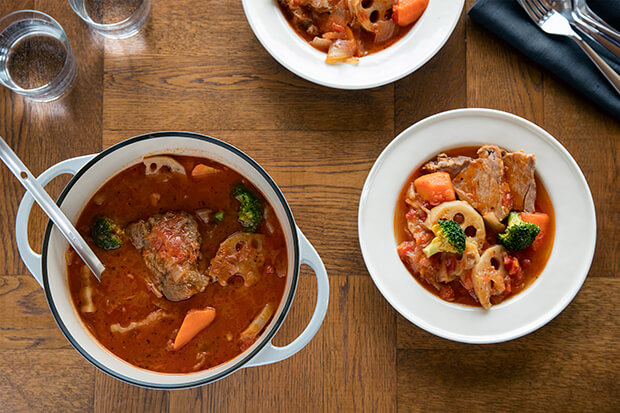
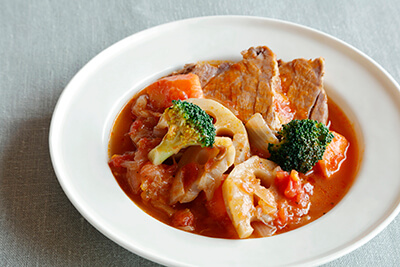
This stew is a real treat, bringing together the umami of pork, vegetables, and tomatoes on a single plate. The key is to simmer the pork in one piece and then cut it up when serving. That leaves the meat moist and juicy.
[Ingredients for 4–6 servings]
500–600 g pork collar (in a slab)
2 cloves garlic
1½ onions
1 section lotus root
2 small carrots
½ floret broccoli
2 tbsp. extra virgin olive oil
(Additional ingredients)
1 can (450g) whole tomatoes
50 cc white wine
1 bay leaf
½ cup water
½ tsp. dry oregano
2 tsp. sugar (to taste)
Salt and pepper as needed
[Instructions]
【1】Season the entire slab of pork well with salt and pepper. Crush the garlic and remove the germ. Cut the onions into 8 equal-sized wedges. Peel the lotus root and cut in half to a thickness of 1 cm. Peel the carrots and chop into large chunks. Separate the broccoli into smaller florets and boil until tender but firm.
【2】Place the olive oil and garlic in a pan and heat. Once the garlic turns fragrant, add the pork and brown.
【3】Add the onion, lotus root, and carrot and stir-fry until everything is coated with oil. Add the additional ingredients and just enough water to cover everything.
【4】Simmer the pork and vegetables until well done, about 50 minutes. Adjust the flavor with salt and pepper. (If excessively sour, add sugar for a hidden twist.) Finally, add the broccoli from Step 1.
【5】Cut the pork into bite-size pieces and dish up with the vegetables.
●The day after, enjoy:
<Shoyu koji udon stewed in tomatoes>
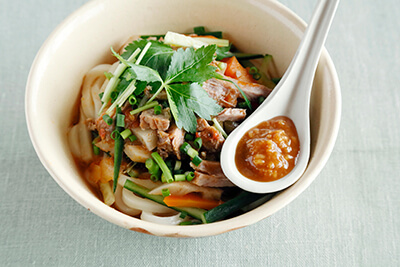
A quick twist is all it takes to turn this Western-style stew into a Japanese noodle dish! Tomatoes and shoyu koji — koji (rice malt) fermented with soy sauce— are both full of umami, and Kumiko gushes about what an exquisite combination they make. Dissolve the shoyu koji in the broth, adjusting the amount depending on how salty the broth is.
[Ingredients for 2 servings]
400 g tomato stew with pork and chunky vegetables (broth and all)
2 portions udon noodles
½ cucumber
2 konegi (young green onions)
Mitsuba (Japanese wild parsley), as needed
2–3 tbsp. shoyu koji
[Instructions]
【1】Slice the meat and vegetables in the tomato stew into thin, easy-to-eat strips. Reheat with the broth.
【2】Cut the cucumber into fine strips and the green onion into small slices. Cut the mitsuba to 2 cm lengths.
【3】Boil the udon as indicated on the package. Dish up, pour on the stew from Step 1, and sprinkle with the vegetables from Step 2. Finally, add the shoyu koji. Blend it in as you eat.
●The featured shoyu koji
<Plus Koji Shoyu Koji>
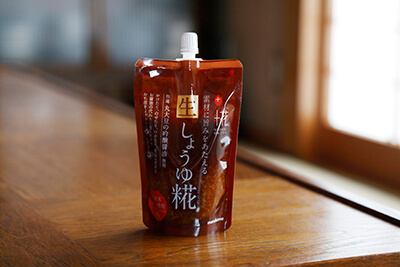
A natural tasting condiment made from koji produced with Japanese rice and ginjo soy sauce made from whole soybeans. Use instead of your regular soy sauce for sophisticated umami flavor and sweetness that will elevate your cooking.
Plus Koji Shoyu Koji
<Shio koji chicken and soybean stew>
The star of this stew is chicken marinated in shio koji (salted rice malt) to bring out the umami. And it’s seasoned with just salt and pepper. A rich flavor spreads across your palate with each bite, comforting body and soul. Also great with chickpeas in place of soybeans.
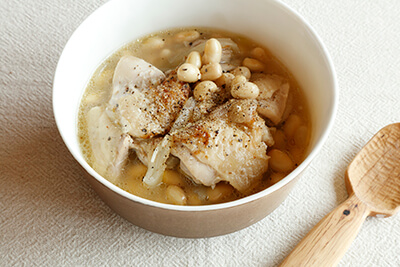
[Ingredients for 4 servings]
2 chicken thighs
2 tbsp. shio koji
½ onion
1 clove garlic
1 tbsp. extra virgin olive oil
50 cc white wine
(Additional ingredients)
300 g plain boiled soybeans
400 cc water
1 bay leaf
Salt, pepper, and coarse ground black pepper to taste
[Instructions]
【1】Cut the chicken into large bite-sized pieces and place in a plastic bag. Coat everything with shio koji and leave overnight in the fridge.
【2】Cut the onion into 5 mm slices. Crush the garlic, remove the germ, and cut into small slices.
【3】Coat a pan with the olive oil and heat. Place the chicken in the pan skin down. Brown the surface until golden, taking care not to burn it.
【4】Add the garlic and onion and stir-fry. Once soft, add the white wine and give a quick simmer while scraping the umami from the pan.
【5】Add the additional ingredients and simmer until the chicken is well done, about 15 minutes. Adjust the flavor with salt and pepper. Dish up and sprinkle with black pepper to finish.
●The featured shio koji
<Plus Koji Shio Koji>
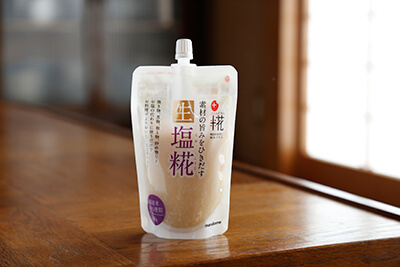
A fresh shio koji (salted rice malt) that brings out the best in the ingredients. This all-purpose seasoning can be used in place of salt in nimono (simmered dishes), aemono (dressed dishes), and stir-fries. With its natural umami flavor, it takes delicious to a new level!
Plus Koji Shio Koji
●The day after, enjoy:
<Gratin de pain with chicken and soybean stew>
A steaming hot gratin made with baguette slices infused with umami-rich broth! Heavy cream is added to the salty-tasting stew, giving it that distinctive umami flavor and richness that only dairy has. It also goes nicely with the fragrantly browned cheese.
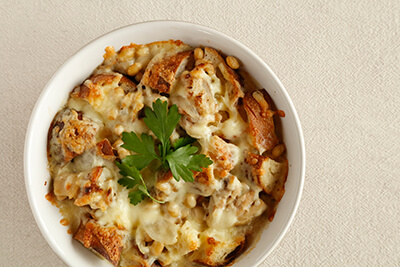
[Ingredients for 2 servings]
350g shio koji chicken and soybean stew (broth and all)
2 slices baguette
80 cc heavy cream
60 g shredded cheese
Salt, pepper, and Italian parsley to taste
[Instructions]
【1】Place the shio koji chicken and soybean stew in a heatproof container with the baguette slices (cut to bite size). Drizzle the heavy cream over both.
【2】Adjust the flavor with salt and pepper, then sprinkle the cheese on top.
【3】Bake in a toaster oven until golden brown. Garnish with Italian parsley to finish.