Rice toppings: a great way to enrich your dining table on busy mornings
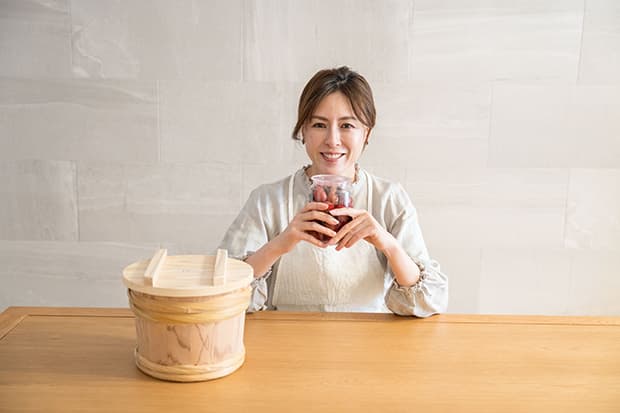
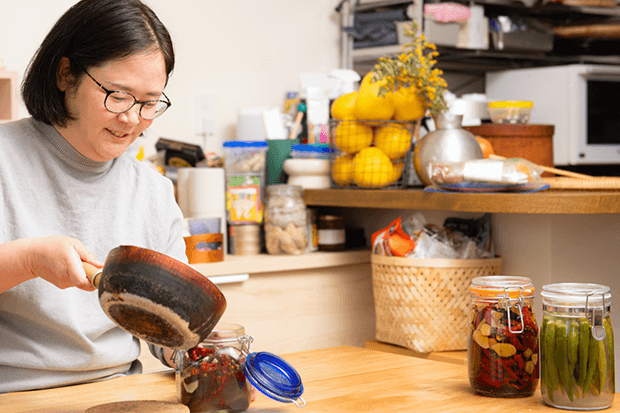
Nothing soothes the soul like a Japanese-style breakfast: freshly cooked rice, miso soup, and an assortment of side dishes. But on a rushed morning, preparing all that food from scratch is no easy task. Toppings that go well with white rice come in handy at times like that. Culinary expert Kobayashi Masami often makes such rice toppings when she has a moment or as she’s preparing dinner, then uses them for breakfast.
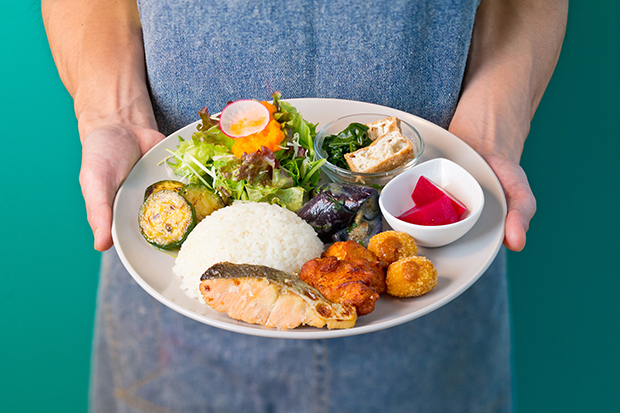
“Rice is really satisfying and keeps you feeling full, which is why I’m a rice person at breakfast,” Masami confesses. “And I eat a proper breakfast every morning: it keeps me going all day. On days when I have a photo shoot — which really take it out of me — I’ll also eat grilled fish, nimono (simmered vegetables or other ingredients), or the previous evening’s leftovers. But usually a bowl of rice, miso soup with vegetables, and a few toppings will suffice. All it takes is three toppings to make a nicely balanced meal: one miso-flavored, one soy sauce-flavored, and one ume-flavored.”
The beauty of rice toppings is that they make meals more nutritionally balanced, not to mention enhance their flavor.
“Sure, a bowl of rice topped with raw egg or natto is great; but with rice toppings, you get to eat a wide variety of ingredients: meat, vegetables, seaweed, fermented foods. And rice toppings aren’t just suitable for breakfast; they’re bento-friendly too, and they can be used for lunch and dinner as well. It’s handy to keep a supply of them in your fridge.”
Here Masami describes the advantages of rice toppings and shares some of her favorite recipes for making them. Why not give these great-tasting toppings a try? They’ll make your breakfasts much more exciting — and satisfy body and soul.
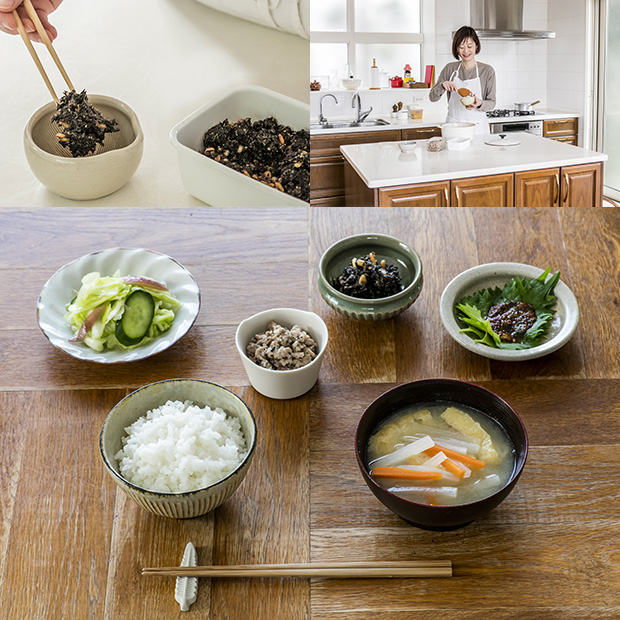
Three great things about rice toppings
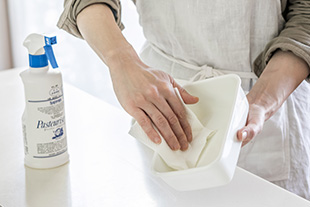
(1) They keep well, simplifying the task of preparing breakfast.
A supply of rice toppings can be kept in the fridge. Simply dish them up, and you’ve got a nice, varied breakfast, even on the busiest mornings. When storing them, don’t forget to disinfect each container with sanitizer and use clean chopsticks. A bit of extra effort will help them keep longer.
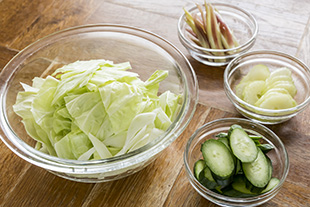
(2) They’re an excellent source of vegetables.
Breakfast often ends up consisting of just a few plain ingredients. A single rice topping made with vegetables — lightly pickled cabbage or cucumber, for example — is a good source of vegetables in the morning. Rice toppings help you get a nutritionally balanced diet.
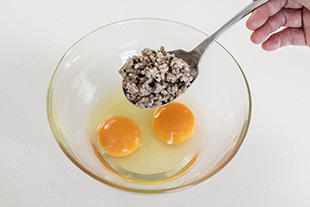
(3) They can be repurposed for other dishes.
These toppings don’t just go well on rice. They can also be used in omelets or fried rice, and they make a great topping for cooked vegetables or noodles. They can be repurposed for a great variety of dished depending on how they’re seasoned, so you can finish them up without growing tired of them. Needless to say, they’re also great for bento lunch boxes, lunch, and dinner!

Kobayashi Masami’s recipes for rice toppings perfect for breakfast
<Vegetables lightly marinated in amazake>
Made with undiluted amazake (a sweet fermented rice beverage), which has a mild sweetness that spreads across the palate. The mellowness of the amazake is accentuated by the pleasant tang of vinegar, making this dish a pleasure to eat. And the delicious taste lingers on the tongue. The flavor penetrates the vegetables more deeply over time, so marinate them as much or as little as you like.
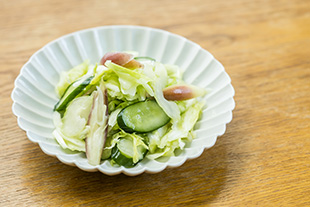
[Ingredients for an easy-to-prepare batch]
2–3 cabbage leaves
½ celery
1 cucumber
2 myoga ginger buds
(Marinade)
3 tbsp. amazake (sweet fermented rice beverage)
1 tbsp. vinegar
⅔ tsp. salt
[Instructions]
【1】Chop the cabbage leaves into 4 cm squares and slice the stem end into thin strips. Remove the strings from the celery and cut into diagonal slices 2–3 mm thick. Cut the cucumber into diagonal slices 5 mm thick. Slice the myoga buds lengthwise in half, then cut each half lengthwise into thirds.
【2】Place the vegetables from Step 1 in a plastic bag with the marinade ingredients and massage well. Chill in the fridge for at least 30 minutes.
Keeps in the fridge for 4–5 days.
●The featured amazake
<Plus Koji Amazake Made from Rice Koji>
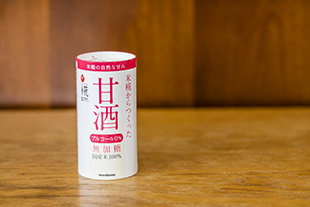
Undiluted amazake made with nothing but rice, rice koji, and salt! The enzymes in the rice and rice koji give it a natural sweetness by breaking down starch. So rich in nutrients it’s known as a superfood.
Plus Koji Amazake Made from Rice Koji
<Hijiki miso>
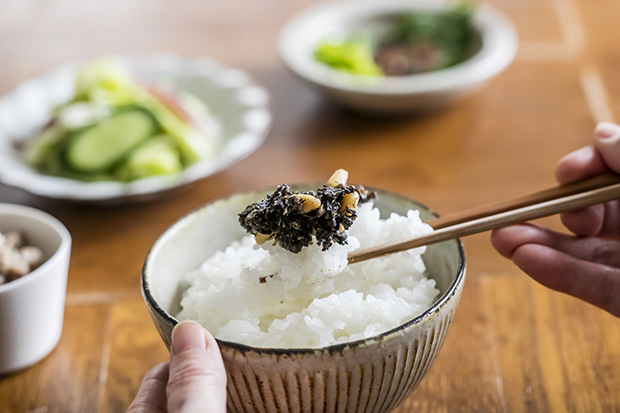
This treat is seasoned with miso and sugar for a sweet, salty taste, making it an appetizing side to a bowl of rice. The hijiki seaweed retains its lumpy texture, and the pine nuts add a nice twist, producing an enjoyable mouthfeel. Hijiki miso can easily be repurposed for different dishes. You can mix it into a thick Japanese-style omelet, for example, or use it as a topping for deep-fried eggplant.
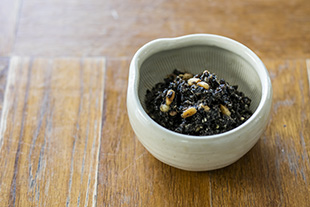
[Ingredients for an easy-to-prepare batch]
20 g dried me-hijiki (hijiki buds)
3 tbsp. pine nuts
1 tsp. vegetable oil
(Seasoning ingredients)
5 tbsp. miso
3 tbsp. ea. sugar and sake
1 pouch (3 g) katsuobushi (dried skipjack tuna)
[Instructions]
【1】Place the hijiki in a bowl with plenty of water. Let soak until rehydrated, about 20 minutes. Remove to a colander and wash in cold water. Mix the seasoning ingredients in a separate bowl.
【2】Place the pine nuts in a frying pan and toast until golden brown, about 3–4 minutes. Remove.
【3】Heat the vegetable in the frying pan and stir-fry the hijiki. Once coated in oil, add the seasoning ingredients and stir-fry while evaporating the moisture.
【4】Turn off the heat and mix in the katsuobushi. Run through the food processor just enough that the hijiki retains its lumpiness. Mix in the pine nuts from Step 2.
Keeps in the fridge for about a week.
●The featured miso
<Plus Koji Additive-Free Koji Bijin>
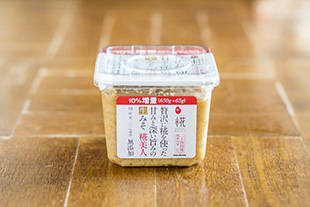
A popular item in the Plus Koji series, this additive-free nama miso is made with 100% domestically grown Japanese rice and generous amounts of rice koji. It lets you enjoy the natural sweetness of miso and its rich umami notes.
Plus Koji Additive-Free Koji Bijin
<Shio koji and herb soboro>
Soboro is seasoned ground meat, and this Western-style pork soboro is seasoned with just shio koji (salted rice malt) and soy sauce. It’s wonderfully moist and tender thanks to the magic of shio koji, with a delectable whiff of basil. It tastes deliciously like sausages. Also recommended with oregano or thyme.
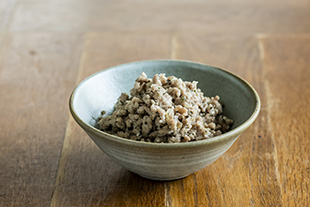
[Ingredients for an easy-to-prepare batch]
200 g ground pork
¼ onion (50 g)
1 tsp. vegetable oil
Pinch of grated garlic
(Seasoning ingredients)
1 tsp. dried basil
3 tbsp. shio koji (salted rice malt)
Pinch of pepper
[Instructions]
【1】Mince the onion
【2】Heat the vegetable oil in a frying pan and stir-fry the onion with the garlic until transparent. Add the ground pork and stir-fry until crumbly.
【3】Add the seasoning ingredients and stir-fry well with the other ingredients.
Keeps in the fridge for about a week.
●The featured shio koji
<Plus Koji Shio Koji>
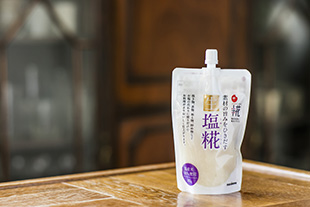
A fresh shio koji (salted rice malt) that brings out the best in the ingredients. This all-purpose seasoning can be used in place of salt in nimono (simmered dishes), aemono (dressed dishes), and stir-fries. Bursting with natural umami flavor, it takes delicious to a new level!
Plus Koji Shio Koji
<Hot and spicy green shiso leaves in shoyu koji>
A go-to rice topping in the Kobayashi household, inspired by Korean pickled perilla leaves. It goes perfectly with white rice, bringing together the fresh taste of green shiso leaves, the pleasant spiciness of chili powder, and the rich umami goodness of shoyu koji (koji fermented with soy sauce). Enjoy on a bowl of rice, sauce and all!
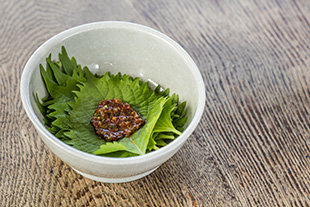
[Ingredients for an easy-to-prepare batch]
20 green shiso leaves
(Sauce ingredients)
2 tbsp. shoyu koji
2 tsp. chili powder* (medium ground)
2 tsp. sesame oil
1 stalk Chinese chives
1 tsp. ground white sesame seeds
pinch of grated garlic to taste
*If chili powder is unavailable, use a pinch of ichimi togarashi (pure chili powder) instead.
[Instructions]
【1】Cut the Chinese chives into small, thin slices. Mix the sauce ingredients in a bowl.
【2】Place a green shiso leaf at the bottom of a dish or storage container and coat with a teaspoon of the sauce prepared in Step 1. Lay a second leaf on top and coat with another teaspoon of sauce. Repeat for each leaf. Equally delicious whether served immediately or left to sit so the flavor can permeate.
Keeps in the fridge for 4–5 days.
●The featured shoyu koji
<Plus Koji Shoyu Koji>
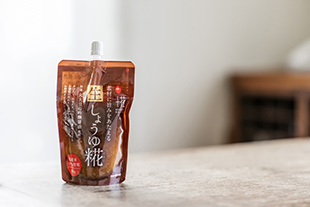
A natural tasting condiment made from koji produced with Japanese rice and ginjo soy sauce made from whole soybeans. Use instead of your regular soy sauce for sophisticated umami flavor and sweetness that will elevate your cooking.
Plus Koji Shoyu Koji