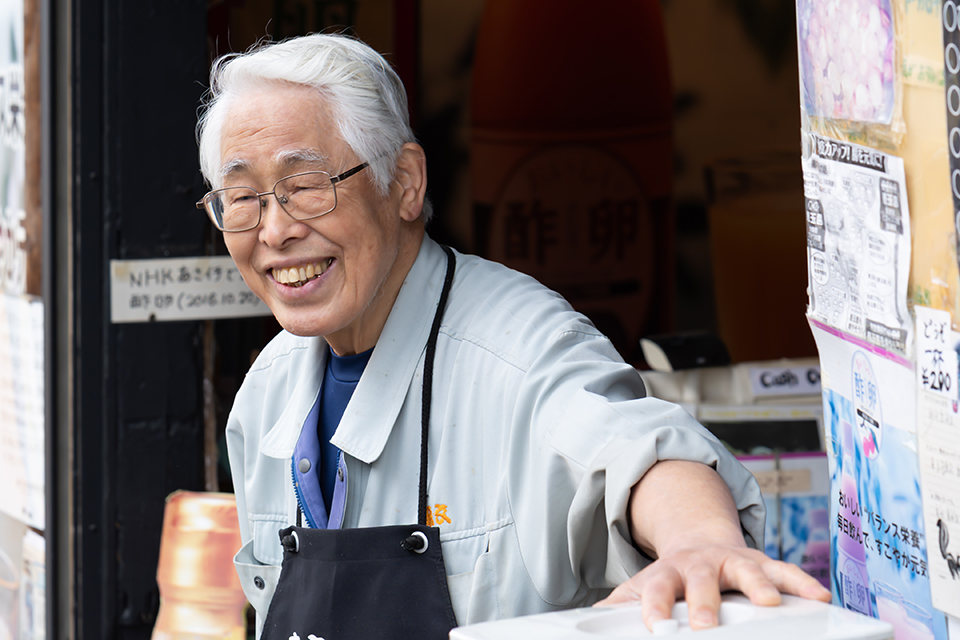
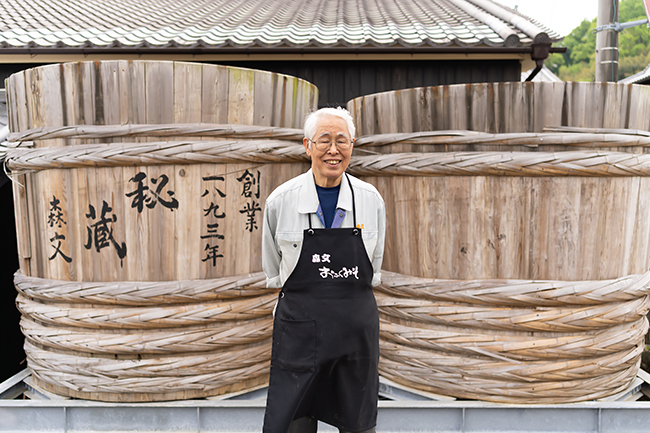
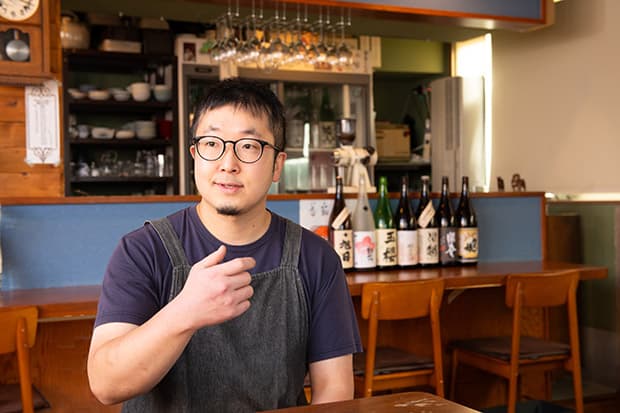
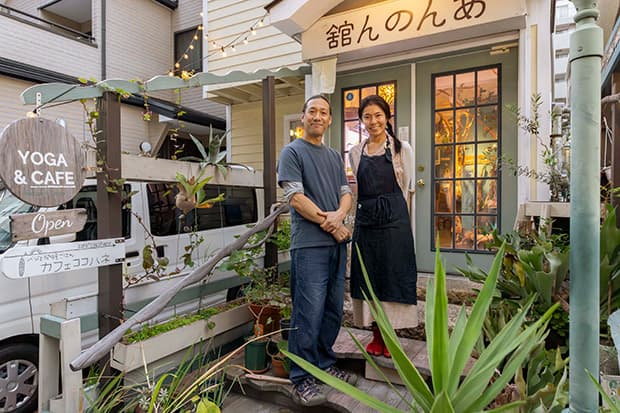
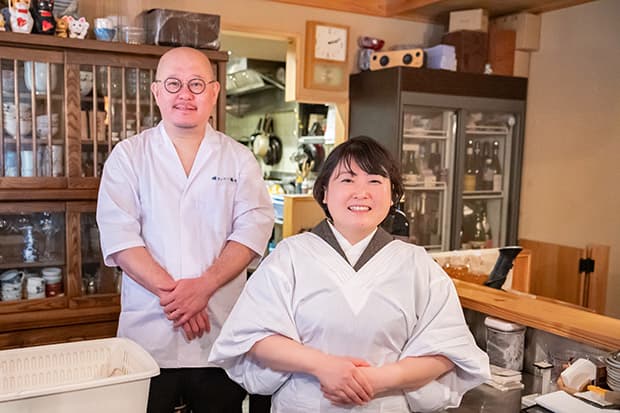
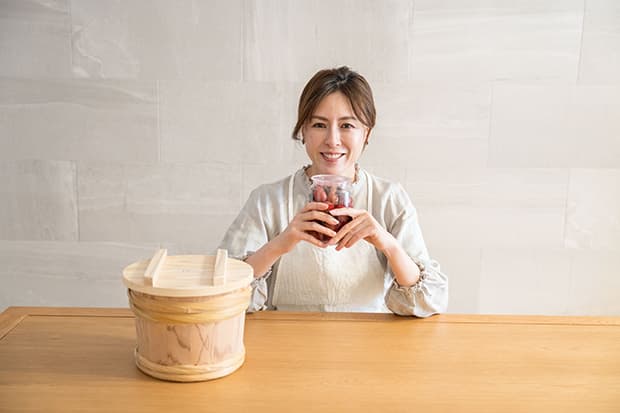
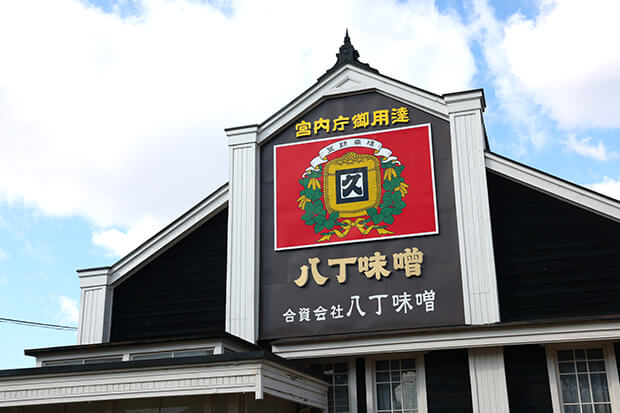
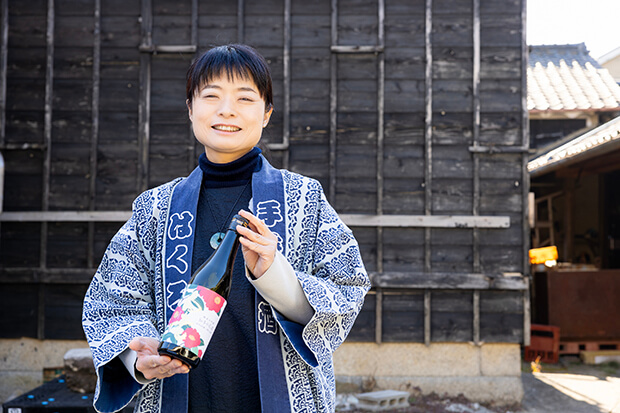
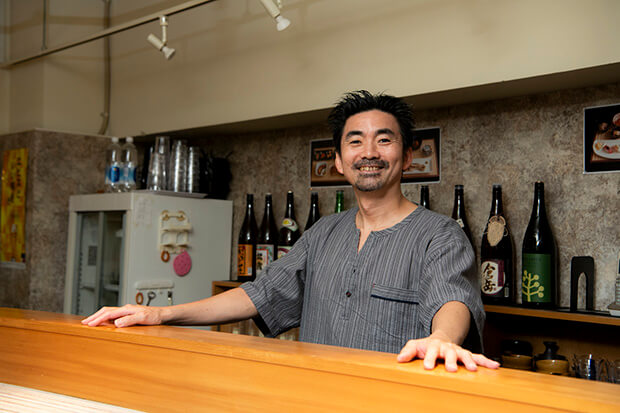
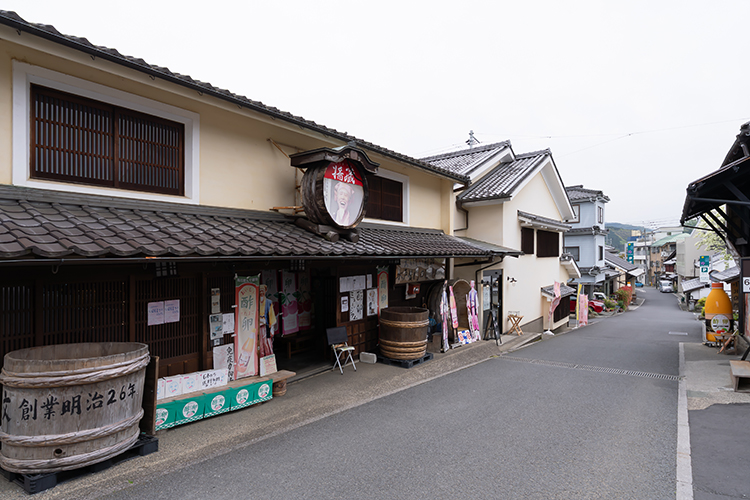
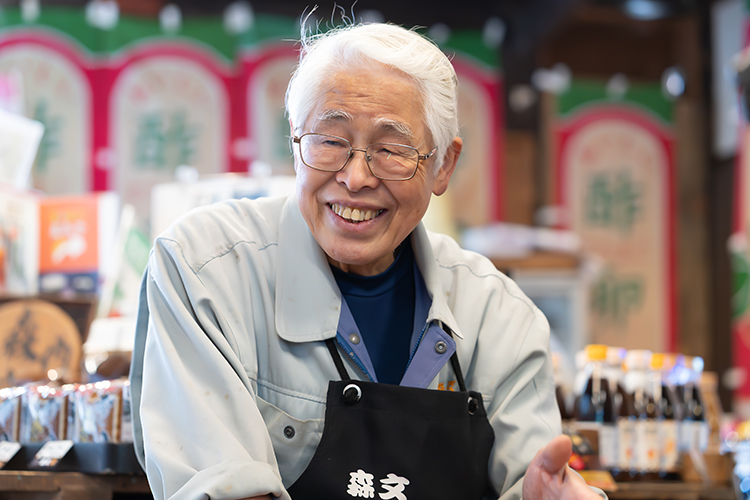
The streets of Uchiko in Ehime Prefecture on the island of Shikoku are lined with the houses of merchant families who once did a roaring trade producing Japanese wax. Here you’ll also come across a store with a prominent signboard bearing the word SUTAMAGO (“vinegar eggs”). This is Moribun Jozo Co., Ltd., which has been making vinegar, soy sauce, and miso for over a century. More recently it’s become renowned for Sutamago. Here we talk with Mori Hideo, the fourth generation to run the family business.
A campaign to preserve Uchiko’s townscape led us to start developing our own one-of-a-kind products.
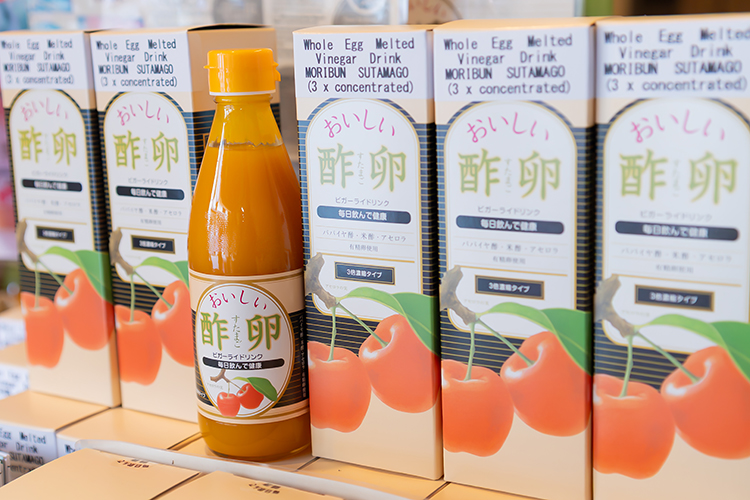
“Would you like a Sutamago drink?” says the staff member in front of the store as we arrive at Moribun Jozo to do an interview. I accept a cupful. Unable to imagine what it might taste like from the name, I nervously take a sip. My mouth is instantly filled with a refreshingly fruity taste. I’m still admiring how surprisingly easy it is to drink, when Moribun Jozo’s president Mori Hideo appears from inside.
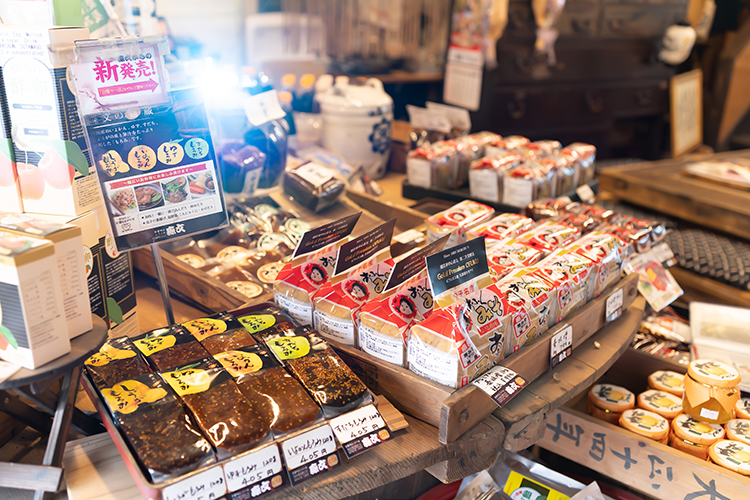
We’re ushered inside, where we find the shelves lined with a wide array of products. First we ask Hideo about the history of Moribun Jozo.
“It was founded in 1893 by my great-grandfather, Mori Buntaro. The name Moribun is derived from his name. The company started out making vinegar. His successor Denzaburo then expanded into miso and soy sauce.”
Hideo, the fourth generation, kept up production of vinegar, soy sauce, and miso while also developing a steady stream of new products like Sutamago. That, he explains, was for historical reasons: the company was being buffeted by changes in the distribution industry. “Our clients were originally liquor stores and small retailers. We’d always worked with local businesses like that. But then in the 1970s, the big supermarket chains started steadily expanding here.”
A large supermarket opened nearby, and more and more consumers shopped at such stores. But Hideo was hesitant to supply his own products to the big supermarkets.
“I didn’t want to do anything to betray our clients,” he explains. “I wanted to avoid going head to head with others in the same line of business and getting caught up in a price war.” With supermarkets increasingly dominating the consumer scene, however, he found himself in a predicament. His products weren’t reaching customers because he couldn’t sell them.
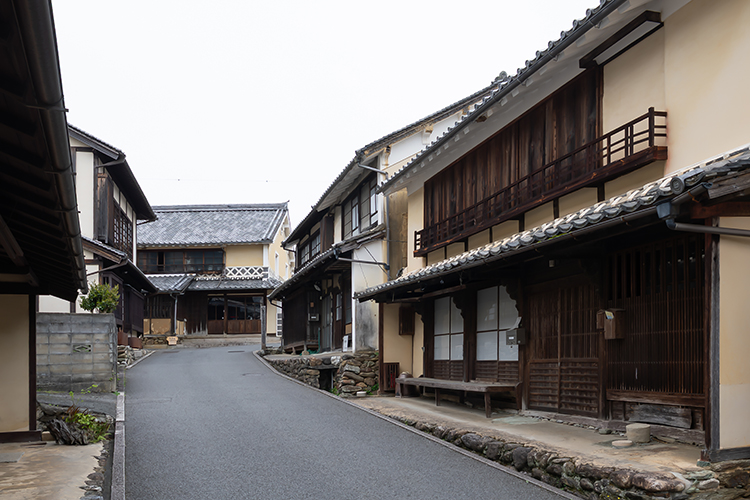
Around that time, a campaign to preserve Uchiko’s townscape got off the ground.
“It must have been about 1976 or 1977. Just as our business was foundering, tourists from outside the prefecture started arriving in town. That got me thinking that maybe we could muddle through. So I began working on all kinds of new products. I altered the packaging of our miso to appeal more to tourists, and I created a dressing and a beverage made with yuzu, which this area is famous for.”
Hideo worked frantically. He enthusiastically engaged in collaborations with other regions of the country as well, such as concocting a dressing made with kabosu, a citrus fruit from Oita. Eventually Moribun Jozo came out with its own unique lineup.
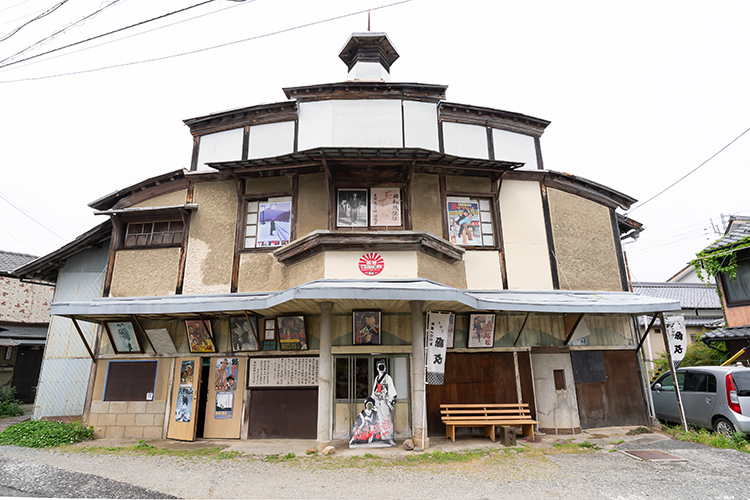
One of the most striking pieces of architecture in Uchiko is the Moribun Asahikan. A moving picture theater completed in 1925 and owned by Moribun Jozo, it holds screenings and readings several times a year.
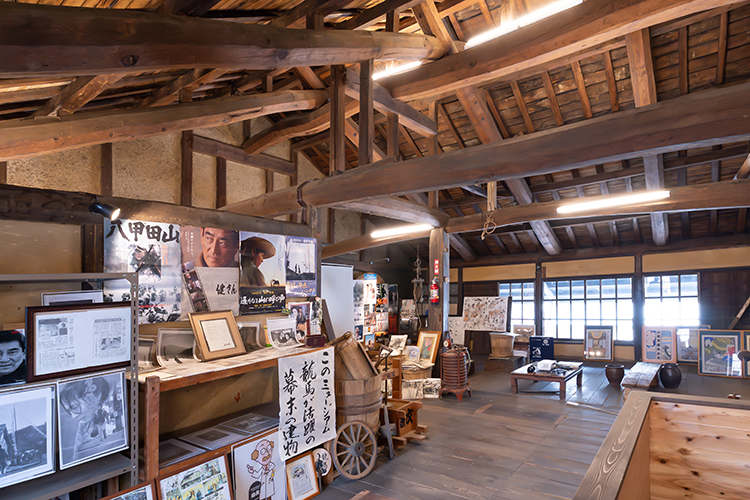
The second floor of the store houses a museum displaying antique brewing equipment and movie paraphernalia.
The exquisite soy sauce that emerged from a resolve never to imitate others — and a mishap
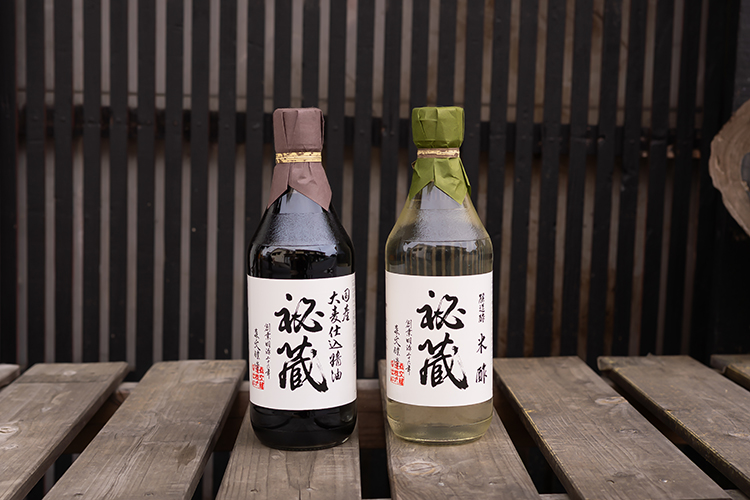
Hizo Soy Sauce and Hizo Rice Vinegar
“The head of the family two generations back left us an important lesson: Never imitate others. Whatever I made, I wanted it to be good, even if it took time,” Hideo says.
Applying his flair for inventive thinking and the knowledge he gained researching enzymes in his student days, he produced a steady stream of new offerings meeting his own demanding standards. Among them was the aged soy sauce that is now one of Moribun Jozo’s flagship products.
“It’s made with Ehime-grown naked barley and regular barley. Soy sauce is normally made using wheat and soybeans, but our Hizo Soy Sauce contains no wheat. It’s gluten-free soy sauce, as it were.”
The Uchiko region of Ehime is one of the very few places in Japan that produces miso made with barley alone, without using soybeans. Moribun Jozo used to make miso with naked barley, but then one summer it was so hot that the miso over-fermented and ended up being too soft.
“Damn it, I thought, I’ve botched it. Then I tried mixing this really soft miso into the moromi mash for a batch of soy sauce. Well, it tasted amazingly good. I investigated further and determined that the natural sweetness from the barley increased the sugar content, resulting in a richer, mellower flavor than usual. This is great, I thought. So we rolled out this soy sauce as a new product.”
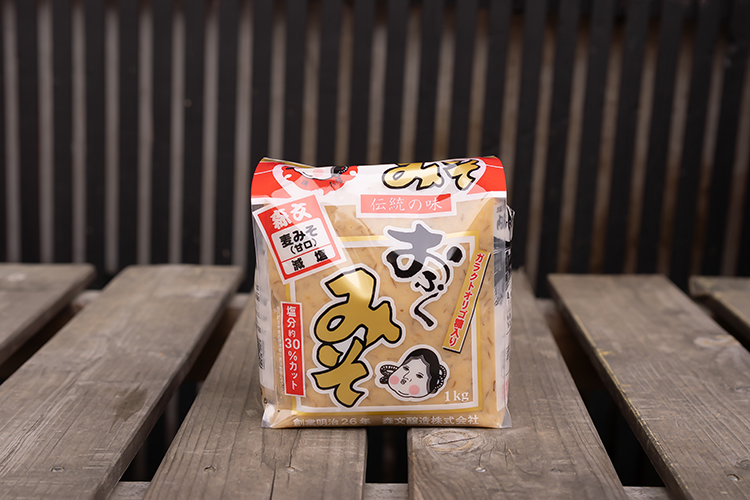
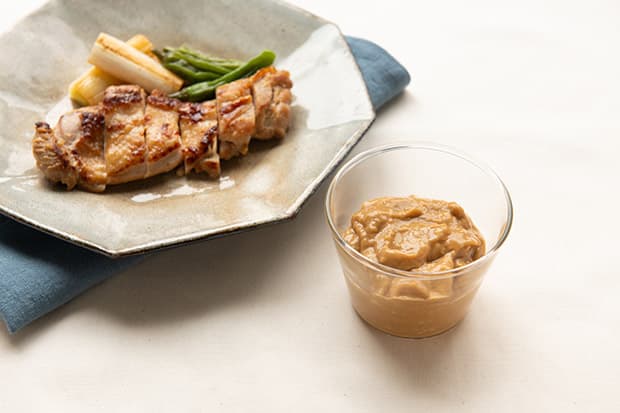
Ofukumiso barley miso (mild), one of Moribun Jozo’s most popular items
Hizo Soy Sauce began with a mishap and ended up getting rave reviews. Today it’s exported to around a dozen countries.
“We get the most inquiries from Taiwan and China. They tell me that it tastes excellent mixed with vinegar as a dipping sauce for xiaolongbao dumplings thanks to its umami flavor. Because it’s gluten-free, we also get a lot of inquiries from Europe. It emerged from a chance mishap, yet now it’s one of our flagship products.”
Having perfected a truly delicious soy sauce, Moribun Jozo soon followed with an equally delicious noodle dip and ponzu based on it.
“If you have a well-made, great-tasting soy sauce, the products derived from it will taste excellent as well. Others in the business are effusive about our noodle dip. They say the soy sauce in it is in a class of its own,” says Hideo with a smile.
I came up with Sutamago as a way to cheer up my wife after she had our baby.
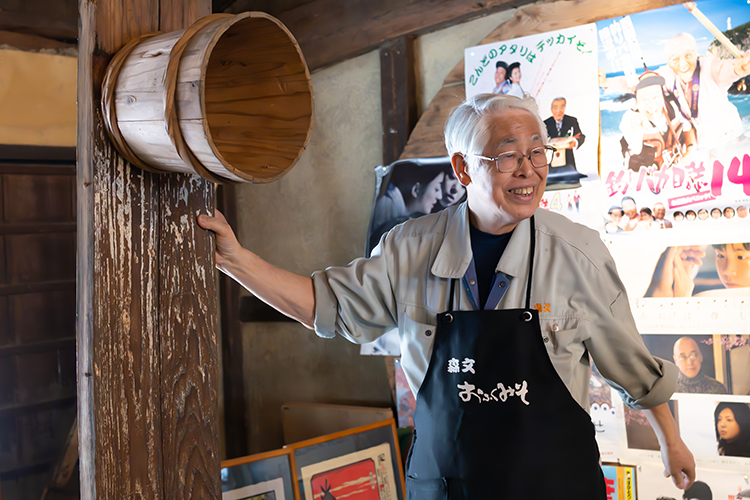
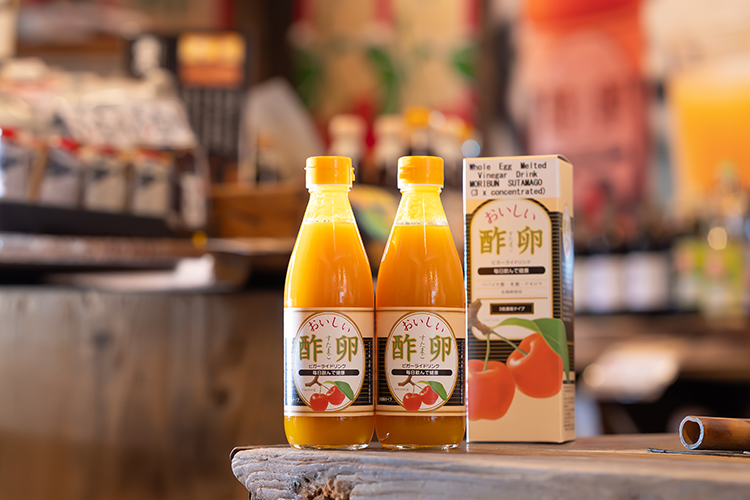
Something else that Hideo created in his determination never to imitate others and come up the company’s own unique lineup of quality products is Sutamago Whole Egg Melted Vinegar Drink. So what is Sutamago anyway? We ask him.
“Sutamago, literally ‘vinegar egg,’ originated as a homemade health drink in China. It’s originally made by placing an egg, shell and all, in some vinegar. The shell will dissolve in about a week. But while it’s highly nutritious, it’s so bitter that it’s virtually undrinkable. So what we did was add acerola and yuzu to make our own easier-to-drink version of Sutamago. Besides regular vinegar, we also blend in vinegar made by fermenting papaya or pineapple.”
It helped that Hideo happened to know someone who grew acerola. Sutamago is made with fertilized eggs from a producer he knows he can trust, plus Moribun Jozo’s own unfiltered vinegar, with the bacteria still alive. The result is a fermented beverage rich in vitamin C and fiber.
But granted that Moribun Jozo makes vinegar, you have to wonder, why Sutamago of all things? His answer is a bit of a surprise.
“Actually, my wife had a placental abruption when she had our baby, and she was physically drained after giving birth. I was looking for a way to cheer her up, and what I finally hit on was the vinegar-egg juice consumed in China. But when I actually tried making it, it was hardly drinkable. So I kept experimenting with ways to improve the flavor, and Sutamago is the result.”
“You have your wife to thank,” I remark at this account of the beverage’s origins, which elicits a grin. What sets Moribun Jozo apart is its ability to find inspiration for new products in just about anything. A delicious soy sauce emerged from a chance mishap. Sutamago emerged from Hideo’s devotion to his wife.
We’re committed to preserving traditional production techniques and bringing fermented foods to more people.
Hideo is brimming with ideas and has a remarkable knack for creating new products. But time-honored techniques and traditional lore are also vitally important, he says.
“Here at Moribun Jozo, we use our own special koji starter to make koji (rice malt). We ferment it using what’s called the three-day koji method. That results in a koji with a pronounced sweetness and umami.”
Three-day koji is rice koji produced over at least three days. Two days are all you need for koji to ferment adequately; but letting it sit past the second day, when the sweetness greatly intensifies, and waiting until the third day increases its amino-acid content, boosting the koji’s umami. Though spending an extra day costs more, great-tasting koji is the key to making fermented seasonings. Three-day koji is therefore a must, says Hideo.
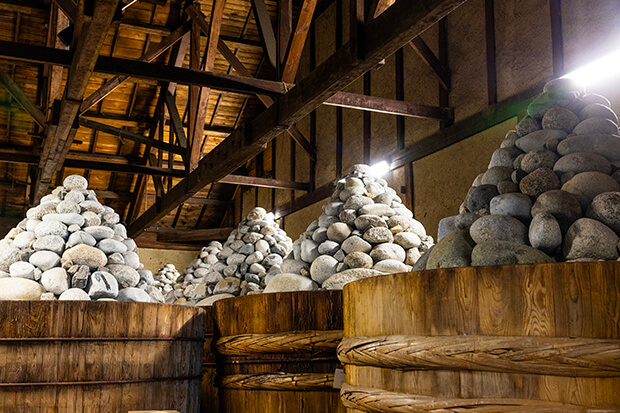
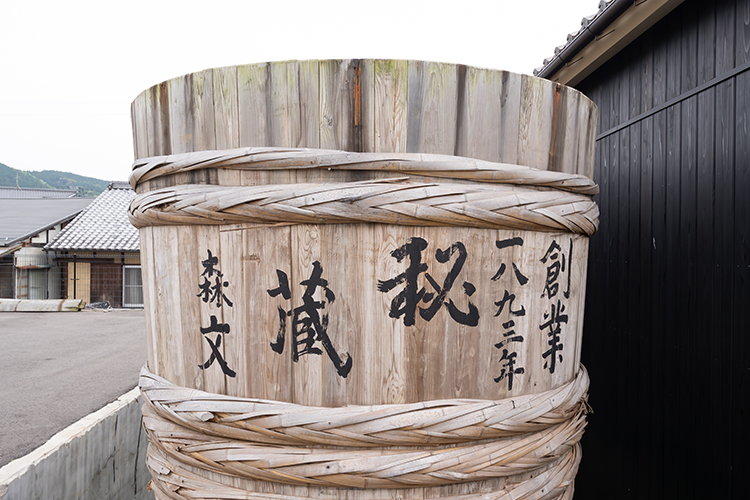
Wooden barrels are used during the fermentation process. They impart the unique taste that is Moribun’s trademark, because they’re colonized by koji mold, yeast, and lactic acid bacteria — all sources of flavor. Further, Hideo adds, Moribun insists on aging its products at low temperature.
“We age our miso and soy sauce for at least a year at a low temperature of below ten degrees Celsius. This method gives fermented seasonings umami and flavor, so we plan to stick to it.”
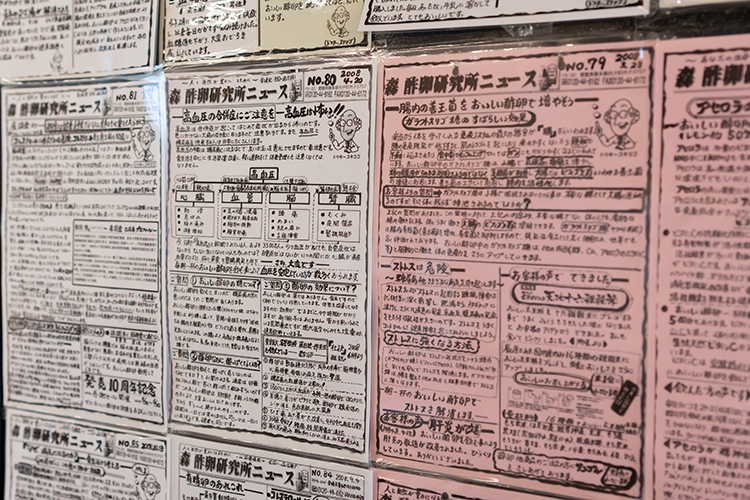
Regular buyers receive a copy of Hideo’s handwritten Mori Sutamago Research Institute News with their delivery. This newsletter, which has many avid readers, is packed with information about fermentation and staying healthy.
Hideo wants as many people as possible to enjoy fermented foods.
“Fermented foods that have been eaten for centuries like miso, soy sauce, and vinegar revitalize the human gut, especially the Japanese gut. Keeping the gut in good condition is essential to good health. Our products are inspired by a desire to help people live healthy lives. I’d love to see young people eat more fermented foods.”
Moribun Jozo has been making fermented products for decades. Its operations are underpinned by time-honored techniques and knowledge, a flair for bringing out products that aren’t mere imitations, and the vision of a healthier world.