The Power of Fermentation: KOJI BARISTA EDITION Latte
Oct 16,2025
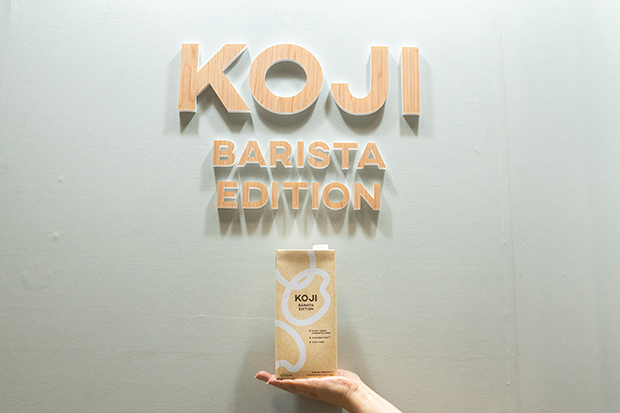
Marukome’s Koji Barista Edition was showcased again this year at SCAJ — one of Asia’s largest coffee trade shows, which brings together industry insiders from across the globe. This new plant milk made with rice koji attracted a great deal of interest with its own booth. Here were featured two baristas who are making waves at competitions in Japan and worldwide: Onuki Takeharu of Mood Coffee & Espresso and Akagawa Naoya of Little Darling Coffee Roasters. What possibilities are offered by a new kind of latte made with neither dairy milk nor conventional milk substitutes? We asked them both.
*You might also want to read this
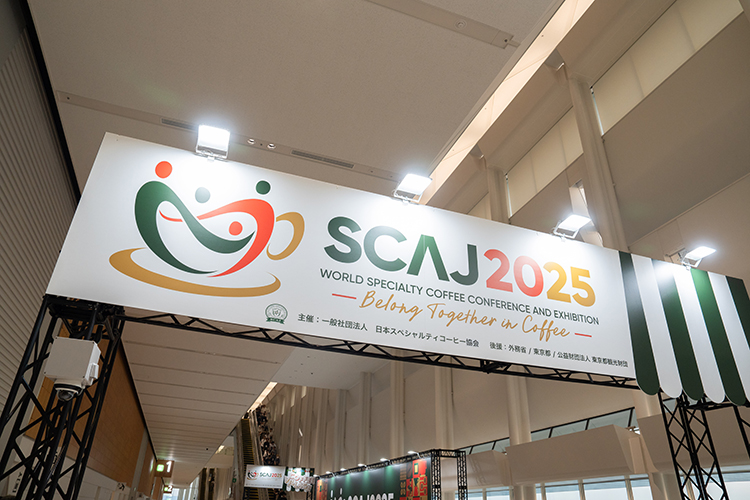
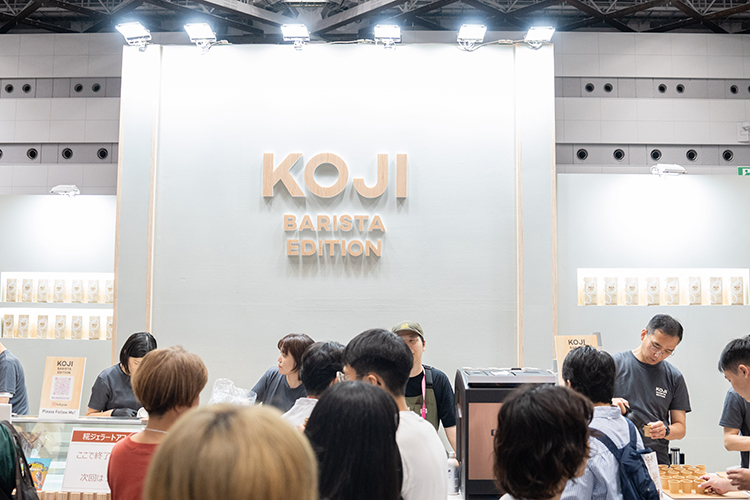
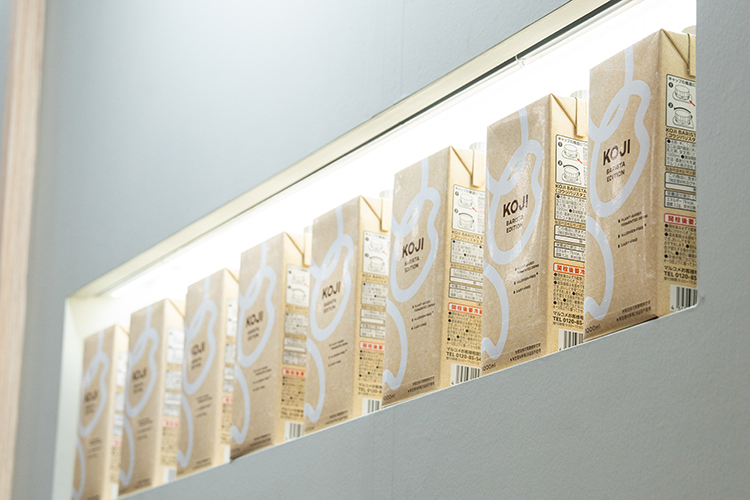
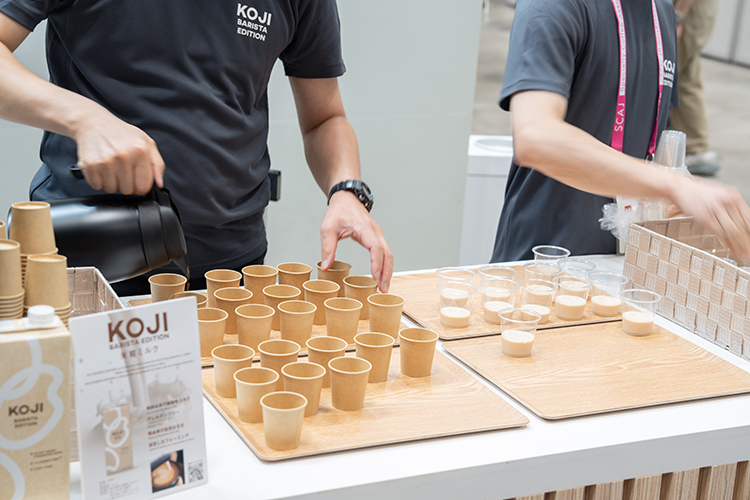
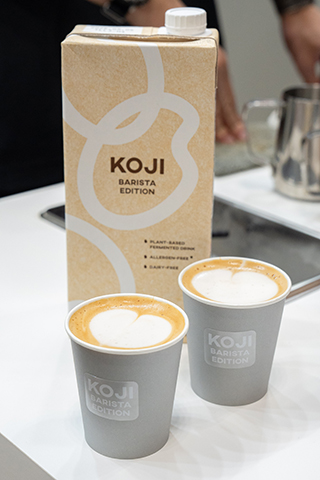
SCAJ 2025 was held September 24–27 at Tokyo Big Sight. The place was bustling with industry insiders as well as coffee lovers from the public at large. Marukome showcased Koji Barista Edition plant milk harnessing the power of fermentation. People came in droves throughout the day to check out the rice koji milk.
A mild sweetness and fine foam that bring out light roast’s aroma
“We often use medium- to light-roasted beans at my coffeeshop, and when they’re used to make latte, it’s important that nothing interfere with the coffee flavor.”
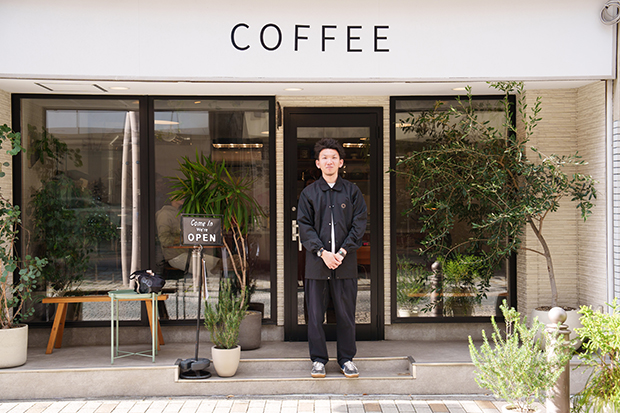
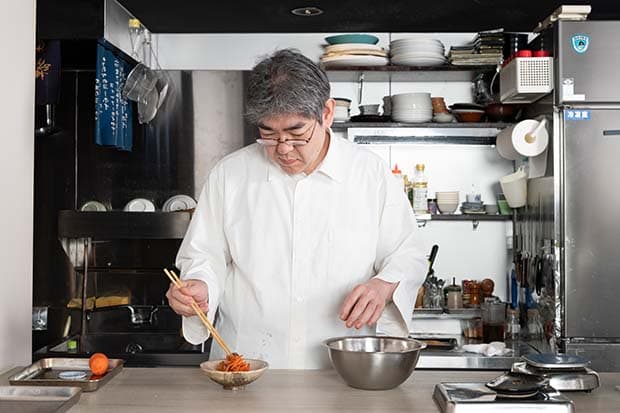
So says Onuki Takeharu, owner of Mood Coffee & Espresso in Mito, Ibaraki Prefecture. He was at the booth demonstrating how to make latte with Koji Barista Edition and explaining how its mildly sweet taste harmonized nicely with the coffee aroma.
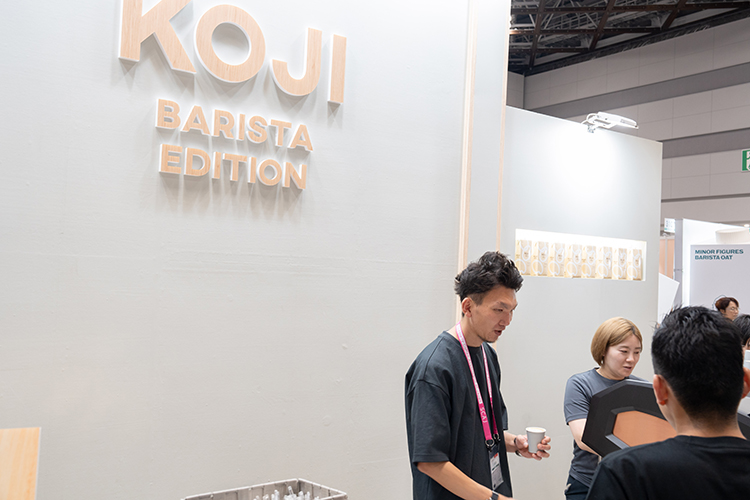
Onuki Takeharu making latte with rice koji milk at the Koji Barista Edition booth
Takeharu is a skilled coffee roaster. In 2024, he won his first Japan Coffee Roasting Championship (JCRC), a competition organized by the Specialty Coffee Association of Japan (SCAJ)、 and went on to represent Japan on the world stage. When he first tried Koji Barista Edition, he was struck by its natural sweetness and smooth mouthfeel.
“Conventional plant milks can mask the aroma of light-roast coffee or tend to separate. But with this rice koji milk, a mild, elegant sweetness fills your mouth while leaving the coffee flavor intact. I was also amazed at how fine the foam is.”
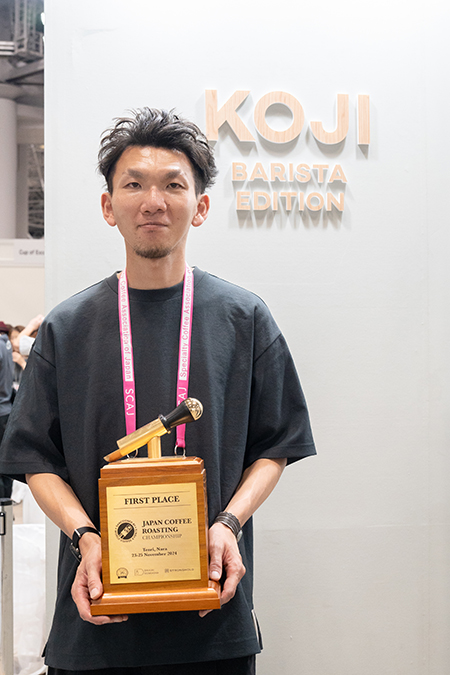
Onuki Takeharu with his JCRC 2024 championship trophy
The beans that Takeharu selected on this particular day were Ethiopia Carbonic Maceration Natural. They were medium-light roasted, combining the ripened sweetness of dark cherries and prunes with the aroma and spiciness of high-cacao chocolate. Paired with Koji Barista Edition, they had a noticeably complex sweetness and aroma with impressive depth.
“Latte is usually associated with dark roast, but Koji Barista Edition naturally complements anything from light roast to dark roast.”
Visitors to the booth had a lot to say about Koji Barista Edition as well. They remarked on how it had a naturally sweet, delicious flavor, even without sugar, and balanced well with light roast.
As easy to work with as dairy milk, and naturally sweet too
While there are more and more plant milks to choose from, the beauty of Koji Barista Edition, Takeharu says, is that it foams almost like milk.
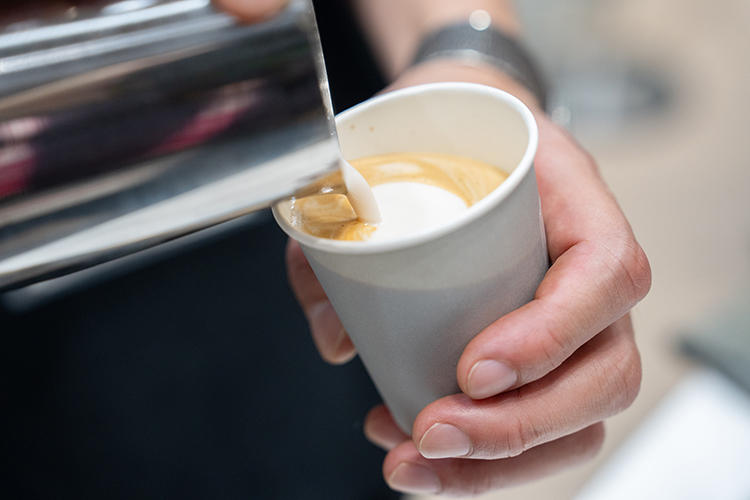


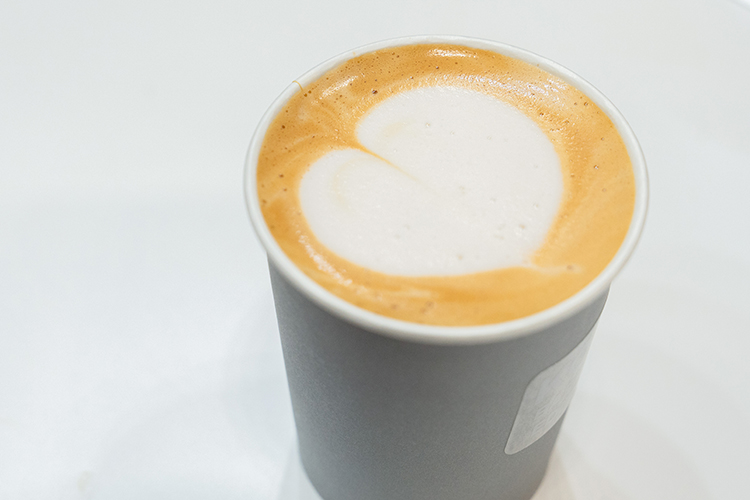
A latte with a frothy microfoam, made no differently than usual!
“Use 170 cc of rice koji milk per 40 cc of espresso. You can basically use it the same way as dairy milk. It doesn’t separate even when it’s steamed, and it produces a characteristically smooth consistency. It has a naturally sweet taste that leaves you satisfied even without adding sugar or syrup. I’d also recommend it to anyone who’s avoiding milk because of allergies or for other reasons.”
A new kind of latte made with neither dairy milk nor milk substitutes
Next, we talked with Akagawa Naoya of Little Darling Coffee Roasters in Minato Ward, Tokyo. He helped with Koji Barista Edition from the development stage and was involved in fine-tuning sample batches.
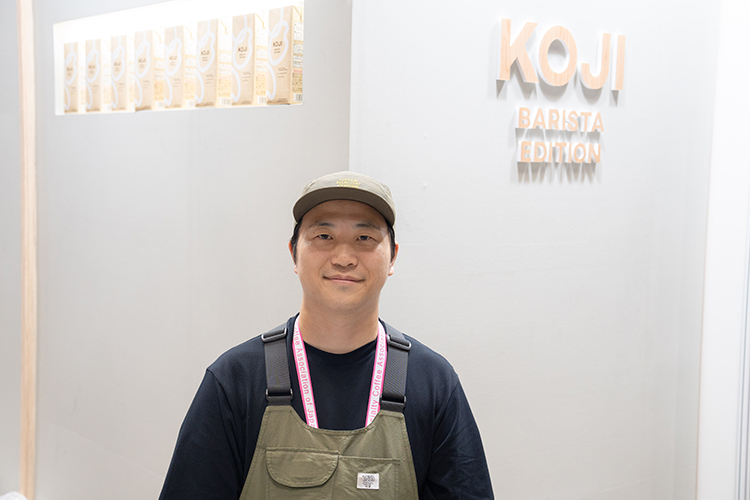
Akagawa Naoya, head barista of Little Darling Coffee Roasters in Minami-Aoyama, Tokyo. He placed second in the Latte Art World Championship Open. He is a roaster, works on developing new products, and does much else besides.
At the development stage, he compared lattes made with four different prototypes and evaluated which offered the best balance on three criteria: clean cup, natural sweetness, and frothing performance.
“Koji Barista Edition doesn’t interfere with the aroma, even with lightly roasted beans; if anything, it highlights it. Because it doesn’t have the heaviness of milk fat, it adapts itself to the beverage, acting as a sweetener underpinning the aroma. It retains its sweetness even when heated, without any loss of aroma. Plus it’s easy to work with in that it doesn’t make the beverage too thick. For a barista, this is a truly outstanding product.”
Another thing about Koji Barista Edition is that it isn’t just an imitation of dairy milk. It possesses its own distinctive sweetness produced by fermentation.
“The natural sweetness resulting from fermenting rice with koji is completely unique,” says Naoya. “It’s simply not found in other plant milks or dairy milk. Koji Barista Edition balances well with light-roast coffees with their acidic taste. People who are health-conscious or want to cut back on sweet foods love it. I don’t usually take sugar myself, but the natural sweetness in this is quite satisfying.”
And, he stresses, Koji Barista Edition is completely allergen-free.
“Completely allergen-free milk has been virtually non-existent — until now. I know I’m safe serving this to customers who have allergies or are health-conscious. At the coffeeshop, I often get asked, ‘What kind of milk is it?’ It’s particularly popular with female patrons. Demand for plant milks has risen noticeably over the past several years. A decade ago, plant milks accounted for about 10 percent of the total, but with the increase in soymilk and oat milk, they now stand at about 20 percent. Since we brought in Koji Barista Edition, more and more patrons have been opting exclusively for it.”
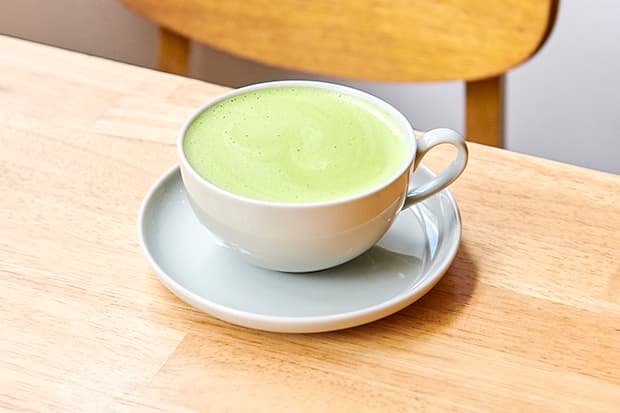
A new offering made with Koji Barista Edition, called “Komekoji Latte,” recently appeared on the menu at Little Darling Coffee Roasters. It’s given rise to conversations about what komekoji (rice koji) is, winning over new fans.
The potential of rice koji milk as an ingredient for gelato and confections
The SCAJ 2025 booth also featured a Koji Barista Edition affogato. Visitors were amazed at how mildly sweet it tasted.
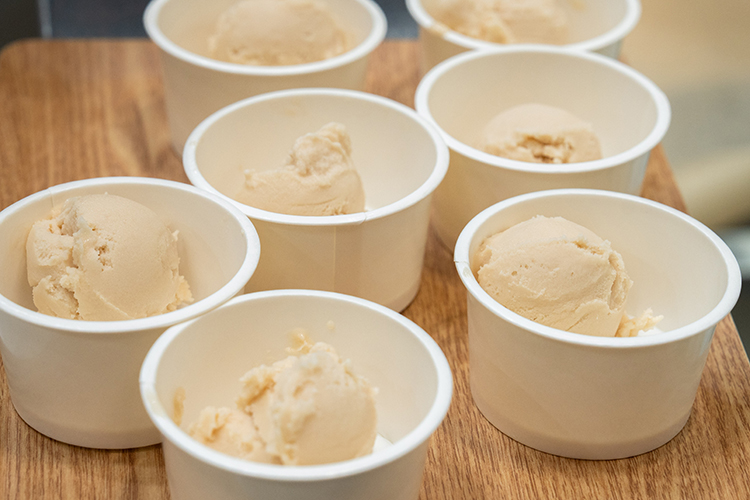
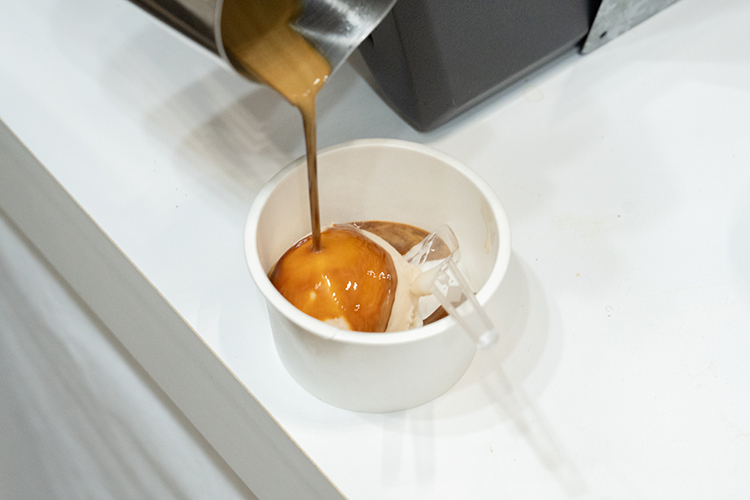
Espresso with its acidic taste and fragrant aroma nicely matches the mild sweetness imparted by rice koji.
“Instead of using sugar, we made the gelato by combining rice koji milk with Koji Mitsu syrup, resulting in a natural sweetness. Then we poured acid-tasting Indonesian espresso over it to make an affogato. There’s no reason you couldn’t do the same with smoothies or confections like chiffon cake. We now have a wider range of new menu items capitalizing on the sweetness and richness of fermented foods.”
Rice koji milk, the product of Japanese fermentation technology, is establishing a new world standard with its mild sweetness and gentle aroma — the result of the power of fermentation.