Natto Ice Cream and Mito Natto Specialties in Mito
Jan 29,2026
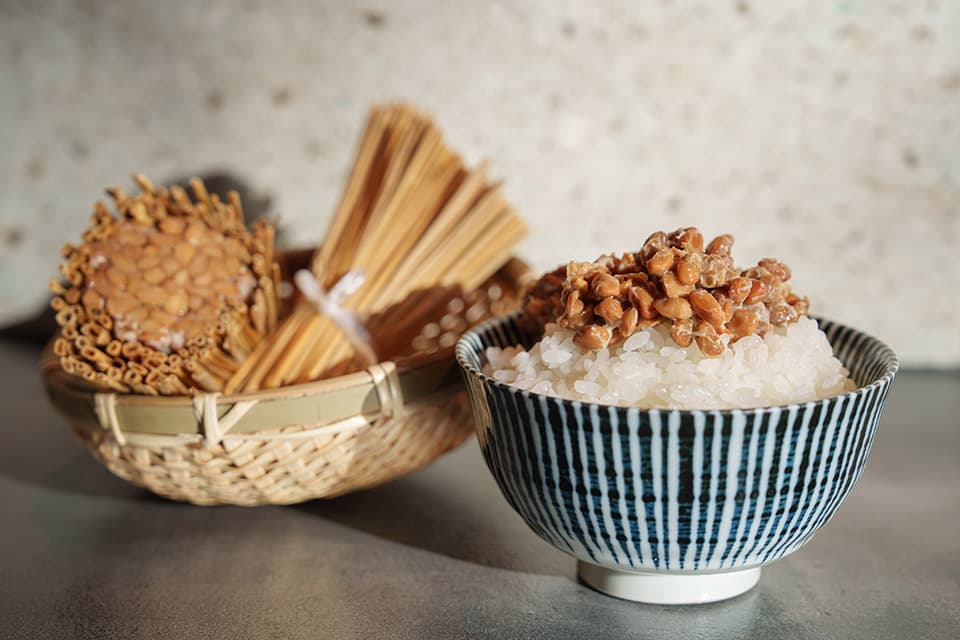
Natto, fermented soybeans, is deeply familiar to Japanese people. Mito, Ibaraki, has long been known as a thriving natto-producing area and the City of Natto. We visited the popular restaurant Mito Mon-no-Mae, where you can savor Mito specialties including straw-wrapped natto made in the traditional way.
Mito, the City of Natto: Why did Mito’s natto become famous?
Many people probably first imagine natto when they think of the city Mito. Throughout Ibaraki, well regarded for its thriving soybean industry and as Japan’s No. 1 natto producer, natto has long been celebrated as a local specialty.
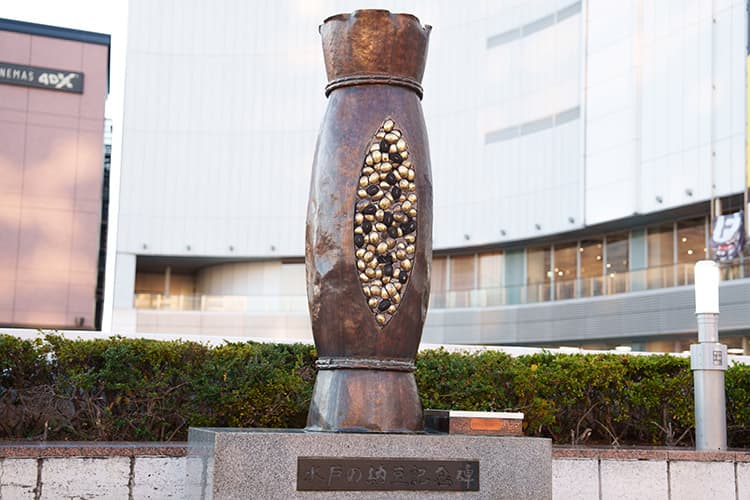
A monument to natto stands in front of the JR Mito train station. A plaque on the monument records the origin of natto in Mito.
There are various theories about the origin of natto. Fittingly, Mito has its own particular natto lore. According to local legend, during the late Heian period (794 to 1185), Minamoto no Yoshiie, a legendary Minamoto samurai, stayed at the residence of the wealthy landowner Ichimori in Watari-cho, Mito, while on his way to Oshu Province. During the samurai’s stay, boiled soybeans wrapped in straw and intended as horse feed allegedly fermented by chance, creating the very first natto. It is said that the practice later spread among Mito’s farmers.
Later on, during the Edo period (1603 to 1868), Tokugawa Mitsukuni, the feudal lord of Mito who was also known as Mito Komon, encouraged the production of natto as a foodstuff stored for emergencies. However, Mito natto didn’t truly come into the national consciousness until the Meiji era (1868 to 1912). With the opening of the railway to Mito, natto began being sold as a souvenir at the train station, gaining a reputation for its deliciousness and becoming known throughout the country.
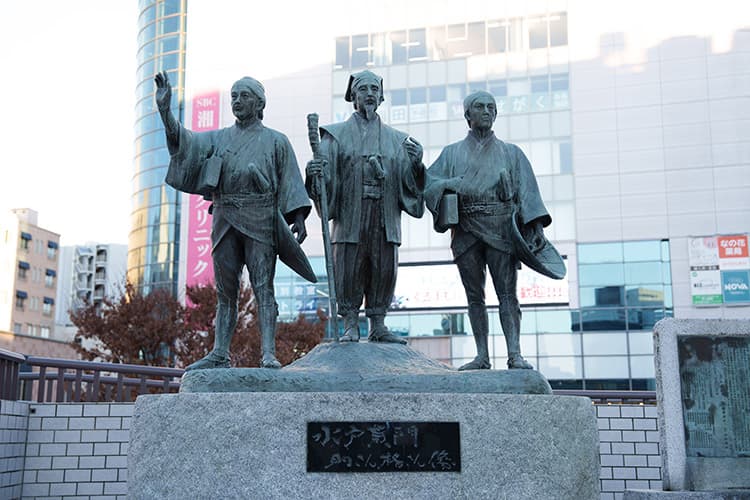
A statue of Mito Komon also stands in front of the JR Mito train station. Tokugawa Mitsukuni encouraged natto production as a preserve for food emergencies.
Enjoy Mito’s delicacies at the Mito Mon-no-Mae restaurant
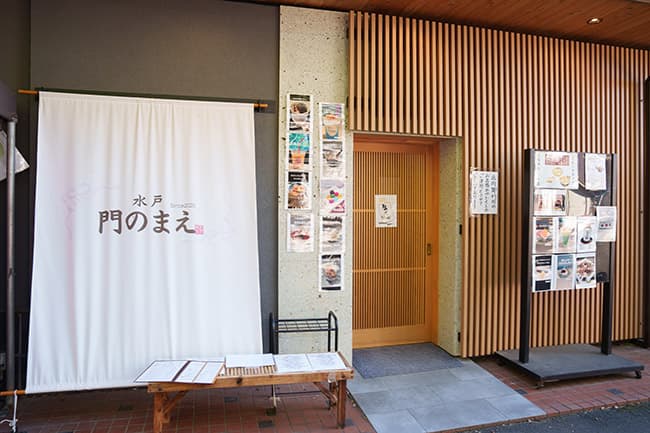
Mito Mon-no-Mae has won a reputation as one of the best places to enjoy Mito’s famous natto. Located near the east gate of Kairaku-en Garden, considered one of the Three Great Gardens of Japan and famous as a plum blossom viewing spot, the restaurant reportedly draws long lines of diners during plum season.
The eatery is run by Yoshikubo Brewing, a saké brewer founded in 1790. It offers a wide selection of dishes that go well with saké as well as many unique Mito dishes featuring Ibaraki’s famous produce.
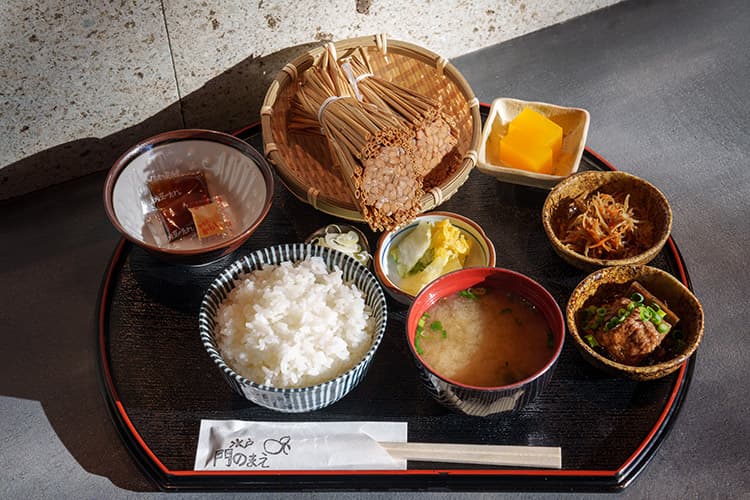
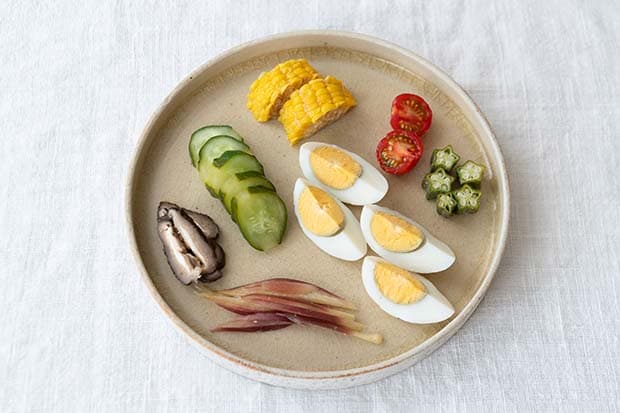
The side dishes, which change every month, are also prepared with great care and attention. The restaurant is very particular about the ingredients it uses, sourcing additive-free vegetables directly from local farmers.
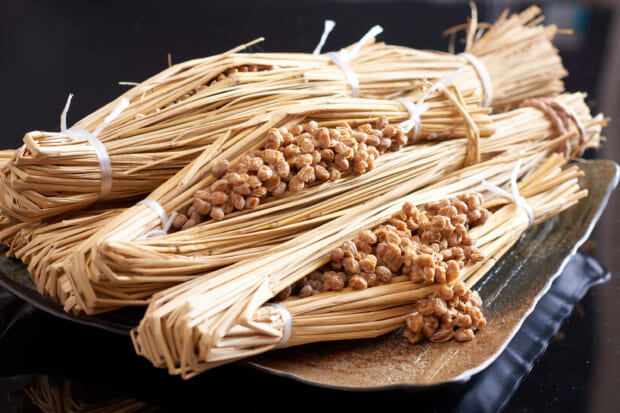
One signature menu item is the straw-wrapped natto set meal. The special includes two bundles of straw-wrapped natto, rice, miso soup, and side dishes like pumpkin agar jelly, simmered conger eel, and kinpira [sautéed and simmered burdock root and other root vegetables]. The straw-wrapped natto, made using traditional techniques, offers a satisfying texture and lets you fully savor the aroma of the straw and the rich flavor of the soybeans.
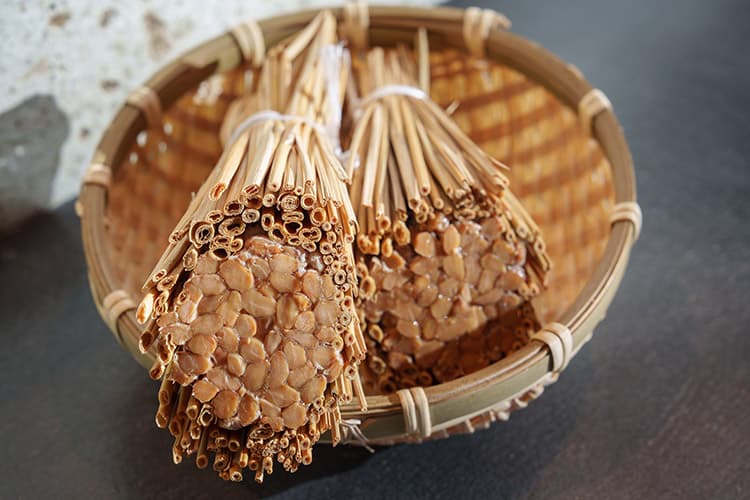
The restaurant serves natto from Tengu Natto, a long-established Mito natto shop
A defining characteristic of Mito natto is its small grain size. This stems from the region’s frequent floods, which led farmers to cultivate small-grain soybeans that can be harvested earlier than other varieties before the typhoon season. When stirred up, small-grain natto develops a strong stickiness that binds exceptionally well to rice.
Natto ice cream that stretches like Turkish ice cream
Natto Stretchy Ice Cream is a popular choice as a post-meal dessert. Many customers order it along with the straw-wrapped natto set meal.
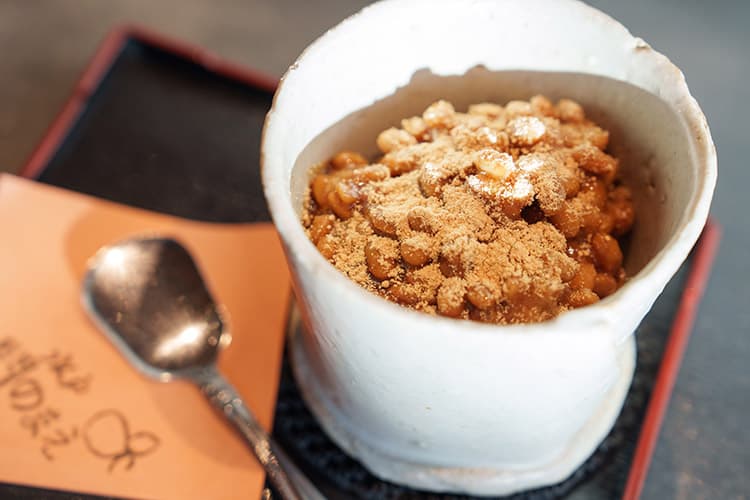
Natto Stretchy Ice Cream features aromatic Madagascar vanilla ice cream
Natto Stretchy Ice Cream is made with a base of vanilla ice cream and topped with natto, kinako [roasted soybean] powder, and black kuromitsu sugary syrup. While its looks may be off-putting at first, thoroughly mixing the treat brings out its stickiness, creating a smooth, stretchy texture reminiscent of Turkish ice cream. The distinctive natto aroma disappears, allowing it to be enjoyed as a delicious Japanese-style sweet.
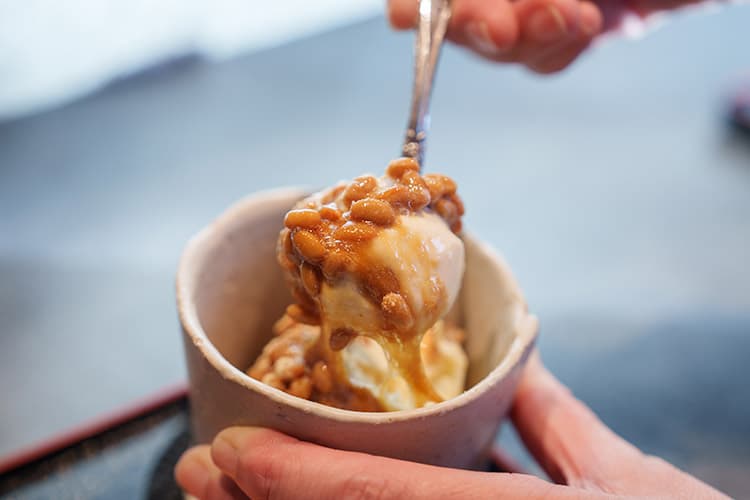
It’s important to thoroughly mix the ingredients together. This eliminates the taste and odor of natto, making it suitable even for people who dislike natto.
You can also enjoy saké and amazake from Yoshikubo Brewing at the restaurant. The amazake made from freshly pressed saké lees has a rich aroma and expansive, full-bodied flavor. Natto, saké lees, and alcoholic beverages, perfect souvenirs for visitors to Mito, are available for purchase at the adjoining shop.

Amazake orange is a refreshing blend of Yoshikubo Brewing amazake and orange juice
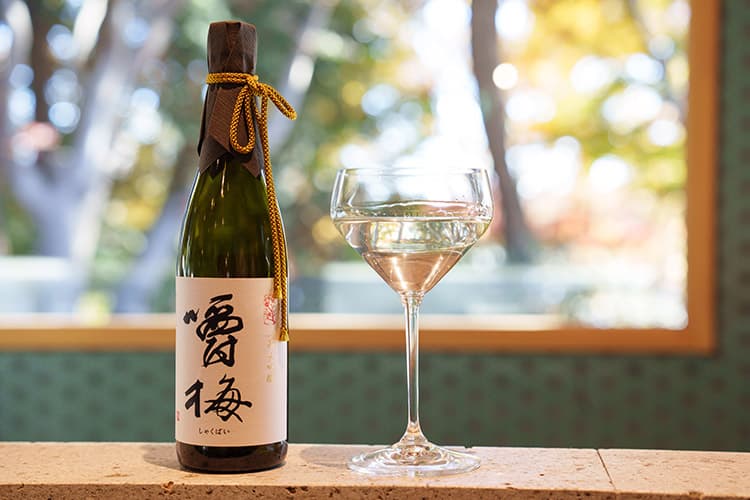
Syakubai is a top-grade daiginjo saké with a vibrant, expansive fragrance. This unfiltered saké is made by collecting drops from the moromi mash without applying pressure.
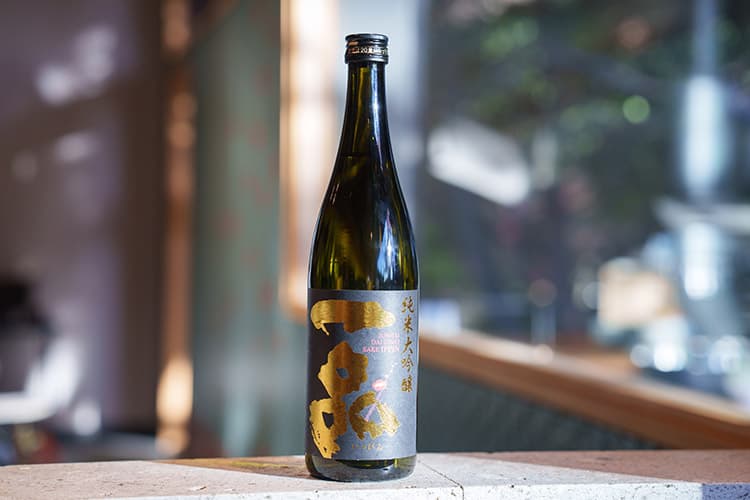
Ippin Junmai Daiginjo is a premium Ibaraki saké crafted with 100 percent Yamada Nishiki rice from contract farmers in Mito. It is known for being served in the exclusive VIP lounge at Dodger Stadium.