Easy Bettara Zuke Recipe with Amazake and Yuzu
Feb 19,2026
Daikon tastes wonderful in winter. But if you buy a whole daikon, what are you going to do with it all? Can you eat it all up before it loses the fresh, juicy flavor and crunchy texture that daikon only has when it’s in season?
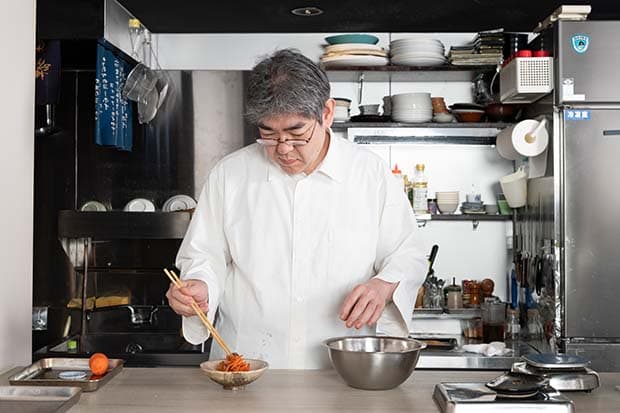
Culinary expert Nakagawa Tama recommends using it to make bettara-zuke pickles with a fragrant dash of yuzu, plus some amazake (a fermented rice drink) for a mild hint of sweetness. Here she shares an easy recipe for preparing bettara-zuke with simple ingredients and ways to serve it. She also tells us about the two types of miso indispensable to her cooking: kome miso (“rice soybean paste”) and shiro miso (“white soybean paste”).
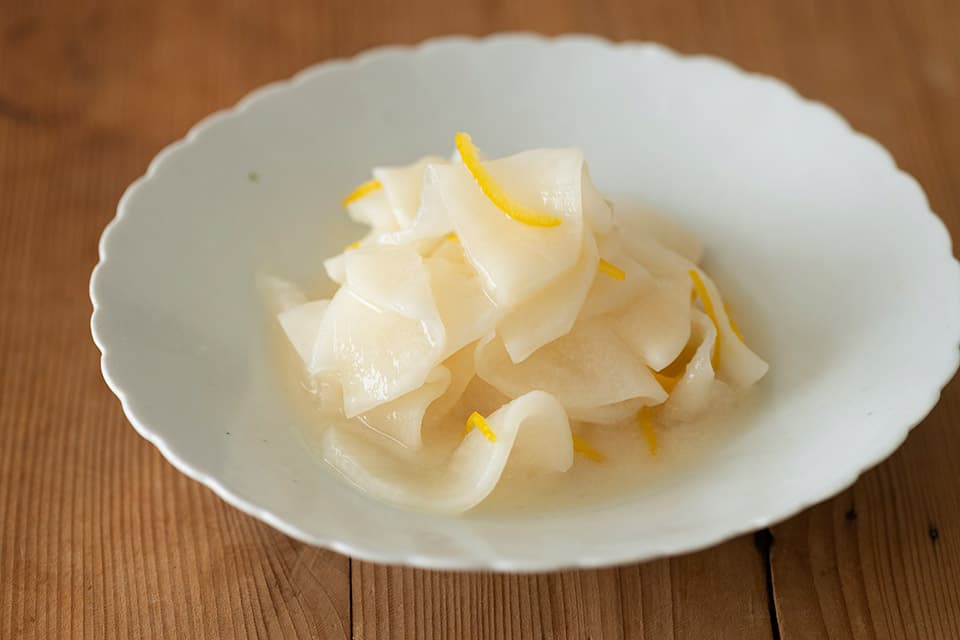
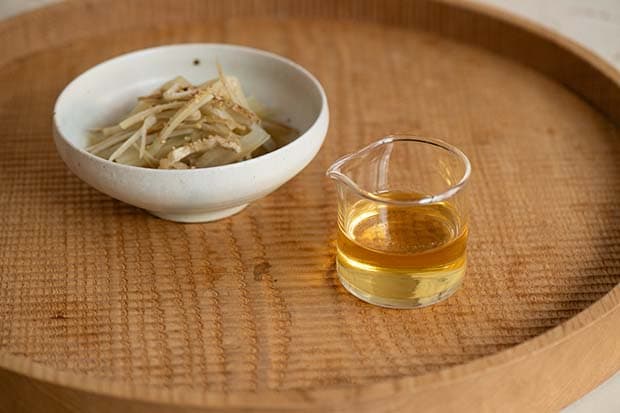
Amazake’s mild sweetness results in a light, refreshing taste.
Tama lives in Zushi on Kanagawa’s Miura Peninsula, which is famous for Miura daikon. Miura daikon are big — big enough to carry under your arm — and they flare outward toward the tip. The great thing about them is, they taste fresh and juicy and keep their shape when you cook them. If you visit the market in winter, you can find Miura daikon pulled from the ground that morning.
“I like to prepare and eat it all while it’s still fresh, so I think of various things to do with it. I’ll use the upper and middle sections for pickles and simmered dishes, say, and use the end in stir-fries.”
Tama is particularly fond of making bettara-zuke, a type of pickle originating in Tokyo. It’s prepared by pre-salting daikon and then pickling it in rice koji and sugar. “You can easily pickle it overnight using amazake made with rice koji,” she says.
“The bettara-zuke they sell at the store can be really sweet, but making it with amazake gives it a natural sweetness that isn’t too pronounced, resulting in a light, refreshing taste. And it keeps in the fridge for about a week, which is nice.”

Amazake can be used in your daily cooking as a natural sweetener and source of nutrition.
Besides buying rice koji amazake at the store, Tama frequently makes it herself.
“I often use it in my cooking. With its mild sweetness, it makes a good alternative to sugar or mirin (sweet cooking sake). Plus it’s so rich in nutrients that it’s known as the IV you can drink. It retains some of its nutrients even when heated, but I do my best to consume it unheated. In summer I drink it with lemon or make sherbet with it, while in winter I love to enjoy it in bettara-zuke.”
Tama’s bettara-zuke has a crisp, tangy flavor. The elegant aroma and acid taste of yuzu juice and rind add a nice twist that complements the natural sweetness of amazake. Even if you’re not a big fan of bettara-zuke, this version is definitely worth a try.
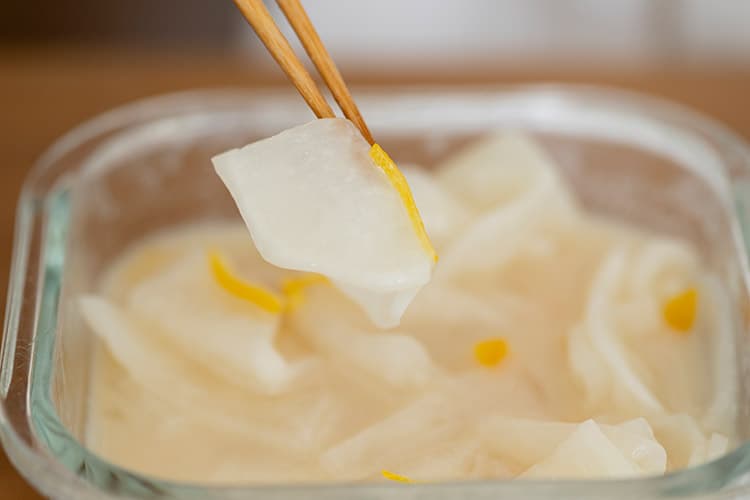
Tama’s bettara-zuke daikon is more thinly sliced than the store-bought variety, making it easier to eat.
Recipe for bettara-zuke
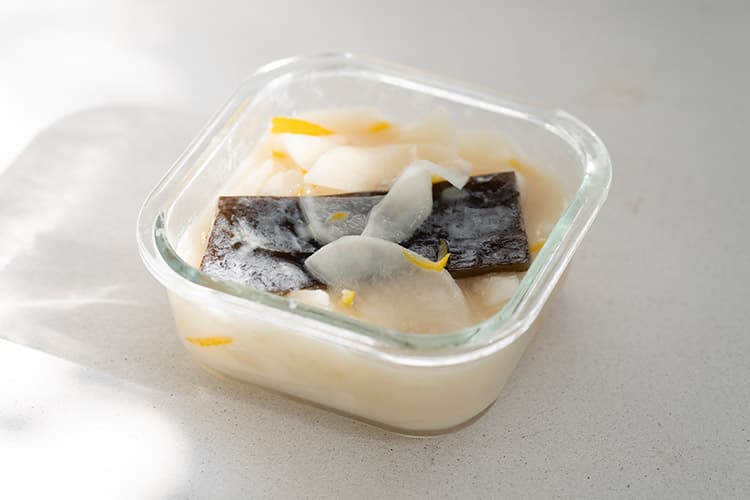
-
- [Ingredients]
- 500 g daikon
- 10 g salt (2% the weight of the daikon)
- ½ medium yuzu
- 150 ml undiluted amazake
- 2 5×10 cm sheets of kombu (dried kelp)
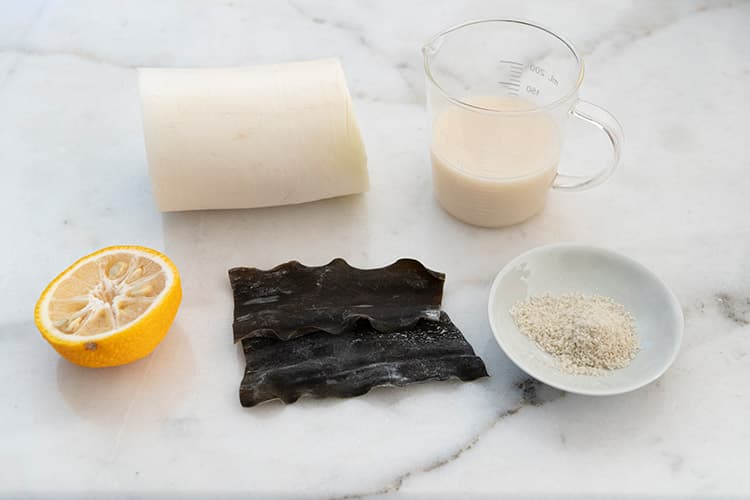
You can use either store-bought or homemade amazake. Natural salt is recommended. Tama uses Guérande salt from France.
-
- [Instructions]
-
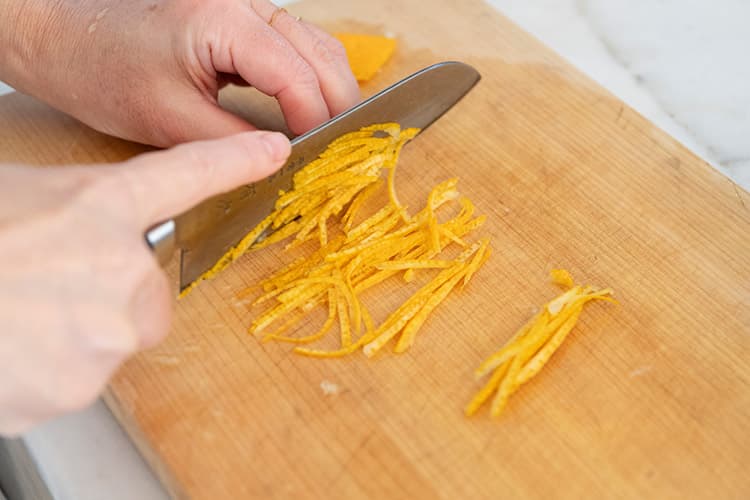
1. Cut the daikon in half lengthwise and peel, then cut into half-moons 2–3 mm thick. Remove the rind from the yuzu. Juice the yuzu and cut the rind into thin strips.
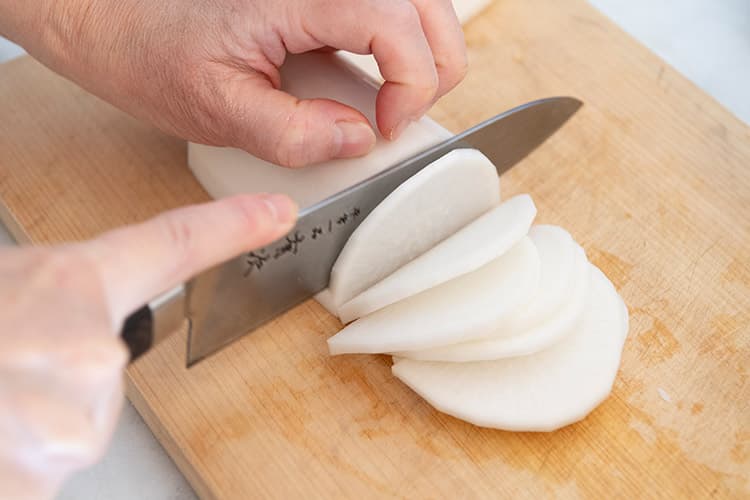
Left: You can adjust the thickness of the daikon to taste. “The thinner you slice it, the more moisture it releases and the quicker it pickles. The thicker you slice it, the longer it takes to pickle. So if you cut the daikon to a different thickness, adjust the time you pickle it accordingly.”
Right: The white part of yuzu rind is bitter, so shave it off before slicing the rind into strips.
-
2. Place the daikon in a bowl. Add salt and gently massage it in. Cover with plastic wrap and let sit for about 30 minutes.
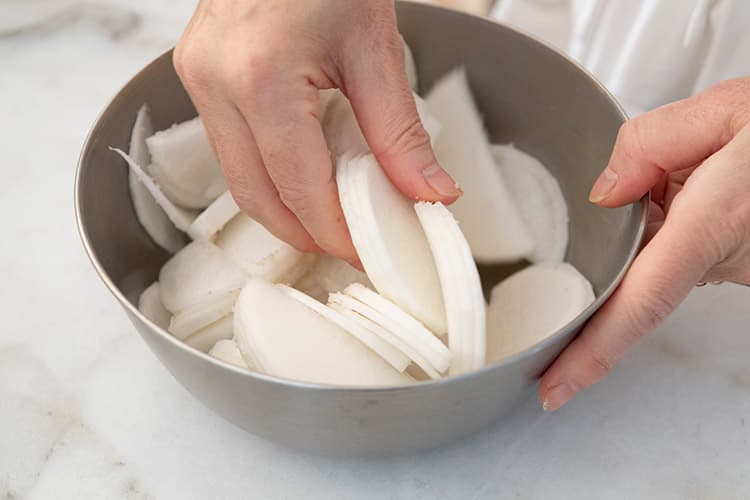
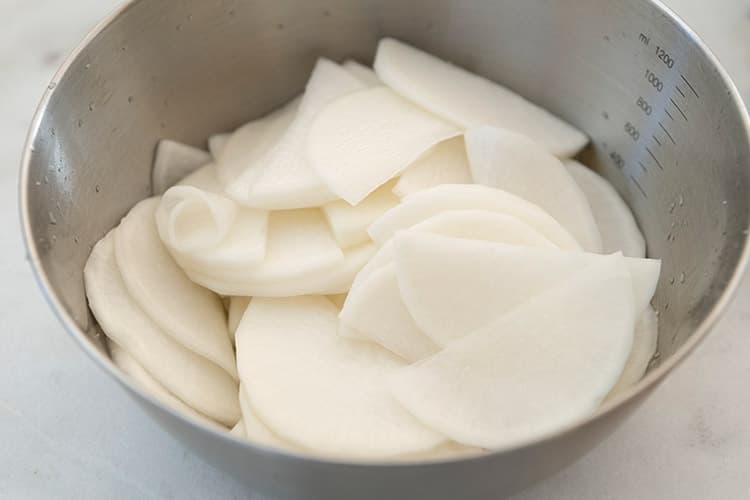
Gently massage salt into the daikon (left) until it turns soft (right).
-
3. Squeeze the water out of the daikon from Step 2 and place in a separate bowl. Add the yuzu rind and juice, the kombu, and the amazake and gently mix together.
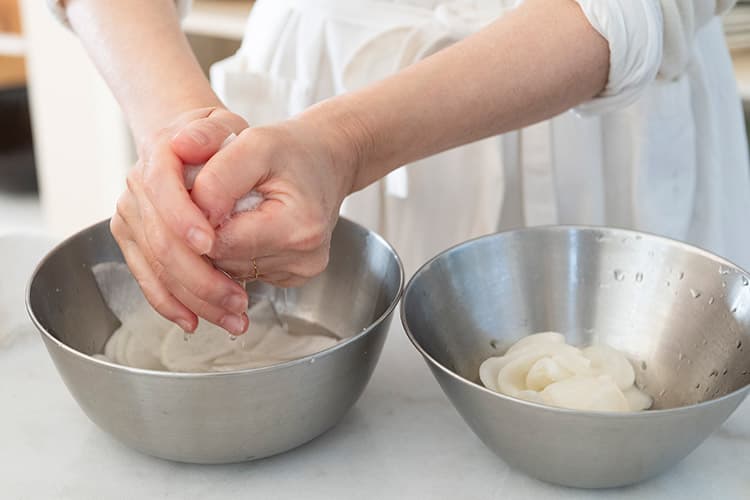
Massaging salt into the daikon and letting it sit for 30 minutes is all it takes to make it release lots of moisture. Squeezing out the excess moisture before pickling ensures the flavor of the pickling brine penetrates well.
-
4. Place one of the sheets of kombu on the bottom of a storage container, add the mixture from Step 3, and top with the second sheet of kombu. Refrigerate overnight. Bettara-zuke will keep in the fridge for about a week.
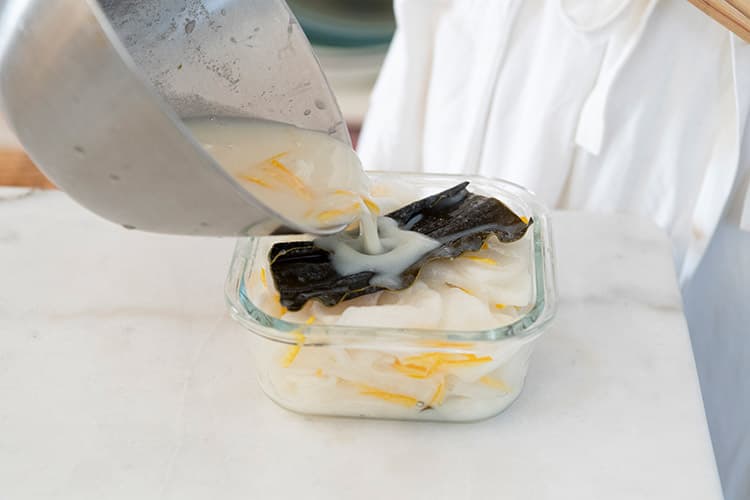
In Tama’s version of bettara-zuke, the daikon is sandwiched between sheets of kombu to lock in the flavor. “You can cut the kombu to match the size of the container, or of course you can mix it with the daikon and brine and pickle it together.”
Delicious ways to serve bettara-zuke
This bettara-zuke with its natural sweetness and tangy flavor can be enjoyed in many ways. Simply toss it as is with vegetables of the season, and presto! You have an instant side dish to serve with rice. Or if you want to get fancy, you can turn it into something much more than just a pickle.
“You can make carpaccio with bettara-zuke by serving it on yellowtail or whatever other sashimi you like. It imparts a distinctive light, refreshing taste. I’d also recommend serving it on vinegared rice with sashimi in the form of chirashizushi. It tastes good with dry-cured ham and other salty proteins as well.”
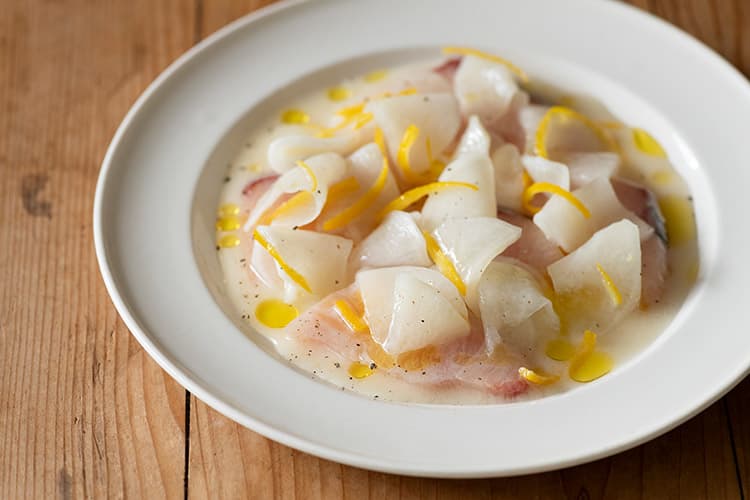
Yellowtail sashimi and bettara-zuke carpaccio. Simply salt the yellowtail to draw out the moisture, top with bettara-zuke, drizzle with olive oil, and season with coarse-ground black pepper.
Kome miso and shiro miso: Which miso to use when?
Tama is a native of Hyogo. Where she comes from, kome miso or “rice soybean paste” is so common that people even eat gyoza with miso sauce.
“My husband is also from Hyogo, but his ancestors were from Kyoto, so in his family they often use a lighter-colored miso called shiro miso (‘white soybean paste’). For that reason, we keep a regular supply of both types of miso at our place — kome miso and shiro miso. It’s the same with the zoni rice-cake soup we have every New Year. We eat it with a clear soup on New Year’s Day, as is the custom in my family, who have their roots in Kyushu. Then on the second of January, we eat it made in the Kyoto style with round rice cakes and shiro miso.”
Each winter when fresh koji (rice malt) becomes available, Tama prepares two batches of miso for fermentation. “I make about five kilos of kome miso, then let it age for about six months. But shiro miso takes only about a month to age. Shiro miso ferments rapidly, so I make a small amount — maybe 200 grams — in the yogurt maker and use it up as soon as I can.”
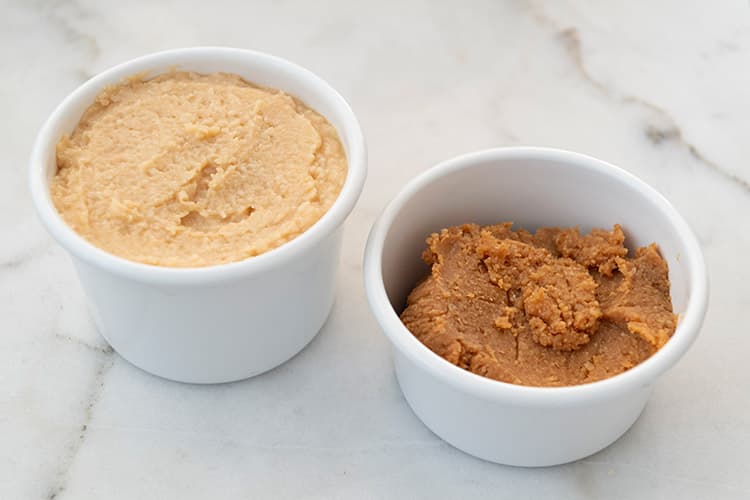
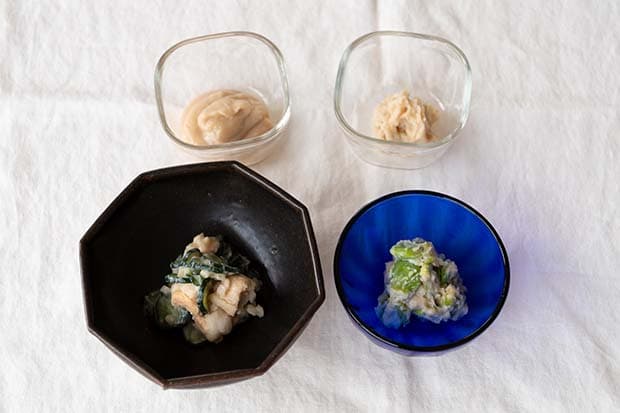
Right: Kome miso that Tama prepared last year. Left: Freshly prepared shiro miso.
Tama’s shiro miso has a sweet, rich flavor, since she makes it with the twice the amount of rice koji she uses for kome koji. She takes advantage of that characteristic in her daily cooking.
“At home, I cook mackerel in shiro miso, and I make pork miso soup with shiro miso as well, plus onions from Awaji Island, which are sweet. Shiro miso pairs well with desserts too. I’ll sometimes mix shiro miso into kome miso when I want a hint of sweetness. Having both types of miso on hand greatly expands your palette of flavors.”
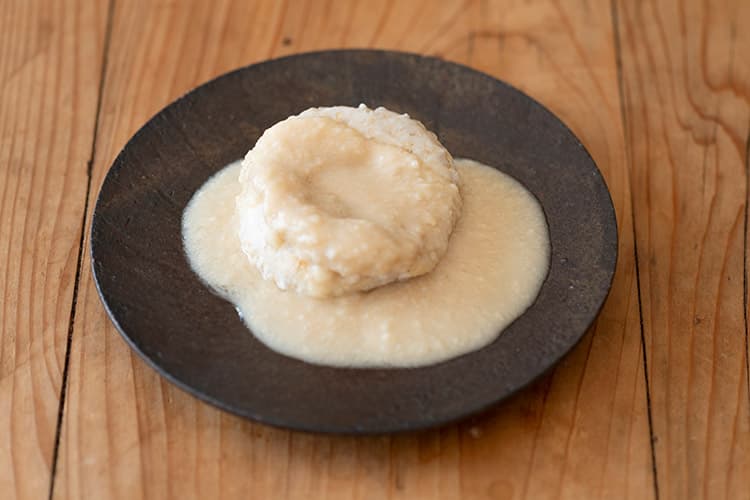
A cooked brown rice cake coated in shiro miso mixed with water. This elegant dessert combines the mild sweetness of shiro miso with a trace of saltiness.