Homemade Ishiru: Japanese Fish Sauce for Umami Cooking
Dec 04,2025
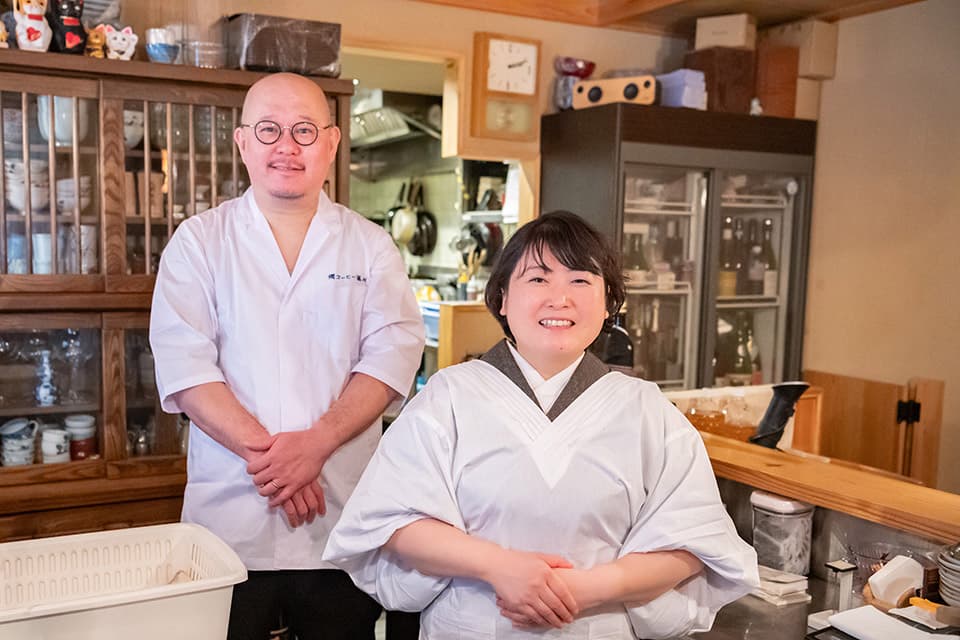
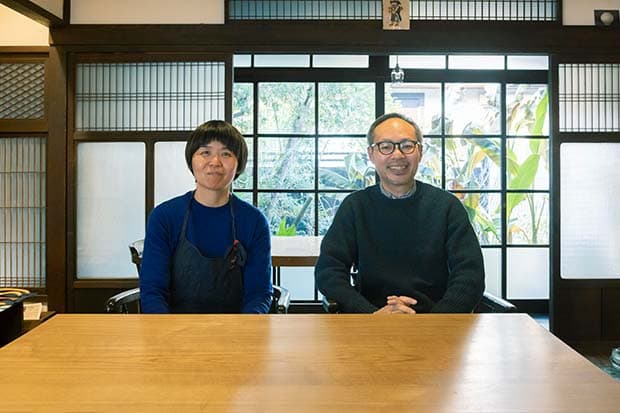
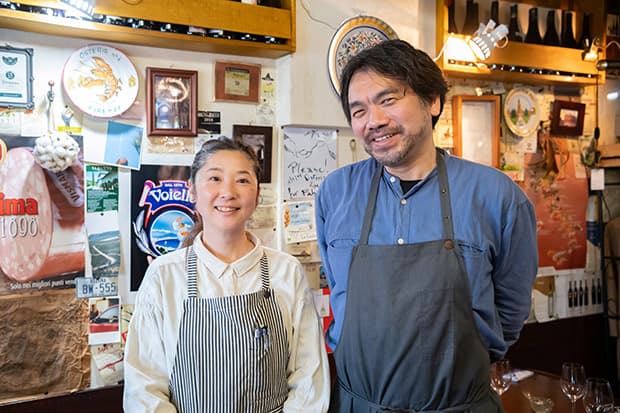
In this ongoing series, we ask food professionals for their top recommended fermented foods. Our guests this time are Fujikiwa Takeshi and Yui, the couple who run Kan Coffee Fuji Fuji, a well-known establishment among foodies in the Araki-cho district of Yotsuya, Tokyo.
In this installment, the Fujikiwas share Takeshi’s choice dish featuring roasted sweet potatoes. A hint of fermentation transforms the sticky roasted sweet potatoes into a sophisticated snack that pairs perfectly with saké. Enjoy savoring this rewarding recipe, the perfect accompaniment while sipping a glass on a winter night.
Just the right amount of fermentation lets the star ingredients shine
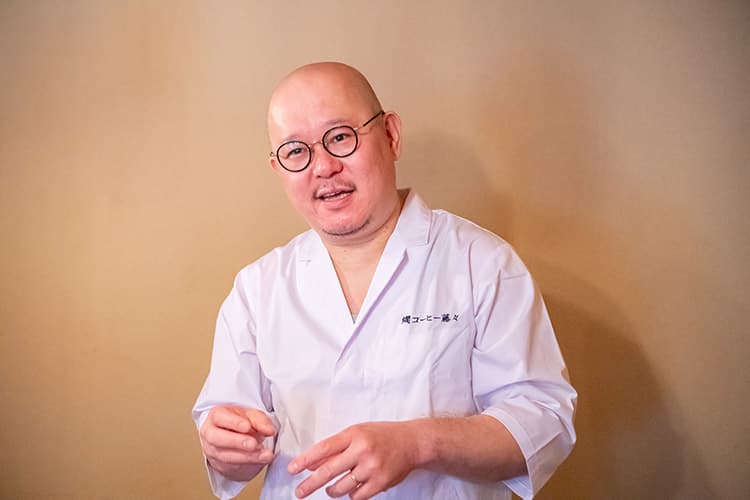
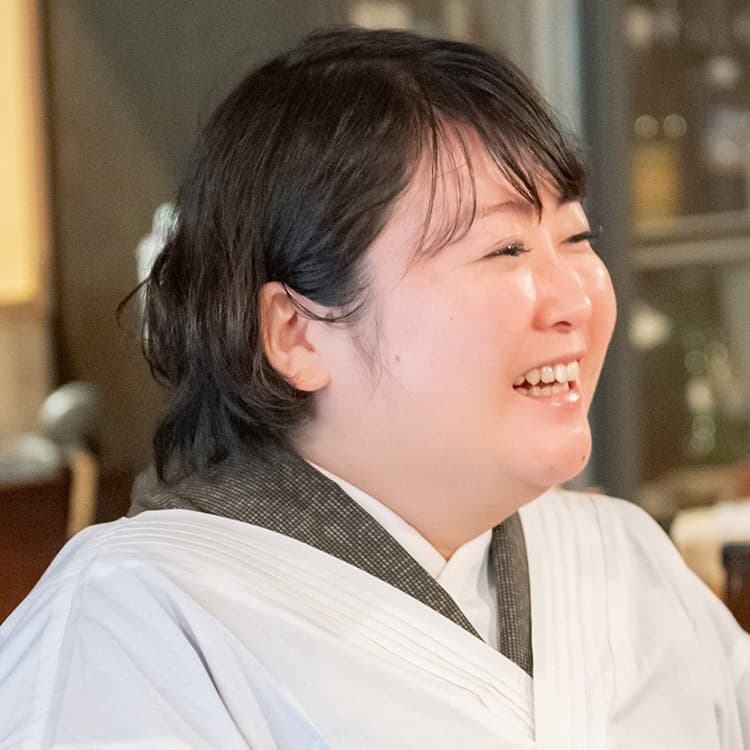
A delicious aroma beckons us to Kan Coffee Fuji Fuji, and waiting for us as we duck through the noren curtains is Yui, wearing a chef’s apron over a kimono. The shop’s name comes from o-kan [warmed saké], coffee, and the character fuji taken from their surnames.
“Our place is sort of a hybrid between an izakaya pub for enjoying warmed saké and a kappo restaurant, but the coffee Yui brews is also one of our signature items. We named our shop Kan Coffee as a pun on canned coffee. (laughs) And Fuji Fuji comes from my former surname, Fujikawa, and her surname, Fujikiwa. The two Fujis make it Fuji Fuji.”
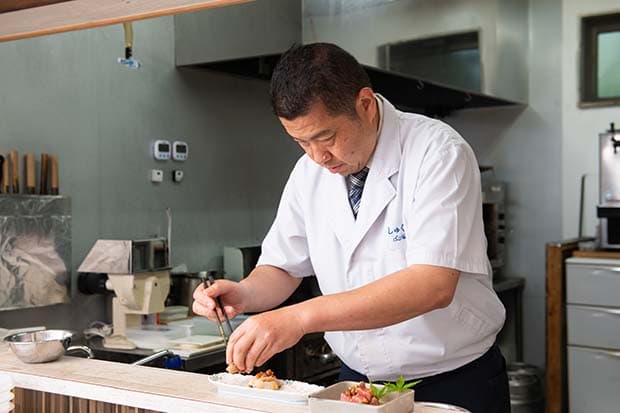
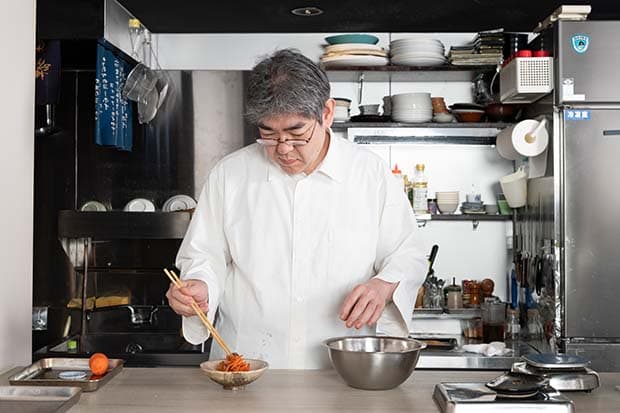
Takeshi, who often laughs playfully like this, has an unusual background for someone in the restaurant trade, being a former jewelry designer. It’s also surprising to learn he taught himself all his cooking skills.
“I switched careers and started working at izakaya pubs that served warmed saké. I was always in a service role and had almost no cooking experience. After starting my own place, I began experimenting with various menu items with fermented foods like nuka-zuke pickles, while envisioning the flavors of some my favorite restaurants.
“What ultimately felt right was using fermentation as a subtle hidden flavor in the dishes, not as the main focus. I took the approach of limiting the characteristic sourness and peculiar aromas of fermented foods as best I could while still benefiting from their umami flavor boost. I think this is the best fit for our place.”
Making a new batch of homemade ishiru fish sauce every two years
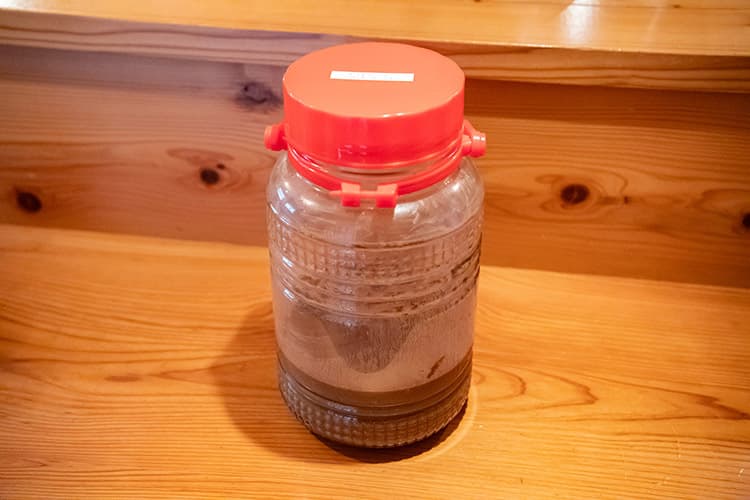
“I started making this fermented seasoning after a chance phone call. It’s a fish sauce made with sardines or anchovies called ishiru. In Italy, it’s called colatura di alici.”
It began with a simple question from Takeshi’s fish wholesaler. “He rang me up asking, ‘Do you need any anchovies?’, and in that moment, it just clicked: I could make ishiru with them,” Takeshi laughs.
He had never made ishiru before. Despite this, he says with aplomb, “You just marinate the entire fish with salt. There’s nothing to it really.”
Takeshi thoroughly washes the anchovies, dries them completely, and places them in a clean storage container. He adds salt equal to one-third the weight of the anchovies, seals the container, and then simply lets it rest, waiting for fermentation to proceed. By salting the anchovies whole, including the innards, the digestive enzymes slowly break down the flesh, extracting more and more umami over time.
“The first time I made ishiru, I hadn’t thought ahead about what to use it for. The ishiru was finished, but it was salty, and right after making it, it had a fishy smell. I was left pondering what I could ever use it for. But gradually, the flesh broke down, turning into a brownish color like that of shiokara [fermented marine viscera]. As it continued to ferment and age even more, the ishiru developed a mellow flavor without any cloying tastes as well as a beautiful aroma. I was truly taken aback.”
Ever since, Fuji Fuji has maintained a cycle of using matured ishiru that has fermented for at least two years, and preparing a new batch of ishiru every two years.
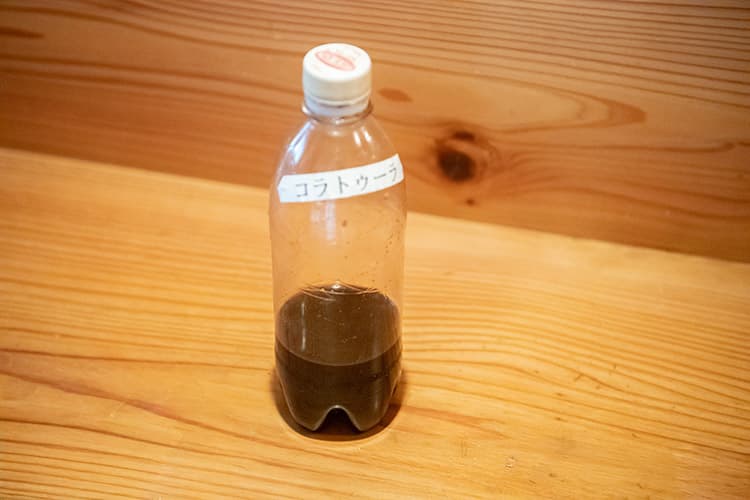
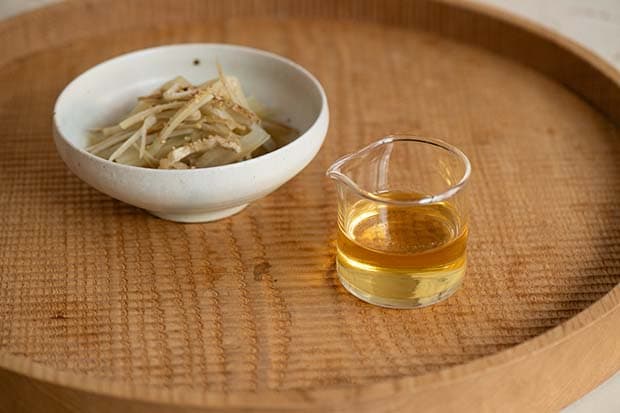
A bottle of ishiru that has been aged for more than five years of maturation and carefully filtered. Its wonderfully inky-black color resembles soy sauce.
Roasted sweet potatoes with etari shiokara and aosa fermented butter
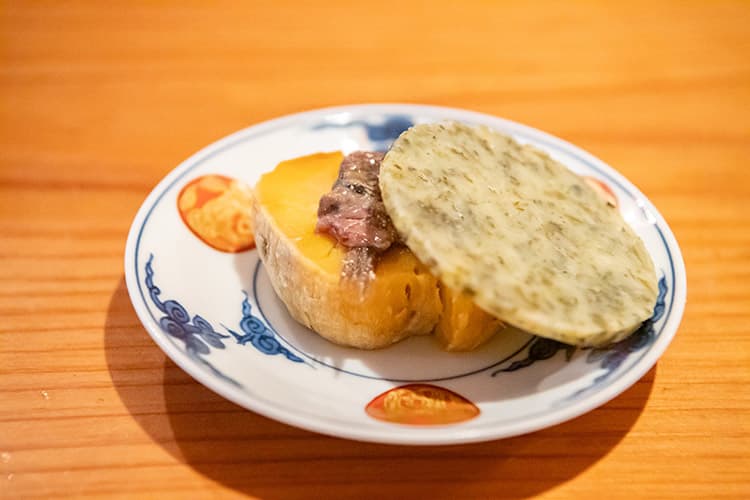
Takeshi’s homemade ishiru, packed with umami, is an important foundation of many of the restaurant’s dishes.
“The aroma is amazing too. Adding just a tiny amount to dashi-stock-based gelatin tastes wonderful. My top choice is something I just came up with this year: roasted sweet potatoes served with shiokara made with Japanese etari anchovies and aosa [sea lettuce] fermented butter. I’m confident this dish will surprise everyone who tries it.”
-
- [Ingredients (easy-to-prepare amount)]
- Fermented butter150 grams
- Aosa10 grams (reconstituted in water)
- Ishiru1/3 tablespoon
- SaltA pinch
- Roasted sweet potatoesAs needed
- Etari shiokara (store bought)As needed
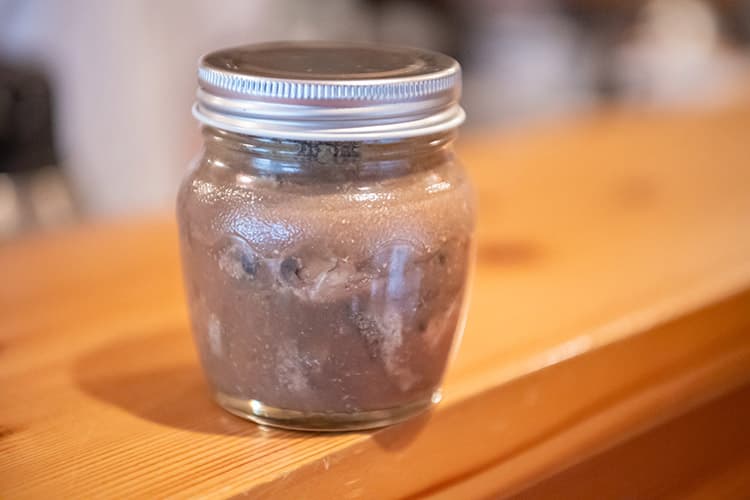
Etari is a type of Japanese anchovies. Takeshi uses etari shiokara sourced from Nagasaki’s Tenyo Maru.
-
- [Directions]
- 1. Place the fermented butter in a small saucepan over low heat. Once it starts bubbling, simmer for about 30 minutes while stirring, until the butter is reduced to about two-thirds of its original volume. Remove from heat when the edges start to brown and caramelize.
- 2. Place the butter from Step 1 in a bowl, add the aosa (thoroughly drained of excess water), and mix well. If the butter has cooled and hardened, mix while the bowl is placed in a hot water bath.
- 3. Add and mix in the ishiru and salt, and then pour the mixture onto a cooking tray lined with a baking sheet. Chill until it sets.
- 4. Slice the roasted sweet potatoes into pieces three to four centimeters thick and remove the skin. Top each slice with some etari shiokara and a circular piece cut out from the mixture from Step 3 with a biscuit cutter.
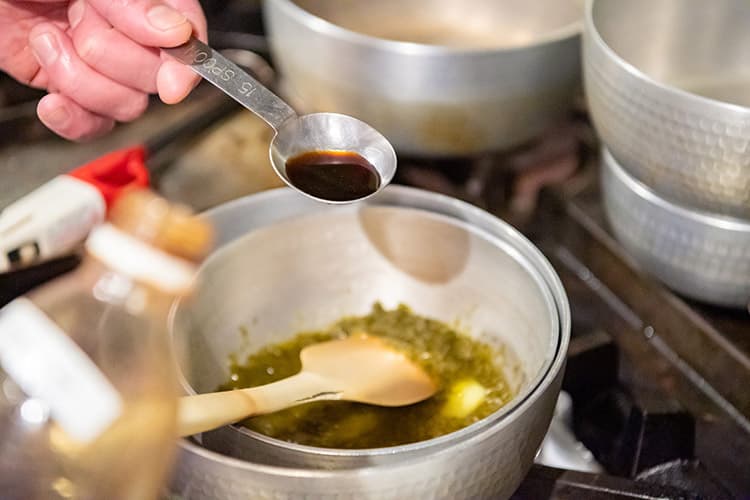
The umami and aroma of the ishiru, along with its mellow saltiness, are key to the flavor
The aosa fermented butter infused with ishiru combines the richness and umami of butter with a seashore aroma. Overlaying this is the sweet, sticky texture of the roasted sweet potatoes and the saltiness and umami of the shiokara, for a delicious taste that stays with you.
“Reducing the fermented butter intensifies its umami and creates a clean, light finish. The key is to turn off the heat just before it scorches. Cutting out the hardened butter sheet with a circular biscuit cutter is purely my personal quirk. (laughs) At home, you can just simply snap off pieces as needed.”
The reason behind such a broad menu: The joy of choice
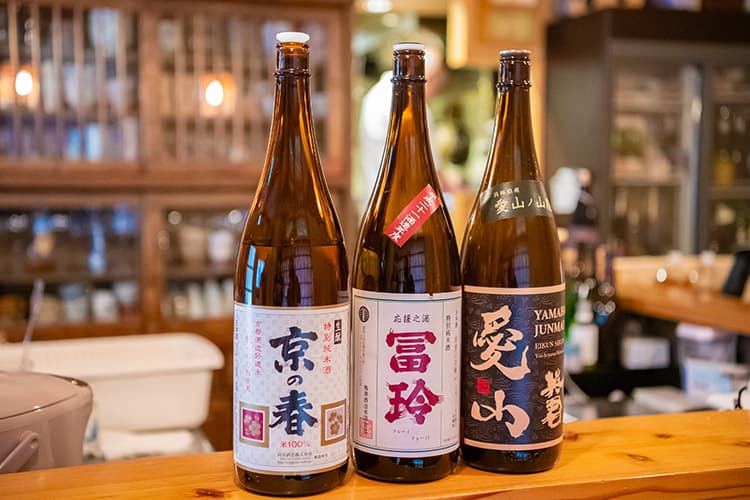
True to its name, Kan Coffee has an extensive menu of warmed saké. And its broad food selections — so many that it’s hard to believe Takeshi manages it all alone in his kitchen — never fail to captivate visitors.
“I want this to be a place where you can order a number of à la carte items and never get bored, no matter how many times you visit. Having choices is a really important theme for me. Since there are so many things I want to try, the menu keeps growing, and the text on the menu keeps getting smaller and smaller. (laughs)”
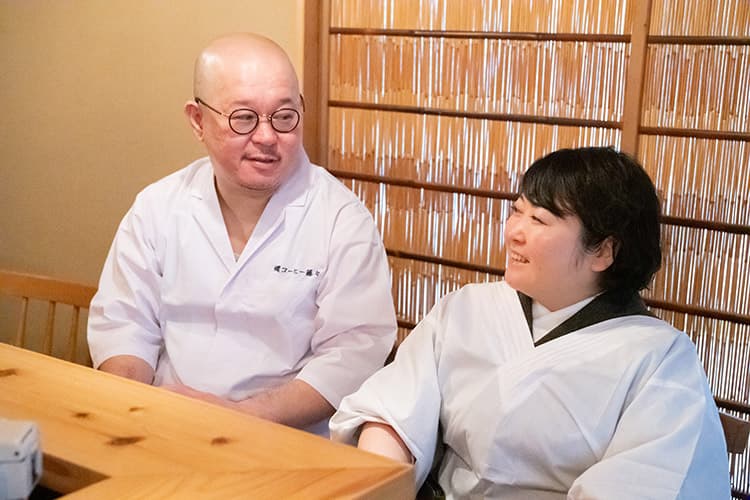
Yui, the proprietress, describes Takeshi, who cranks out new dishes, as an “ideas man”.
“He’s always researching something, and I think he’s really good at synthesizing all that information,” says Yui.
The drink menu is centered on warmed saké. Choosing the saké to pair with your dishes is another pleasure.
“Most of the saké we carry here has been well fermented, so they are not so sweet. They pair well with food, and the idea is that their delicious zone is both flexible and broad. I prefer that kind of deeply pleasing and comforting taste over flavors calculated down to the last detail.”
Warmed saké, coffee, and fermentation
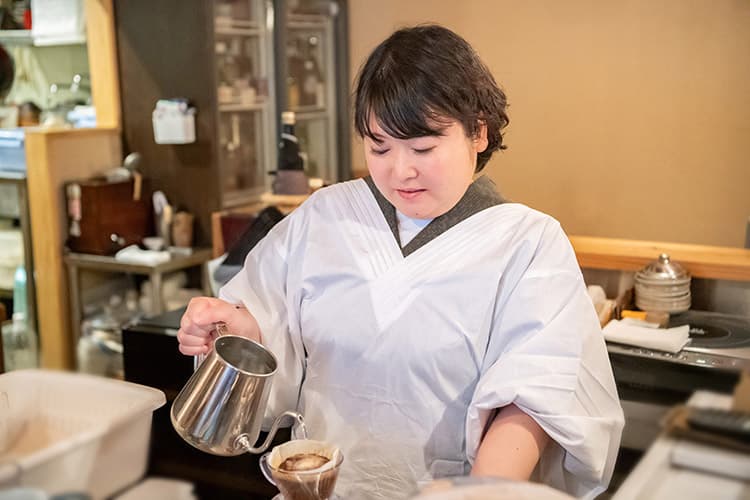
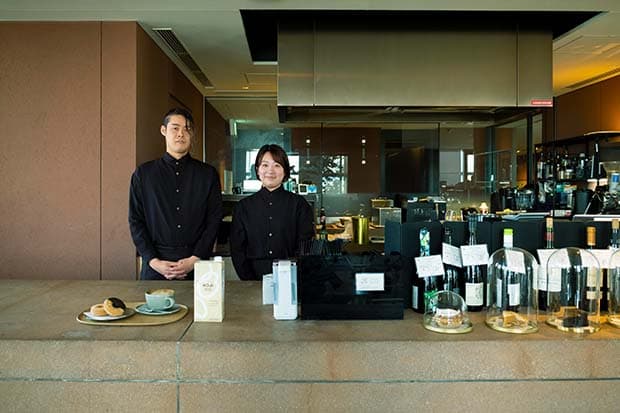
The Fuji Fuji style is, once your stomach and soul are satisfied, to cap everything off with a coffee that Yui carefully brews one cup at a time.
“I aim to brew coffee with a clear taste and little bitterness. I want each cup to maintain a lingering aftertaste, like how the umami of dashi stock or the tone of warmed saké continues on unbroken. You could think of it like green tea after a meal. Its soothing, gentle flavor pairs surprisingly well with Japanese cuisine, creating a pleasant harmony.”
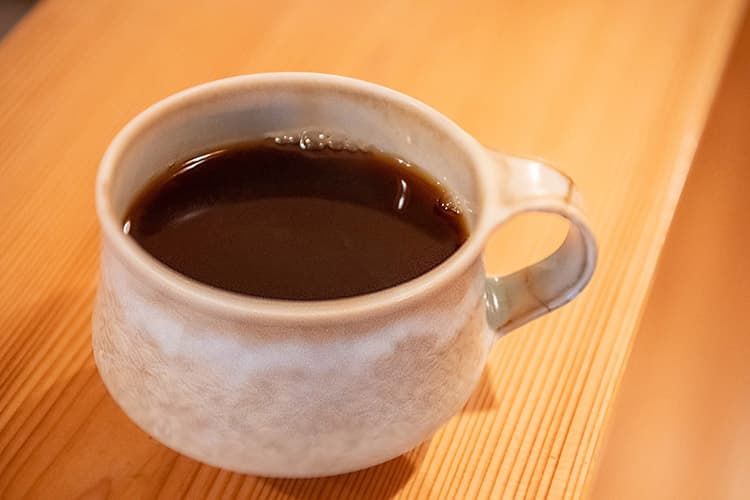
The beans on the day of our visit were produced in El Salvador
The use of fermentation brings variety, surprise, and depth to the restaurant’s diverse menu. The warmed saké sinks unhindered into your body. The coffee’s aroma wafts gently throughout the place. All these elements blend together naturally, calmly encapsulating the joy of eating and drinking. At Fuji Fuji, such delicious moments flow along with tranquility.
In our next article in this series, the baton passes to Kenichi Sato, owner of Sugar Sake & Coffee, an izakaya pub in Tokyo’s Asagaya area. Watch this space!