Starting with no experience in restaurants or retail: Centering Temahima on their love of fermentation and interest in mingei
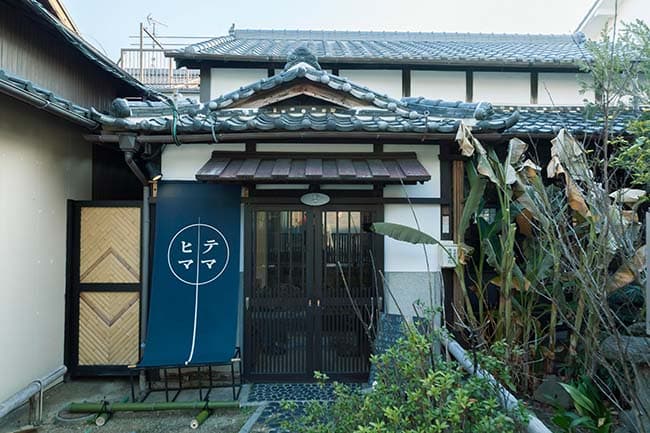
A walk through a residential neighborhood within easy access of the train station brings you to a nostalgic traditional house that has stood for over 90 years. Mingei tableware lines the earthen entranceway, and upon entering the house, even more tableware and goods welcome you. Mingei folk art has a broad scope, but it generally refers to handcrafted items such as ceramics, woodwork, and glass made for daily use rather than for display. You can sense the unpretentious beauty within everyday life through mingei that have been crafted using local materials and traditional techniques. Beyond the shop area filled with these kitchen and household goods is the café area, where you can enjoy homemade dishes featuring fermented foods during lunch and coffee breaks.
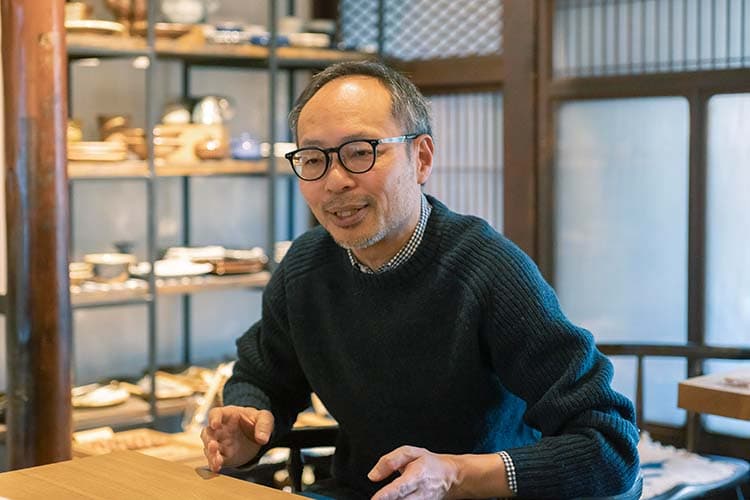
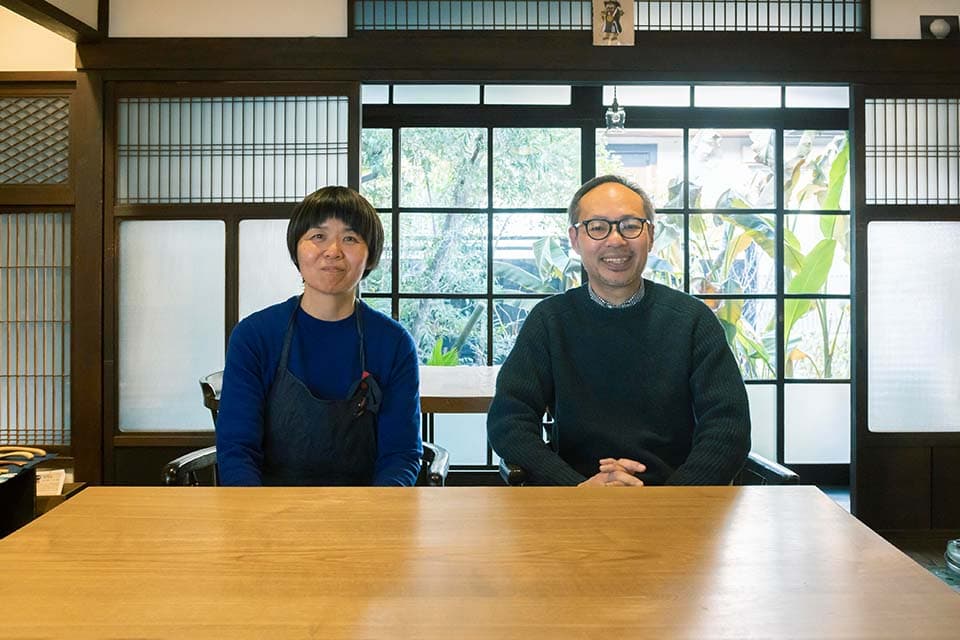
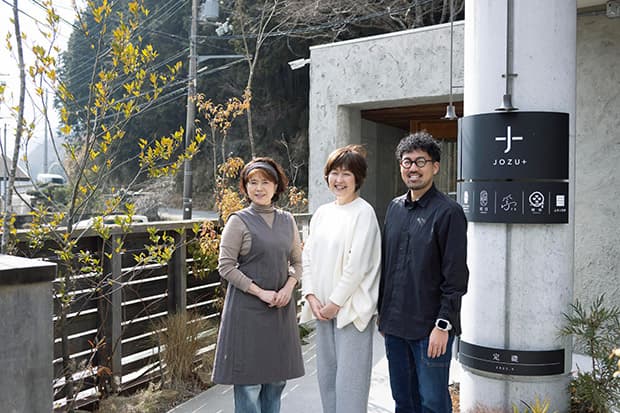
Hitoshi outlines how Temahima came to be. “I worked at an online retailer in fashion and e-commerce before starting Temahima. I used to visit pottery studios all over the country out of a personal interest, but I never intended to turn my pastime into a livelihood. My company offered an early retirement program at one point, but as a manager, I wasn’t eligible. The moment I found myself thinking it was a shame I was ineligible, I realized there was a part of me that wanted to leave. [laughs] Driven by this revelation, I quit my job and the two of us started looking for a place to open a shop. We decided to look for an older traditional Japanese house because we felt it was the best way to showcase an entire lifestyle in addition to fermentation and mingei. After some twists and turns, we finally found this location.”
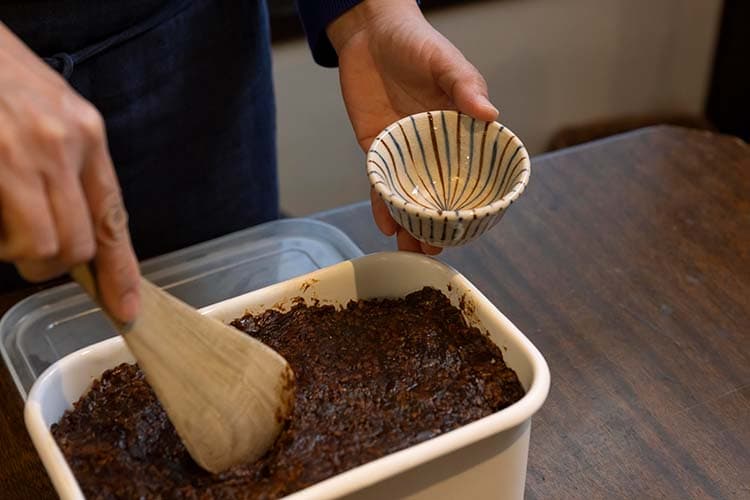
Of Temahima’s fermented food offerings, Tomoko, a self-professed miso lover, places particular attention on the miso she uses in her dishes. Interestingly, she started Temahima’s café with zero experience in the food and beverage industry.
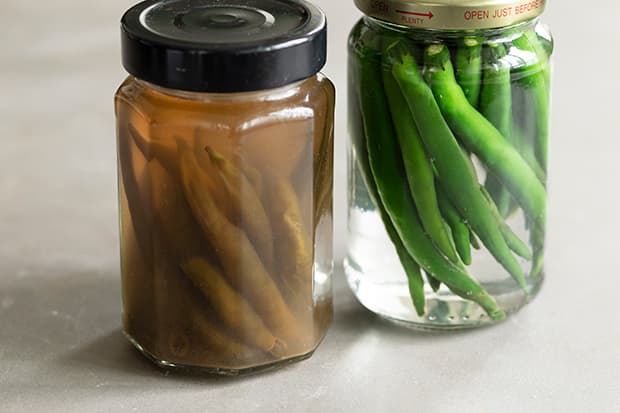
“I got into fermentation when my mother got seriously ill. Her illness got me to re-evaluate my diet and eat healthier. When I started thinking about using healthy seasonings as well, I realized the benefits of fermented foods. After helping make miso at a friend’s shop, I learned that miso is actually surprisingly easy to make. From there, I started making miso and maintaining my own nukadoko [rice bran pickling bed] at home. I used to keep a diary about the fermented foods I made, and when I read it again, I can see how I excited I was making fermented foods. [laughs] There were failures to be sure, but it was just so much fun. Before I discovered fermentation, I never questioned the processed condiments I used. But once I started incorporating fermented foods into my daily life, I stopped catching colds. And the friends I made through making fermented foods were all such interesting people. When I served meals made with my homemade fermented foods to friends who came over, they would always tell me I should open a restaurant. But at the time, I was a full-time housewife with no experience in the food industry.”
Nevertheless, through her many experiences, Tomoko became completely obsessed with the appeal and benefits of fermented foods, especially miso.
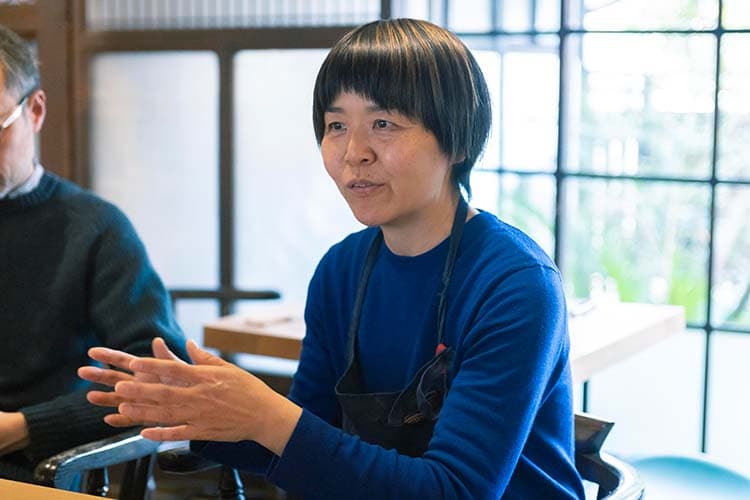
“There are so many varieties of miso all over the country, each with its own unique character,” Tomoko says. “Whenever I travel, I buy miso as a souvenir, and I always end up with really heavy luggage. [laughs] What I really love about it is its versatility — you can turn just about any ingredient into miso soup. And if a dish tastes a bit bland, adding just a little miso brings the flavor together perfectly. It’s delicious, good for your health, and fun to make. I’ve been enchanted by miso for a very long time now.”
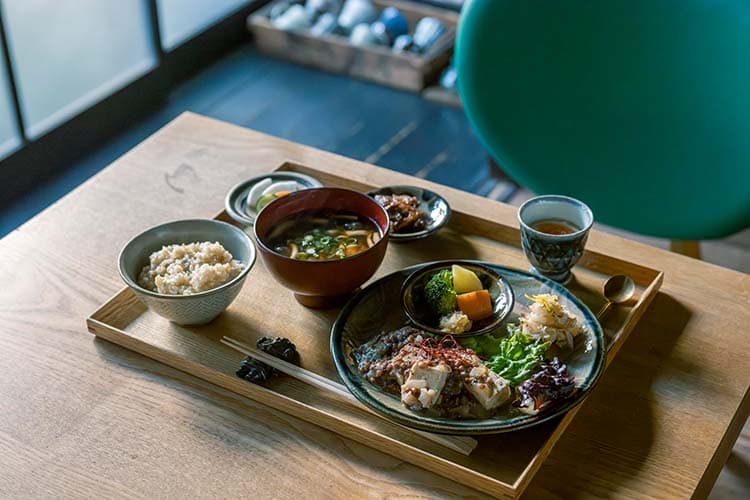
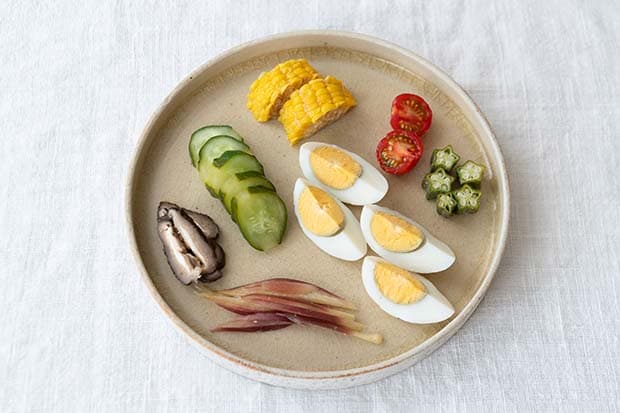
“Tomoko didn’t get her miso sommelier certification to open a restaurant,” Hitoshi says. “She got it simply because she wanted to learn more about miso. [laughs] Every dish at Temahima is overflowing with a love for miso.” Indeed, the menu at Temahima features an abundance of dishes that include miso. For instance, the monthly obanzai lunch special that consists of Kyoto-style side dishes with a choice of miso soup is full of Tomoko’s ideas for using miso in creative ways.
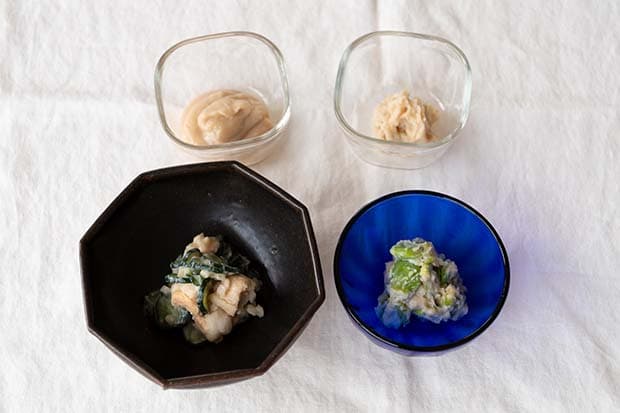
The couple is equally particular about the ingredients used at Temahima. Aside from the bonito flakes used in the dashi stock, no animal-based ingredients are used. The menu features hearty dishes like sprouted brown rice cooked in an earthenware pot, pickles, and small side dishes. You can choose from three types of miso for your miso soup — rice, barley, or soybean — and since one of them changes monthly, you can discover a new miso each time you visit. The miso is carefully selected and sourced from all over the country.
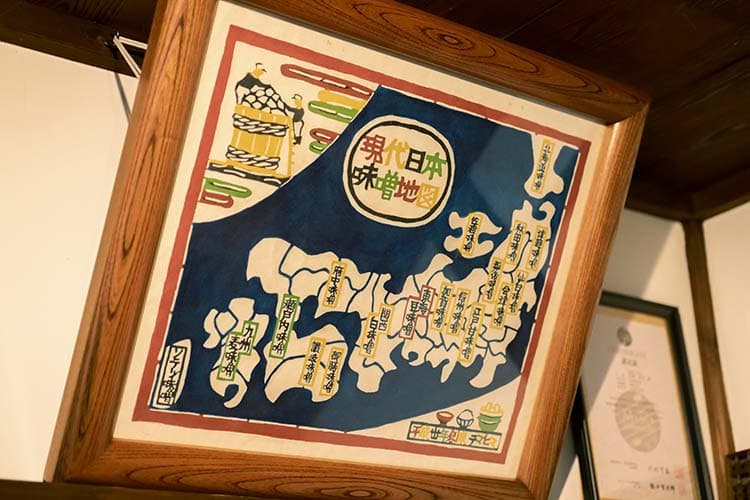
“Even though mobile orders have become commonplace today, when customers order lunch, we explain the regional origins and characteristics of each miso before letting them choose,” Hitoshi says. “Many of our obanzai side dishes also feature miso, and some customers remark that they didn’t realize miso could be used in so many different dishes. People tend to think of miso as just for miso soup, but it’s a shame to stop there. We sometimes share recipes, and in the winter, we hold workshops on homemade miso. We would like our customers to do more than just eat here. We’d like them to use miso in their home cooking and even make it themselves. We hope our place serves as a gateway to that.”
“I want people to learn about the variety of miso and fermented foods found all over Japan and enjoy them,” says Tomoko. “Entrusting food to the power of fermenting microorganisms makes it taste better. I hope people will incorporate miso freely into their home cooking. Making miso might seem like a lot of work, such as boiling and mashing the soybeans. But once you taste how delicious your own miso is, you’ll want to make it every year.”
Hitoshi adds: “When I talk about the regional differences in miso, friends who come in together start chatting about how they use barley miso at home or that they’ve always used rice miso. You don’t usually talk about the miso you use at home, even with close friends, do you? It’s a great conversation starter, and from there, the talk naturally moves on to family life, stories about their childhood homes, and their hometowns. Talking about miso really enlivens conversations.”
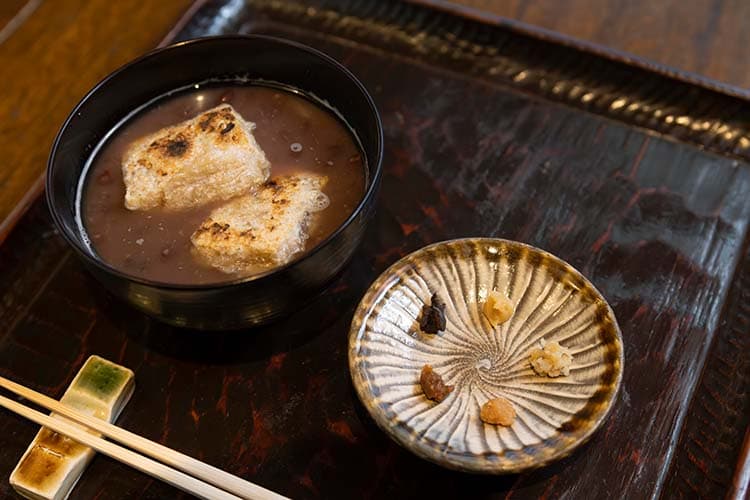
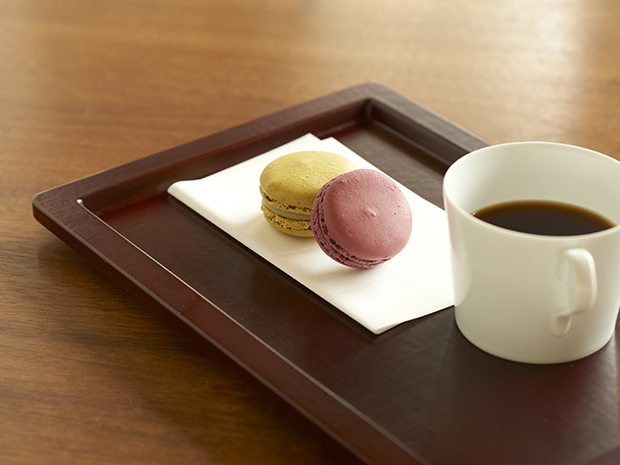
In addition to the lunch specials, Temahima offers its own twist on zenzai [sweet red bean soup made with azuki beans served with mochi or rice dumplings] served during café hours during the winter season. Instead of the usual salted kelp, five types of miso are served as palate cleansers.
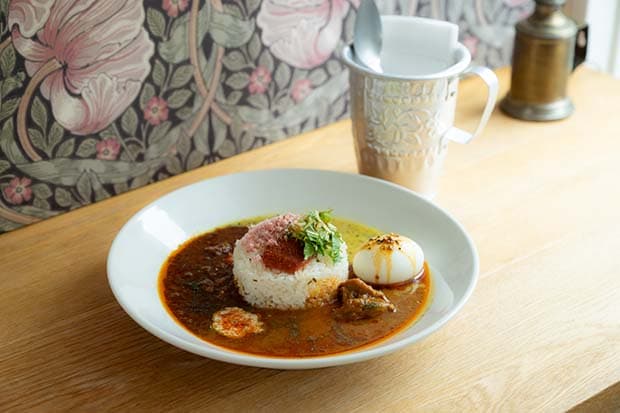
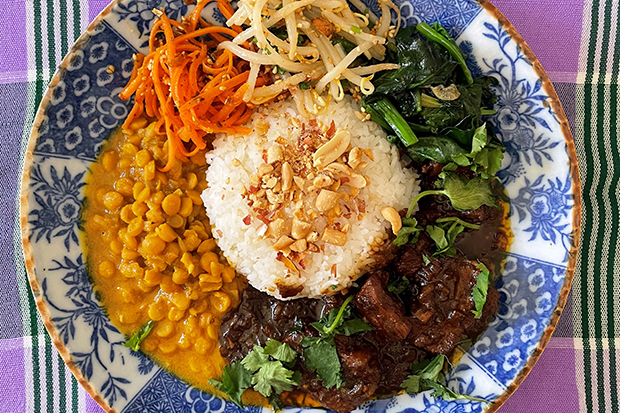
“We use miso in many of our dishes,” Tomoko says. “The five types of miso served with the zenzai let you enjoy the differences between them, and their saltiness enhances the sweetness of the soup. Our Thursday-only curry also uses miso. We use ingredients like lacto-fermented mushrooms in the curry in place of animal-based ingredients. We hope that by serving delicious meals created with the bounty of nature and fermentation, we can inspire people to try these ideas in their own home cooking.”
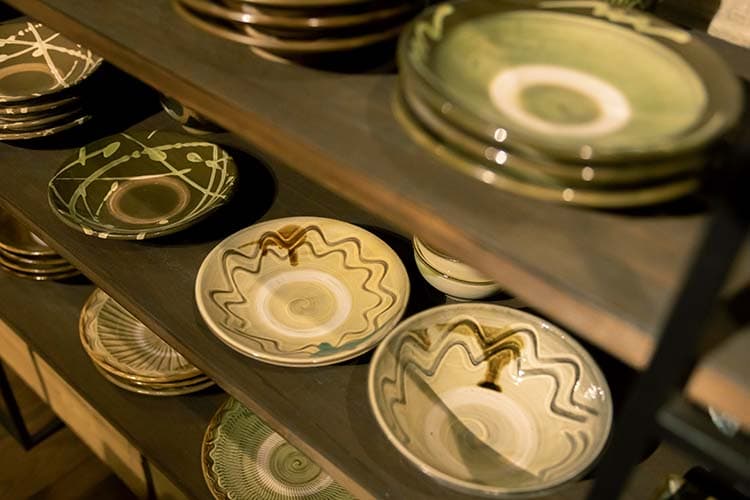
Naturally, nearly all of the mingei tableware used to serve the food is the same as what is sold in the boutique. Customers can enjoy meals while appreciating the charm of the tableware.
“After running the shop for eight years, you can actually see changes in the lacquer bowls we’ve used since we first opened,” Hitoshi says. “By comparing them with brand-new bowls and seeing how they change with continued use, customers can gain an appreciation for the beauty of aging inherent in mingei tableware. Mingei and fermentation actually have a lot in common. Both involve nameless artisans and a reliance on external forces. Relying on external forces stands in contrast to self-reliance. With mingei tableware, for example, the artisan must entrust a piece to the kiln’s fire before it can come into being. Fermentation works in the same way. People arrange the conditions and then entrust the process to the actions of microorganisms. Fermentation also embodies the nameless artisans concept associated with mingei, since fermentation has been passed down from ancient times without being the invention of any single person or having definitive recipes. Both mingei and fermentation are built on traditions formed by our ancestors.
“Mingei is often thought of as simply objects, but it is really a movement. It proposes a general principle for how to live, and it is also a way of thinking and a philosophy. Fermentation is the same. I believe fermentation is not only a food and a phenomenon, but also serves as a barometer.”
Other Temahima initiatives deepen one’s awareness, much like fermentation or maturation
At Temahima, the Otas are not just running a café featuring fermented foods or a folk art boutique. They have also been launching initiatives you won’t find anywhere else, like Thoughtfulness Tickets and Philosophy Café events that bring out the goodwill and consideration in people and connect people.
“The Thoughtfulness Tickets are a book of five drink tickets, priced at about the cost of four drinks,” says Hitoshi. “Lately, I’ve felt that the world has become harsher and less tolerant. So I started these tickets about a year ago, hoping that even a small gesture could warm people’s hearts and bring a sense of calm. One of the five tickets is, so to speak, a gift from Temahima. Customers who purchase a book of tickets can use them themselves or give them to someone else. And that gift can be received by anyone. It’s a gesture of passing on the seeds of goodwill — what’s known as paying it forward — to the next person.”
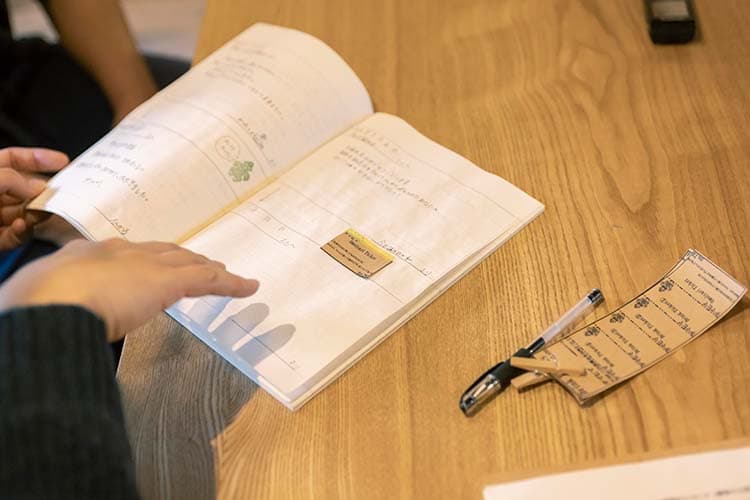
The way to give and receive Thoughtfulness Tickets is very simple. You paste a ticket in a notebook and write a message addressed to a stranger. When someone reads the message and thinks, “This is meant for me,” they can write a reply and use the ticket to order a drink.
“We could probably turn this into an app, but we’ve deliberately kept it analog with paper tickets,” says Hitoshi. “We have customers write in the notebook who they want to give their tickets to. The notebook is open for anyone to see, regardless of whether they’ve purchased a ticket, and the recipients vary: ‘To the mom who needs a breather,’ ‘To the person who dropped in during their work break,’ and so on. Communication grows in the notebook and it takes on a life of its own. One customer was even moved to tears on finding a message that seemed to speak directly to them. The sender apparently intended it as a kind of letter to their past self from a few years ago, but that sender’s past was also another’s present. The moment someone receives a ticket, an act of kindness is born. There’s a fascinating aspect to this form of communication that transcends time. Since they come in a book of five tickets, the purchaser looks forward to their next visit, wondering what happened to the tickets they’d bought. The Thoughtfulness Tickets, much like fermentation, are an act of joyful waiting.
“We simply provide the notebook, which acts like a nukadoko, and what kind of communication emerges from within the notebook is up to the ‘microorganisms’ — i.e., our customers.
“Unexpected connections and relationships blossom, and just watching these exchanges unfold makes me feel good. I want people to receive this type of compassionate kindness.”
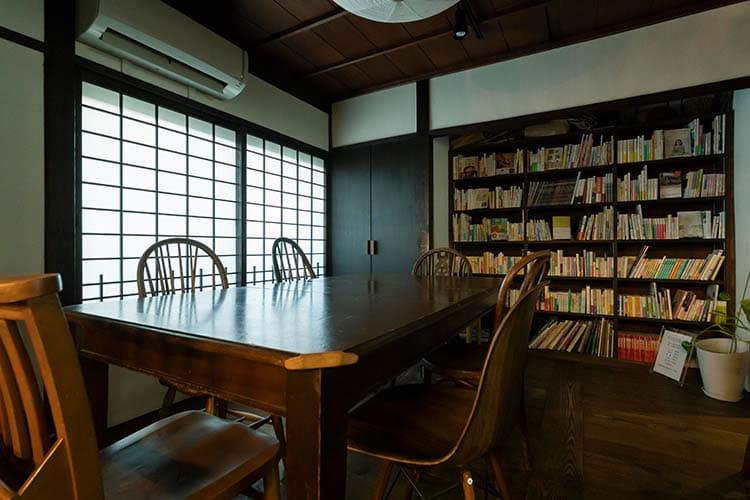
The Philosophy Café is a monthly event for dialogs and exchanges. It’s not a venue for discussing philosophical ideas, but rather a talk session where people share their daily frustrations and uncertainties. The goal isn’t to find answers. Instead, the participants enjoy the act of exchanging thoughts about questions that have no answers.
“Once people enter the workforce, they tend to mainly talk only with people from similar backgrounds or in similar circumstances,” Hitoshi says. “At Temahima’s Philosophy Café, people who wouldn’t normally even meet gather together. Even when participating for the first time, they don’t introduce themselves or reveal their age or occupation. Instead, they put forward questions about mutual uncertainties and discuss them with one another. It’s not about debating or refuting others, but rather the act of listening to people’s stories. With a drink in hand, we delve deeper into thoughts on topics people don’t usually discuss. It’s been about a year since we started these events, and I’ve come to realize that they are also a bit like a nukadoko.
“As the facilitator, I simply set the stage and leave the rest to the participants. I want them to enjoy how their individual thoughts and ideas ferment and mature over time. Although everyone speaks without revealing their names, the added atmosphere of this traditional Japanese house creates a completely different experience from the anonymity of social media; the participants spend a restorative time talking while watching each other’s faces and expressions.”
We want Temahima to be a place where people can unwind, while connecting people to people and people to objects
Homemade dishes featuring fermented foods, traditional folk crafts from all over the country, and Thoughtfulness Tickets and Philosophy Café events. Temahima provides not only gourmet food and specialty goods but also a space to reflect on daily life and experience culture firsthand.
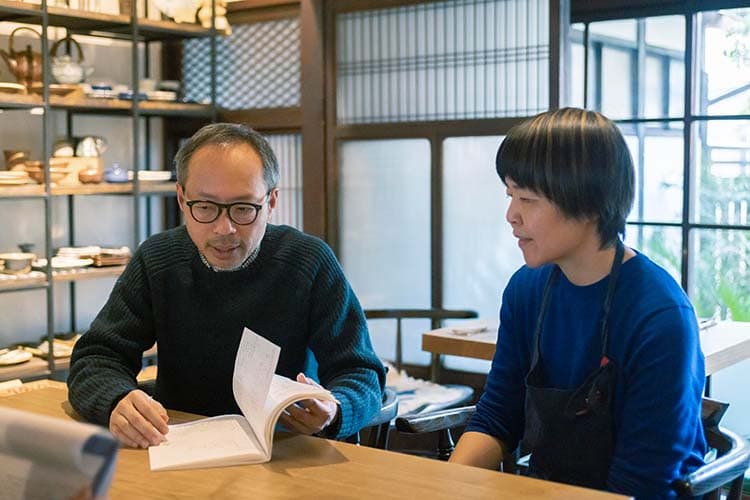
“I realized this after we started the Philosophy Café and the Thoughtfulness Tickets, but both feel very much like fermentation,” Hitoshi says. “Fermentation isn’t just about food; it also connects to a way of thinking. Since Temahima is tucked away in a back alley of a residential neighborhood, people rarely stumble upon it by chance. People who love fermentation, mingei, and old houses come here, as well as expectant mothers, parents with babies, and health-conscious individuals. A truly diverse range of customers go out of their way to find us, even traveling from far away. We want this place to be a kind of entry point, where everyone takes home something, even if it wasn’t what they originally came for. It’s been eight years since we opened, but Temahima hasn’t been built up by just the two of us. It exists today because of our staff, our customers, and the connections between people. It’s a matter of depth over growth. Just as we’ve slowly fermented and matured over time, we want to continue letting nature take its course and enjoy the changes that come with it.”