Sake Lees with Soy Sauce and Mirin for Medicinal Dishes
Jan 22,2026
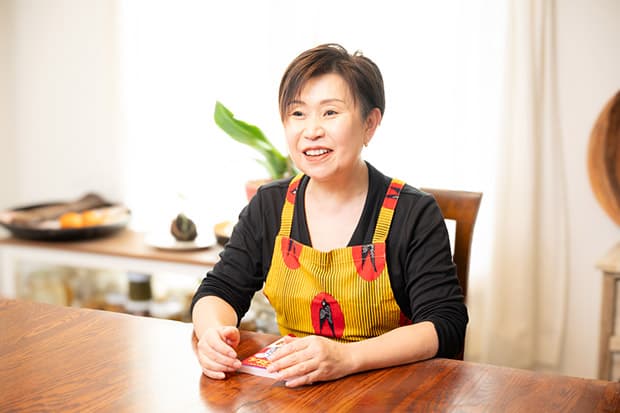
Yakuzen or Chinese medicinal cuisine is having a moment in Japan these days. At this time of year, certified Yakuzen chef and culinary expert Saito Nanako is particularly fond of using sake lees, a fermented food widely available in winter.
“Many people find sake lees difficult to work with or are put off by their unusual flavor. But they’re easy to use provided you first take the edge off them,” says Nanako. Here she shares her recipe for sake lees in soy sauce and mirin — an ingredient she loves — and tells us how to get the most out of them in the kitchen. And you won’t want to miss her insights on black fermented foods, a must for winter meals!
Sake lees: the ultimate winter wellness ingredient
Sake lees (in Japanese, sake kasu) are the solid by-product left over after the mash is pressed during the sake production process. Delicious, fragrant sake lees are available in Japanese stores from winter to spring, when new sake is released. “In Chinese medicinal cuisine, sake lees are considered effective in remedying a variety of disorders that affect people in winter,” says Nanako.
“They supplement the qi (the energy source necessary to maintaining life), boost immunity, and warm the body. They warm your insides when they’re chilled and promote digestion. They also stimulate blood flow and replenish the skin’s moisture. They’re good for you in every way, especially in winter.”

Bringing out the benefits of sake lees with soy sauce and mirin
But while sake lees can help you stay warm in winter, many people find they’re tricky to work with because of their firm texture and think they have a peculiar taste. Here, therefore, Nanako tells us how to prepare a great seasoning by simply softening sake lees slightly in hot water, then adding soy sauce and mirin. She calls it “sake lees in soy sauce and mirin.”
“Because it’s in the form of a thin paste, it can immediately be used in your cooking. Plus the soy sauce’s saltiness and aroma and the mirin’s mellow flavor mask the unusual taste of the lees. It’s a more versatile version of sake lees.”
The enzymes in the sake lees, moreover, break down proteins. Using sake lees in soy sauce and mirin as a marinade for meat or fish leaves it soft and tender and infuses it with flavor. It’s a delicious way to prepare either.
“When you cook the marinated meat or fish, the alcohol in the marinade evaporates, further reducing the unusual taste of the sake lees.”
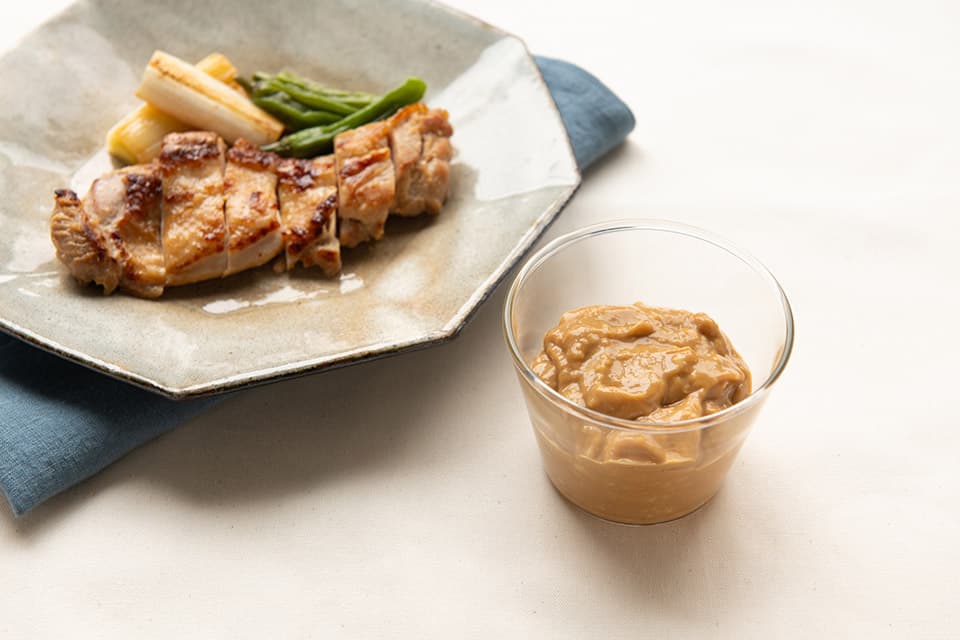
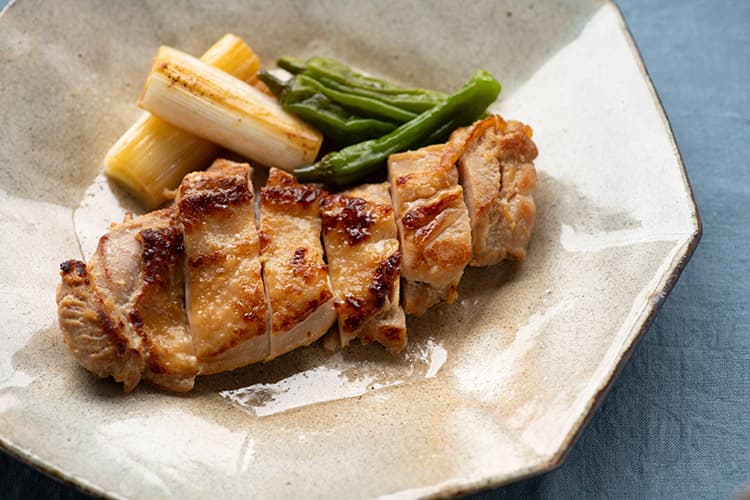
Here, Nanako also shares her recipe for chicken marinated with sake lees in soy sauce and mirin.
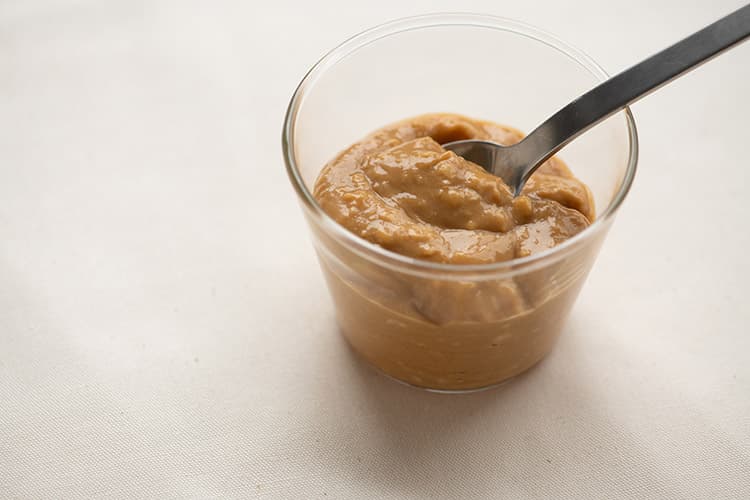
Sake lees in soy sauce and mirin takes the form of a smooth paste. Stored in a jar or ziplock bag, it keeps for about two weeks in the fridge.
Recipes: Sake lees in soy sauce and mirin Chicken marinated with sake lees in soy sauce and mirin
-
- [Ingredients (for 2 servings)]
- 〈Sake lees in soy sauce and mirin〉
- 100 g sake lees
- 3 tbsp. boiling water
- 2 tbsp. soy sauce
- 1 tbsp. mirin (sweet cooking sake)
- 〈Chicken marinated with sake lees in soy sauce and mirin〉
- 1 chicken thigh (300 g)
- The entire batch of sake lees in soy sauce and mirin
- 2 tbsp. sake
- ⅔ naganegi long onion
- 6 shishito peppers
- ½ tbsp. vegetable oil
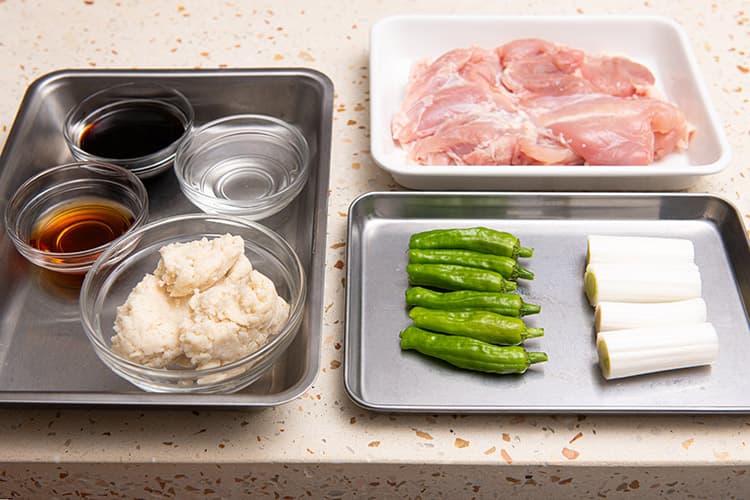
Nanako recommends using sake lees in the form of soft flakes (bara kasu) rather than sheets (ita kasu). To garnish the marinated chicken, slice the naganegi long onion into 4 equal lengths, and trim the shishito pepper stems.
-
- [Instructions]
- 〈Sake lees in soy sauce and mirin〉
-
1. Place the sake lees in a bowl. Add the boiling water and mix well.
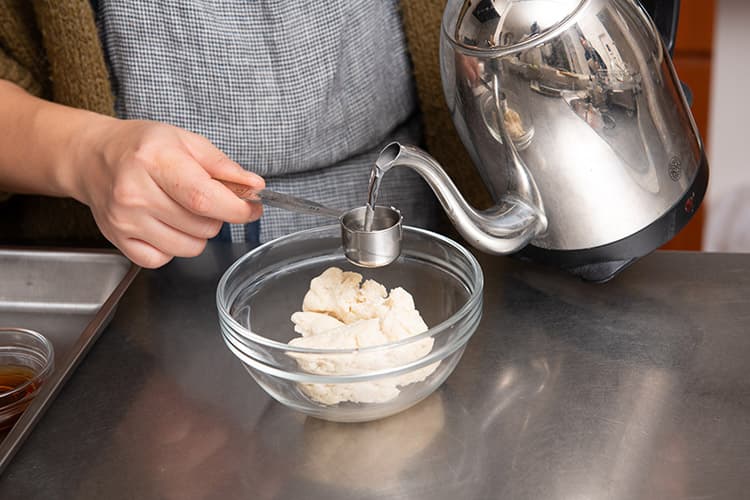
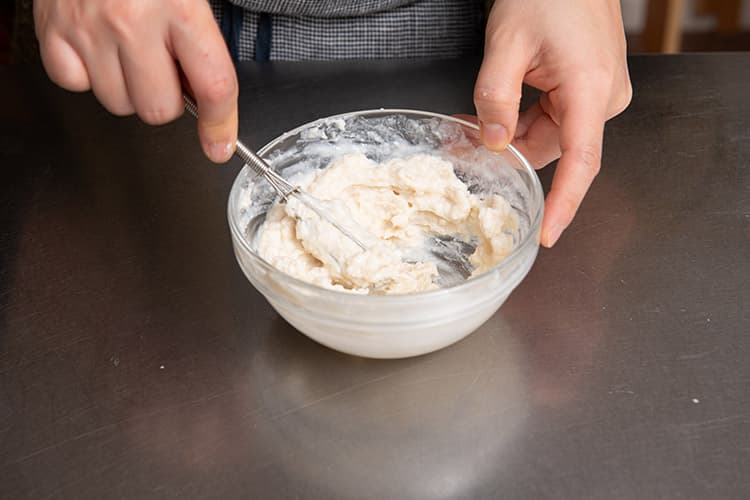
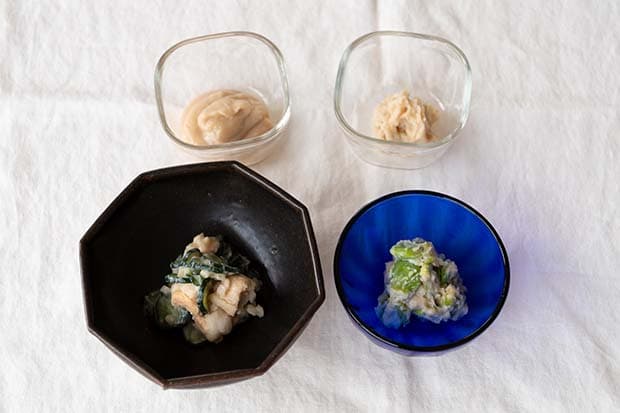
Add hot water to the sake lees and mix them well, dissolving them into a paste. “Basically, you should mix them to a smooth consistency as in the photo. Don’t worry if there are a few little lumps left.”
-
2. Once the sake lees dissolve, add the soy sauce and mirin and continue mixing well.
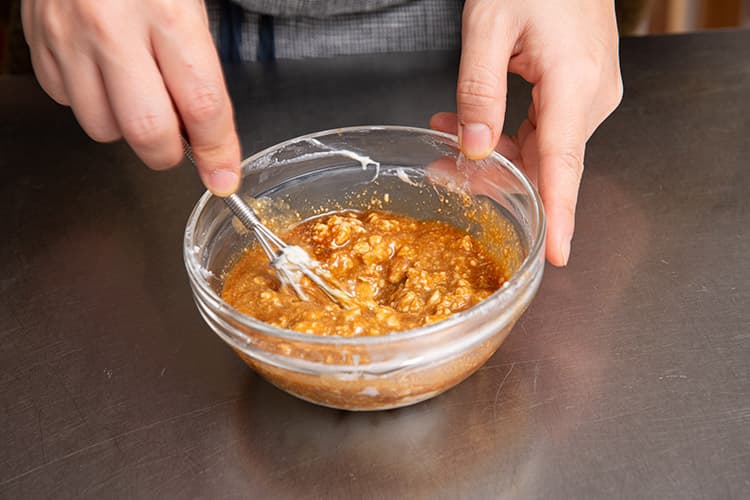
The finished product. If you’re going to be using it to make chicken marinated with sake lees, transfer the entire batch to a ziplock bag.
- 〈Chicken marinated with sake lees in soy sauce and mirin〉
-
1. Remove any excess fat and sinew from the chicken. Place the chicken skin-side down and score it across the fibers, then slice in half crosswise.
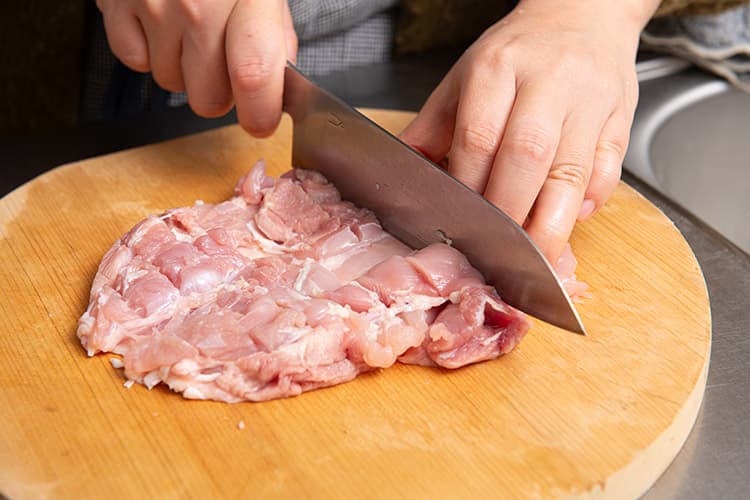
Cutting the fibers helps prevent the chicken from shrinking. Place it sideways on a cutting board and score it in several places at 2 cm intervals.
-
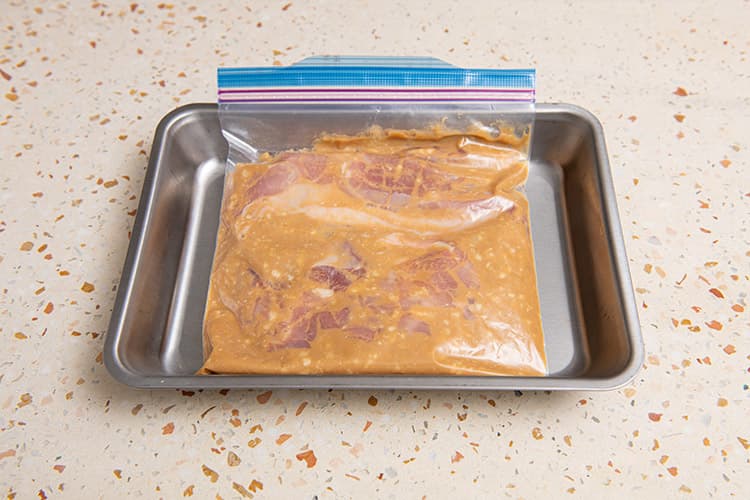
2. Place the chicken in the ziplock bag containing the sake lees in soy sauce and mirin and massage to coat it. Remove the air and seal the bag, then place in the fridge. Let marinate at least overnight.
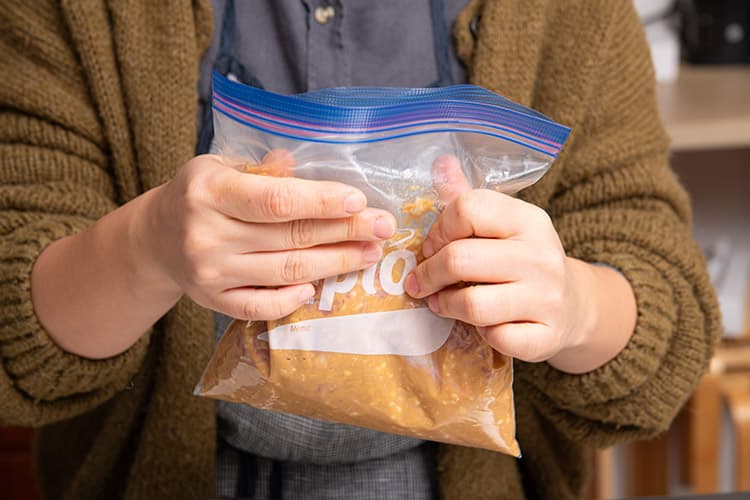
Left: Massage gently through the bag.
Right: After squeeing all the air from the bag, lay it down flat so the chicken absorbs the flavor. It can also be stored in the freezer like this. Use fresh marinade for each batch.
-
3. Remove the chicken and wipe the sake lees marinade off the surface, then wrap in a paper towel and press gently.
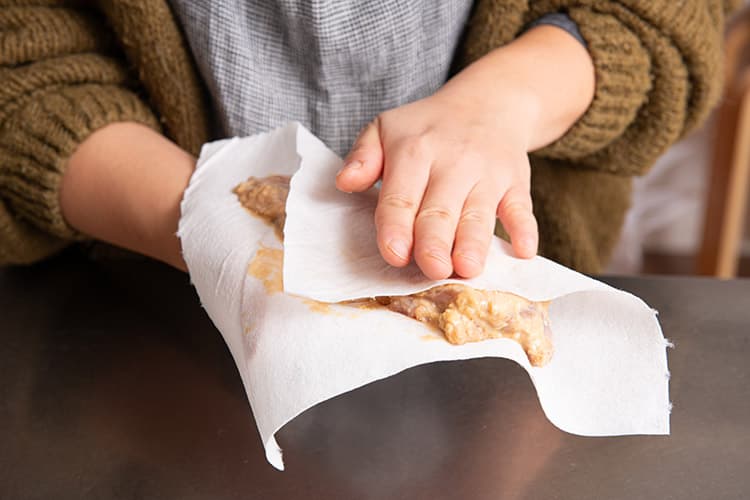
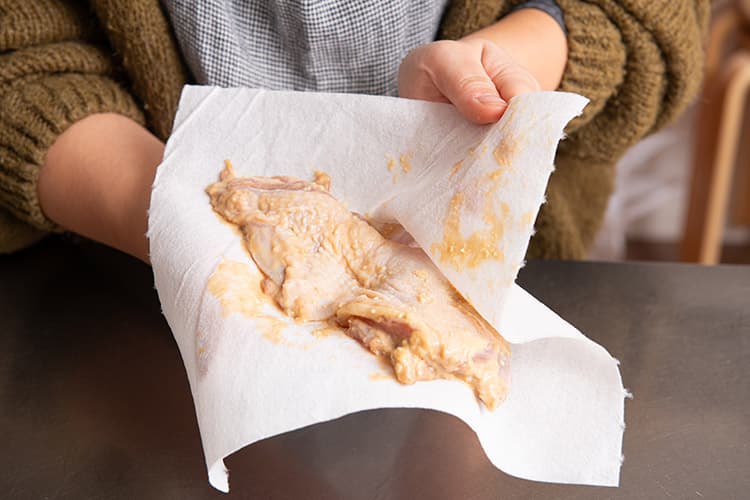
Sake lees in soy sauce and mirin burns easily, so make sure that none is left on the surface of the chicken. Pressing gently with a paper towel removes any excess marinade.
-
4. Heat the vegetable oil in a pan over medium heat. Add the chicken, skin side down, and arrange the naganegi long onion around it. Cook until the chicken turns golden brown, about 2 minutes, then flip over and pour the sake over it. When the sake comes to the boil, add the shishito peppers. Cover with a lid, turn the heat to low, and cook for a further 6 minutes. Turn off the heat and let sit for about 5 minutes to warm through with the residual heat.
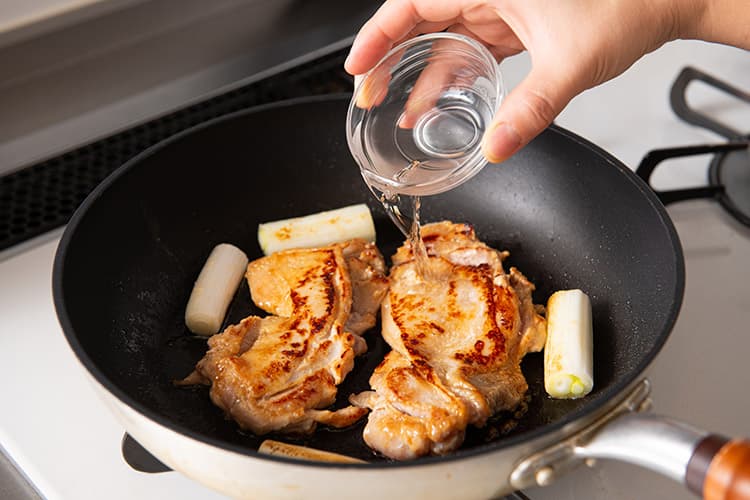
Sake is poured over the chicken to prevent it from burning and to steam it in.
- 5. Remove the chicken, slice into bite-sized pieces, and plate. Garnish with the onion and shishito peppers.
Other delicious ways to enjoy sake lees in soy sauce and mirin
Sake lees in soy sauce and mirin don’t just make an excellent marinade for meat and fish. “Here’s another delicious way to enjoy them,” Nanako explains. “Massage your favorite vegetables with salt to remove excess moisture, then pickle them overnight in the sake lees. Because they’re uncooked, they taste strongly of sake lees. If you like sake lees, you should definitely give this a try.”*
In winter, try adding sake lees in soy sauce and mirin to miso soup to make kasujiru or “sake lees soup.” This soup with its faint aroma of sake lees warms you to the core. “Even children and people with an aversion to sake lees will find it goes down smoothly. Because it’s heated, you can even make it with marinade that meat or fish has been marinated in, so nothing goes to waste.”
*Uncooked sake lees contain alcohol, so they should be avoided by people who don’t drink, pregnant women, and children.
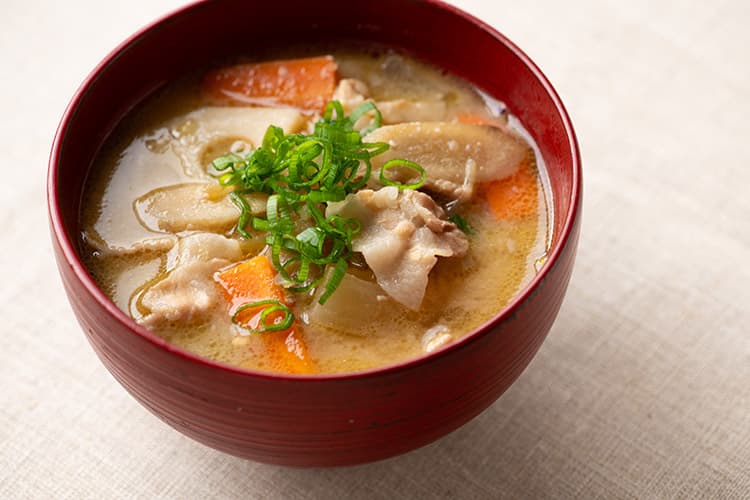
Simmer pork belly, carrots, daikon, gobo, and similar ingredients in 500 ml dashi. Add 5–6 tbsp. sake lees in soy sauce and mirin and 1 tbsp. miso. Boil off the alcohol for 2–3 minutes.
Pamper your body in winter with black fermented foods.
An important concept in Chinese medicinal cuisine is that of keeping one’s body warm in winter to nurture the kidneys. The kidneys are the seat of the life force. They are involved in physical growth and development, reproduction, and aging. They are also the part of the body where water is stored and metabolized. Chinese medicinal cuisine conceives of the kidneys in broader terms than Western medicine.
“As your body gets cold in winter, your water metabolism becomes more active, and you go to the toilet more often. That can put a strain on the kidneys. Weaker kidneys sap the sex hormones and life force, making you age. That’s why it’s important to eat foods that help the kidneys function properly,” says Nanako.
“They say that a good way to nurture the kidneys is to eat black foods, so you should eat something black every day, especially in winter. Typical black foods include black kikurage fungus, black sesame seeds, and hijiki seaweed, but what I’d most recommend is amazake with black rice and black soybean natto.”
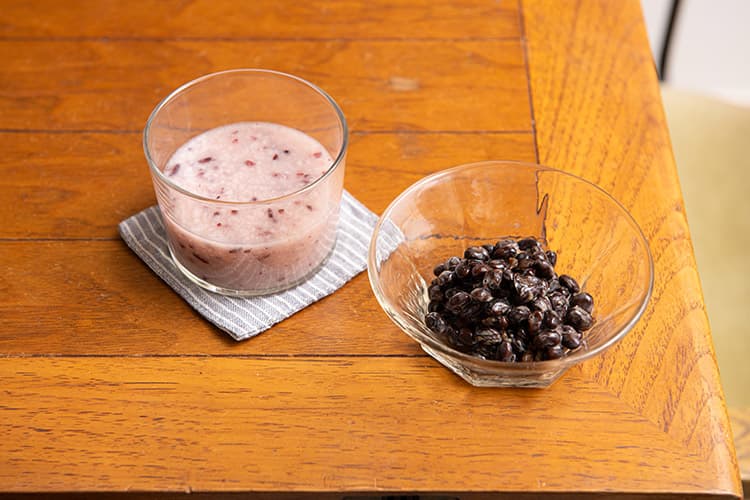
Left: Amazake with black rice is a lovely soft pink.
Right: Natto made with black soybeans.
“I happened to come across amazake made with black rice online. The reason I incorporated black soybean natto into my diet was because I figured that it could be eaten more often as an accompaniment to rice than sweet simmered beans. Neither requires any preparation, making them both really handy at busy times of the year.”
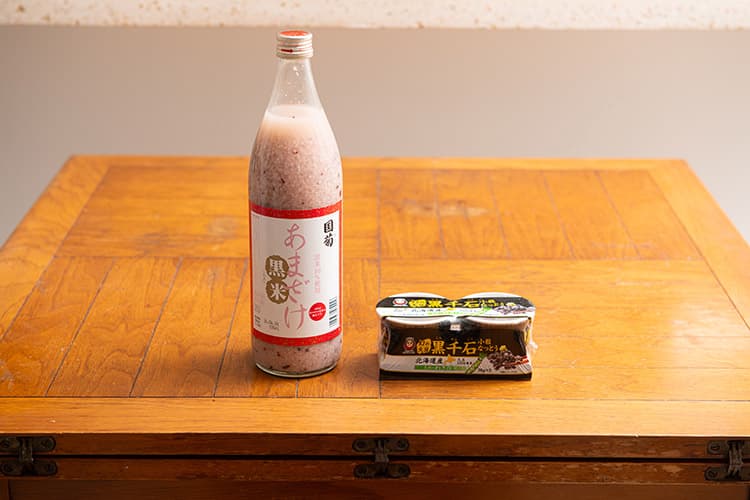
Two of Nanako’s favorites. Left: Kunigiku Black Rice Amazake from Shinozaki, made with rice that is 10% black rice. The texture of the black rice and natural sweetness make it so easy to drink.
Right: Kurosengoku Small-bean Natto from Azuma Shokuhin. “It’s not as sticky as your regular natto, so it’s easier to eat. Add the accompanying wasabi, and it’s positively addictive.”