Azara and Kesennuma Local Cuisine to Enjoy with Sake
Feb 12,2026
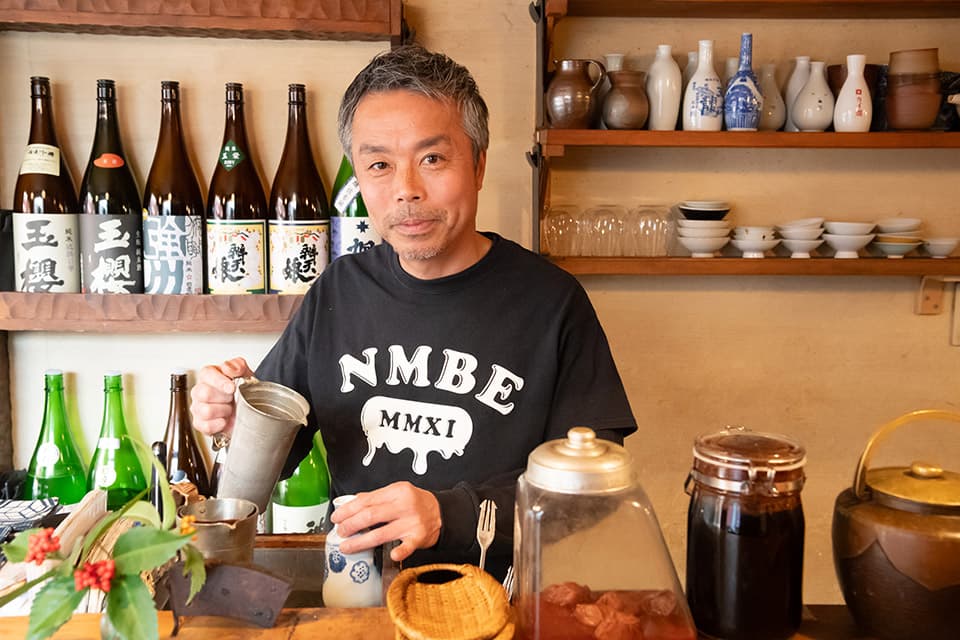
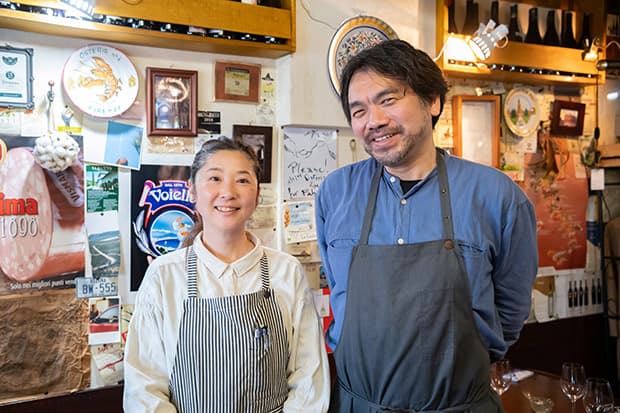
In this ongoing series, we ask food professionals for their top recommended fermented foods. This time, we visited Sakefuku, an izakaya pub specializing in saké in Ichikawa, Chiba.
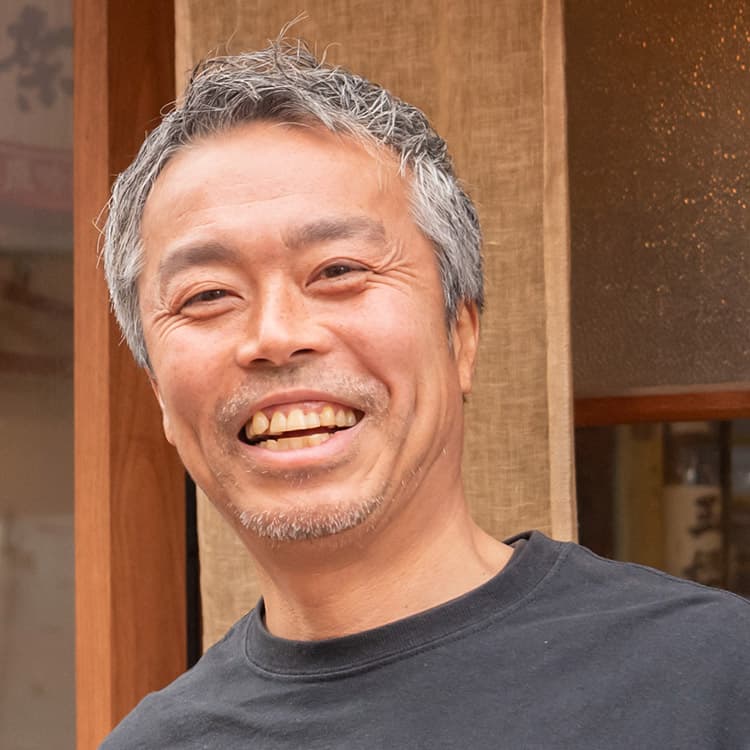
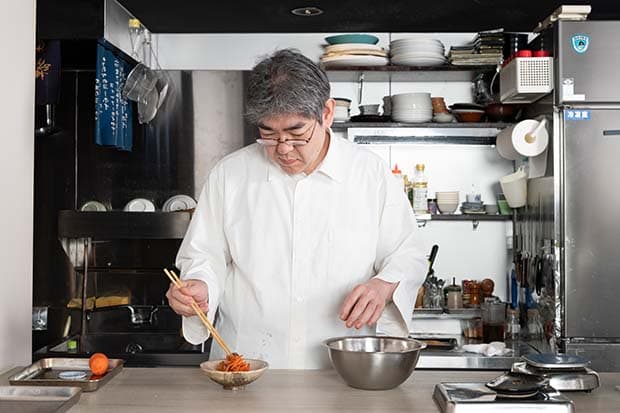
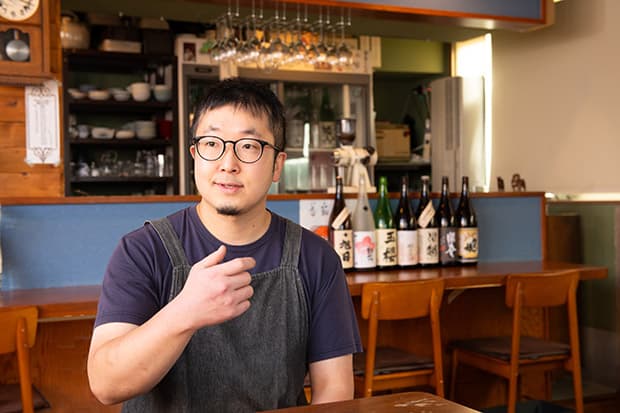
Sakefuku’s owner, Takahashi Shinichi, recommends azara, a traditional dish from Miyagi’s Kesennuma region. Intrigued by this unfamiliar name, we leaned forward as we stepped into the deep world of fermentation.
Azara, a traditional Kesennuma dish is simple, yet flavorful
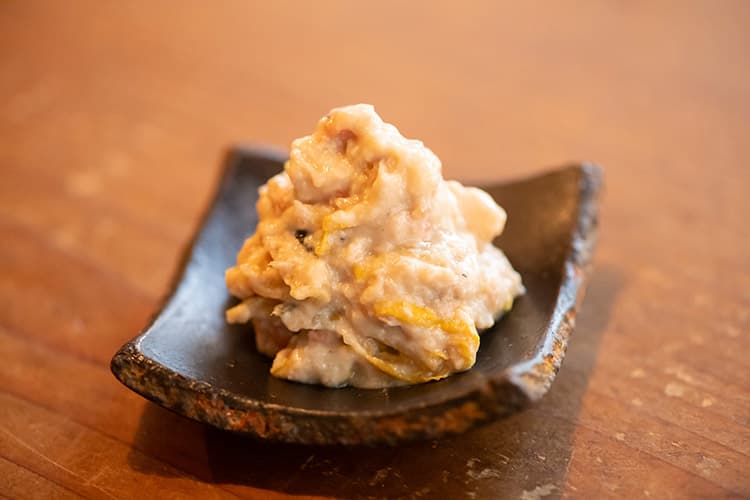
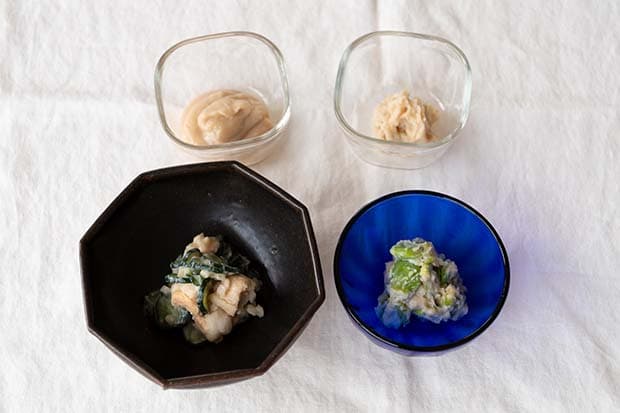
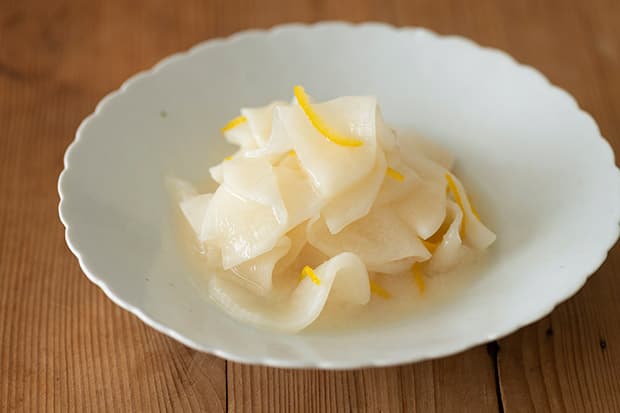
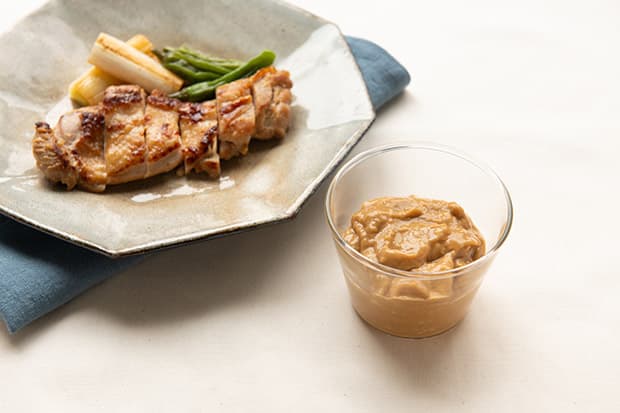
Azara is an understated dish made by simmering aged pickled Chinese cabbage and fish offcuts in saké lees. It used to normally be eaten around springtime, when Chinese cabbage that had been pickled over winter had fully fermented and developed a tangy sour flavor.
Traditionally, offcuts and scraps from ocean perch landed at Kesennuma are usually used to make azara. For this article, Takahashi showed us a recipe using canned boiled salmon backbone, which is readily available in supermarkets.
-
- [Ingredients] (easy-to-prepare amount)
- Tome-kasu* (or saké lees in block form) 150 grams
- Aged pickled Chinese cabbage 60 grams
- Boiled salmon backbone (canned) 40 grams
- Kelp dashi stock 40 milliliters
- Soy sauce and mirin rice wine To taste
- *Tome-kasu is the saké lees from the final pressing.
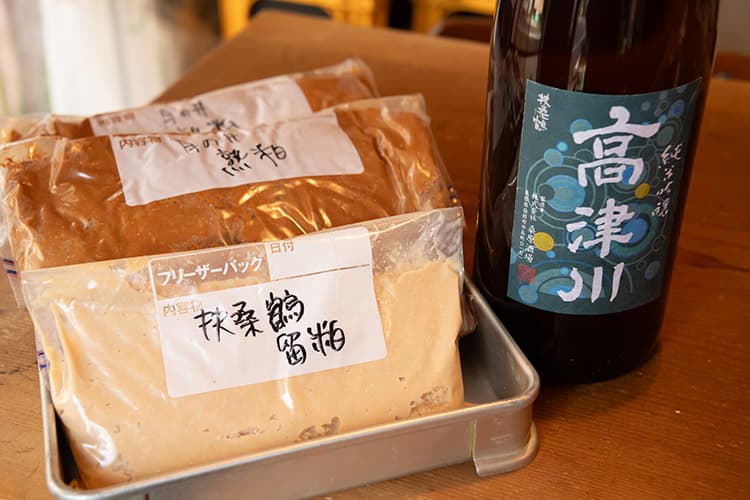
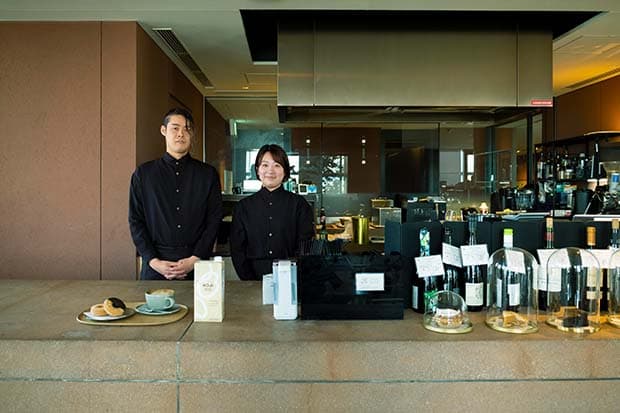
Sakefuku uses aged tome-kasu provided by the Shimane-based saké brewery Fusozuru. Tome-kasu is the saké lees packed with umami flavor remaining after the final saké pressing. They are high in moisture and are soft, similar to kneaded block saké lees, making them easy to blend into your cooking.
-
- [Directions]
- 1. Place the saké lees, aged pickled Chinese cabbage, and dashi stock in a pot and heat. Stir with a rubber spatula, then add the salmon. Continue stirring to prevent burning and simmer until the mixture reaches the desired consistency.
-
2. Season with soy sauce and mirin, then simmer the mixture a little more.
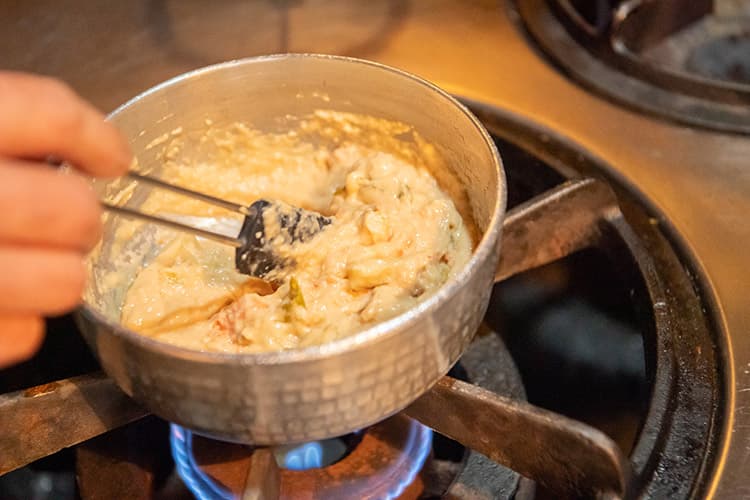
Be sure to keep the heat low, as the mixture burns easily. Adjust the amount of soy sauce and mirin added at the end by taste to match the saltiness of the pickled Chinese cabbage.
“Some azara recipes make this more like a traditional saké lees soup, but since I serve this as a snack with saké, I use less dashi stock to make it a bit firmer.”
A taste that evokes memories and a sense of nostalgia
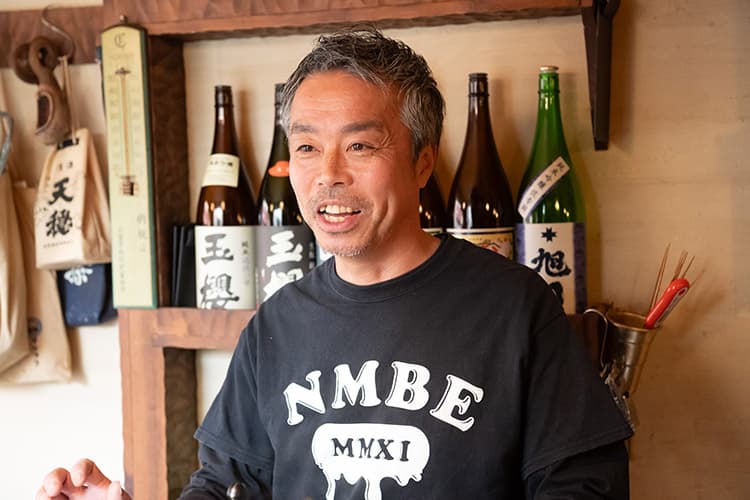
“It seems that azara is a dish specific to the Kesennuma region — so much so that even some customers from Miyagi haven’t heard of it. Since the name isn’t familiar, I have it tucked away on the menu, but customers who try it out of curiosity often ask for it first, saying, ‘I’ll have the azara, please!’”
Takahashi first encountered azara in Sendai. He spotted the word azara on the menu of a restaurant run by an acquaintance.
“When I heard that azara uses aged pickled Chinese cabbage, it brought back memories from my childhood.”
At the core of azara lies the Kesennuma expression of “waste not, want not” wisdom. When the Chinese cabbage that has been pickled in large quantities during winter matures, it is simmered with fish scraps and saké lees to transform its sourness into umami. Takahashi says that this idea reminded him of nostalgic scenes from his past.
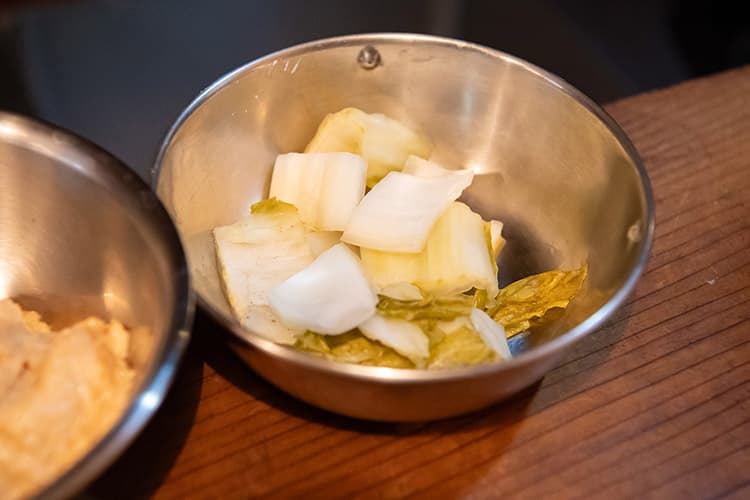
Takahashi made the pickled Chinese cabbage himself. He pickles Chinese cabbage by coating it with 2.5 to 3 percent of its weight in salt.
“My parents are from Sendai. At my grandparents’ house, it was their custom to serve pickled vegetables alongside sweets as snacks with tea. My mother, who grew up in that tradition, used to make pickles at home, and she’d take the leftovers, combine them with pork, and stir-fry them in sesame oil to serve. When I connected those memories with this dish called azara, it all made sense to me.”
The pub’s unsung hero created with fermentation’s umami
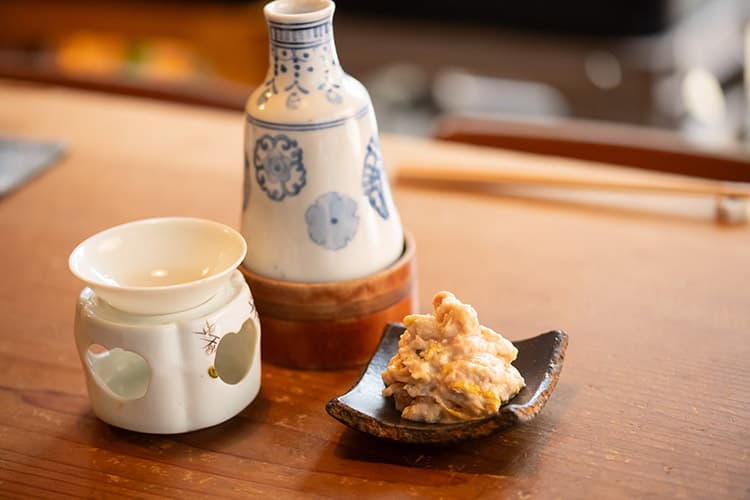
Takahashi grins as he sets the azara on the counter: “It’s not the most photogenic dish in the world.”
“But it’d be exhausting if every dish were glittering, like a star athlete. This is the type of dish I like to slip in quietly beside the main dish. It may not be flashy, but it’s deeply felt umami makes it satisfying.”
The ingredients and directions are incredibly simple. It’s easy to make, just mix and simmer, and it looks unremarkable. And this is why it’s the perfect dish to complement main dishes, showcase saké, and blend in with one’s time at the pub.
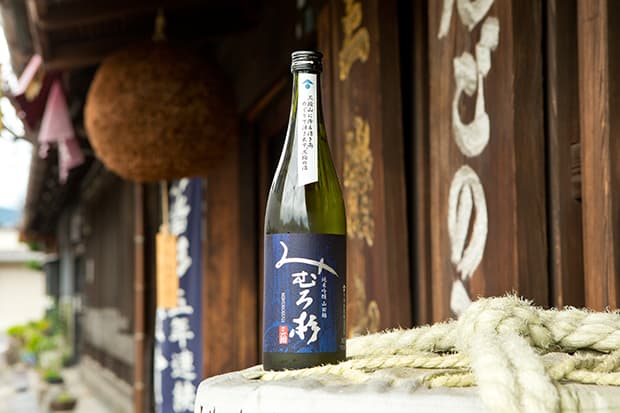
“Since we’ve used Fusozuru’s saké lees, let’s pair it with a Fusozuru saké. You can really sense the saké’s character in the lees. Fusozuru’s saké lees are gentle and mellow. I also use it as a secret ingredient in gratins and pork miso soup. Just a tiny bit really deepens the umami.”
We take a bite of the azara, where the tartness and umami of the pickled Chinese cabbage bloom together with the mellow aroma of the saké lees. Follow it with a sip of hot saké, and the tartness and sweetness harmonize in your mouth, leaving only a gentle, lingering aftertaste.
Transforming the ‘waste not, want not’ wisdom into flavor
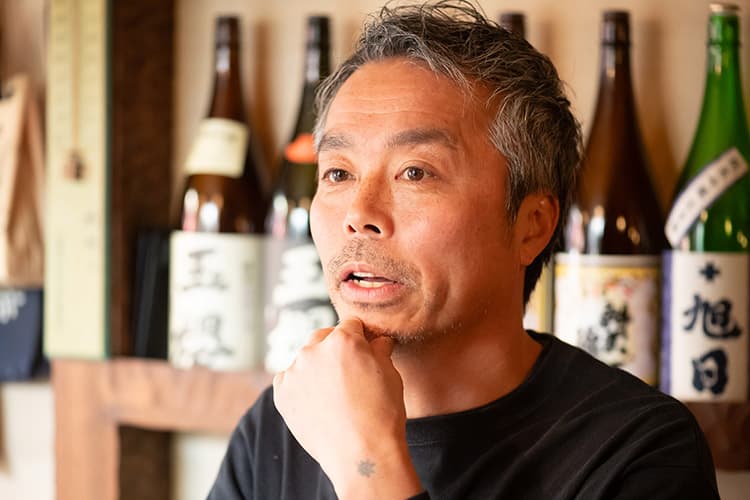
“Azara is delicious because it’s made from aged pickles. We use everything, and no ingredients go to waste. This kind of wisdom and ingenuity is gradually being forgotten, but I think they are very important.”
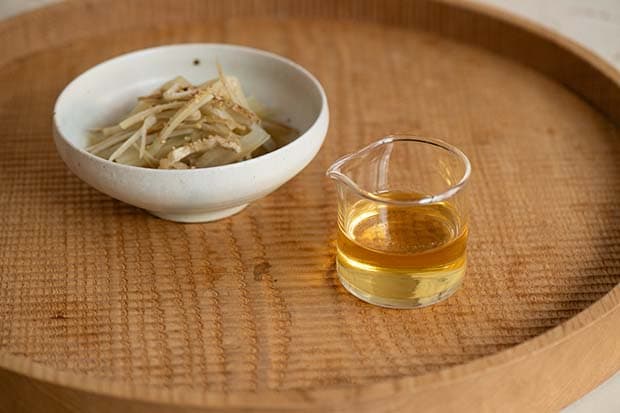
Perhaps such wisdom and ingenuity arise through the process of making things with forethought and care. Takahashi showed us his homemade pickled Chinese cabbage and explained how to use the brine.
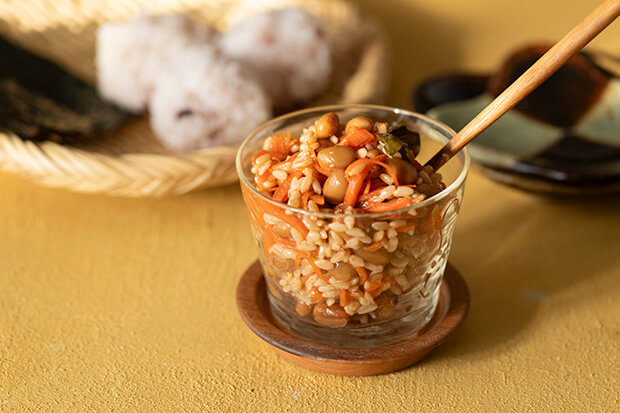
“The liquid that rises from the pickles is practically vinegar. At home, I use this brine to marinate mackerel, make salad dressings, and, after adding a little sugar, make boiled beans. It keeps well and, of course, has that fermented umami flavor. It would be such a waste to throw it away, right?”
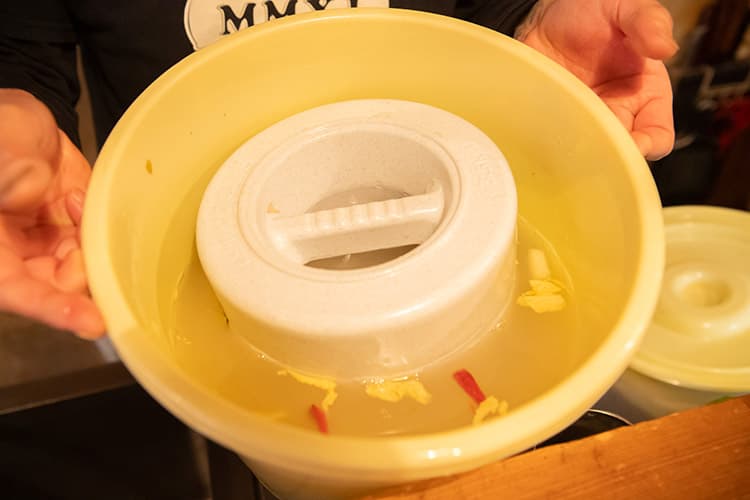
Takahashi uses the brine that rises from his homemade pickled Chinese cabbage in all kinds of dishes
The menu at Sakefuku changes every two weeks or so. Perhaps this is another example of Takahashi’s cooking philosophy: making the most of seasonal ingredients without waste.
“I don’t know about that. It’s more like I get bored easily. [laughs] But I think my customers enjoy finding new dishes each time they visit.”
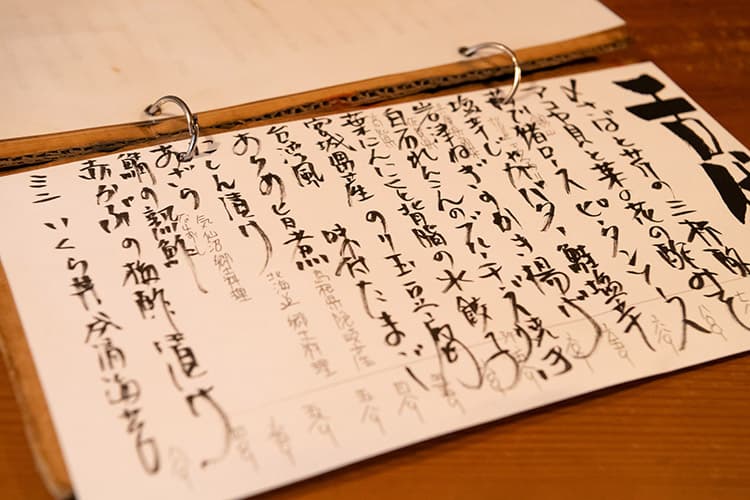
The menu is sure to tickle the fancy of any barfly
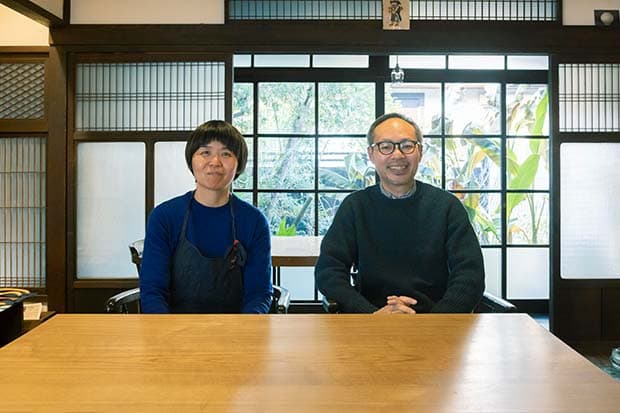
In our next installment, we’ll be visiting Osteria Luce, an Italian restaurant in Kita-Senju, Tokyo. Be sure to watch this space.