Cooking with Boiled Mirin and Seasonal Spring Vegetables
Apr 23,2026
The Kitchen Calendar series features popular culinary experts sharing recipes for their favorite make-ahead dishes and preserves made with seasonal foods and fermented ingredients.
In this installment, food coordinator Minakuchi Nahoko explains the basics of making boiled mirin — mirin being Japanese sweet rice wine for cooking. Boiling off the alcohol is a great way to bring out the best in what’s called hon mirin or “genuine mirin.” She also shares some tricks for incorporating boiled mirin into your cooking. And she presents her recipe for young burdock root and celery simmered with vinegar — plus a surprising way to enjoy boiled mirin just like syrup.
Then we zero in on mirin lees — the solid by-product left over after pressing hon mirin. Nahoko waxes lyrical about what a great ingredient mirin lees make and shares ideas for using them in your daily cooking.
The joy of using different flavors and colors of hon mirin depending on what’s cooking
“Mirin is one of the most fascinating fermented seasonings out there. I’ve always thought that it deserves a bigger place in the spotlight.”
By mirin, Nahoko means hon mirin or “genuine mirin,” which is made with sticky rice, rice malt, and shochu (or distilled brewer’s alcohol). It’s worlds apart from so-called mirin-style seasoning.
“It strikes me that the number of people who can tell the difference between hon mirin and other forms of mirin is slowly but steadily increasing. But people should also realize that different varieties of hon mirin each have their own character. Mirin’s flavor and color vary considerably depending on whether it’s made the traditional way or industrially, where the ingredients are produced, and in what ratio they’re combined. I opt for hon mirin made with Japanese-grown rice, and I use several different varieties depending on what I’m cooking: sometimes a pale-colored mirin with an elegantly rich flavor and refined umami, sometimes a deeper-colored mirin with a pronounced sweetness and umami.”
To make hon mirin even more versatile, simply boil off the alcohol.
Hon mirin adds umami and sweetness, gives foods a nice glossy sheen, and takes the edge off their odor. Because it contains alcohol, though, a lot of people think it’s only good for making nimono or simmered foods.
Nahoko’s solution is to boil off the alcohol.
“Boiling hon mirin concentrates its umami and sweetness, so it can be used in place of sugar. It also results in an elegantly rich flavor. With sugar, the flavor won’t penetrate well unless you add it just as you start simmering the ingredients, because the granules are so big. But with boiled mirin, the flavor blends in instantly, which is great when you want to simmer the ingredients quickly. Plus it can be used in unheated foods as well. Because it no longer contains alcohol, however, it won’t keep for very long, so if any is left over, stick it in the fridge and use it up within five days.”
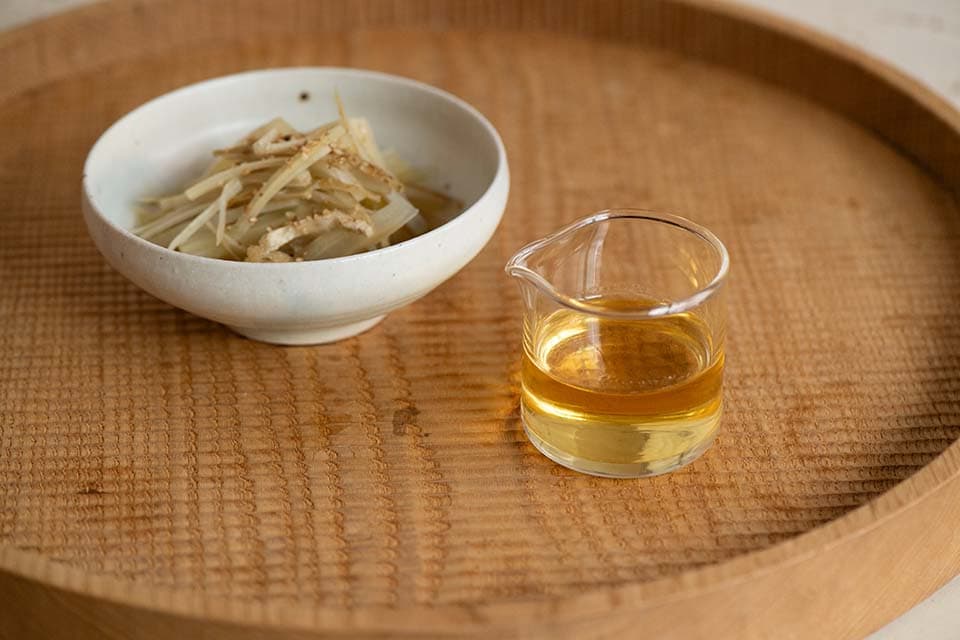
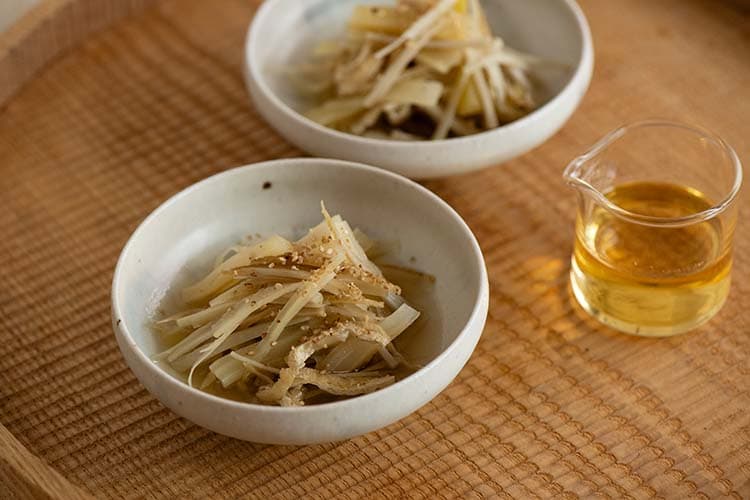
Here Nahoko tells us the trick to making boiled mirin and shares a recipe perfect for spring: young burdock root and celery simmered with vinegar. This combines the delicious fragrance of burdock root harvested early in the season with the rich flavor and bright color of celery. Simmering them with vinegar results in a refreshingly tangy treat.
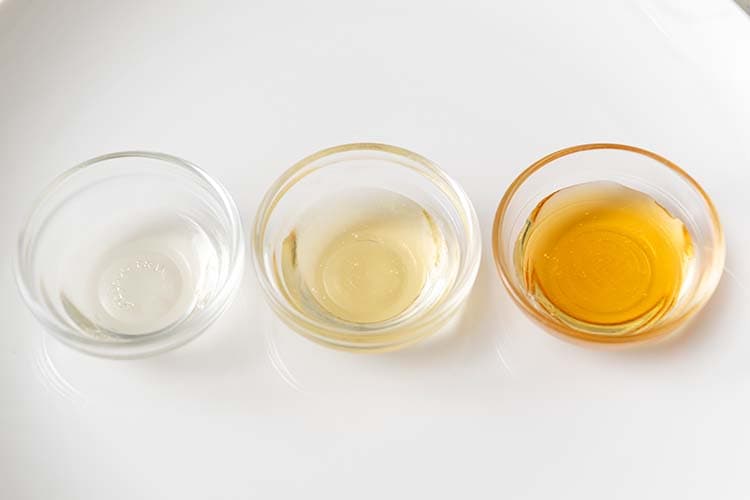
Mirin’s appearance varies depending on how long it has boiled. Left: Ordinary hon mirin. Center: Hon mirin boiled for 1–2 minutes, evaporating the alcohol. This is what you want for cooking. Right: Hon mirin boiled down for 7–8 minutes, resulting in a thick, syrupy consistency.
Directions for making boiled mirin and recipe for young burdock root and celery simmered with vinegar
-
- [Ingredients]
- 〈Boiled mirin〉
- 100 ml hon mirin (genuine sweet rice wine for cooking)
- 〈Young burdock root and celery simmered with vinegar〉
- ½ young burdock root
- 1 stalk of celery
- ½ slice of abura-age (deep fried tofu)
- 400 ml dashi (stock)
- 1 tbsp vinegar
- 1–2 tsp usukuchi (“light”) soy sauce
- 1 tbsp boiled mirin
- Salt to taste
- Pinch of toasted white sesame seeds
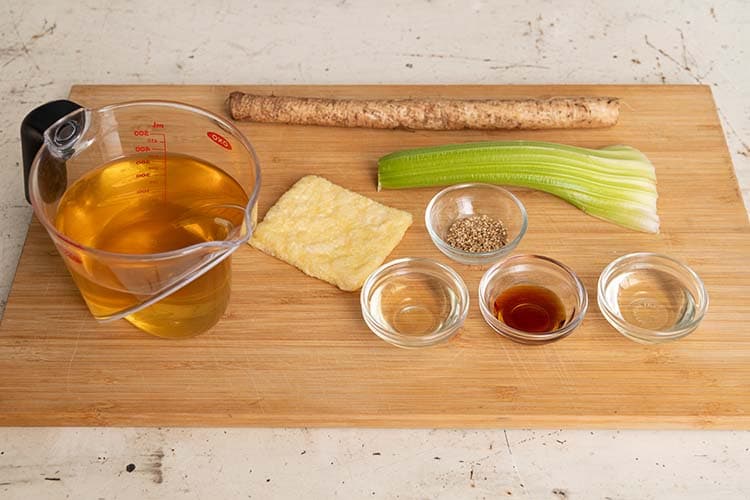
Ingredients for young burdock root and celery simmered with vinegar.
“Instead of young burdock root, you can substitute regular burdock root or early-season carrots, which taste equally good.” Using usukuchi soy sauce keeps the vegetables’ color intact.
-
- [Instructions]
-
1. Make the boiled mirin. Pour the hon mirin into a small pan and heat over medium-low heat until it comes to a boil. Let boil for 1–2 minutes to evaporate the alcohol.
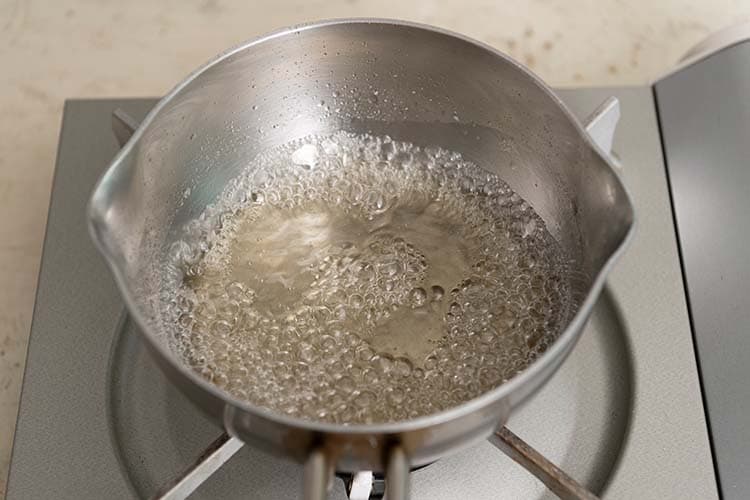
Boiling well for 1–2 minutes will evaporate all the alcohol. “It can easily boil over, so keep an eye on the stove as you heat it.”
-
2. Clean the skin of the burdock root with a tawashi (scrubbing brush) and slice into 4 cm strips 2–3 mm thick. Remove the strings from the celery, then slice it and the abura-age into thin strips.
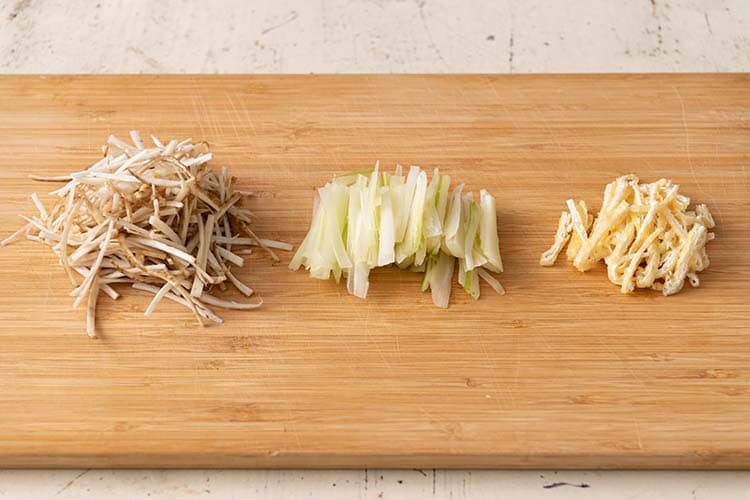
The strips should be matchstick-sized.
-
3. Put the dashi, boiled mirin, vinegar, usukuchi soy sauce, and salt in the pan and heat over medium heat.
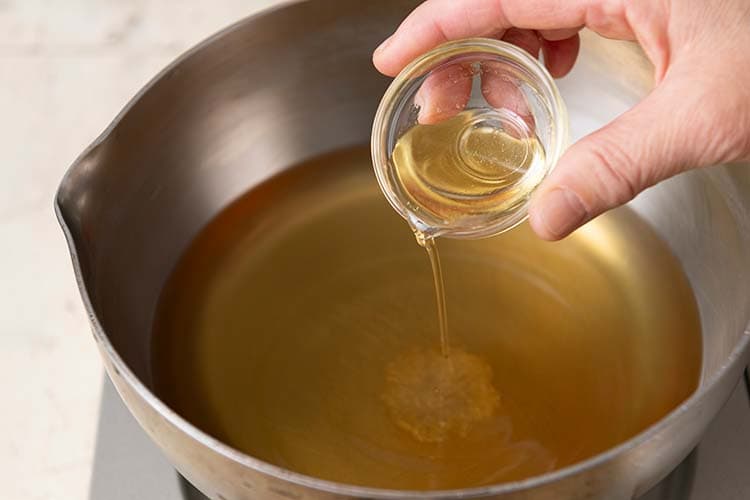
Alcohol-free boiled mirin nicely sets off the flavor of the ingredients and the stock, even when added at the same time as the other seasonings and the dashi.
-
4. Once the mixture comes to a boil, add the ingredients from Step 2 and simmer for a further 5 minutes. Turn off the heat and let cool on the stove.
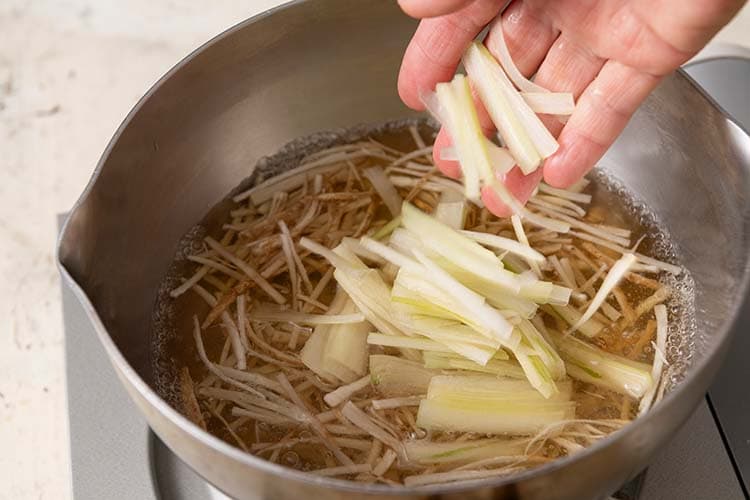
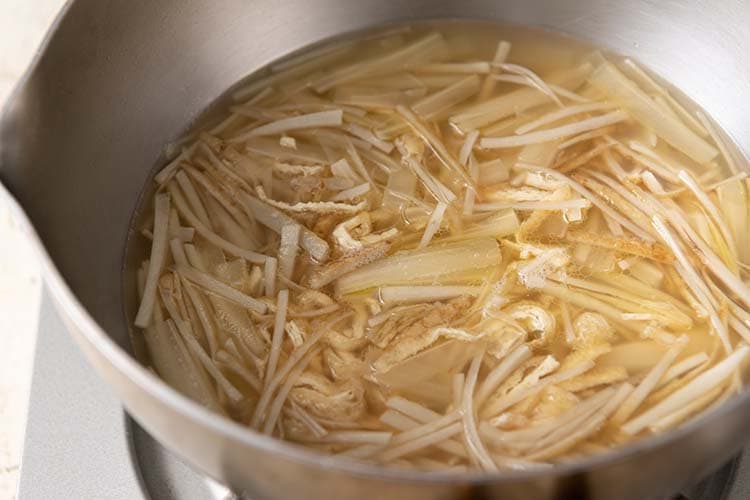
Add the young burdock root and celery (left) and give a quick simmer for 5 minutes until soft and tender (right). Let cool on the stove so the flavor can penetrate.
- 5. Drain lightly and dish up. Pour over the cooking liquid and sprinkle with the toasted white sesame seeds.
Another fun way to enjoy boiled mirin
One of the wonderful things about alcohol-free boiled mirin is that it can be used as is without heating. It adds an elegant sweetness and richness to your aemono salads and vinegared dishes — no sugar needed.
Mirin boiled down for 7–8 minutes has a thick, gooey consistency with an even more concentrated sweetness and umami, resulting in a syrupy color and taste. “It’s like an elegant-tasting agave syrup, with a mild sweetness that gives it a subtly Japanese flavor. It tastes delicious on things like ice cream, strained yogurt, and fruit.”

Sliced fruits of the season served on toast with a generous dollop of syrupy boiled mirin. This variation on boiled mirin makes a handy sweetener, much like maple syrup or agave syrup.
Naturally sweet and bursting with nutrition, mirin lees are great for meals and snacks.
Along with hon mirin, another ingredient Nahoko couldn’t do without in her kitchen is mirin lees. Mirin lees are the solid by-product left over after pressing the mash during production of hon mirin — mirin made from sticky rice, rice malt, and shochu. Due to their white, flaky appearance, they’re known in the Kansai region as kobore-ume or “scattered plum blossoms.” They don’t have the distinctive aroma and flavor characteristic of sake lees; instead, they possess a mild sweetness than lingers on the tongue.
Nahoko first came across mirin lees in her husband’s hometown —Naruto in Tokushima Prefecture on the island of Shikoku — at a producer of hon mirin by the name of Hata Shoten.
“Their mirin lees taste just delicious, even eaten as they are. They have an elegant sweetness that’s free of anything that detracts from the flavor. The lady there told me a tablespoon per day is really good for you, which got me thinking that mirin lees must be nutritionally beneficial as well. Sure enough, they’re a rich source of B vitamins and amino acids, as well as resistant proteins, which keep the gut microbiome healthy. Eating them gives you an energy boost.”
Unfortunately, Hata Shoten went out of business several years ago — but the great thing about mirin lees is that they can be frozen. Nahoko bought lots before the place closed and keeps them in her freezer. They’re an ingredient she treasures.
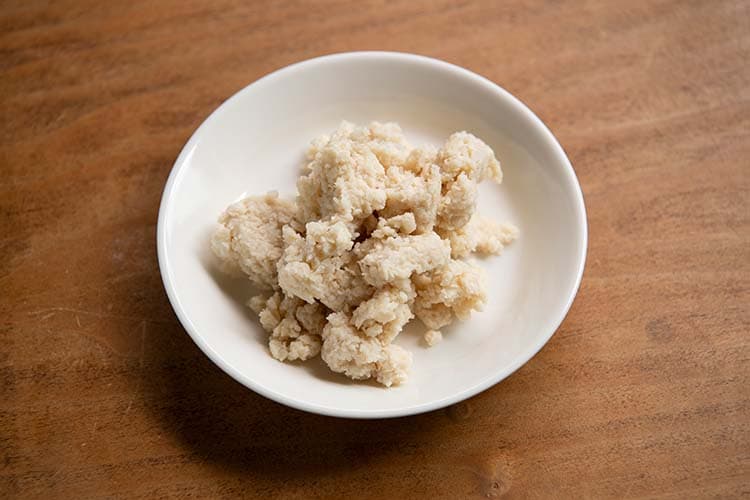
Precious mirin lees from Hata Shoten
On being asked how to use mirin lees, Nahoko replies: as a marinade.
“Dilute the lees in hon mirin, soak meat or fish overnight in the mixture, and then try cooking it. You’ll find it tastes delicious, with the flesh absorbing the umami of the mirin lees. When cooking it, season it with soy sauce or something. If using vegetables, massage them in salt before marinating, then give them a quick wipe and eat them as they are.”
As part of her catering business, Nahoko also serves a bite-sized sweet treat called “energy balls.”
“I gave them that name because the lady at Hata Shoten described mirin lees as a real energy booster. They’re made by combining one part mirin lees with one part cream cheese and one part crushed mixed nuts or dried fruit, forming the mixture into balls, and coating them with coconut flakes. They’re not overly sweet, and a single mouthful will satisfy your cravings. You might want to try them as a snack.”
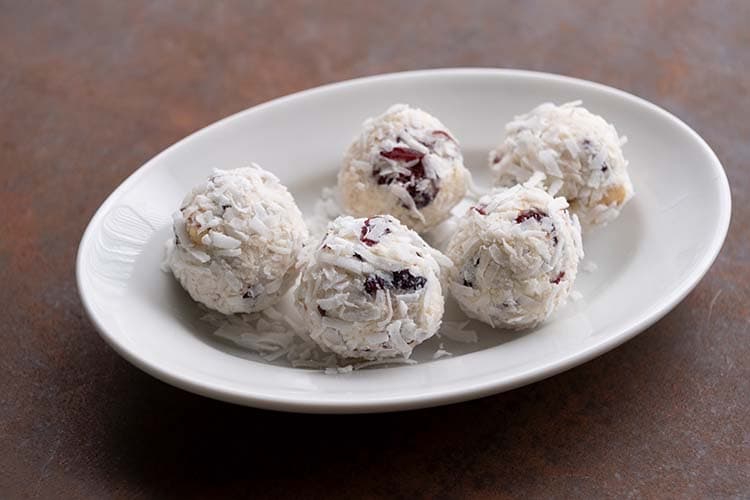
Bite-sized “energy balls” are eminently moreish. “These ones are made with cranberries, but they also taste good with semi-dried fruits like apple or pineapple mixed in,” says Nahoko.
For many readers, this may be their first introduction to the magic of boiled mirin and mirin lees and how to get the most out of them. Simply boiling down hon mirin or adding mirin lees makes a huge difference to your daily meals. So start savoring the wonderful world of hon mirin: there’s much more to it than meets the eye.
NOTE: Unheated mirin lees contain alcohol. They shouldn’t be eaten by anyone with an aversion to alcohol, pregnant women, or children.