Hasshoku: A Fermentation-Themed Restaurant
May 28,2026
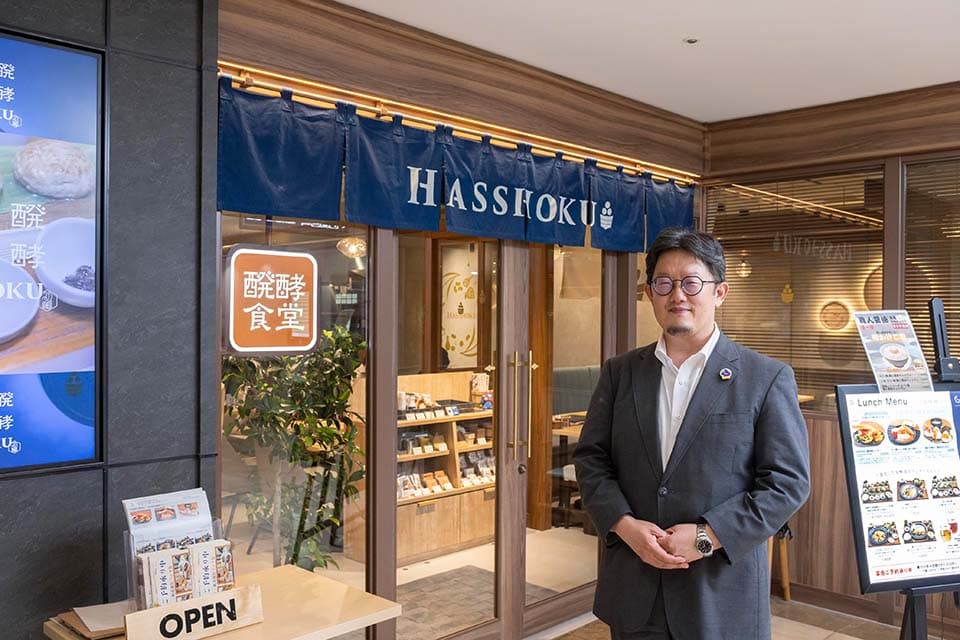
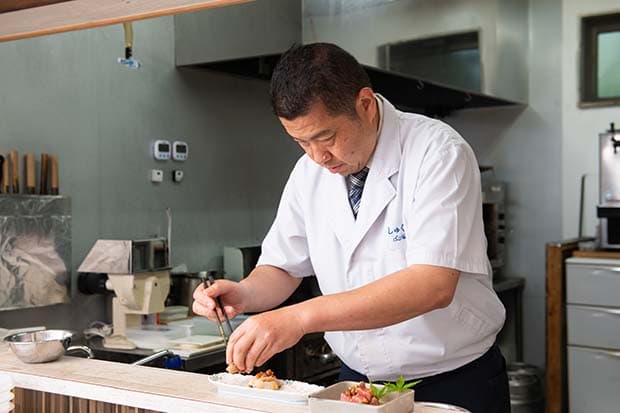
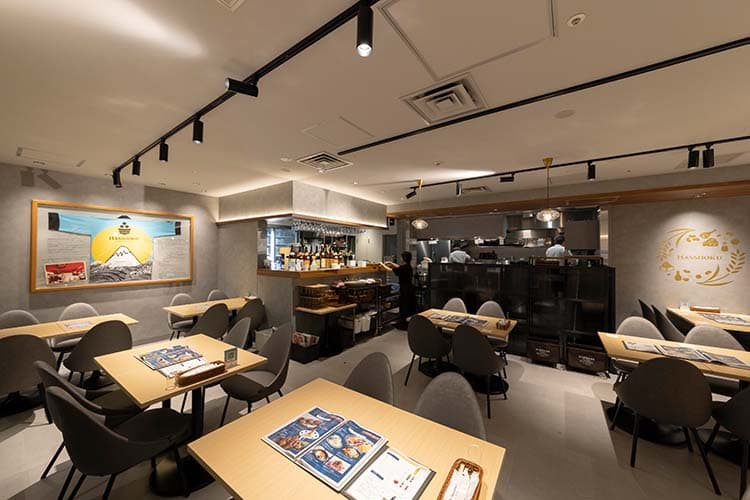
Hasshoku, a restaurant organized around the theme of “bringing Japan’s fermented food culture to the world” for Expo 2025 in Osaka, Kansai, bustled with visitors from Japan and abroad during the event. Following that success, Hasshoku — which means fermented food dining hall — opened at a permanent location on March 13, 2026. The restaurant is operated by Hatsukame Corporation, a food service company headquartered in Hirakata, Osaka. We spoke with Kameoka Kentaro, the company’s president and CEO, to find out why a company that typically provides food services in food courts, parks, and public facilities ended up launching a restaurant centered on fermentation.
The company’s origins trace back to restaurant operations at Expo 1970 in Osaka — Through its participation in Expo 2025, it discovered the appeal of Japan’s fermentation
“At Expo 1970 held in Osaka, my grandfather, who was running a small family shop at the time, secured a booth and sold udon noodles and shaved ice. He was assisted by my father, who was still in university. The booth proved to be a huge success, which led my grandfather to incorporate the business in 1971 as Hatsukame Corporation. Since then, the company has entered booths at nearly every major international exposition held in Japan, including the International Science Technology Exposition 1985 in Tsukuba, the International Garden and Greenery Exposition 1990 in Osaka, and Expo 2005 in Aichi. Although my father passed away in 2021, we applied to enter a booth at Expo 2025, which was held in Osaka and the greater Kansai region.”
“The motto of Expo 2025 was ‘Designing Future Society for Our Lives’. Food and beverage vendors for the expo were required to present concepts for their booths that were aligned with the question of how to build a sustainable society.
“This meant we had to formulate a concept that was in line with the spirit of the expo before submitting our application. We couldn’t just say: ‘Please try this food; it’s delicious’. Our concept had to dovetail with the themes of future society and life. What we eventually decided on was fermentation. The lives and actions of microorganisms result in enhanced nutritional value and tastier flavors. We felt that fermentation was a connection to life, a key theme raised by the expo, and so we made that the concept of our restaurant.”
Connections between people woven together by fermentation is an idea only a long-established food service company could realize
This is the first time that the Hatsukame Corporation has opened a restaurant with a fermentation theme.
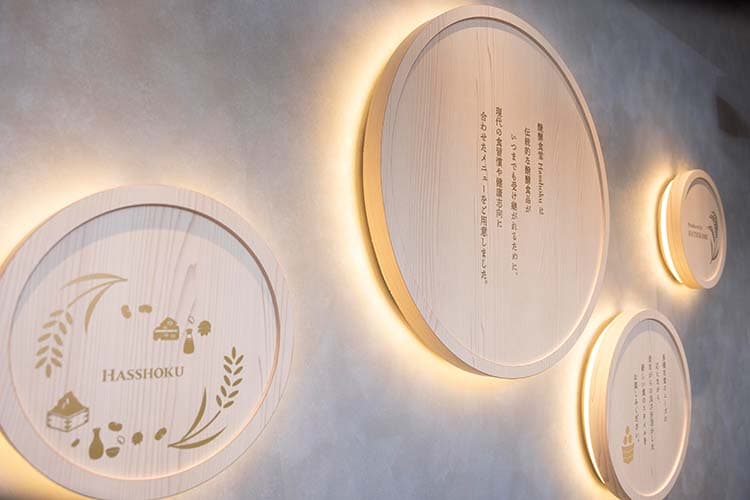
“I travel a lot to Japan’s regional areas where I have the chance to speak with producers of traditional foods like saké, miso, and soy sauce. Many of them are preserving businesses that are difficult to sustain. While our food services business has a history of about 50 years at the most, the worlds of miso, soy sauce, and saké have a much longer history and far greater depth. So I thought that by adopting fermentation as our theme at the expo, we could also work together with these regional food producers.”
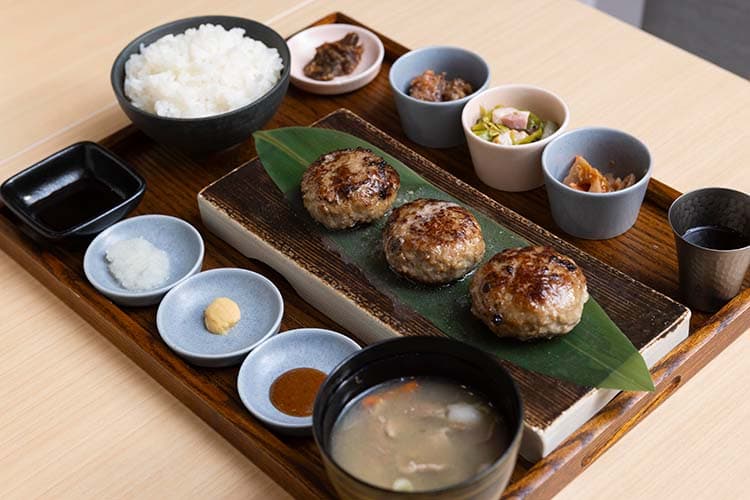
Developing a menu centered on fermented foods presented challenges at an expo that would be attended by visitors from Japan and abroad.
“Although miso and soy sauce are closely associated with Japanese cuisine, for the expo we opted for Western-style dishes that everyone would be familiar with. I thought people would find it interesting to see soy sauce, miso, and koji [rice malt] used in hamburgers, pasta, and curry. Structuring the menu wasn’t much of a struggle, but we had a hard time choosing which fermented foods to use, since there are countless breweries across the country producing high-end soy sauces and miso products. In the end, it came down to whether we knew the producers. We selected products from breweries we could trust and wanted to support.”
One of the producers Kameoka selected was Shibanuma Soy Sauce located in Tsuchiura, Ibaraki.
“I connected with Shibanuma Soy Sauce through the Chamber of Commerce and Industry’s Young Entrepreneurs Group. They are a participant in the Kioke Craftsmen Revival Project, a movement to preserve the brewing of soy sauce in kioke [traditional wooden vats]. Breweries that make soy sauce in kioke account for only about one percent of the domestic market. This makes it a rare production method in Japan today. And not only are the breweries themselves dwindling in number, but also the kioke craftsmen. That’s why this project was launched, led by Yamaroku Soy Sauce Brewery on Shodoshima Island in Kagawa, to teach people from soy sauce breweries how to make kioke. After getting to know them, I told them I’d like to display a kioke at the expo, and they provided a kioke that became Hasshoku’s symbol at the expo.”
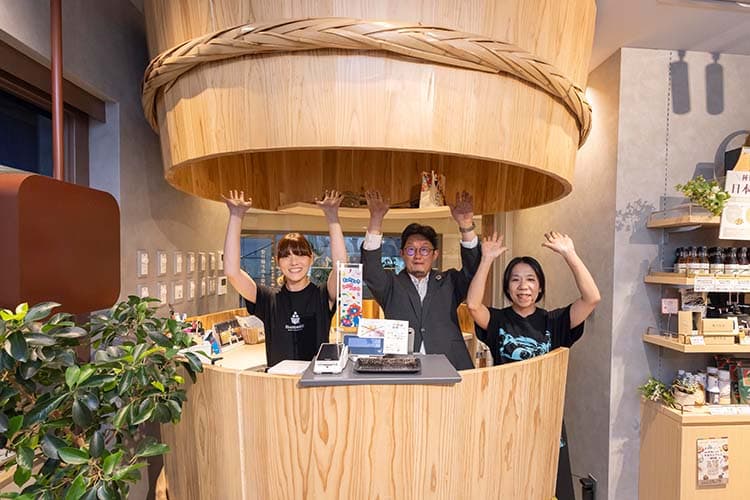
The kioke used at Expo 2025 has now been repurposed as part of the expo’s legacy at the new restaurant in the Umeda district of Osaka.
“The kioke used in the restaurant has the same structure as the original, even down to its taga hoops. The guidelines for participating in Expo 2025 included provisions for recycling and preserving the legacy of the expo. The first Osaka expo in 1970 popularized foods like fried chicken, cola, and hamburgers, and I imagine the organizers had expectations for something similar to happen at this expo too. Fermented foods, however, are not the type of food that gains a new audience just because of an expo. So our company decided to open this Hasshoku restaurant with the intention of continuing the business model from the expo and preserving it for the future.”
A restaurant for casual, everyday dining with a menu combining Western-style dishes and fermentation
The menu at the new restaurant in Umeda features items designed to let you enjoy the post-expo experience, starting with the Hasshoku Soy Sauce Koji Burger (1,500 yen).
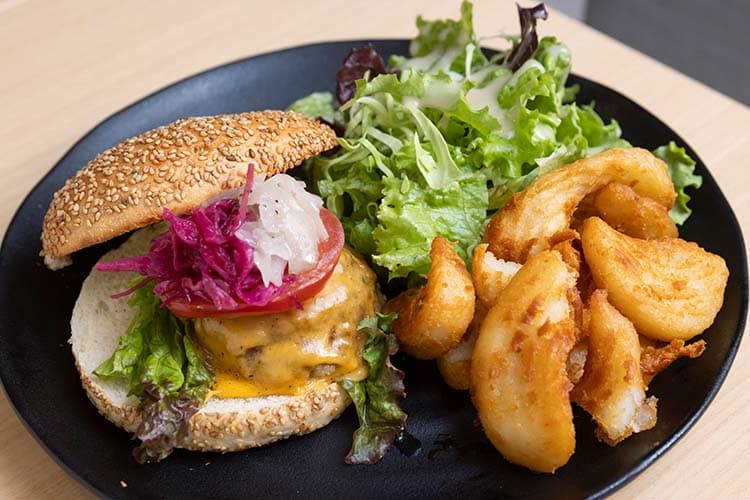
“In addition to our Hasshoku Soy Sauce Koji Burger, which has stayed popular since the expo, we have extended our lunch menu to include set meals, such as the Awaji Beef and Awaji Pork Hamburg Steak Special (from 1,700 yen) and the Fish of the Day Lunch Special. The Umeda area is popular among all age groups, partly due to its proximity to Osaka’s business district. The restaurant has expanded from the expo offerings, such as hamburg steaks and fried chicken, to newly developed recipes. Nevertheless, we remain true to our original concept of connecting Japan’s fermented food culture by using fermented foods like soy sauce and koji in all our dishes. I think Japanese people, who are already familiar with fermented foods, quite enjoy these dishes, since incorporating ingredients like miso and soy sauce isn’t a huge step for them.”
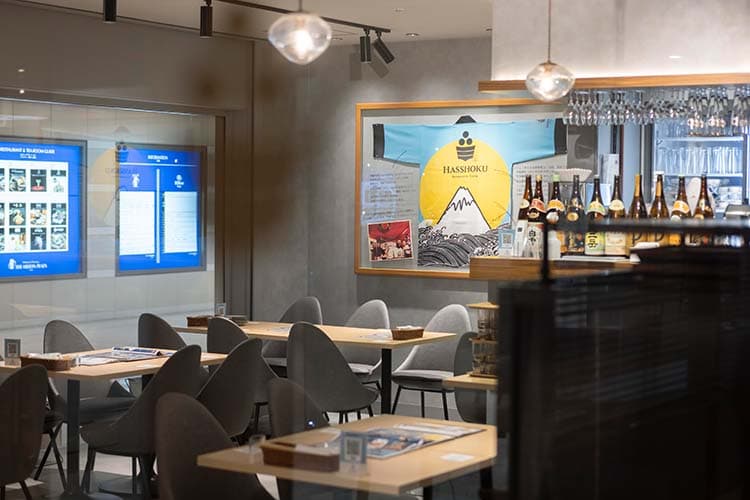
The post-expo buzz in the Kansai region boosted the popularity of restaurants offering expo-legacy experiences. However, now, just several months after opening, Hasshoku seems to have already become an established neighborhood dining spot.
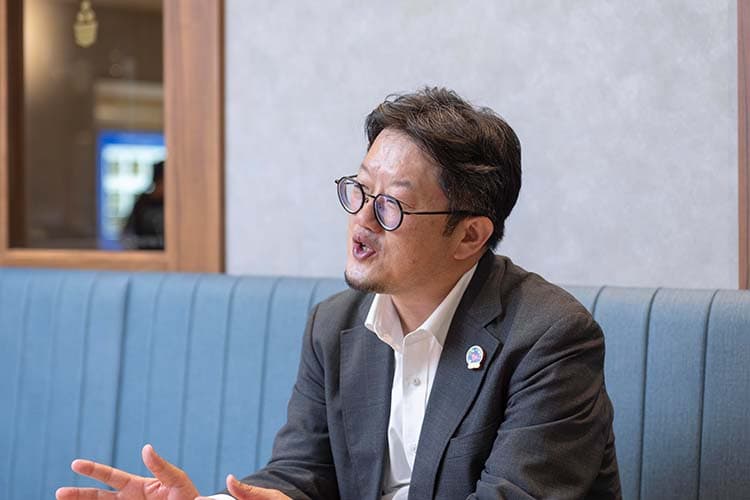
“At first, many people came in to enjoy the post-expo atmosphere. But now more and more people use us as a regular spot for lunch or dinner. While fermentation conjures up an image of health food, our portions are substantial enough that even peckish men leave satisfied. We’re also particular about the ingredients we use, such as Awaji beef, Awaji pork, and vegetables produced in Hyogo and Tamba. While we don’t list the place of origin for everything on the menu, we strive to use ingredients that allow us to provide clear answers when customers ask.”
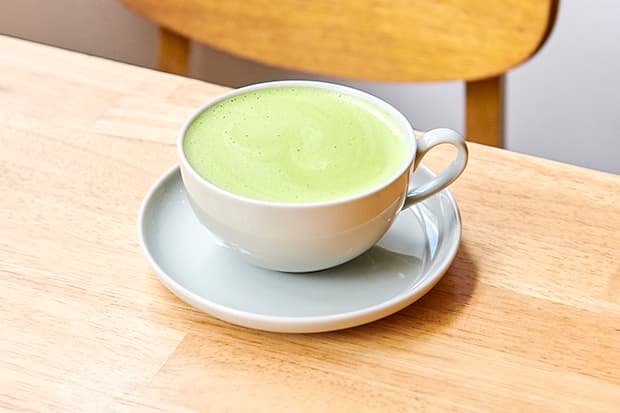
During lunch hours, the focus is on set meals. In the evening, however, the menu shifts to more à la carte items that can be enjoyed with drinks. In addition to desserts, the restaurant has a selection of carefully curated drinks, including those made with saké and amazake [a sweet drink made from koji malt].
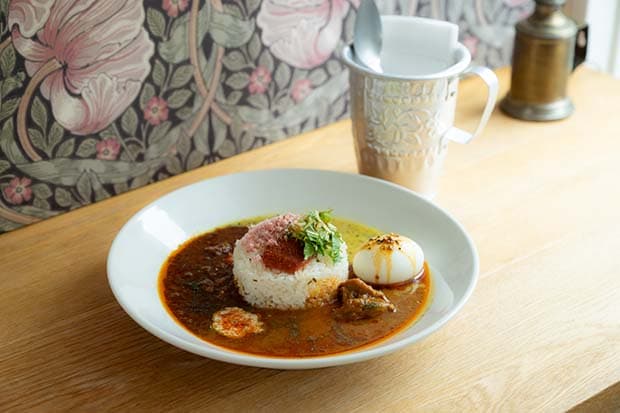
“Saké has a deep connection with fermentation as well. We carry saké from breweries in the three major saké-producing regions of the Kyoto‐Osaka area, such as Itami and Nada. In the future, we hope to offer rare brands for limited times as well. Our Amazake Pudding is just as popular now as it was at the expo. Customers are thrilled by its gentle sweet deliciousness that comes from the koji syrup.”
The ever-growing dream of Hasshoku: To continue connecting fermentation at the next expo
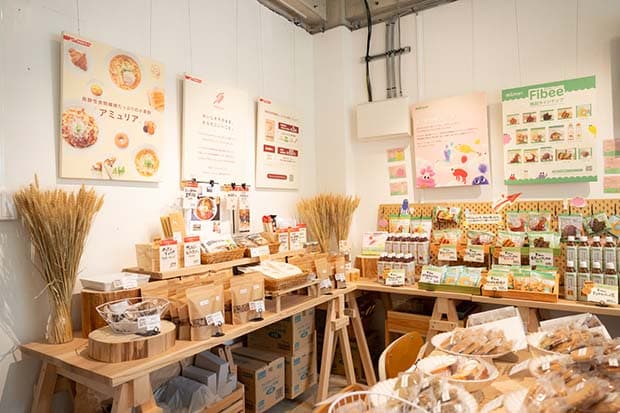
The restaurant also sells in-store the soy sauces, miso products, and other fermented foods it uses in its dishes. The company has high hopes to continue expanding Hasshoku and its mission in the future.
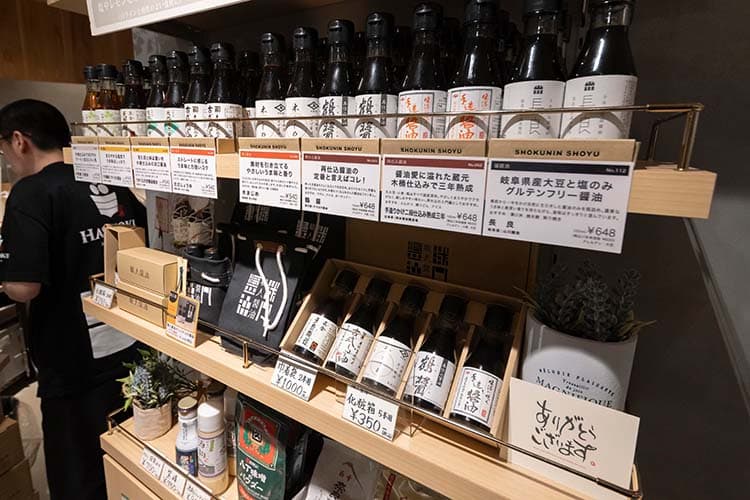
“We are currently working hard to secure a booth at the Green x Expo 2027, which will be held in Yokohama. At the Osaka restaurant, we plan to host seminars featuring fermentation brewers. In-store, we sell soy sauces and other fermented foods from all over Japan, such as Nara-zuke pickles and dengaku miso pastes. We hope customers will enjoy a cup of tea while listening to the stories of the makers and discovering the charms of fermentation.”
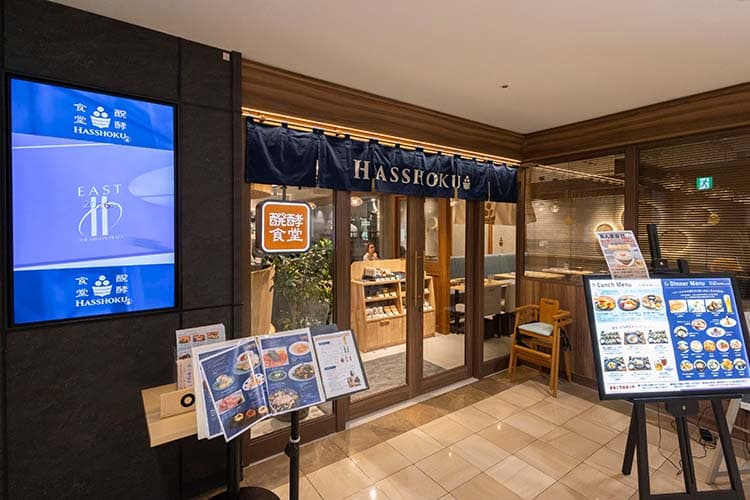
Since launching Hasshoku, Kameoka’s own interest and fascination with fermentation has not flagged.
“The expo opened my eyes to fermentation. I realized there are so many interesting companies in this industry. When I said ‘I’m opening a restaurant specializing in fermented foods’, I got a flood of information. For example, I learned about Shokunin Shoyu [Artisanal Soy Sauces] in Gunma, which sells small bottles of soy sauces from all over Japan. The proprietor has visited hundreds of soy sauce breweries across Japan, and he sells some 100 varieties in small bottles, allowing customers to enjoy small amounts of soy sauce that convey each brewer’s passion. In fact, the soy sauce we sell here are Shokunin Shoyu products.
“Naturally, each brewery has its own unique taste. Even with tamari [dark and rich tasting] soy sauces or usukuchi [light tasting] soy sauces, I often find flavors that make me think, ‘This isn’t the soy sauce I know’. The miso we use in the pork miso soup served with our set meals is a brand called Hishiku produced by Fujiyasu Jouzou in Kagoshima. Customers have praised its rich and delicious taste. And when I spoke with a manufacturer of seed koji, which is the base for soy sauce and miso, I was surprised to learn about the sheer number of seed koji varieties, even though I already understood the production process. The work of the artisans who select the seed koji based on ingredients like rice and barley, as well as their brewing environment, is almost like an art form. And this is not some miracle product; it’s the result of hard work. The workings of microorganisms are what produce delicious tastes and flavors. Simply getting people to eat our dishes at Hasshoku isn’t enough to convey all of that excitement and wonder. But I hope to share this fascination through seminars and other events in the future.”