Sake Lees Dressing and Vinegared Miso Dressing
May 21,2026
The Kitchen Calendar series features popular culinary experts sharing recipes for their favorite make-ahead dishes and preserves made with seasonal foods and fermented ingredients.
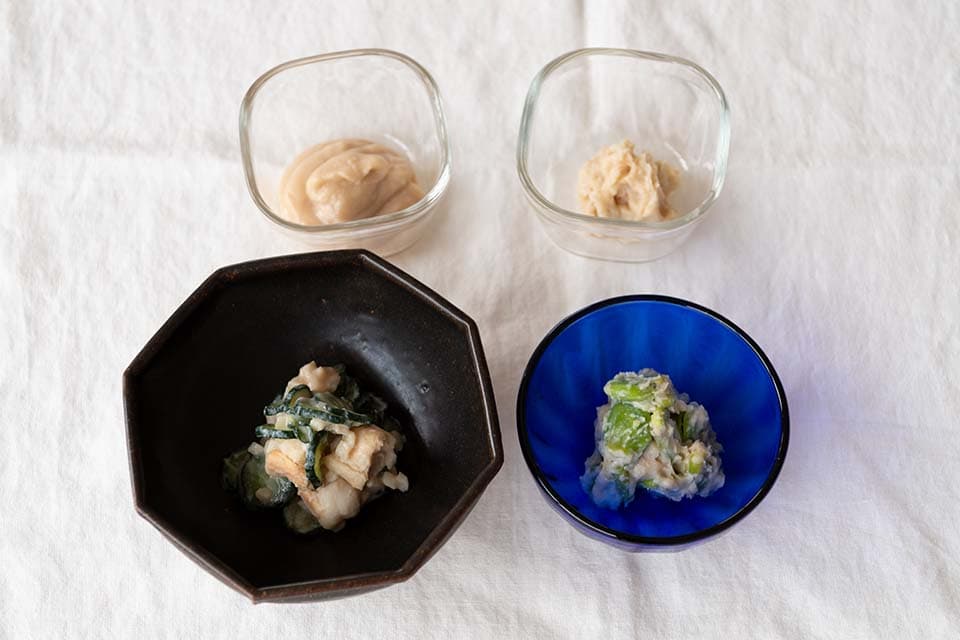
This installment features Kondo Yuriko, an expert in everyday Japanese food and master of the art of preparing aemono or “dressed foods.” Yuriko explains how to bring out the flavor of seasonal vegetables with a pair of aemono dressings: vinegared miso and sake lees. Both last well in the fridge. She shares two recipes made with these delightful dressings: cucumber, toasted wheat gluten, and young ginger dressed with vinegared miso; and broad beans dressed with sake lees.
Nothing complements Japanese food like sake, of which Yuriko is extremely fond. She tells about a naturally fermented sake that pairs especially well with aemono.
To fully bring out the flavor of seasonal vegetables in an aemono, avoid over-tossing them.
“The reason I make aemono is to enjoy the texture and flavor of seasonal vegetables.”
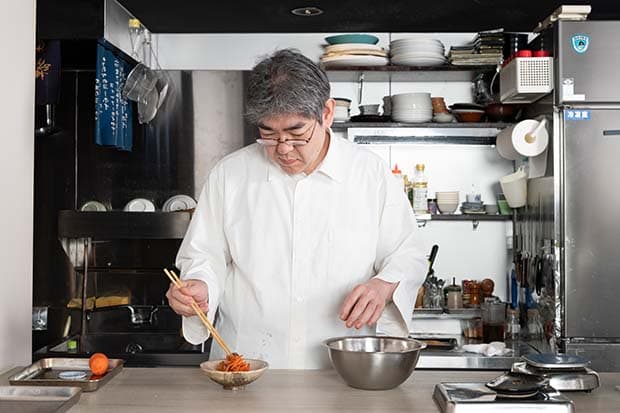
Yuriko is a master of the art of preparing aemono or “dressed foods.” Her dressed vegetable dishes will redefine what you think of as aemono. They’re mild tasting yet full of flavor. For starters, she keeps the saltiness of the dressing to a minimum.
“To avoid masking the flavor of the vegetables, I add no salt or soy sauce to the dressing. Instead, I coat the ingredients with usukuchi or ‘light’ soy sauce and then gently wipe off or squeeze out the excess liquid — a process called a ‘soy sauce rinse.’ That results in a nice balance of flavors.”
Be sparing in the amount of dressing you use so the vegetables delight the eye with their colors. There’s also an important trick to tossing the ingredients.
“Instead of mixing the dressing in so thoroughly that the taste is even throughout, be careful to avoid over-tossing the ingredients. That way both the ingredients and the dressing can shine. The first mouthful may be hard to pin down, but then after you’ve finished eating, the flavors of the ingredients and the dressing linger pleasantly on the tongue like a continuing reminder of the season. That’s how an aemono should be.”

Fermented seasonings add a nice twist to aemono dressing by playing up the vegetables.
Here Yuriko tells us how to make vinegared miso aemono dressing and sake lees aemono dressing, both of which can be prepped in advance. You might think from the name that they each must have an overpowering flavor, but Yuriko’s aemono dressings have a mellow taste that nicely brings out the flavor of vegetables.
What makes that possible, Yuriko explains, is using fermented seasonings, above all Saikyo miso. (Saikyo miso is a sweet white miso produced by miso makers licensed by the Kyoto Prefecture Miso Manufacturers Cooperative[IC2.1]. It’s low in salt and contains a high percentage of koji.)
“Saikyo miso is the perfect ingredient for making aemono dressing. It’s got just the right amount of umami and doesn’t taste harsh. When making sake lees aemono dressing, I combine two parts Saikyo miso with one part sake lees in order to take the edge off the distinctive sake lees flavor. Another nice thing about Saikyo miso is its pale color, which attractively sets off the colors of the vegetables.”
Besides Saikyo miso, the vinegared miso aemono dressing also contains rice vinegar, while the sake lees aemono dressing also contains sake lees, rice vinegar, and mirin (sweet rice wine for cooking). “Because each dressing consists of such a simple combination of ingredients, you should be careful to select fermented seasonings with an attractive aroma and flavor.”
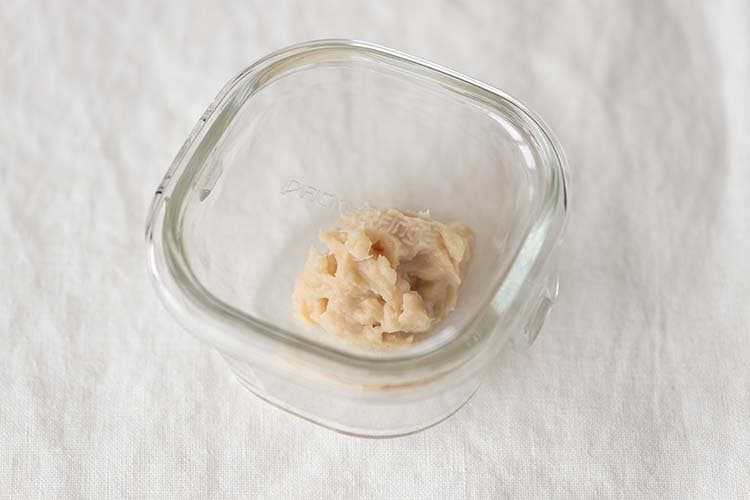
Vinegared miso aemono dressing and sake lees aemono dressing are both made with Saikyo miso and other fermented seasonings. They can be stored in a container and kept in the fridge for about five days.
Recipes for: the two aemono dressings; cucumber, toasted wheat gluten, and young ginger dressed with vinegared miso; and broad beans dressed with sake lees
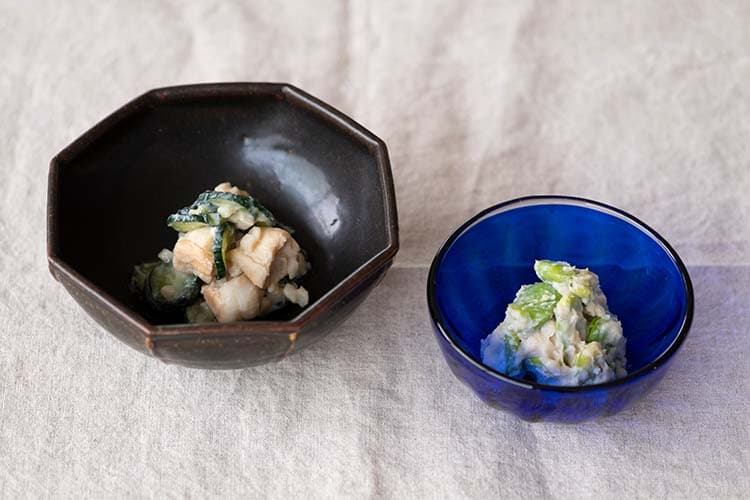
Cucumber, toasted wheat gluten, and young ginger dressed with vinegared miso
-
- Ingredients for 2 servings
- 1 cucumber
- 1 tsp. usukuchi (“light”) soy sauce
- 8 pieces of yakifu (toasted wheat gluten)
- 2 knobs of shin shoga (new ginger), coarsely chopped
- 3 tbsp. vinegared miso aemono dressing
- Vinegared miso aemono dressing (makes 2 servings × 2 batches)
- 80 g Saikyo miso
- 1 tbsp. rice vinegar
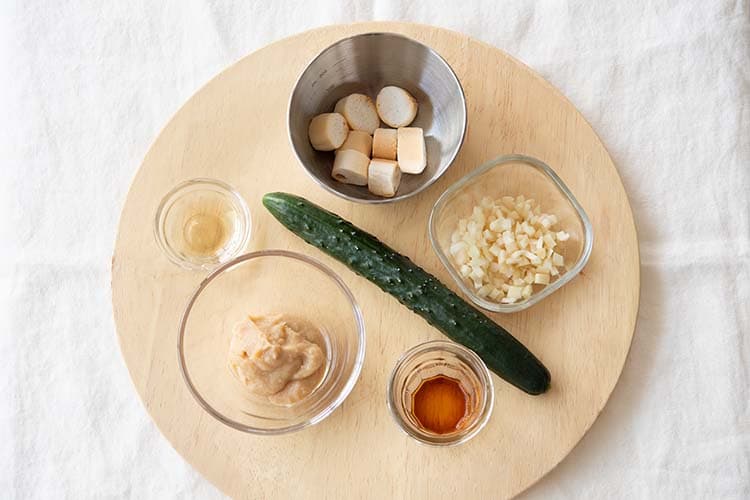
When “rinsing” the ingredients in soy sauce, use usukuchi (“light”) soy sauce to bring out the color of the vegetables. The vinegar should be a mellow-tasting variety.
-
- Instructions
-
1.Prepare the vinegared miso aemono dressing. Place the Saikyo miso and rice vinegar in a bowl and mix with a rubber spatula.
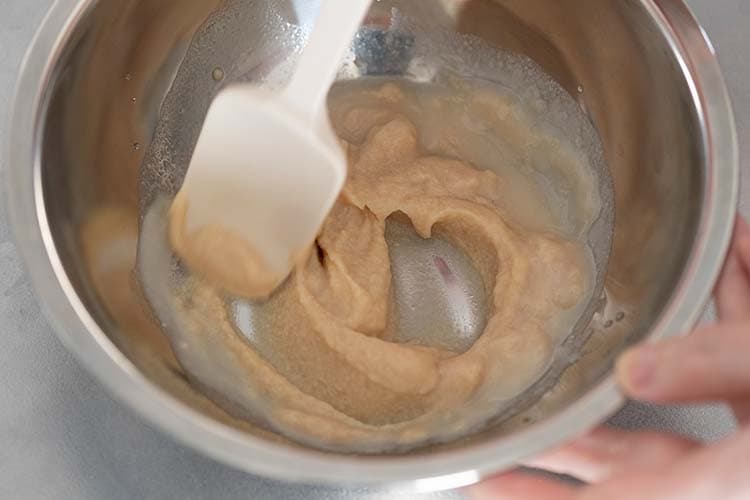
Instead of a bowl and a rubber spatula, you can use a Japanese ceramic mortar and wooden pestle. “This vinegared miso aemono dressing also goes well with eggplant, tomatoes, or pineapple.”
-
2.Slice the cucumber into rounds about 2 mm thick. Sprinkle with ⅓ tsp. salt and let sit for 5 minutes. Thoroughly squeeze out the liquid. Place in a bowl and coat with the usukuchi soy sauce. Let sit for 5 minutes and squeeze out the liquid.
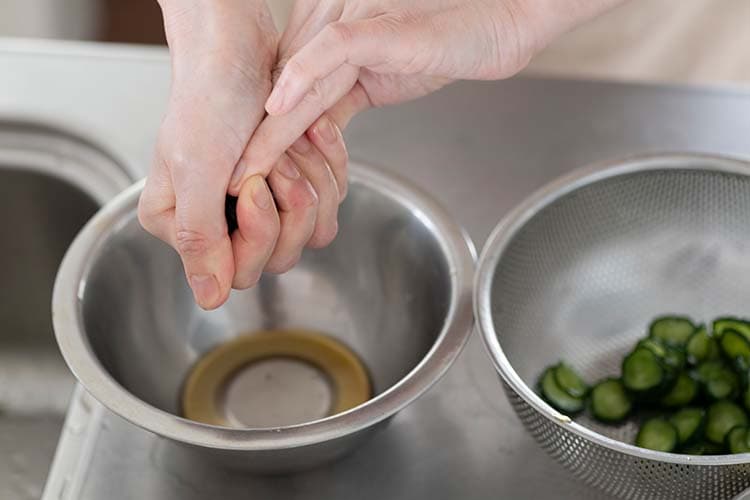
Slice the cucumber into rounds: if you slice it diagonally instead, it’s liable to release too much water. Cutting the cucumber to a thickness of 2 mm makes it enjoyable to crunch on. Use both hands when squeezing out the liquid, but be careful not to crush the cucumber. Thoroughly squeeze out the liquid after massaging the cucumber with salt; do so gently after rinsing it in soy sauce.
- 3.Reconstitute the toasted wheat gluten in water and drain for 1 minute. Squeeze out the water by gently sandwiching it between your hands.
-
4.Place the ingredients from Steps 2 and 3 in a bowl. Add 3 tablespoons of the aemono dressing prepared in Step 1 and toss the ingredients using a rubber spatula. Next add the young ginger and lightly toss. Let sit for 5 minutes.
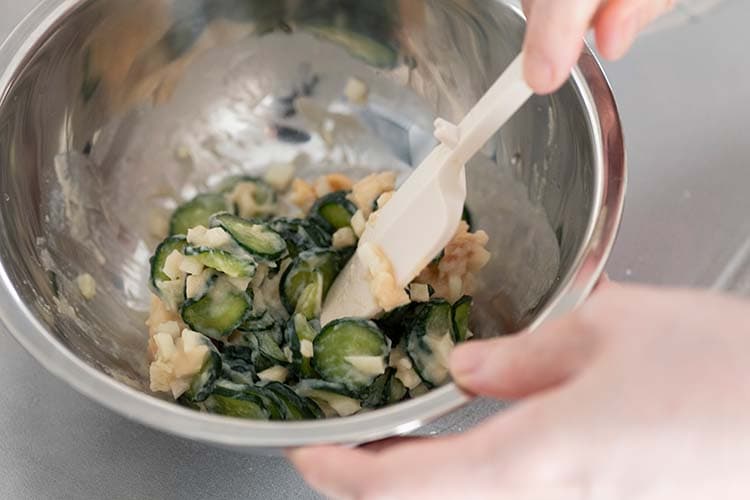
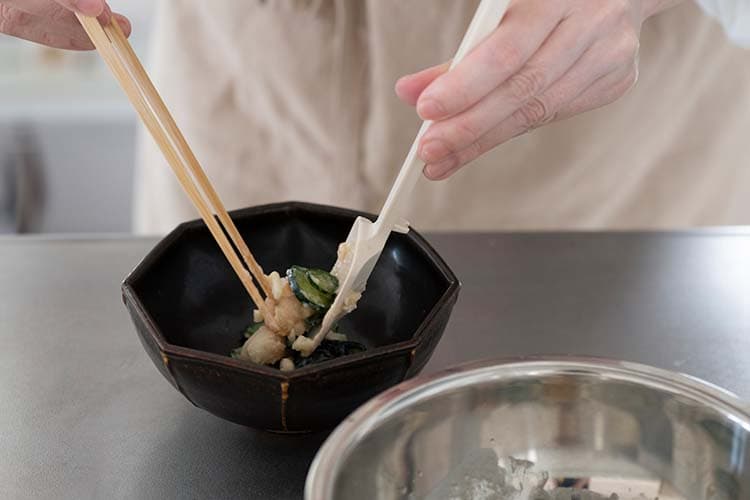
Left: When tossing, repeatedly scoop up the ingredients with a spatula and then flip them over until the aemono dressing is blended in. Don’t mix the dressing in.
Right: Letting the ingredients sit for 5 minutes after tossing gives the toasted wheat gluten time to absorb moisture, so it’s just the right texture. (It’s still firm when reconstituted.) Use a pair of long serving chopsticks and a rubber spatula to arrange the ingredients when plating.
Broad beans dressed with sake lees
-
- Ingredients for 2 servings
- 20–25 broad beans (removed from the pods)
- ⅔ tsp. usukuchi (“light”) soy sauce
- 3 tbsp. sake lees aemono dressing
- Sake lees aemono dressing (makes 2 servings × 2 batches)
- 30 g sake lees
- 60 g Saikyo miso
- 1 tsp. mirin (sweet rice wine for cooking)
- 1 tsp. rice vinegar
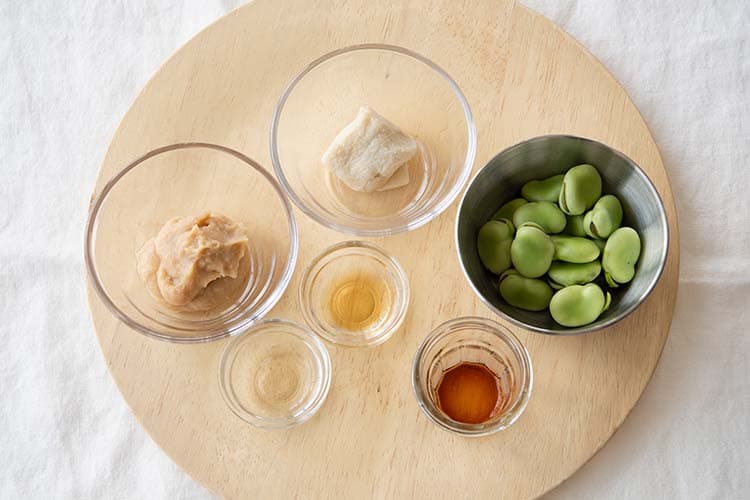
Let the sake lees sit for half an hour at room temperature, until soft enough that they bend slightly when pressed with a finger. Remove the beans from the pod and boil them as soon as possible.
-
- Instructions
-
1.Prepare the sake lees aemono dressing. Place the sake lees and mirin in a suribachi (Japanese ceramic mortar) and let sit for 5 minutes, then mash until smooth. Add the Saikyo miso and stir in well. Next add the rice vinegar and blend into a paste.
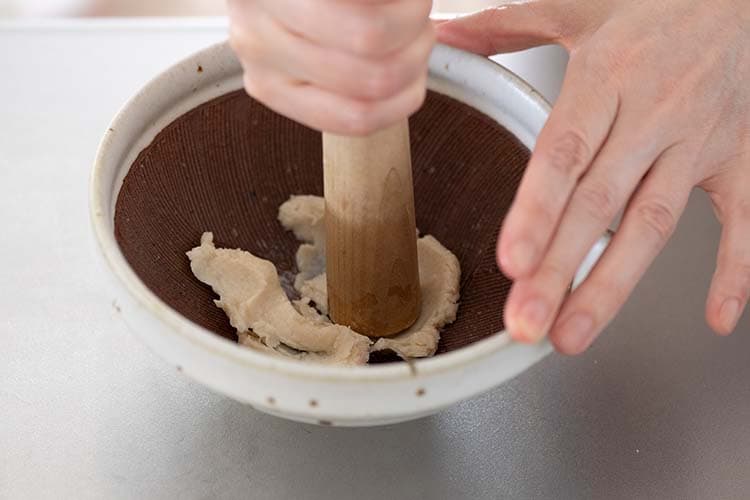
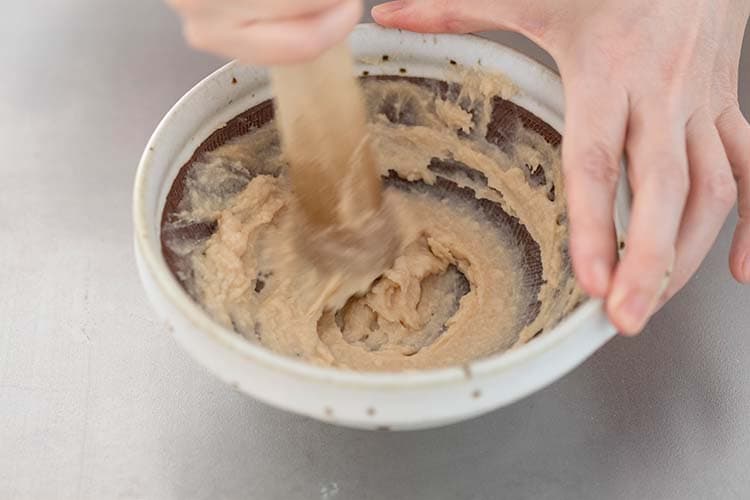
Left: Mash the sake lees and mirin together using a wooden pestle. You can also use a bowl and rubber spatula.
Right: Add the Saikyo miso and rice vinegar and grind in until the mixture reaches a smooth consistency as shown here. “This sake lees aemono dressing also goes well with turnips or myoga ginger. It also tastes good with a small amount of ume paste added.”
-
2.Cut a 5 mm notch into the skin of each broad bean at the end opposite where it’s black. Boil over medium-high heat for 1 minute 30 seconds in hot water with a pinch of salt. Remove to a colander and let cool slightly, then peel.
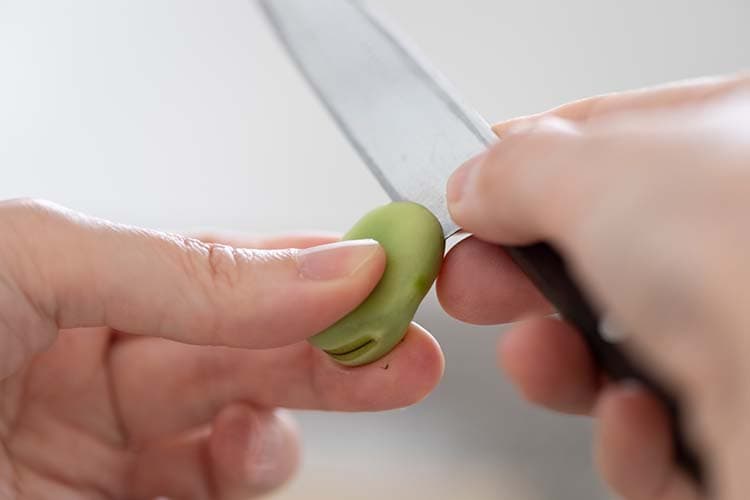
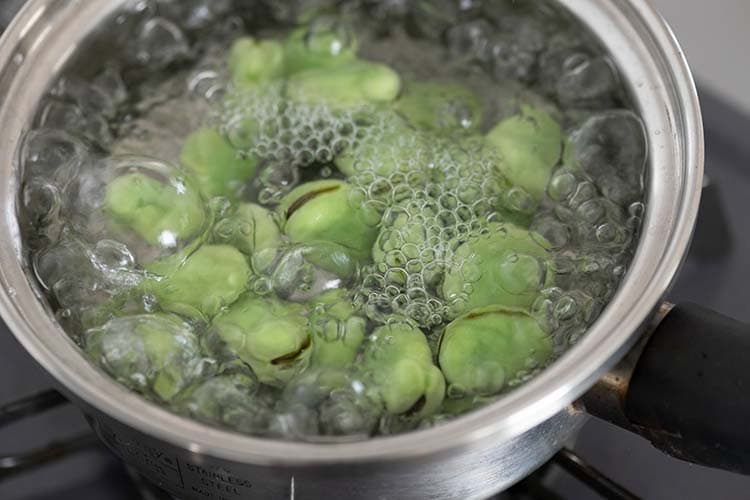
Left: Notching the beans before boiling makes the skins easy to remove afterwards simply by pinching the black end. They can easily be notched using the heel of your knife.
Right: Boiling the beans quickly over fairly high heat gives them a beautiful bright color.
-
3.Place the broad beans from Step 2 in a bowl and coat with the usukuchi soy sauce. Let sit for 5 minutes, then gently pat with a paper towel to remove excess moisture.
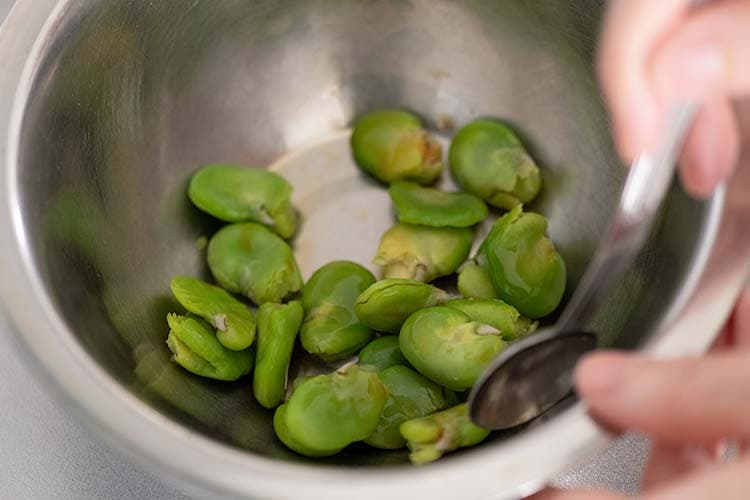
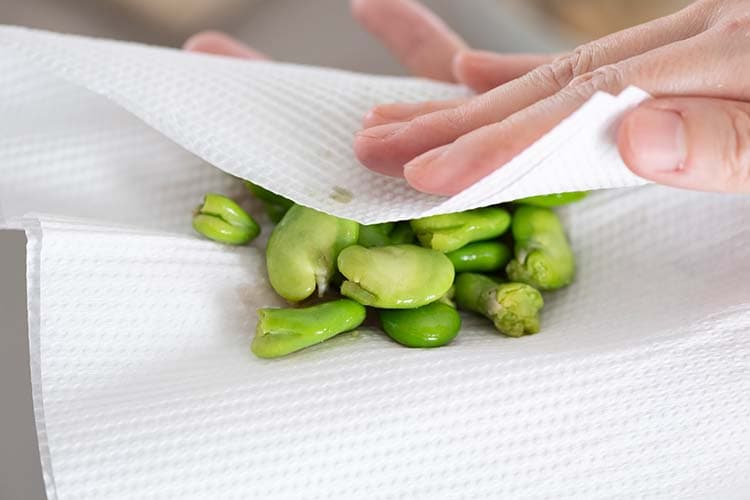
Left: Gently coat or “rinse” the broad beans with usukuchi soy sauce using a spoon or similar implement.
Right: After rinsing in soy sauce, gently pat the beans with a paper towel. Be careful not to wipe off too much of the soy sauce.
-
4.Wipe the soy sauce off the bowl and return the broad beans to it. Add 3 tablespoons of the aemono dressing prepared in Step 1 and quickly toss the beans using a rubber spatula. Let sit for 5 minutes.
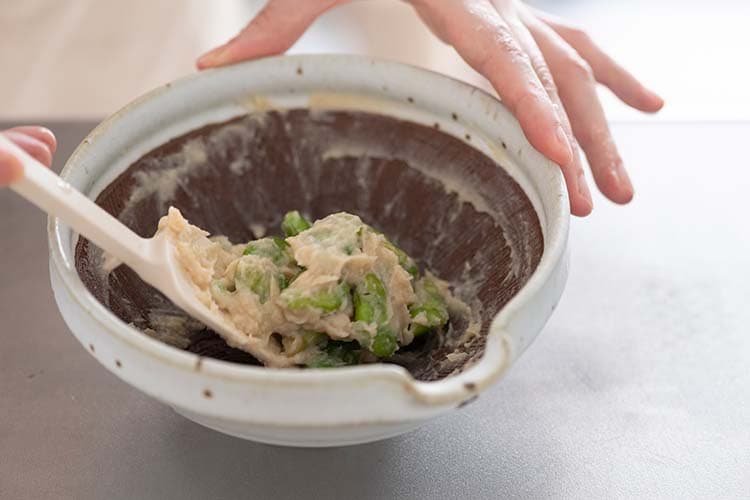
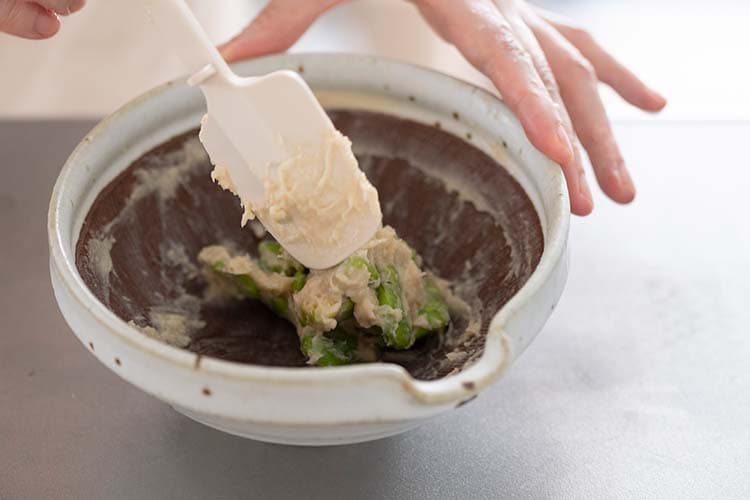
Left: When tossing, scoop up the entire mixture, beans and all.
Right: Then flip over to blend the dressing in.
An easy-going naturally fermented sake that pairs beautifully with aemono
Yuriko’s official title is “expert in everyday Japanese food.” True to her job description, she explores ways to create Japanese meals fit for serving in the home. And nothing pairs better with a meal like that than sake. One sake brewery that Yuriko particularly admires is Terada Honke in Katori County, Chiba Prefecture. “There’s no other brewery like it,” she says. Terada Honke is committed to making sake in the most natural surroundings possible, with minimal human intervention.
“Most breweries use koji mold supplied by producers of koji starter, but not Terada Honke. They collect koji mold derived from that growing naturally on ears of rice and cultivate it in-house. They use their own house yeast and even permit people who have eaten natto to tour the brewery, which at most sake breweries is a no-no. So they let in all kinds of microorganisms and allow nature to take her course.
“The brewery workers sing traditional sake-making songs dating from the Edo period (1603–1867) while mashing steamed rice and koji to prepare the starter culture and while stirring the mash as it ferments. They commune with the microorganisms as they brew. That’s why drinking Terada Honke’s sake makes me feel strangely energized.”
Yuriko particularly recommends Junmai 90 Katori, which she says pairs beautifully with aemono.
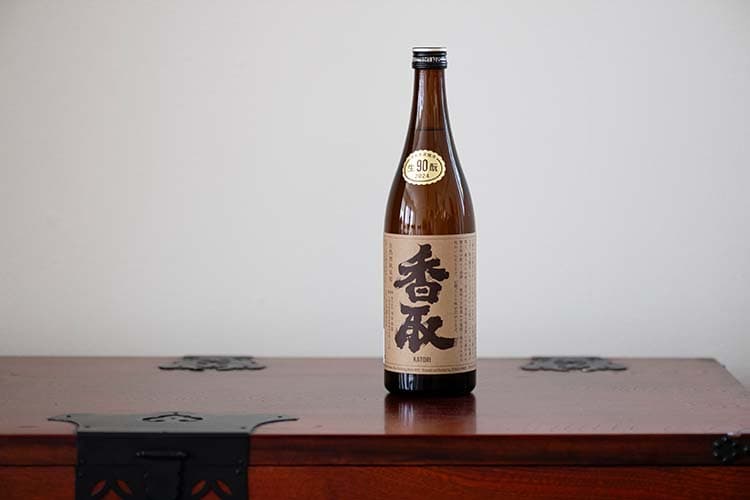
Junmai 90 Katori brewed by Terada Honke, which has been in business for 350 years.
“Japanese sake is typically made with 50–70 percent polished rice, but this particular variety is made with just 10 percent polished rice. That means it’s more acidic, with a somewhat amber color, but it has such a natural flavor and goes down wonderfully smoothly. Because it’s such an easy-going sake, it pairs well with fermented foods, which each have their own character.”
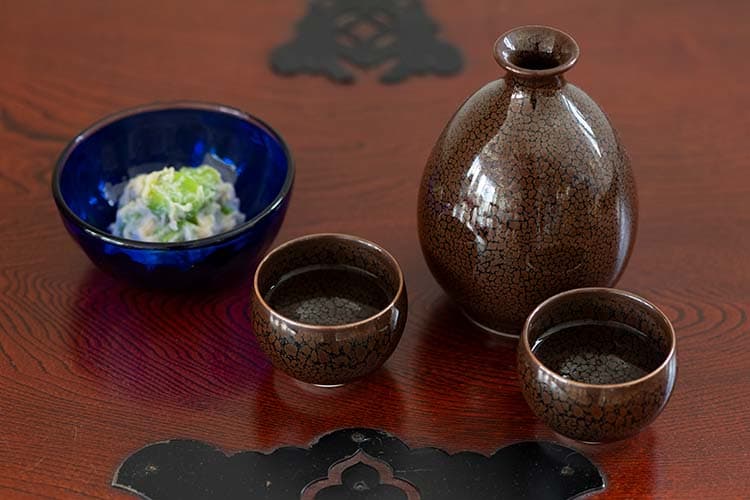
“It pairs well with aemono when served hot,” says Yuriko, “because the sake aroma is more pronounced.”
With different combinations of seasonal vegetables and aemono dressings, you can come up with all kinds of flavor variations on Japanese-style dressed vegetables. Once you prepare a batch of aemono dressing, you can have fun using it to dress a wide range of great-tasting early-summer vegetables. Why not make the flavors of the season part of your meals?