JoGeSaYu: A 100% Plant-Based Vegan Restaurant in Hiroshima
Jul 02,2026
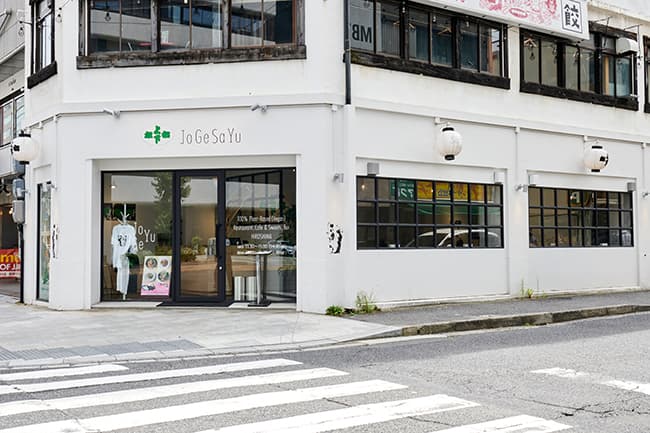
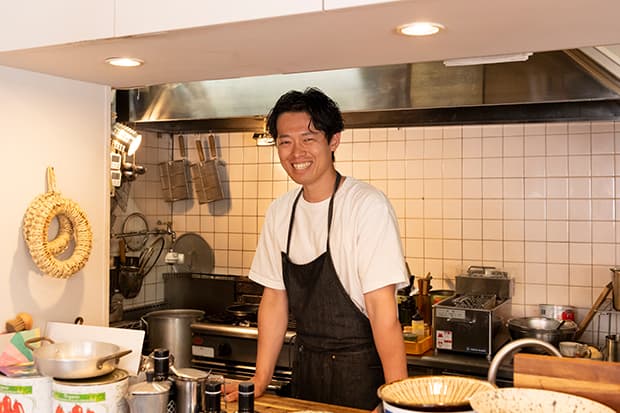
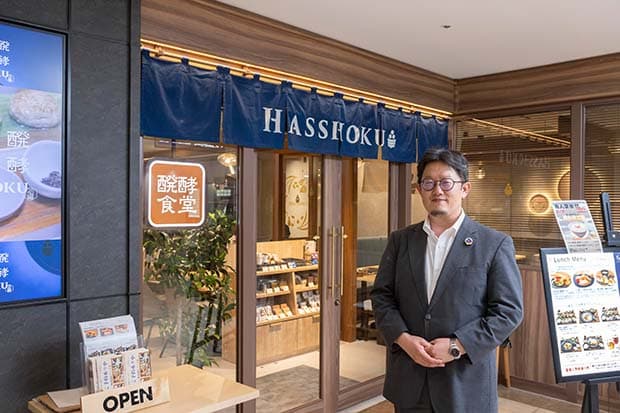
JoGeSaYu is a stone’s throw from the Peace Memorial Park in Hiroshima’s Hondori neighborhood[IC1.1], an area bustling with locals and tourists. This 100% plant-based restaurant attracts vegans and many others with dietary restrictions. Here people from all walks of life can gather around the same table to enjoy a meal made with fermented ingredients and rice koji milk. We asked Sanada-san, who prepares the food, what makes JoGeSaYu special.
A 100% plant-based restaurant frequented by tourists from all over the world
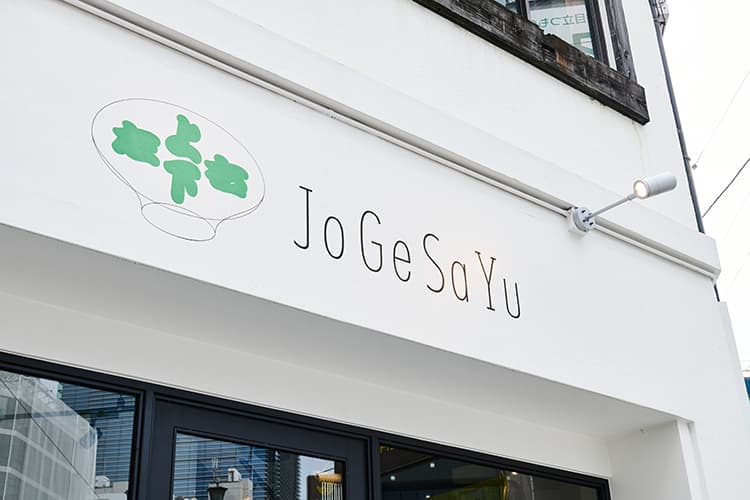
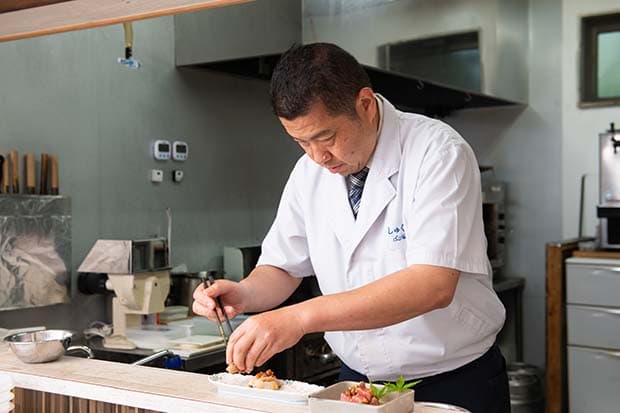
The conspicuous green logo on the white facade instantly catches your eye. Glance through the window, and you’re struck by all the visitors from abroad enjoying the food. JoGeSaYu aspires to be a restaurant where people from all walks of life can gather around the same table regardless of their differences — nationality, culture, religion, values, whether or not they have allergies. The name JoGeSaYu means literally “up, down, left, and right.” It symbolizes acceptance of all directions, values, and forms of diversity. “Some 80 percent of our patrons come from abroad,” says Sanada-san, who is in charge of preparing the food here. “We’re close to Peace Memorial Park, and I feel we’re exactly the kind of restaurant that’s needed in a major international tourist destination like Hiroshima.”
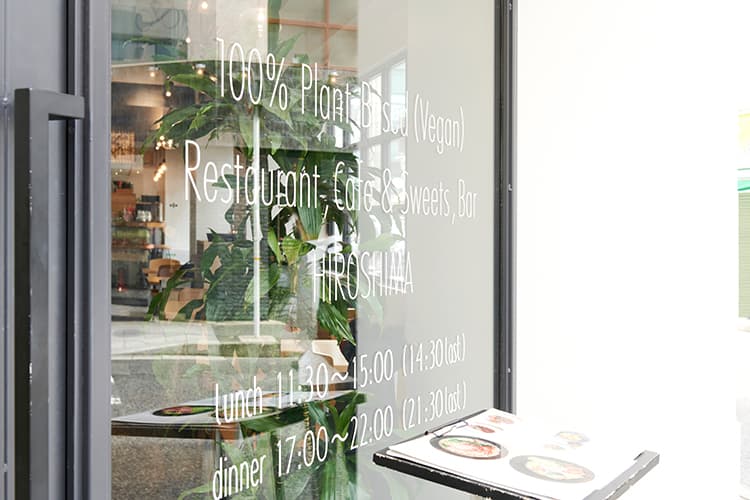
JoGeSaYu serves meals made with 100% plant-based ingredients. It uses no meat, fish, eggs, dairy, honey, or other animal products. Restaurants offering an entirely vegan menu are still few and far between in Hiroshima; hence JoGeSaYu is a precious sanctuary for people observing dietary restrictions.
“We had one person from overseas tell us, ‘Until I found this place, all I ever ate was the salad they sell at the convenience store.’ Another came up to the kitchen counter just to thank us. ‘I’ve had nothing but biscuits for the past three days. Thank you for the delicious meal.’ They were almost in tears,” recalls Sanada-san. “Being told that makes me feel it’s important that we’re here.”
Bringing delicious vegan food to all under the supervision of a world-renowned chef and patissier
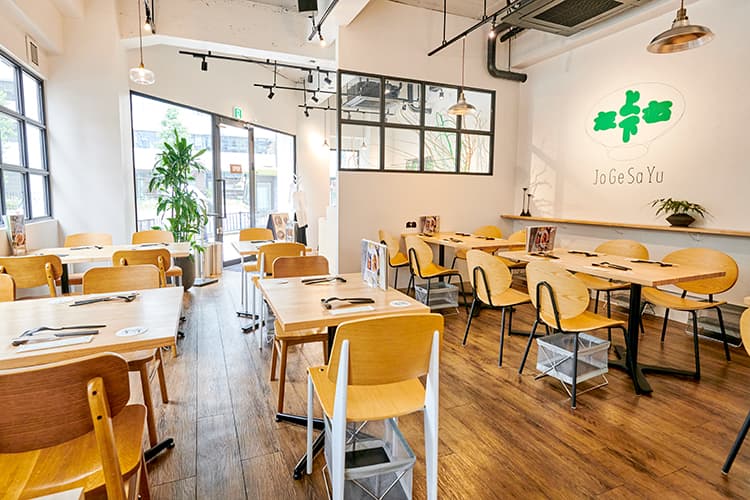
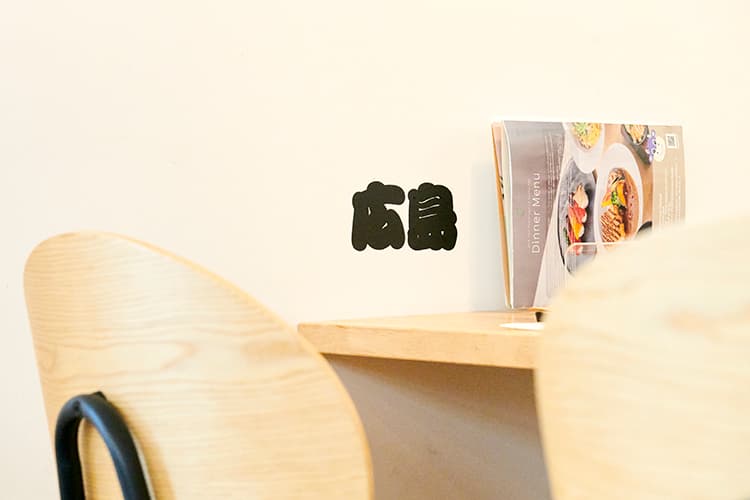
The roomy interior. Note the striking logo on the wall, featuring characters written in the Kanteiryu style of Japanese calligraphy, which has been used since the Edo period in kabuki theater.
Sanada-san says it’s important that the food tastes delicious no matter who you are. “Some people have this stereotypical notion that vegan food is bland and lacks flavor. But our recipes fully bring out the richness of plant-based ingredients and fermented foods, leaving you feeling satisfied. Customers tell us our food tastes great.”
And no wonder. The restaurant’s culinary director is Chef Kusumoto Katsumi of Saido, named the world’s best vegan restaurant in 2019 by the global vegan and vegetarian platform HappyCow. Its sweets are overseen by award-winning patissier Tsujiguchi Hironobu.
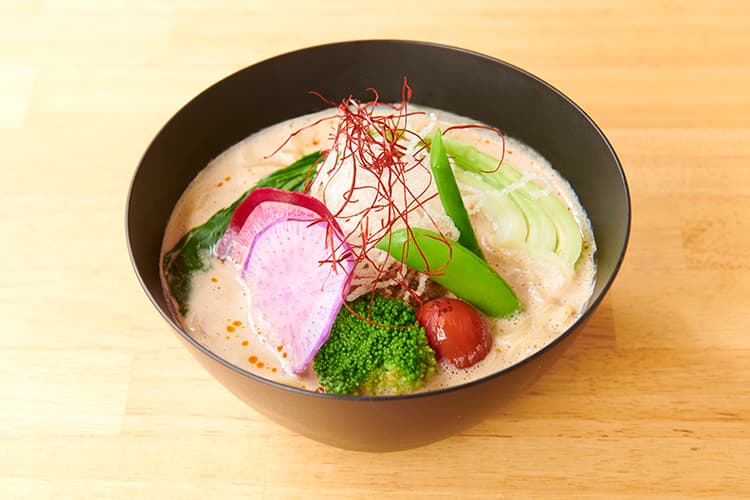
Spicy Dandan Noodles made with soy meat. You can substitute gluten-free for regular noodles.
The most popular item on the menu is the Spicy Dandan Noodles made with medicinal spices. The spicy-smelling soup with its rich sesame taste possesses a wonderfully complex flavor. You would never guess these dandan noodles are made with 100 percent plant-derived ingredients if it didn’t say so on the menu. They’re topped with a different selection of vegetables each season, and the colors look delightful. This dish is truly a treat for the eyes and the palate, which makes it a favorite with many diners.
Another popular item, this one featured on the dinner menu, is the Mini Teppan Okonomiyaki. Okonomiyaki is a kind of savory pancake for which Hiroshima is renowned. A surprising number of people who would love to try this Hiroshima specialty have to pass on it for religious, health, or other reasons — until they discover JoGeSaYu. They’re delighted when they realize they can eat okonomiyaki here.
“The food on our menu isn’t just for vegans to enjoy. Everyone seated at the table agrees it tastes delicious. That’s what you get to see here.”
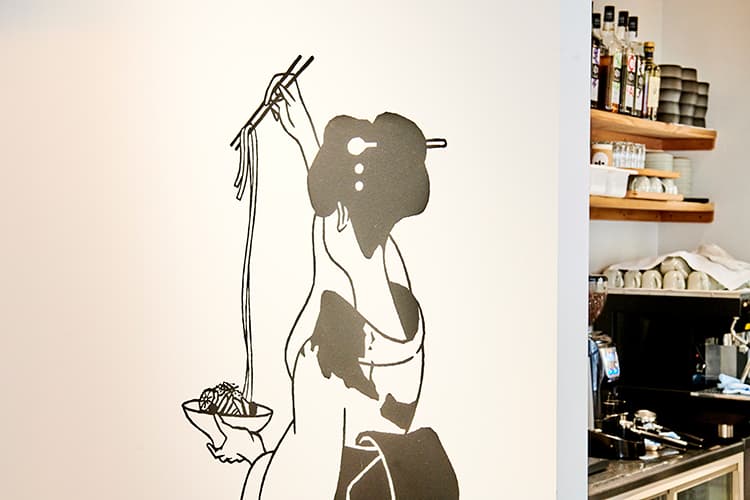
Pictures inspired by the famous Japanese illustration of the “Beauty Looking Back” are to be seen throughout the restaurant. They’re a visual reminder of its Japanese identity.
An extensive selection of lattes made with Koji Barista Edition
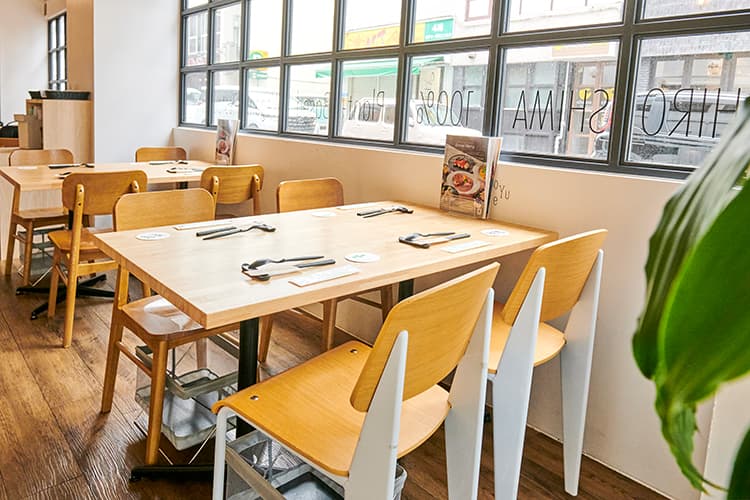
The large windows let in plenty of sunshine.
Needless to say, great care has been lavished on the drink menu as well.
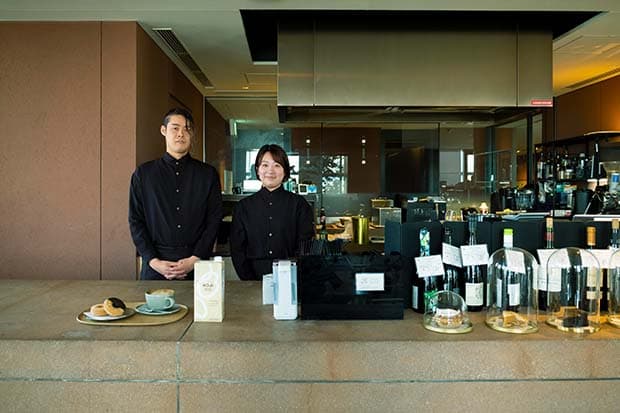
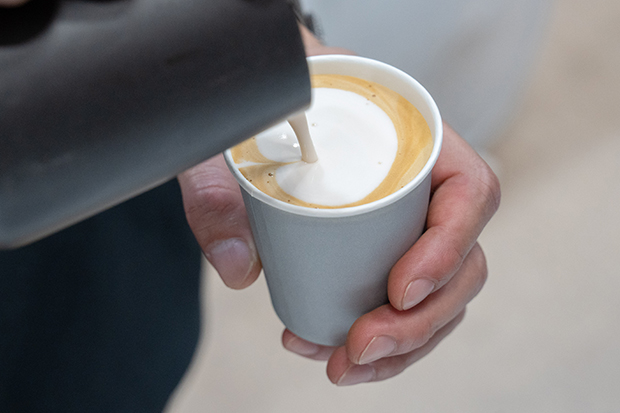
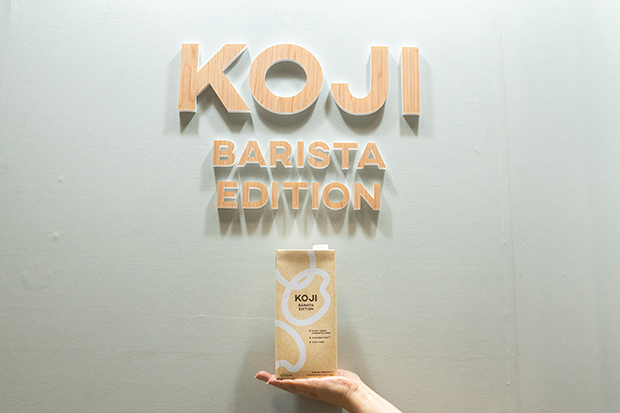
“We don’t have any drinks made with milk on the menu. Instead, we offer a full selection of lattes made with rice koji milk, including café latte, café mocha, black tea latte, matcha latte, hojicha latte, and rooibos tea latte. All are made with Koji Barista Edition.”
The coffee used to make JoGeSaYu’s café latte is blended and roasted by specialty coffee buyer and coffee journalist Iwasaki Taizo. It’s a deep roast of organic Peruvian and Brazilian beans, balanced with Colombian and floral Ethiopian notes, for a rich, smooth coffee with gentle acidity. And it’s beautifully complemented by Koji Barista Edition with its faint trace of sweetness.
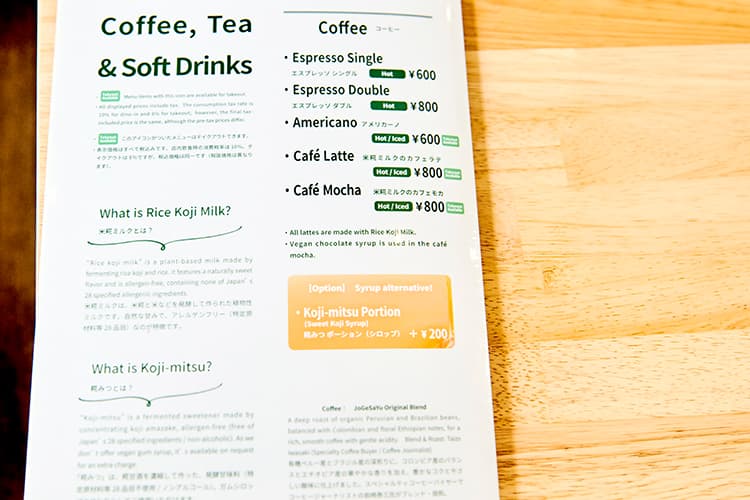
The menu explains what rice koji milk is in both Japanese and English.
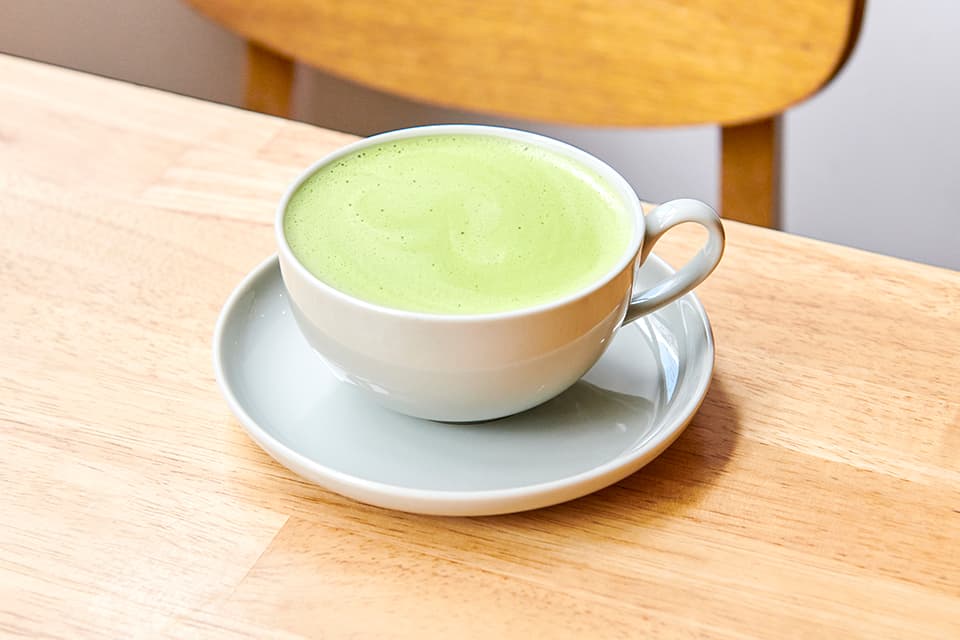
The matcha latte and hojicha latte are popular with tourists visiting from overseas, says Sanada-san.
“A lot of tourists order the matcha latte in particular, because matcha is a big favorite abroad. We’re real sticklers when it comes to our matcha. We use only the choicest matcha, so I think you’ll find the matcha taste comes through loud and clear.”
Take a sip, and sure enough, that unmistakable matcha flavor spreads across your palate. You can distinctly taste the bitterness and umami. Plus the frothy microfoam of Koji Barista Edition goes nicely with matcha. You can easily see why this beverage gets the thumbs up from so many customers.
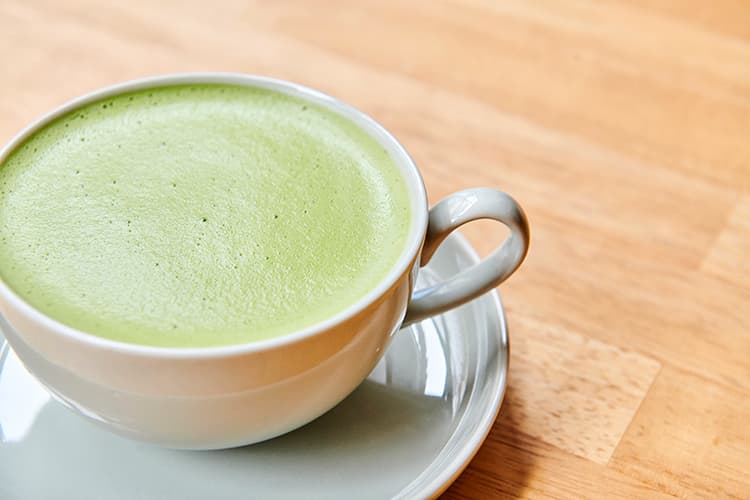
The frothy microfoam brings out the fine flavor of the matcha.
“It’s mildly sweet too. Many people are amazed when we tell them that we use no sweeteners,” says Sanada-san, breaking into a smile.
Increasingly, moreover, customers visiting from abroad light up with recognition at the Japanese words koji (“rice malt”) and hakko (“fermentation”). “Many of our customers these days are familiar with Japan’s culture of fermented foods. It’s obvious from all their questions about the dishes on the menu that they’re interested in uniquely Japanese ingredients and flavors and having fun exploring them.”
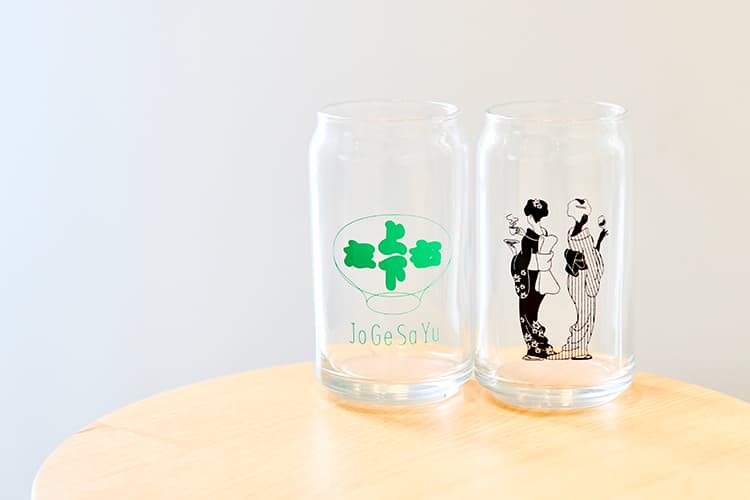
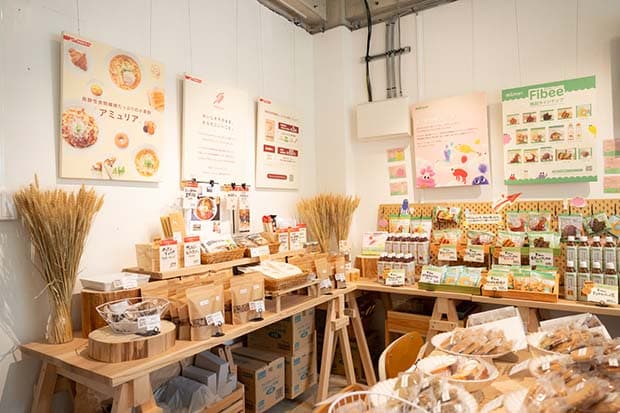
Exclusive restaurant merchandise is available on the premises — popular gifts for the folks back home.
Finally, Sanada-san shared some insights on what it’s like to be a vegan restaurant in a major tourist destination like Hiroshima.
“Every meal that tourists eat on their travels is a memorable occasion. It can transform a trip into a wonderful, unforgettable experience, or it can do the opposite. Among the customers who come to eat at JoGeSaYu are people whose diet is restricted in various ways. We want locals to enjoy the food and drinks on our menu, of course. And because so many tourists drop by, we try to put our hearts into everything we serve, so their dining experience here becomes a fond memory of their trip. We want to see all our guests smiling and having a great time, whether they’ve tracked us down online and gone out of their way to visit us or just happen to be passing by. Nothing could be more gratifying than that.”