Konka Sardines: The Tradition of Konka Iwashi
May 14,2026
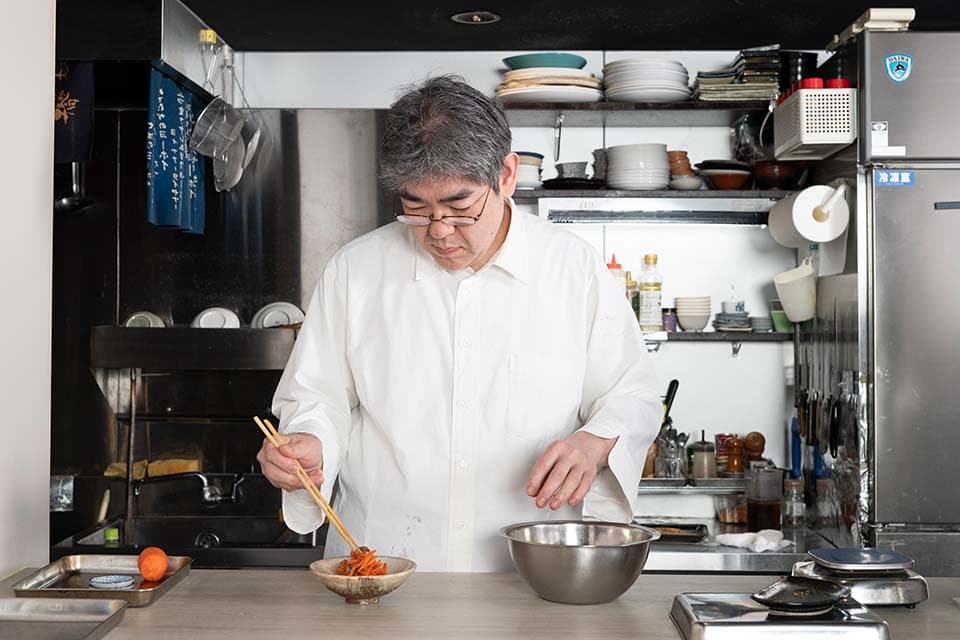
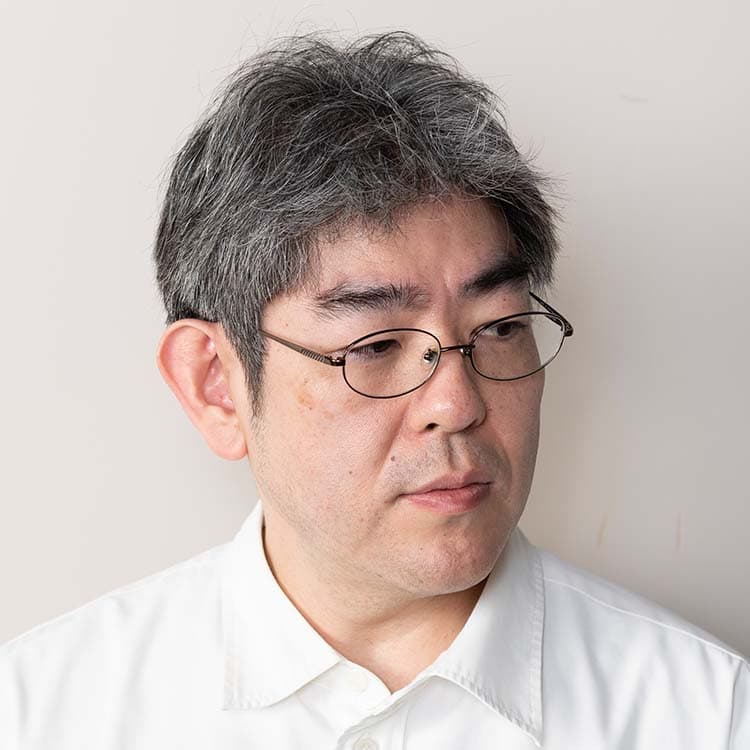
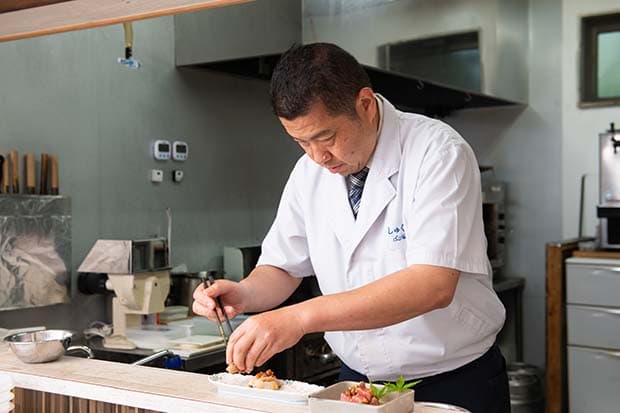
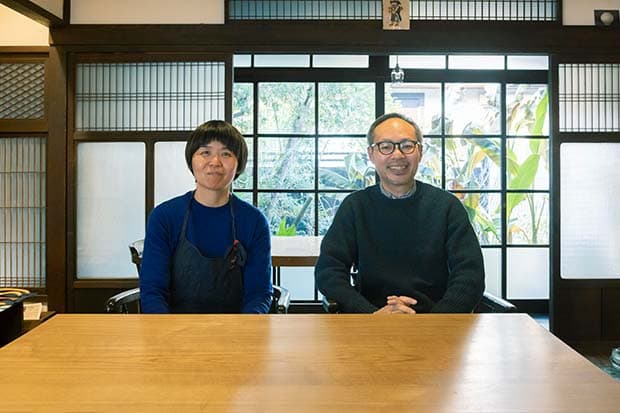
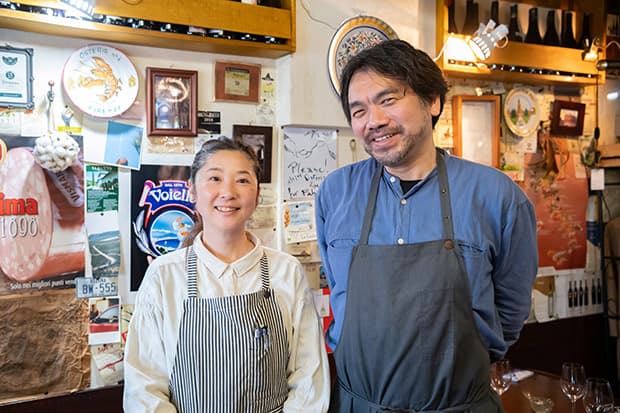
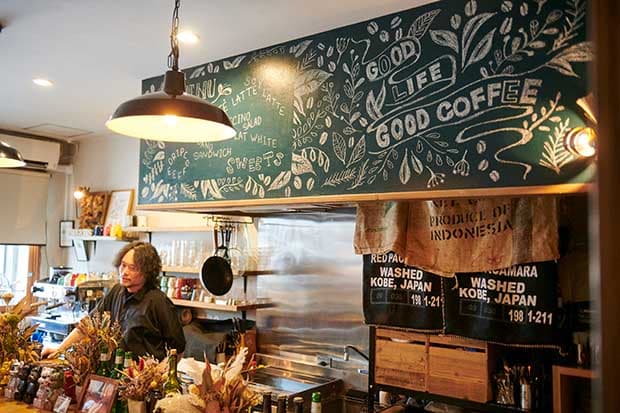
29Rôtie is a chic Japanese izakaya pub located in Otsuka, Tokyo. For this article, owner Ezawa Masatoshi picked konka sardines produced in Himi, Toyama, as his choice fermented food. Konka sardines — long regarded as a delicacy in the Hokuriku region — are sardines that have been aged and fermented in rice bran. These sardines go exceedingly well with saké. Konka sardines come in several varieties, but Ezawa says the variety he orders and is particularly fond of tastes exquisite because of its mellow saltiness and deep richness. On a broader level, he notes that fermented foods have a singular ability to amiably bring together varied ingredients and form a harmonious flavor profile.
Starting with a conversation about konka sardines, we explore with Ezawa the inclusiveness and expressiveness that fermented foods evoke.
Ezawa’s first encounter with konka sardines
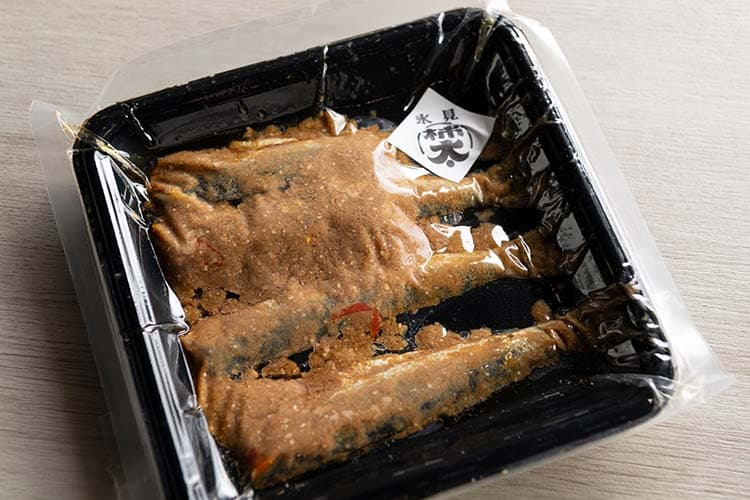
Konka sardines from Kakita Suisan, a seafood processor in Himi, Toyama. The company salts and slowly ages sardines landed at the Port of Himi in rice bran beds.
Konka means rice bran in the local Hokuriku dialect. Thus, konka-zuke refers to fresh fish, abundant in the Hokuriku region, that have been pickled in rice bran. In Fukui and other areas, it is also called heshiko. This type of fish fermented in rice bran is one of Ezawa’s favorite fermented foods. He says that he is especially enamored with the konka sardines he orders from Kakita Suisan in Himi, Toyama.
“Long before I opened this place, I was interested in heshiko as a snack to go with drinks. When it came time to actually open my own restaurant, I looked around for something I could confidently serve as a dish to go with drinks, and I ordered various foods to taste-test. The last one I tried was from Kakita Suisan. It was surprisingly delicious: It hit the exact sweet spot of my taste preferences. I knew right away that there was no other option for me.”
Because of its mellow saltiness, the deep richness that only rice bran fermentation can produce, and a gentle tang, this dish, which Ezawa claims wholeheartedly is the best in the world, has become a popular item at 29Rôtie.
The world’s best heshiko butter on toast offers a delectable trio of fermentation flavors
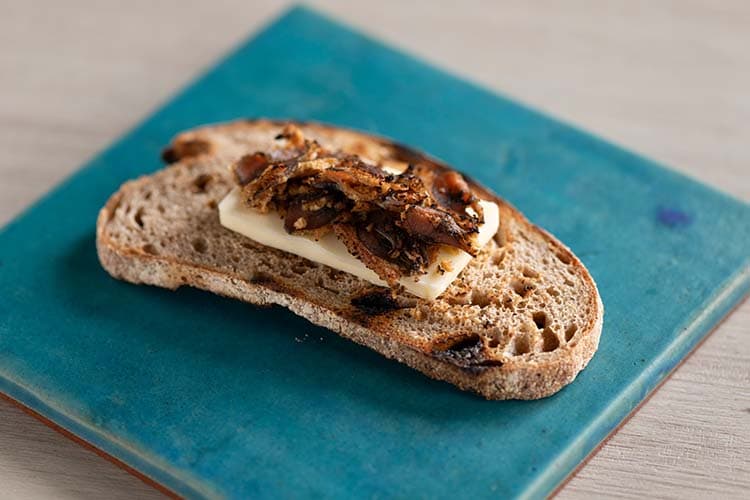
Tucked away on 29Rôtie’s popular menu is what Ezawa calls the world’s best heshiko butter, which features konka sardines.
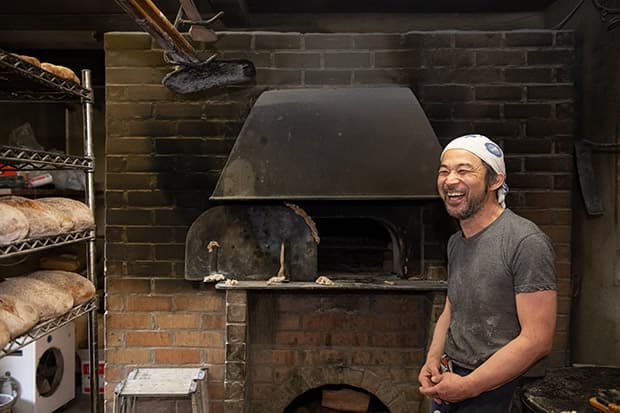
“It goes without saying that konka sardines pair perfectly with rice, since the sardines are fermented in rice bran. They taste really good chopped up and mixed in with rice to make rice balls or ochazuke [green tea over rice]. But I take a different approach here and serve them on toast. What I call the world’s best heshiko butter is fermented butter and finely chopped konka sardines placed on thinly sliced pieces of toast. I use bread from Panezza, the bakery featured in the previous article in this series. The bread, the butter, and the konka sardines. The fermented umami flavors of each harmonize beautifully like a symphony.”
The saltiness, richness, and aroma form layers of flavor as a faint acidity and umami spread unhurriedly across your palate. You can only nod in agreement when Ezawa tells you that nearly everyone who tries the dish orders it again.
A recipe for carrot and konka sardine salad
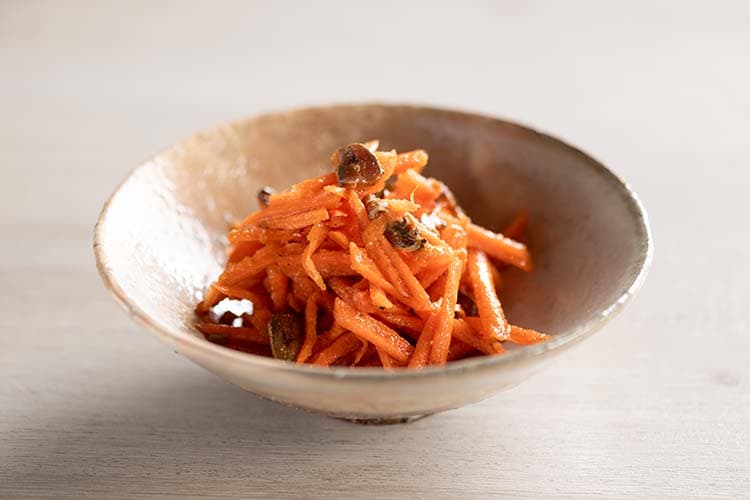
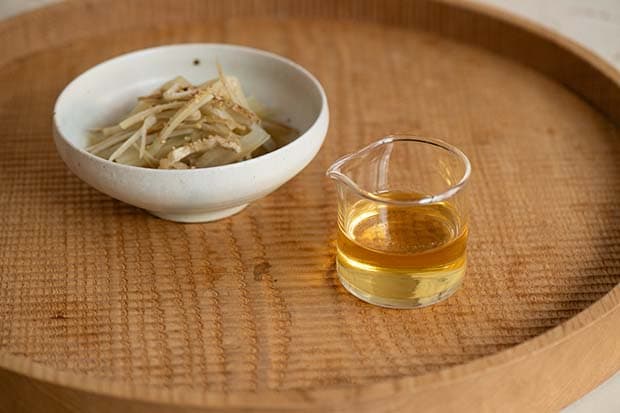
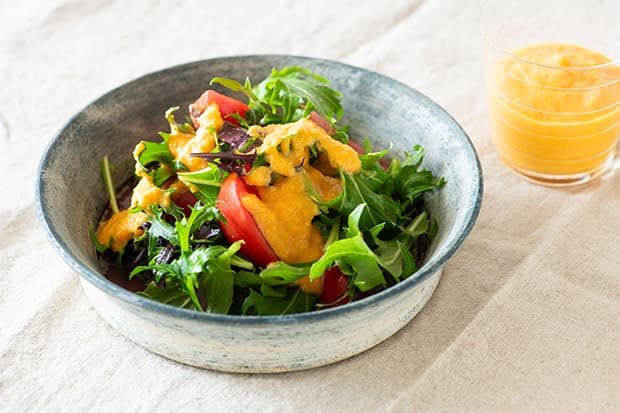
Because of their powerful umami and rich saltiness, Ezawa recommends using konka sardines as a seasoning. He gave us a carrot salad recipe that uses konka sardines in place of a conventional dressing. It’s a simple recipe that you’ll want to make again and again after just the first bite.
-
- Ingredients (serves one to two people)
- Carrot1/3 of stick (60 grams)
- Konka sardines10 grams (frozen)
- Taihaku [a mild, unroasted]
sesame oilOne teaspoon
- Soy sauce1/2 teaspoon
-
- Directions
- 1.Cut the carrot into thin, matchstick-like pieces.
- 2.Thinly slice the konka sardines. (They are easier to slice thinly when frozen.)
- 3.Arrange the sliced sardines from Step 2 on a heat-resistant dish and sear them with a kitchen torch.
- 4.Place the carrot from Step 1, the sardines from Step 3, the sesame oil, and the soy sauce in a bowl, and toss to combine.
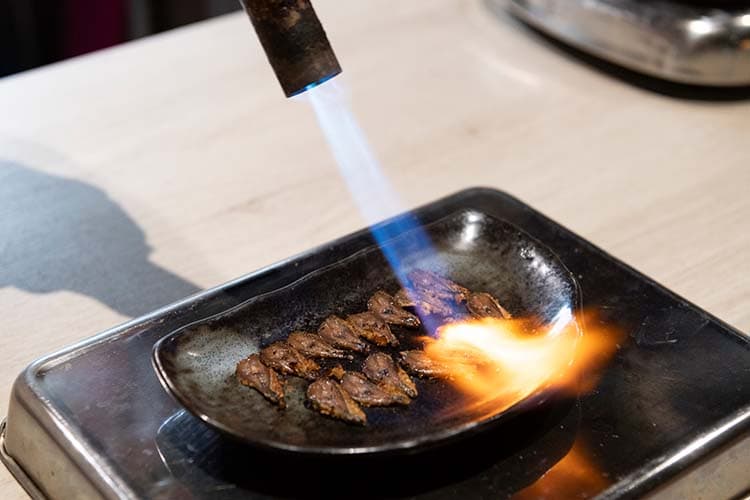
“Quickly searing the sardines gets rid of any raw, fishy odor and brings out their aroma. Only with fermented foods can you savor such an exquisite umami taste while still getting the toasty aroma of grilled fish. If you don’t have a kitchen torch, you can sear the sardines on a grill or something similar. And if you freeze konka sardines when they have fermented to the degree you prefer, they are easier to use. I feel they taste the best right when they arrive, so I freeze them immediately.”
A fascination with the cushioning ability of fermented foods
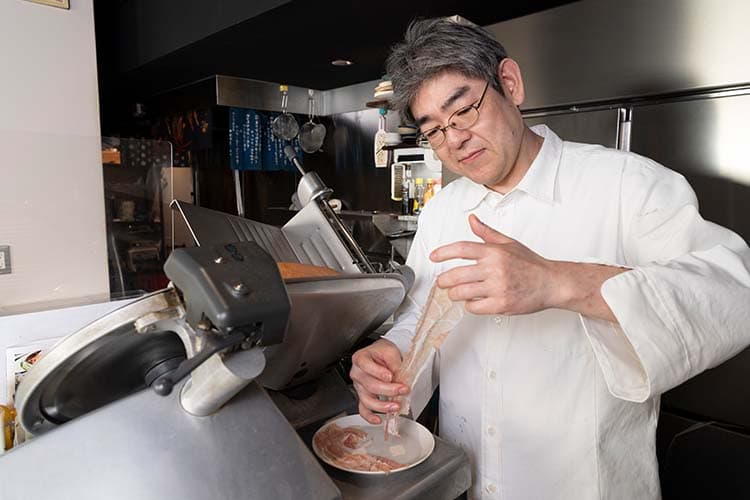
One reason why Ezawa is fascinated with fermented foods is their incredible ability to envelop and bind multiple flavors together.
“What’s wonderful to me about fermented foods is how they harmonize the overall flavor of a dish without having the various ingredients clashing with each other. A master saké brewer once described this to me as the cushioning power of fermentation, which struck a chord with me. Fermented foods soften and cushion the impact of different ingredients coming together. I think that the superb cushioning ability of fermented foods provides more than just tastes like umami and sweetness that the tongue can detect. It also creates an indescribable sense of comfort.”
A good example of this is the pairing of prosciutto and heated saké, one of 29Rôtie’s signature dishes. This combination gives you a direct experience of fermentation’s cushioning ability and inclusiveness. The heated saké gently melts the delicate fat of the paper-thin slices of prosciutto, bringing out the best flavors of each.
A bountiful expressiveness born of nature
“Saké, wine, soy sauce, miso, and even konka sardines are all products of fermentation. Konka sardines undergo lactic acid fermentation, but apparently, lactic acid bacteria produce more than just lactic acid. They create a wide array of flavor components at the same time, but we are unable to clearly perceive each one as a distinct taste. Nevertheless, I feel that foods with complex microbial activity have an abundance of flavor expressions.”
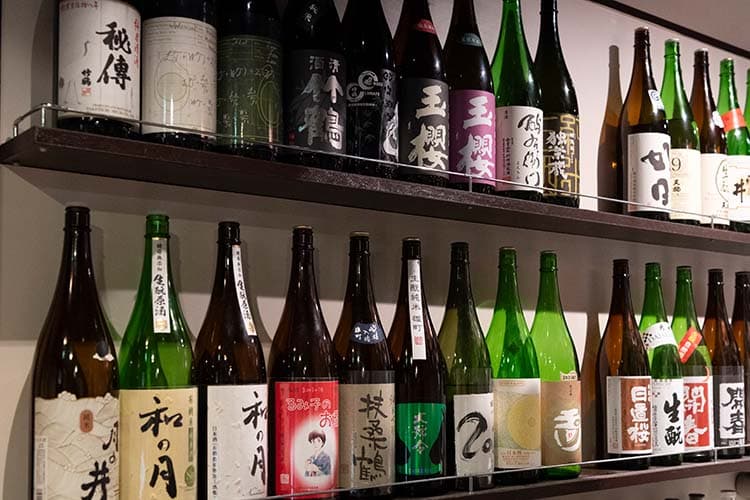
The saké varieties at 29Rôtie are best enjoyed hot
29Rôtie offers saké brewed using the traditional kimoto method, as well as natural wines. These selections also seem to echo Ezawa’s culinary philosophy, which values cushioning and inclusiveness.
“Tastes brought about by fermentation are not immediately obvious. That’s what gives them their depth, and why there is this impression of the flavors blossoming while also connecting dissimilar ingredients on some level. I feel that fermented foods go especially well together because they are made with natural methods that harness the actions of microorganisms.”
Trust in food created by the workings of nature
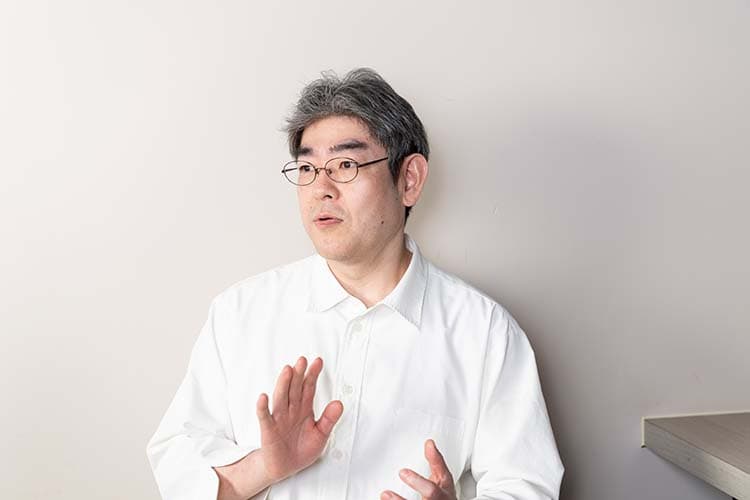
The menu at 29Rôtie at first glance seems borderless, freely blending different culinary genres. Yet, at its core, there is a consistency to the offerings that give a fuller appreciation of the true 29Rôtie taste.
“It has turned out this way simply because I have served what I personally like and want to eat. [laughs] It may seem disjointed or random at first, but I feel there is actually an underlying connection between all the items.”
At the foundation is a trust in food that is created with the power of nature, rather than a single-minded pursuit of efficiency or uniformity. Fermented foods, produced with age-old techniques, fit right in with this cooking flow and philosophy.
“The older I get, the more I truly appreciate finely crafted fermented foods,” Ezawa says with a chuckle.
“Perhaps the biggest benefit of fermented foods, in my opinion, is they are easy on your body and your digestion. Fermentation is the process of enzymes and bacteria breaking down ingredients, so in a sense, you could say fermentation is akin to outsourcing your metabolism. Fermentation changes food into a form that’s easy for our bodies to absorb, which is why we can enjoy the food that much more. I think it’s especially important for us older folks to make use of these wonderful resources. [laughs]”
Moments of savoring fermented foods slowly with a drink, delighting not only the palate but the body as well. With fermentation on our side, the joys of delicious food seem never-ending.
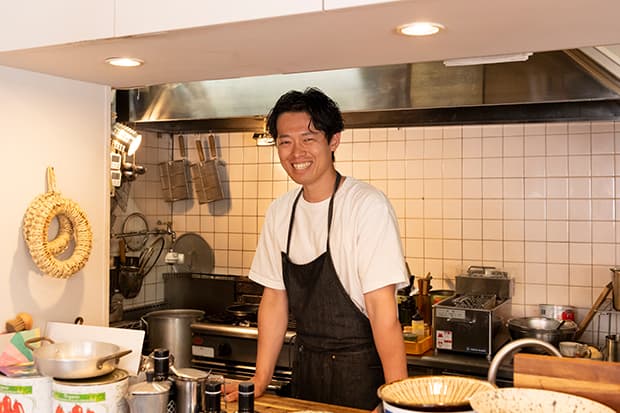
For our next installment, Ezawa will pass the baton to Nakano Susumu, owner of Washoku Shukuriyya, a reservation-only restaurant in Ikebukuro, Tokyo. Be sure to watch this space.