Exploring Okinawan Fermentation Culture and Local Foods
Aug 27,2026
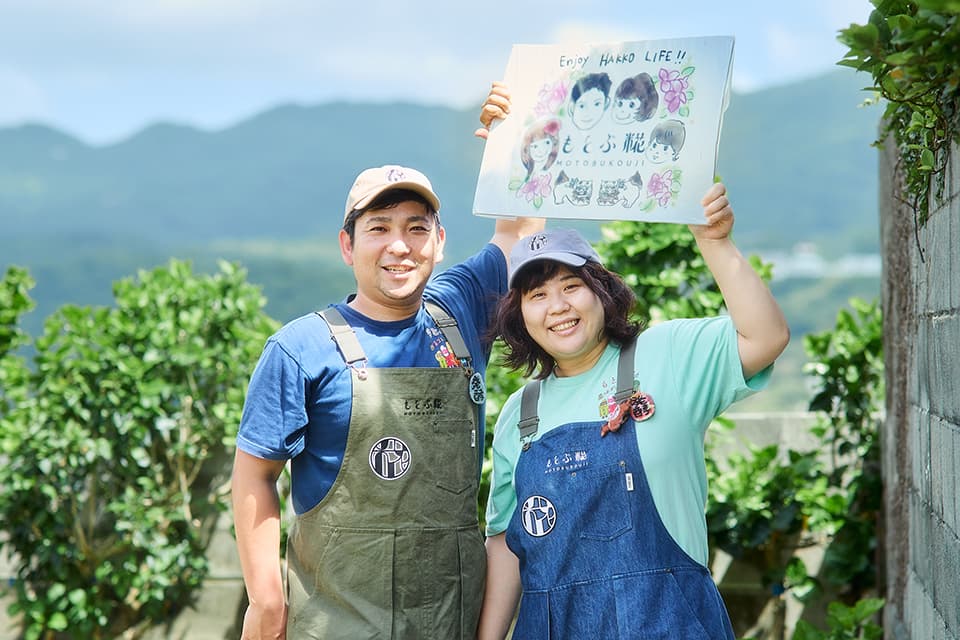
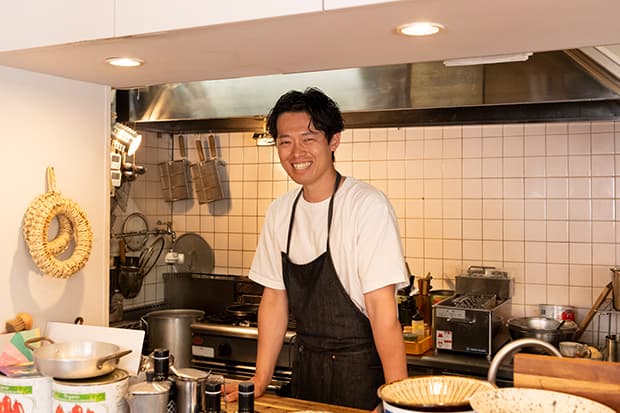
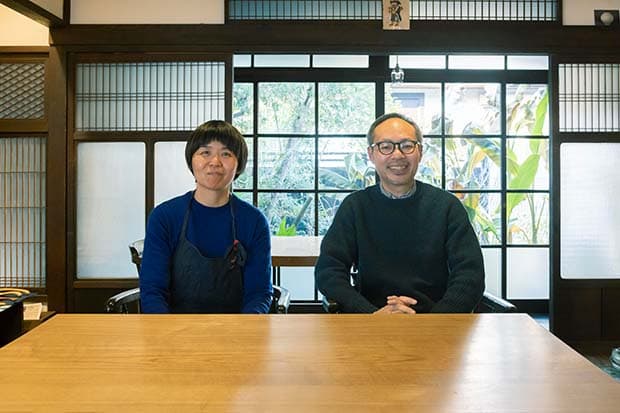
Motoki and Maiko Kadekaru run Motobu Koji no Sato — Kobo Mira [literally, Mira Koji House, Motobu Koji Village], where they are dedicated to creating fermented foods using koji rice malt, in the town of Motobu in the northern part of Okinawa Island. The couple produces and sells a variety of products, including rice koji, amazake [a sweet drink made from koji], salted koji, and soy sauce koji, as well as original items that combine these with local Okinawan ingredients. Their journey began with the Ryukyu Fermented Foods cooking school started by Maiko’s mother, Uezu Kazumi. Carrying on a tradition of fermentation wisdom developed over centuries, they took over the koji house as the second-generation owners in 2023. Since then, they’ve transformed the place from primarily being for production into a venue open to the community for workshops and a direct sales outlet. We spoke with them about the development of the koji house in fostering connections between people through fermentation.
The unique Okinawan fermentation culture inherited from my mother
“It all began with the Ryukyu Fermented Foods cooking school that my mother started over a decade ago,” Maiko explains. “The cooking school holds courses on fermentation that run for six months, and we’ve had more than 600 graduates so far. These graduates have spread the word about fermentation’s goodness in many domains, including developing café menu items that incorporate fermented foods and holding their own cooking classes. I’m thrilled that people who learned about fermentation from scratch at our school are now applying what they’ve learned in their daily lives or in their own establishments. I can really feel how fermentation is spreading from person to person.”
The couple originally lived in the southern part of Okinawa Island, but they wanted to raise children in the nature-rich northern region.
“I worked in physical therapy at an orthopedic clinic for more than 10 years,” Motoki adds. “I had many opportunities to interact with the elderly, so I’ve always been interested in people’s health and physical well-being. While studying fermentation from Maiko’s mother, we learned the skills and knowledge needed for production, and in August 2023, we officially took over the koji house as the second-generation owners. Maiko’s mother wanted to focus solely on her cooking school, so we decided to separate the cooking school from the production side of the business. While cherishing what her mother has built, we continue to produce fermented foods here at the koji house.”
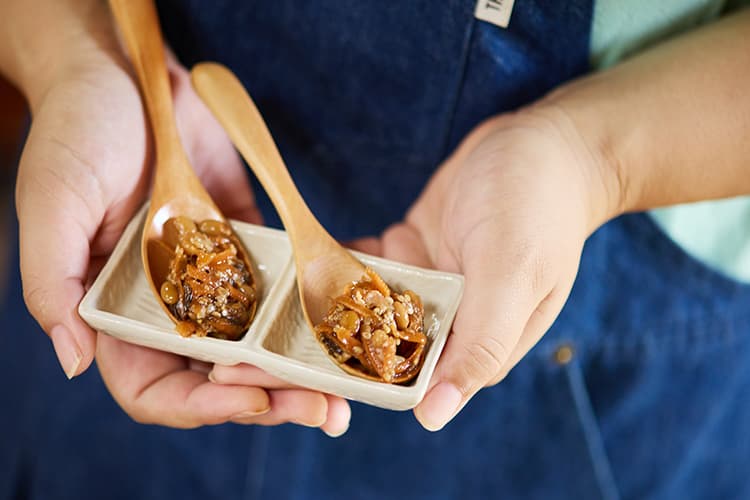
Koji natto is made by combining natto [fermented soybeans] with rice koji. Adding a natural sweetness and mellow richness derived from koji to the umami flavor of natto makes this item especially popular to eat with rice.
A new hilltop koji house with a fine view brings production, sales, and workshops under one roof
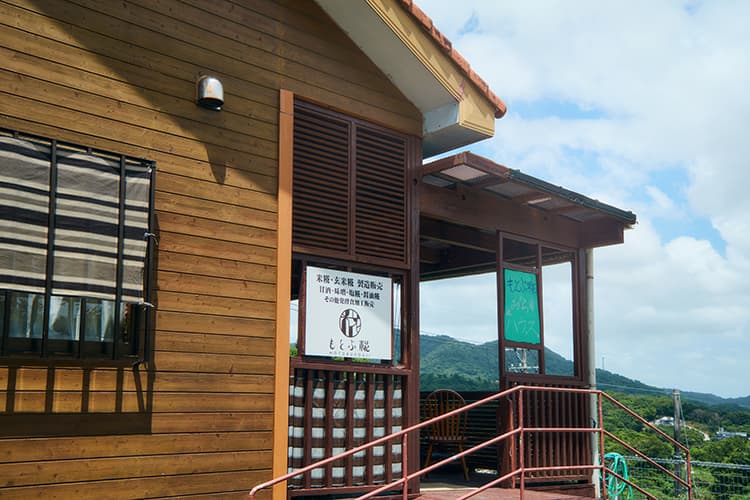
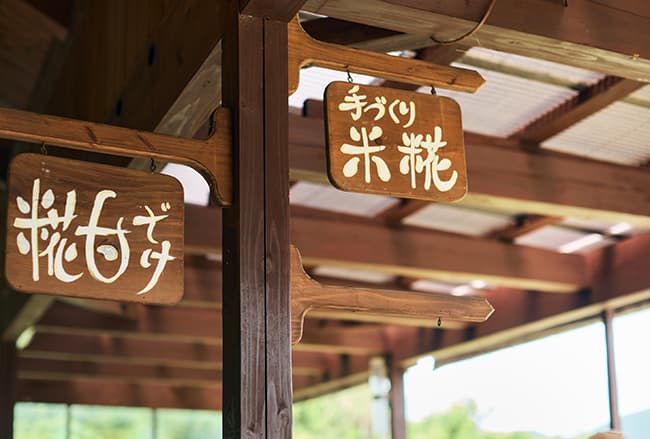
The current koji house serves not only as a production facility but also as a venue for workshops and a direct sales outlet. It turns out that the Kadekarus found the location by fortuitous chance.
“It happened when a real estate agent told us about a property that hadn’t been listed yet. It had previously been used as a vacation rental, and with its wooden ambiance and terrace, I thought it would be the perfect space for fermented foods.”
They had been leasing a separate location to hold their workshops. But with the new koji house, they could bring everything, from production to hands-on experiences and sales, under one roof.
“It’s become a place where families feel free to bring their children along. I want it to be a space where people feel more closely connected to fermentation. The most important thing when making fermented foods is, of course, controlling the temperature and other environmental conditions. Because koji is a living organism, it feels a bit like watching over children. To nurture the koji into a healthy state, meticulous attention to details like temperature controls is essential. Perhaps it’s because we spare no effort in nurturing our koji that customers who buy our products tell us how delicious they are and how they will buy them again. Every time I see or hear such reactions, I’m glad we took the extra time to make our products with care.”
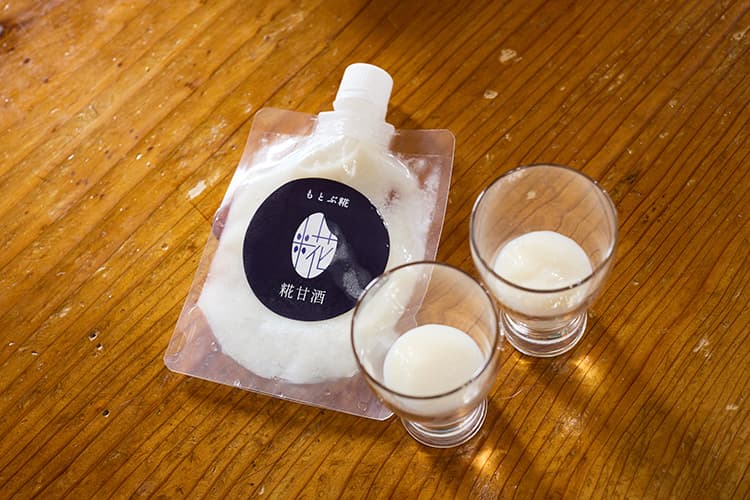
Koji amazake from Kobo Mira. What Kobo Mira prizes most is the idea that fermentation isn’t a special health regimen, but a food culture that’s part of everyday life. Amazake is a symbol of this thinking.
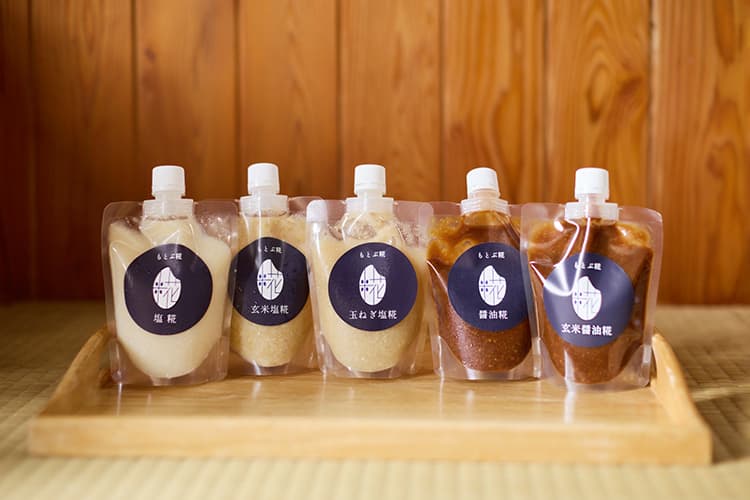
Start with salted koji, then learn the idiosyncrasies of brown rice koji, experience the convenience of onion-flavored salted koji, and expand your culinary horizons with soy sauce koji or brown rice soy sauce koji. Kobo Mira’s product line is designed so users can gradually deepen their enjoyment of fermentation.
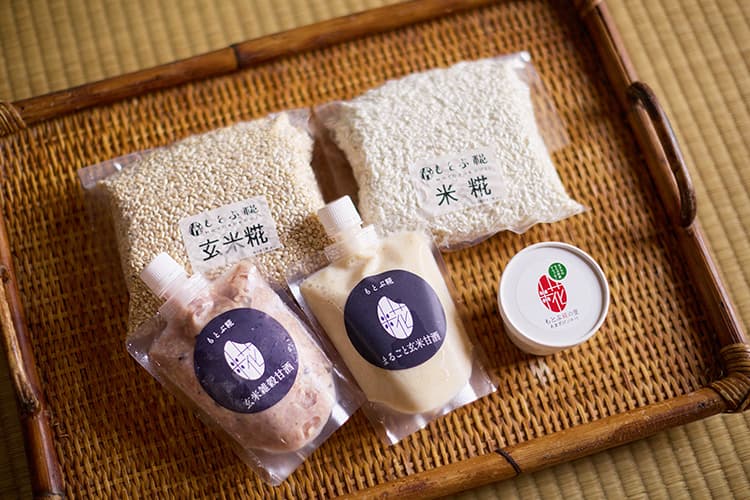
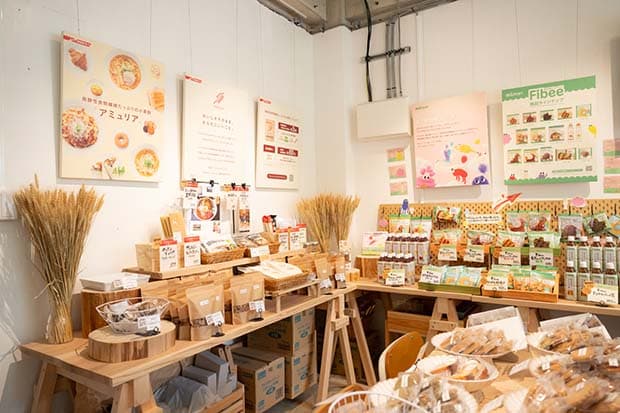
From brown rice koji and rice koji to amazake and fermented sweets. Kobo Mira takes great care in crafting each of its products so customers can be confident in incorporating the gentle, delicious flavor of koji into their daily lives.
Fermented foods made here exclusively, utilizing Okinawan ingredients
Kobo Mira’s calling card is creating products that combine koji with Okinawan ingredients. One of the most popular of these is yangnyeom [a Korean spice mix], made with a recipe passed down from Maiko’s mother’s generation.
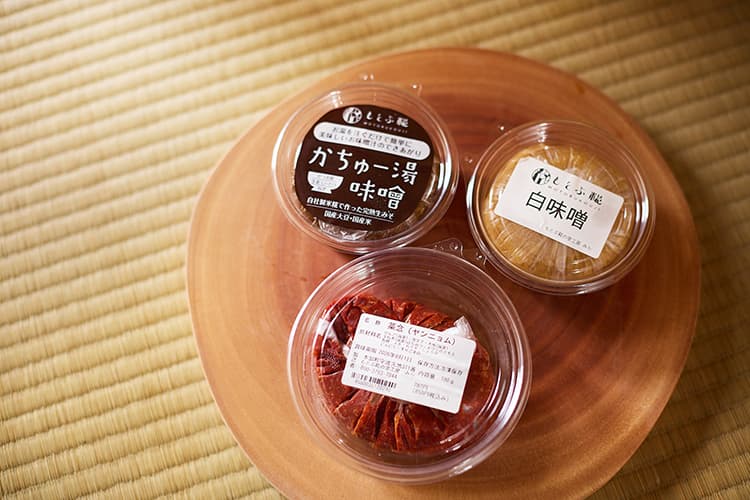
“Our yangnyeom is based on Korean fermentation culture but adapted to suit Okinawan tastes. We add apples and honey to make it more palatable for those who aren’t fond of spicy foods.”
The condiment is gaining popularity as a versatile seasoning that’s easy to use at home, whether adding a dash to miso soup or using it to flavor stir-fries, fried rice, or yangnyeom chicken.
Another product on the rise that could only come from Okinawa is kachuyu miso [miso with dried bonito flakes, ginger, and spring onion].
“Many Okinawan dishes use lots of bonito flakes, and kachuyu is a home-style dish that has been passed down through everyday life. Kobo Mira’s kachuyu miso is a product that adapts this traditional food culture into a format easily incorporated into modern life.”
Kachuyu miso embodies both Okinawan food culture and the wisdom of fermentation that Kobo Mira cherishes.
Growing community ties through fermentation
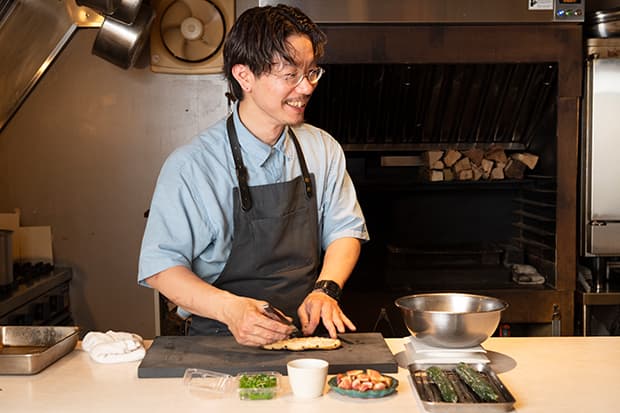
Today, Kobo Mira’s products are available not only at local stores but also at an expanding number of retailers, primarily in northern Okinawa. The products are even reaching professional kitchens, as hotels and restaurants are adopting them as seasonings. Meanwhile, at their workshops, participants in their 70s and 80s can be seen enjoying the process of making koji.
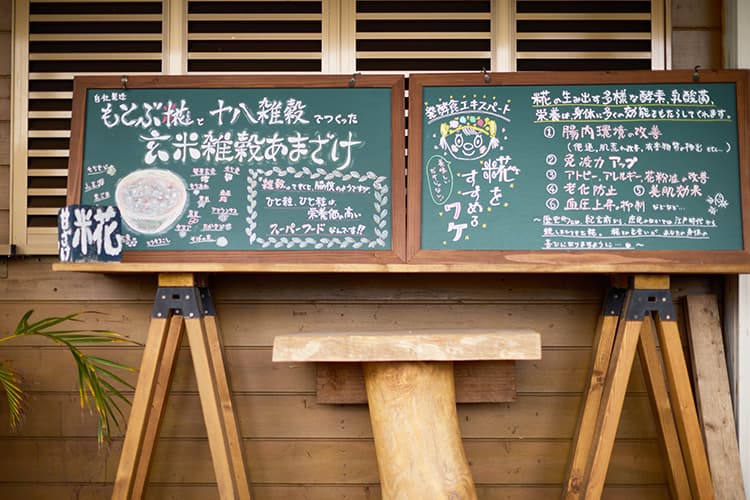
“Many people are interested in fermentation, regardless of their age. Everyone enjoys making it. I truly feel fermentation is a communication tool that connects people across generations.”
The circle of fermentation that began in a small koji house is spreading throughout the district and across all of Okinawa.
“We want to convey the appeal of fermentation, as a koji house that remains true to our vision. We don’t want to simply deliver products; we want to create a place where people can come and enjoy fermentation and Okinawan food culture.”
At Kobo Mira, koji continues to thrive quietly, even today, amid the nature of Motobu.