Cucumber Nukazuke with Mackerel and Fig Salad
Aug 20,2026
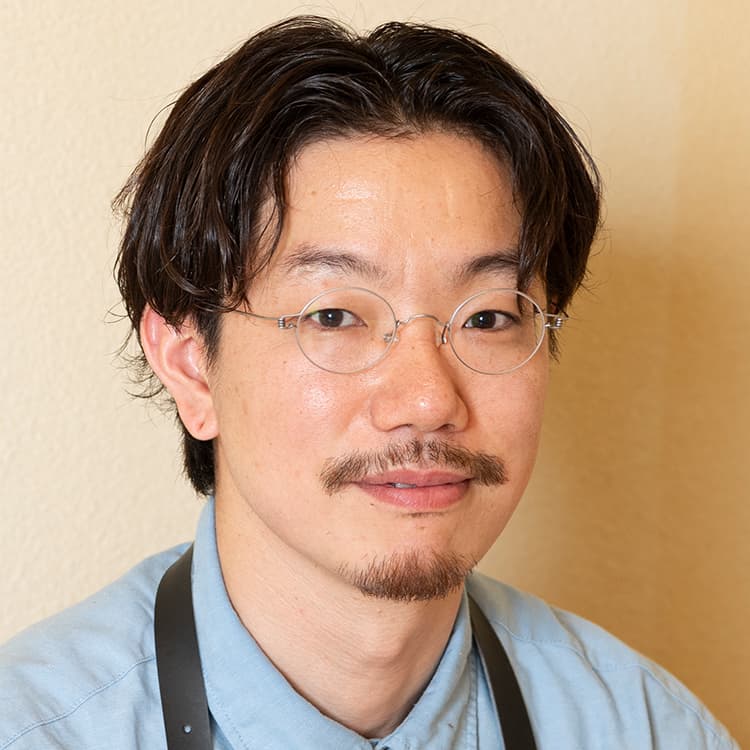
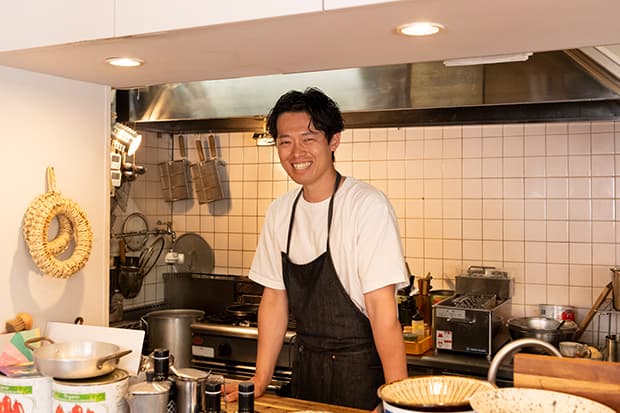
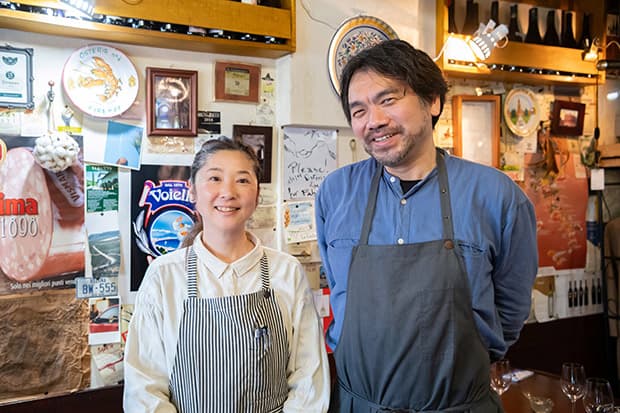
The Tasty Fermentation Club is an ongoing series where we ask food professionals for their top recommended fermented foods. This time we visited with Nakamura Toshiya of aeru, a French restaurant in Mejiro, Tokyo.
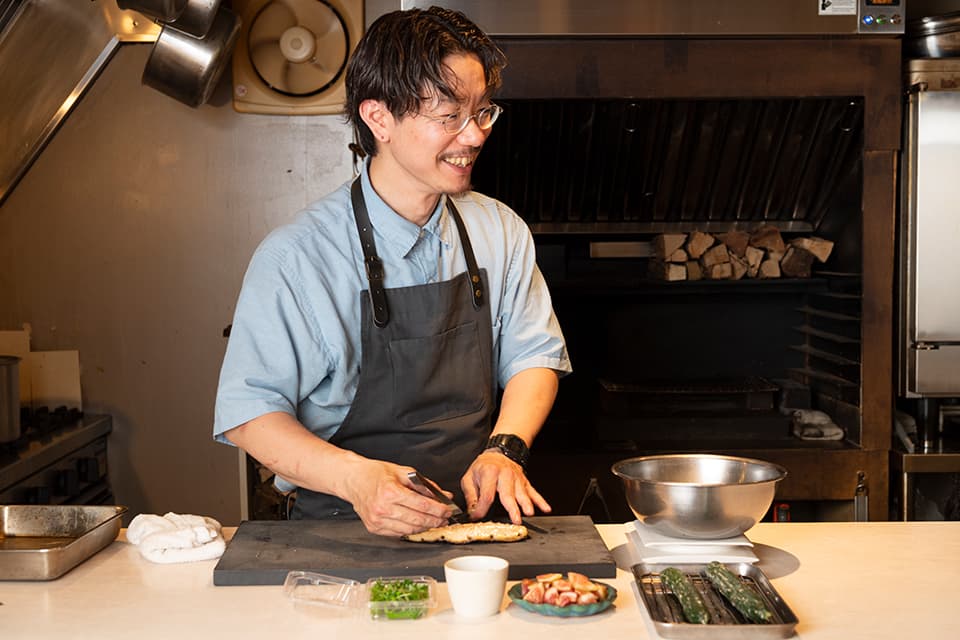
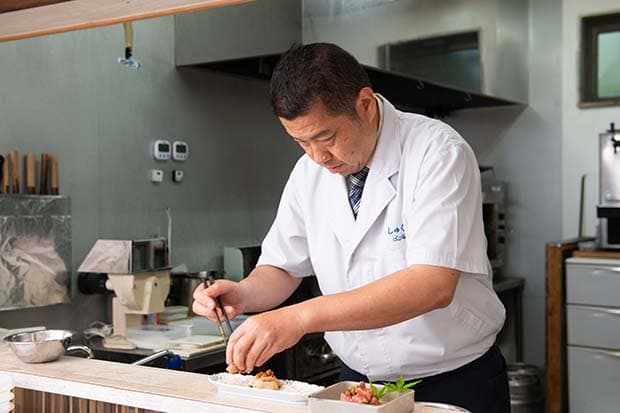
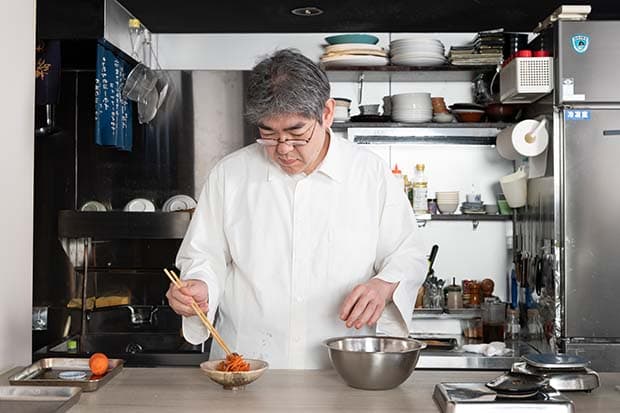
Drawing on French cuisine and utilizing wood-fired cooking, Nakamura creates dishes that make use of seasonal ingredients and Japanese culinary culture. His choice fermented food is nuka-zuke [pickles fermented in rice bran]. He shared with us a novel aemono dish [a dressed, salad-style dish] that combines nuka-zuke cucumbers with sun-dried mackerel and figs. The appeal of this dish lies in its simple ingredients and preparation method, allowing you to enjoy the chef’s creativity at home. We asked him the secret of why this seemingly unexpected combination creates such depth in aroma, umami flavor, and texture.
The multidimensionality of fermentation expands the possibilities of cuisine
Aeru is a hidden gem offering wood-fired French cuisine that lets you forget the hustle and bustle of the city. The moment you step inside, you’re enveloped by the gentle scent of firewood.
Amid the red glowing flames, the crackling sound of the fire, and a toasty aroma that tickles your nose, each dish offers an exhilarating taste experience. So, it was surprising that Nakamura, who crafts aeru’s unconventional menu items, cited nuka-zuke — a traditional Japanese fermented dish — as his top fermented food.
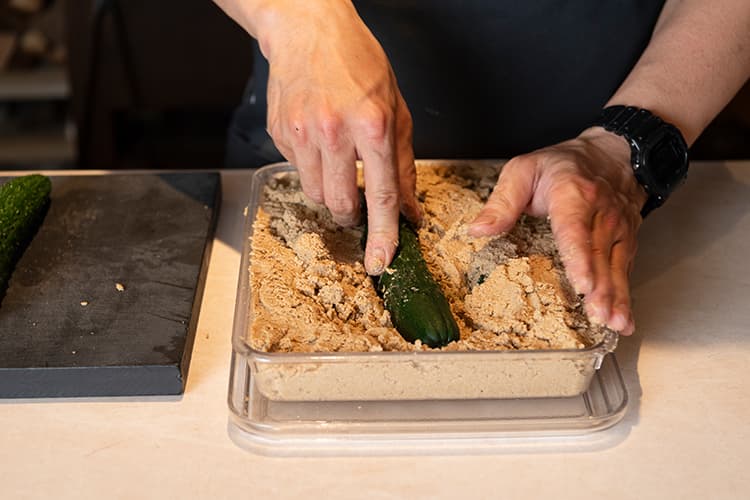
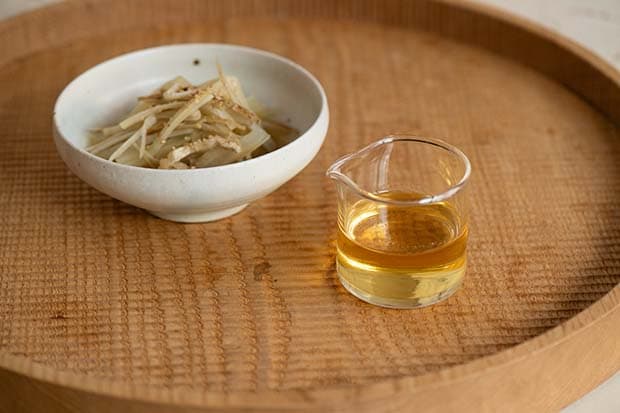
Nakamura keeps the salt concentration of aeru’s nukadoko rice bran bed at around 15 percent. “We take out the vegetables after pickling them for about half a day and use them immediately. We pickle a new batch every day. It’s essentially a nukadoko for restaurant use.”
“I added a dish that uses cucumber nuka-zuke pickles to our summer course meals. The fermented cucumbers have a more pronounced and multilayered aroma and umami compared to fresh cucumbers or cucumbers just rubbed in salt. This multidimensionality gives flavors more depth and extends the possible combinations of ingredients.”
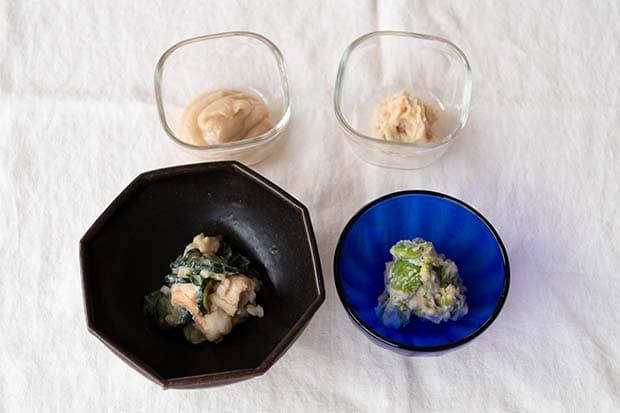
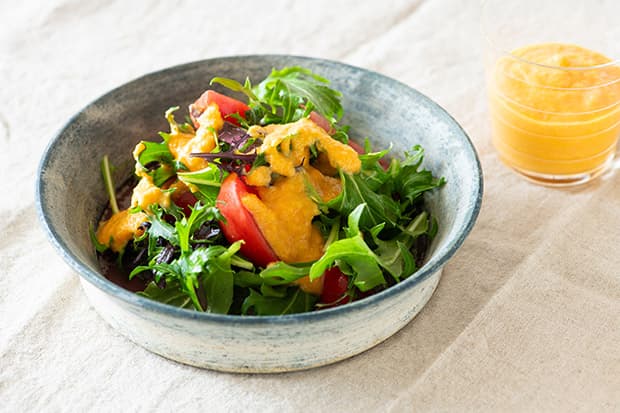
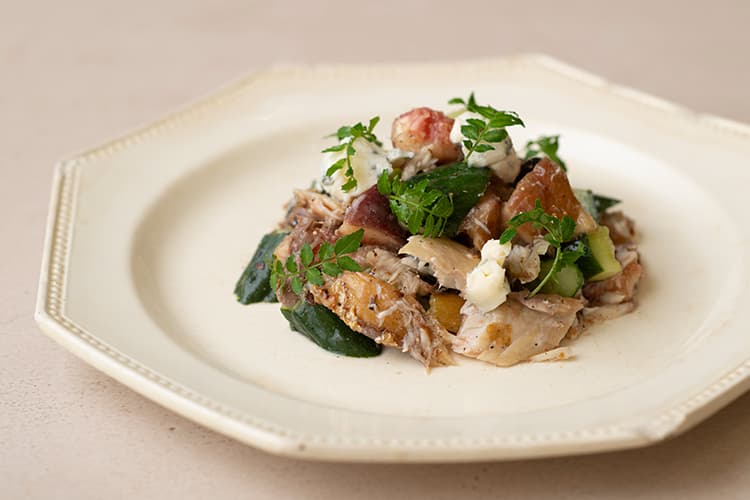
True to his word, Nakamura provided us with a recipe combining sun-dried mackerel and figs with cucumber nuka-zuke pickles. This surprising three-ingredient combination lets their aromas and flavors intertwine, creating a lingering aftertaste you want to keep on savoring forever.
How to make a dressed aemono dish with nuka-zuke cucumbers, mackerel, and figs
-
- Ingredients (for a two-person serving)
- One nuka-zuke cucumber (100 grams)
- Half a fillet of sun-dried mackerel (100 grams)
- 100 grams of figs
- Gorgonzola and kinome [young sansho pepper leaves] to taste
- A few dashes each of sesame oil and salt
-
- Directions
- 1.Lightly brush both sides of the mackerel with the sesame oil, then cook skin-side down on a fish grill or in a fry pan. Once the skin is golden brown, flip the fish and cook for another two to three minutes.
- 2.Once the mackerel has cooled somewhat, remove the bones and break up the fish by hand into large bite-sized pieces.
- 3.Wipe the cucumber with a paper towel to remove any remaining rice bran, then cut it into chunks. Cut the figs into chunks, leaving the skin on.
- 4.Place the ingredients from steps 2 and 3 into a bowl. Dress the ingredients together with a rubber spatula, breaking up the figs slightly as you go, ensuring all the ingredients are bound together. Taste and season with a pinch of salt, then transfer to a serving dish. Scatter the Gorgonzola over the top and garnish with the kinome leaves.
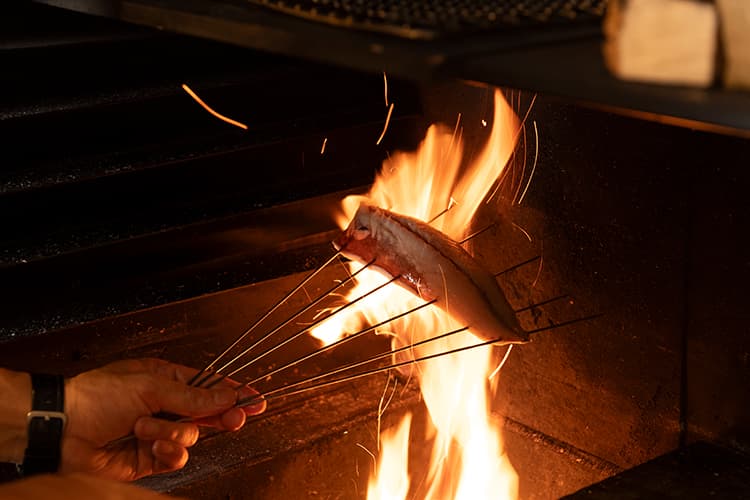
The smoky aroma of mackerel grilled over a wood fire is complemented by the scent of fermentation. Even when grilling at home, it’s important to make sure the skin is thoroughly seared until fragrant.
“When you break up the figs slightly while mixing them in, they act as a binder, much like a sauce. My restaurant’s name, aeru, actually comes from the verb aeru, meaning ‘to dress gently until all ingredients are coated evenly’. It’s different from simply mixing. Gently dressing the ingredients causes them to bind together and creates a more varied and layered flavor. I feel this is a very Japanese way of bringing out the best in the ingredients and enjoying them.”
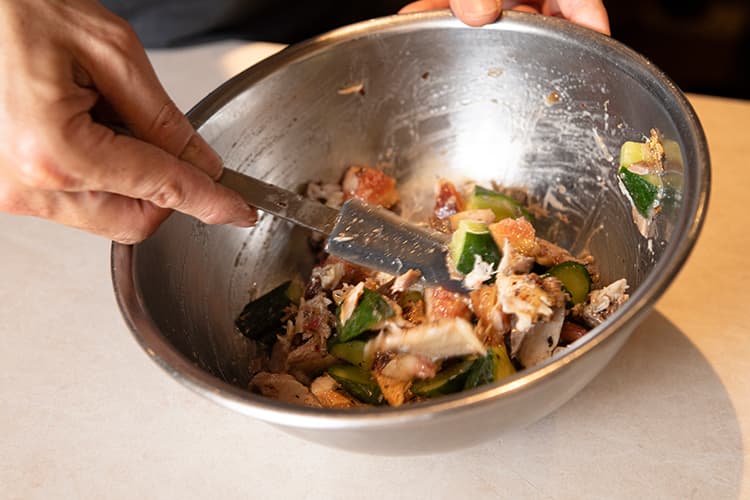
The dish combines the saltiness and tartness of the nuka-zuke, along with its crunchy texture, with the robust umami and toasty aroma of the mackerel and the fig’s creamy sweetness and juicy flesh. The aromas, textures, and flavors layer upon one another, providing a new sensation with every bite. This aemono dish truly embodies the spirit of aeru.
“I think this recipe is easy to make at home, because the main ingredients are used in equal amounts. If you have some kinome leaves, be sure to add them as a finishing touch! The refreshing aroma they add ensures you’ll enjoy every bite without getting bored.”
From homemade nuka-zuke to making the aeru menu
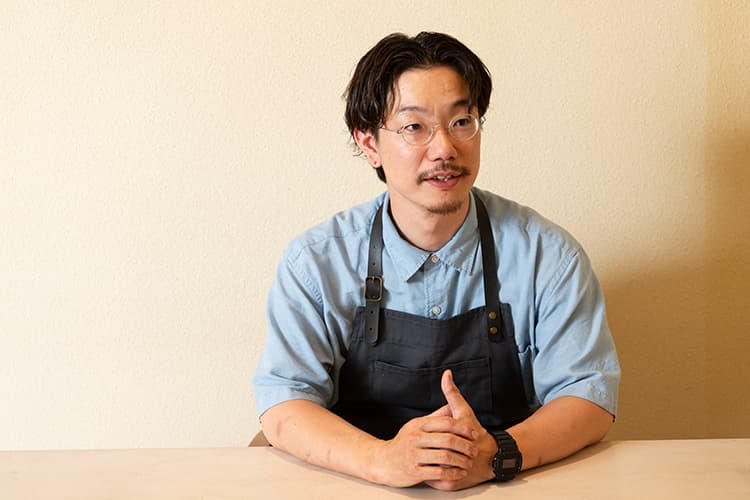
Even with his most inventive combinations, Nakamura says the images he gets of how each ingredient’s aroma and flavor will layer together just occur to him naturally. Underpinning his creative ideas is his experience making nuka-zuke at home.
“I got into making my own nuka-zuke because the nuka-zuke I had at my wife’s parents’ place was so delicious. The nukadoko at the restaurant even has a small amount of nuka that my mother-in-law shared with me. Since we add aromatic vegetables and herbs to it here at the restaurant, it’s developed into a nukadoko with a gentle aroma.”
Nakamura says he regards the nature of fermented foods not as something that asserts itself, but rather as something that broadens the scope of what he can serve.
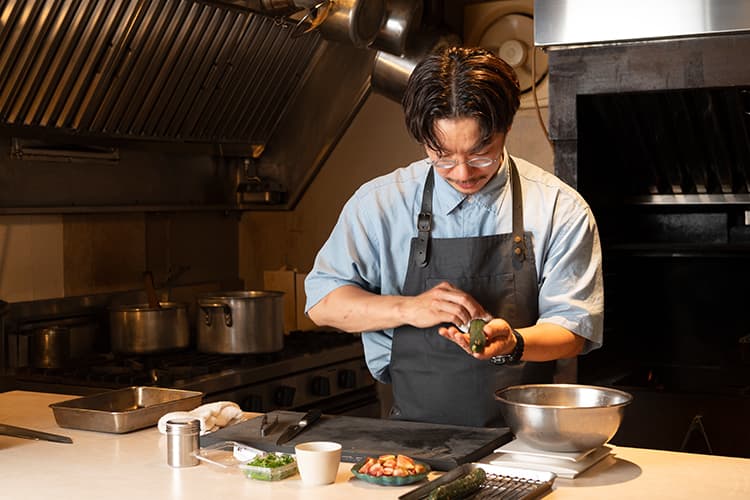
“My impression is that fermentation expands the capacity of ingredients: it broadens the canvas, so to speak, that I can work with. For example, the combination of gourds like cucumbers and fish like ayu sweetfish is a classic that appears in early summer and throughout the summer months. When you ferment that cucumber in a nukadoko, layers of acidity, umami, and aroma are added, creating a flavor with even greater depth and complexity.”
His aemono dish with nuka-zuke cucumbers, mackerel, and figs is an extension of this idea. The addition of fermentation binds the sweetness of the fruit and the umami of the Gorgonzola together, further expanding the possibilities of cooking.
Transforming the age-old wisdom of wood-fired cooking and fermentation into new culinary expressions
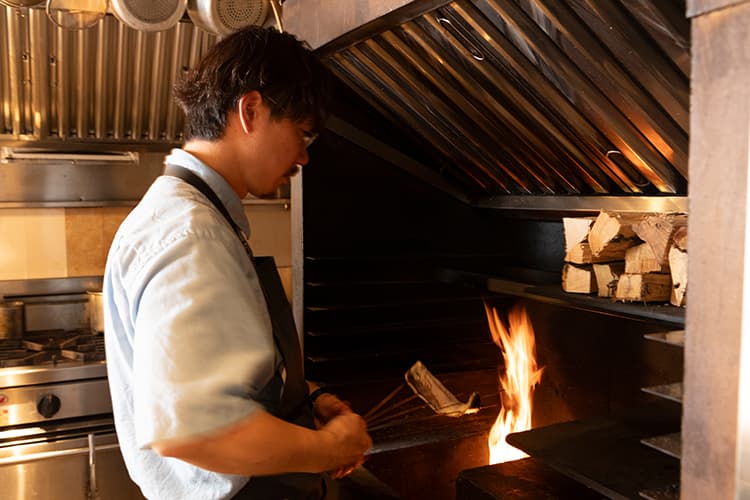
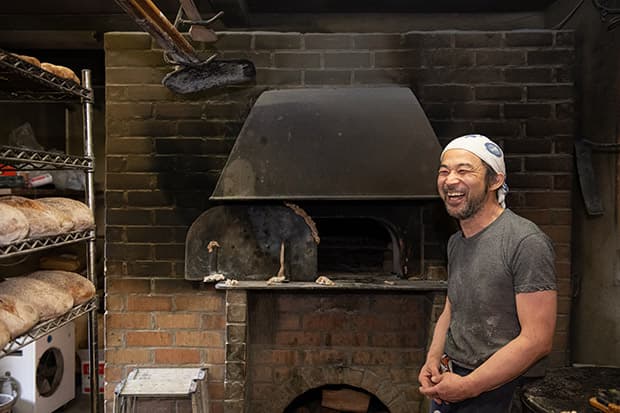
“It’s hot as hell in here in the summer,” Nakamura says with a laugh
One must not forget to mention wood-fired cooking when talking about aeru’s cuisine.
Nakamura’s fascination with wood-fired cooking comes from his long love of camping. He wanted to incorporate the deliciousness of food cooked over an open fire in his restaurant’s dishes. Accordingly, a wood hearth is one of the heat sources at aeru.
“When I want to infuse some item with the aroma of firewood, I will grill it over the open flames,” he says. As the moisture in firewood evaporates, the billowing aroma transfers to the oils in the ingredients, producing the smoky fragrance unique to wood-fired cooking.
“Whether it’s fermentation, the aroma from cooking over firewood, or the way the flames gently penetrate the ingredients, there’s a real sense of it being alive. Serving food with the aromas and flavors only possible through this process is something I prize more than anything in my cooking.
“Because we live in a time of such convenience, I’ve deliberately tried to take a contrarian approach of going back in time, such as relying on wood-fired cooking. I believe this leads to new discoveries, new culinary expressions, and new forms of cooking. The same holds for fermentation. Though it’s a tradition that’s been part of Japan for ages, I feel there’s ample potential to apply it to contemporary cuisine by re-examining it from a fresh viewpoint.”
Both wood-fired cooking and fermentation have long been integral to people’s livelihoods. However, in Nakamura’s hands, these techniques are not just a throwback, but a means of expression for devising new tastes. Each dish at aeru, with its interplay of aromas, takes on a depth and complexity that can only be found here.
The Tasty Fermentation Club’s baton travels next to Kamakura. We’ll be speaking with Fujii Takumi, who is affectionately and respectfully known as the Fermentation Freak among food professionals. Stay tuned!