Fermented Coffee and Koji Latte at BAGTOWN COFFEE
Aug 06,2026
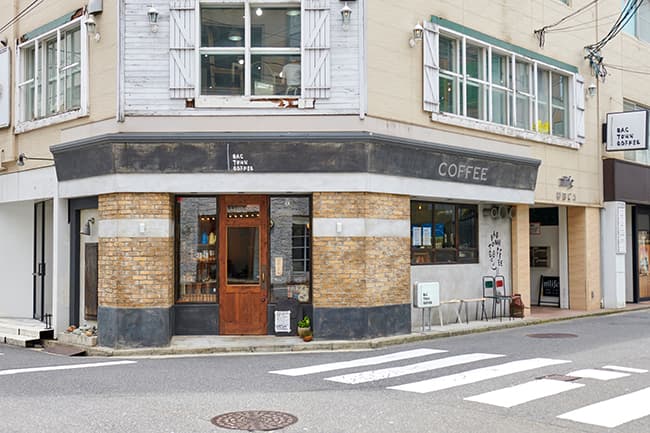
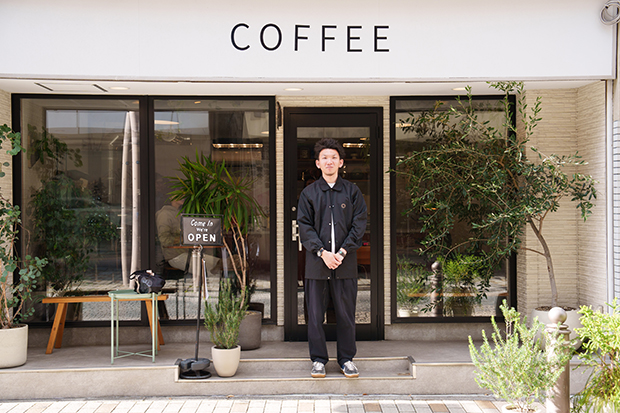
Walk down the street in Fukuromachi, an area of restaurants and bars in downtown Hiroshima, and at the corner you’ll come across a place called “Bagtown Coffee.” Named after the neighborhood — Fukuromachi means literally “bagtown” — this popular roastery opened in 2015. Today, an endless stream of locals, coffee lovers, tourists, and sundry others passes through its door. So how did Bagtown Coffee come into being? We asked its owner, roaster Yamamoto Atsushi.
I stumbled into the roasting business. For the first few years, I had a vague feeling I wasn’t doing something right.
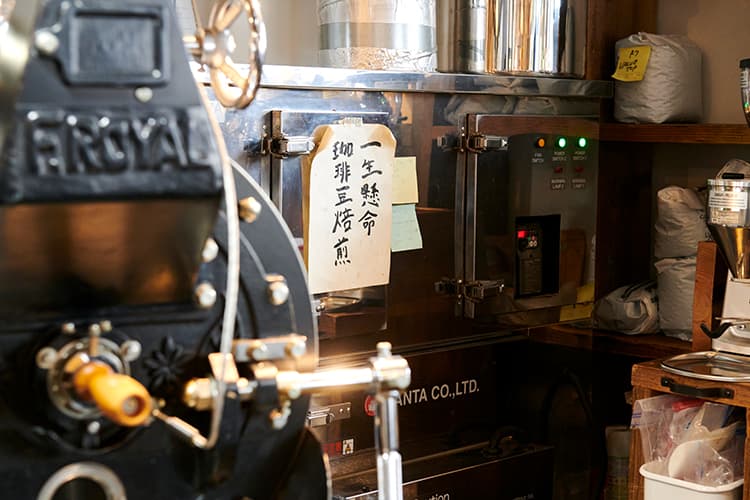
“I imagine that most people who start their own coffee place get into the business because they’re highly motivated and have a passion for coffee, but I kind of stumbled into it, to be honest,” begins Yamamoto Atsushi, who opened Bagtown Coffee a decade ago. After working at a tech company for over twenty years, he struck out on his own, but his freelance career failed to get off the ground, and he ended up stumbling into the coffee business. Once he got started, though, he was “horrified” to discover he knew so little and lacked the requisite skills.
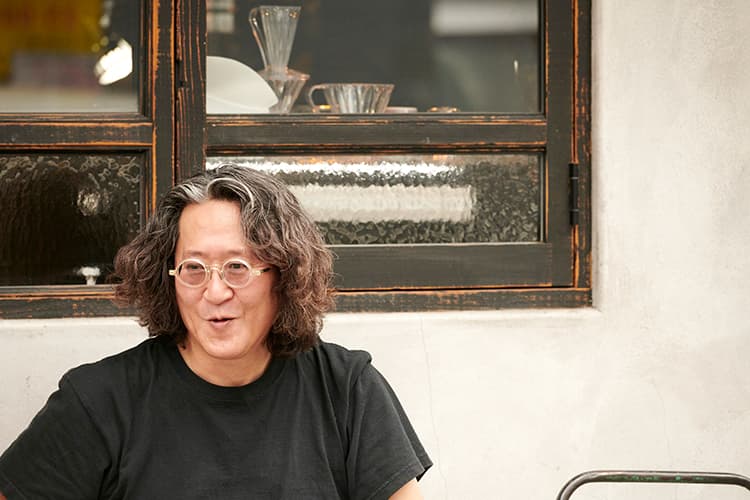
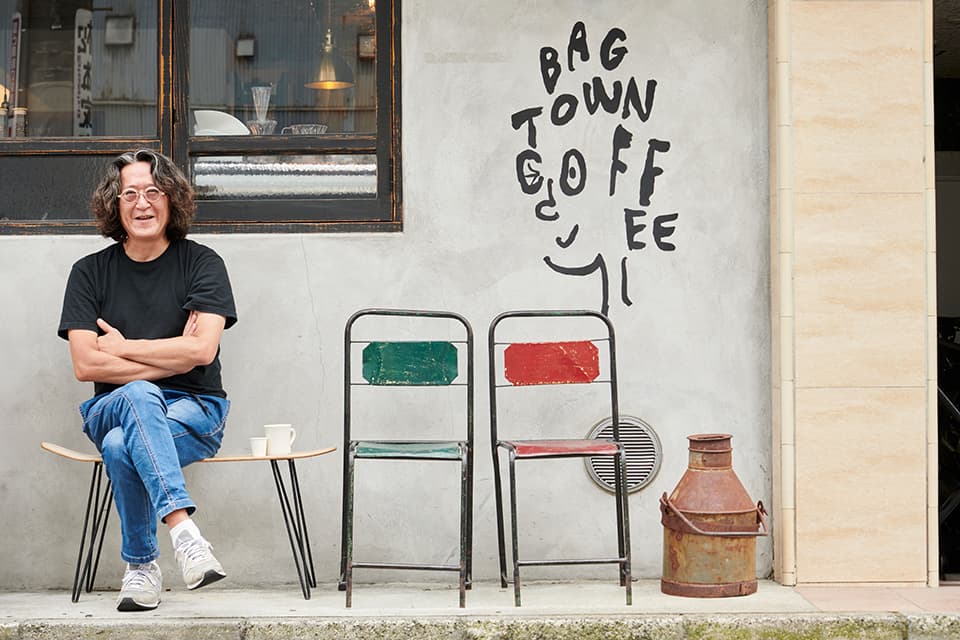
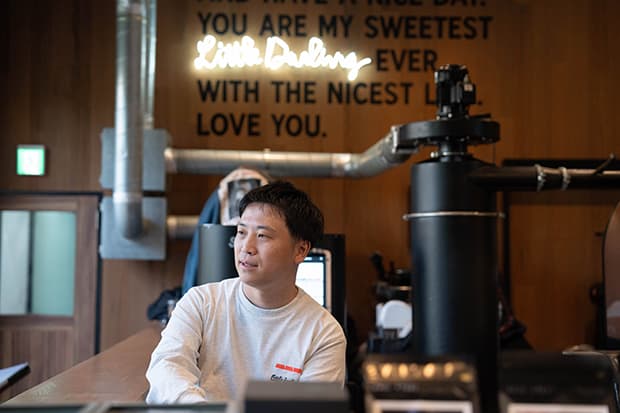
Roaster Yamamoto Atsushi, owner of Bagtown Coffee
“The first few years were tough. I didn’t know whether the stuff on sale at my place was good or bad. It was like I was just selling coffee beans that were browned.” Then Atsushi made up his mind to take part in a roasting seminar offered by a manufacturer of coffee roasters. That was two years after opening Bagtown Coffee.
“I went to the seminar every month for a year. What it taught me, I feel, wasn’t so much bean roasting techniques per se as the mindset it takes to be a good roaster and how to read your beans.”
At the seminar, Atsushi gained a mentor he greatly respects to this day. Despite all that the seminar taught him, however, he still had a problem judging his own beans. He had a vague feeling he wasn’t doing something right.
Then a turning point came for Atsushi. He entered the Roast Masters Team Challenge organized by the Specialty Coffee Association of Japan (SCAJ).
“You compete in teams. Two of the members of my team were people I already knew, and the other three I’d never met before. We got together beforehand to prepare for the event, and a more experienced roaster on the team got annoyed at me because I was so ignorant — like, ‘Are you stupid?’ I didn’t know what I was doing, so all I could do was beg them to teach me.”
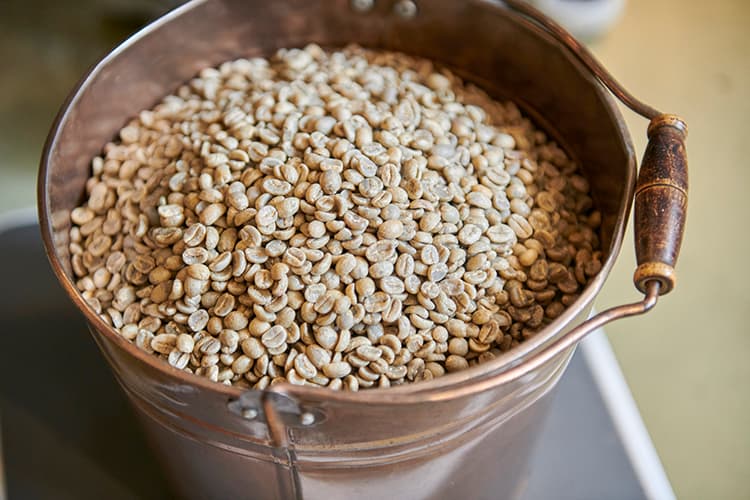
Then the competition began, and Atsushi’s team bagged two awards: the Jury Prize and the Audience Prize. He has been friends with the other team members ever since, and they’ve taught him a lot.
“I would send them coffee I’d roasted to see what they thought of it. I was grateful that I had made friends who honestly told me what they thought when I asked them to level with me. Flavor is a sensitive topic, even among coffeeshops.”
Having fellow roasters to talk to eventually cleared up Atsushi’s vague doubts about whether his coffee really tasted good and was of decent quality. His circle of colleagues steadily grew thereafter. They would import beans together, and if he was unsure about anything, he would turn to them for advice. That made being in the coffee business much more enjoyable.
Many people with a lot of life experience behind them would probably be reluctant to ask someone else to teach them the ropes—but not Atsushi, who launched his business at age forty-three. “I’m the new old guy on the block on the Hiroshima coffee scene. Because I’m no spring chicken, I’m not ashamed to ask anything. I was totally ignorant at first, so I couldn’t afford to act like I had everything down pat,” he laughs.
A 100-percent perfect roast is almost impossible to achieve. That’s the fun of it.
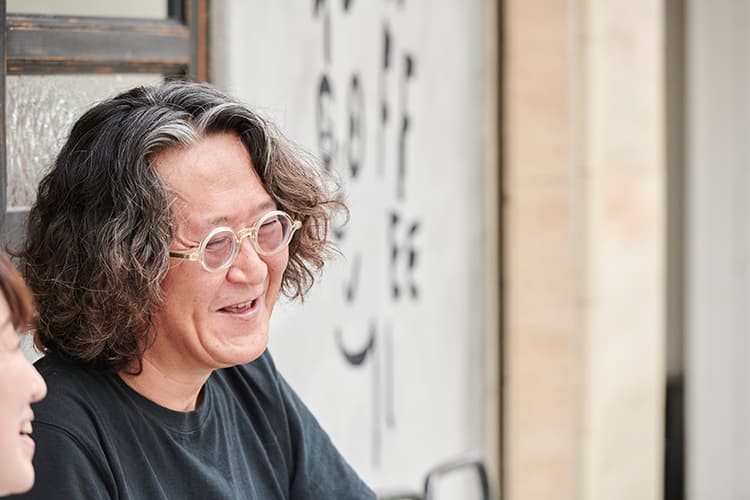
Now that his place has been open for a decade, Atsushi finds roasting coffee “great fun.” “Everybody should be doing it,” he says mirthfully, breaking into a smile.
“An awful lot goes into a cup of coffee, right? First, of course, there’s the flavor of the beans and how they’re roasted. Then there’s the producer. Who grows the beans and where? What’s going through their mind at the time? Then there’s the question of logistics. How do the beans get to Japan? Whose hands do they pass through? So how do you convey all that to the customer? Our ultimate goal is to put a smile on customers’ faces with the great taste of our beans, and the entire process for getting there is a lot of fun.”
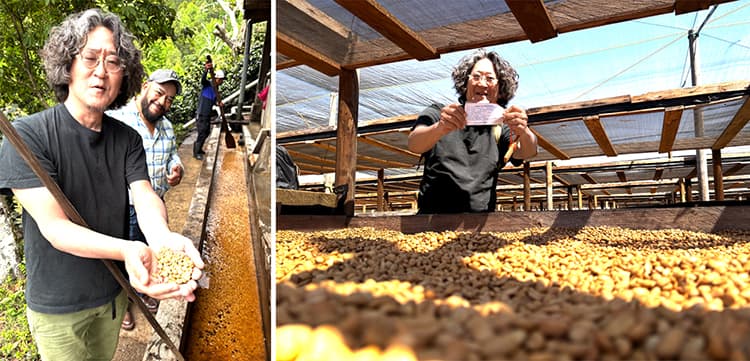
Atsushi makes a point of visiting coffee-growing regions like Guatemala, El Salvador, Nicaragua, and Indonesia. Seeing where the beans are actually grown teaches you a lot, he says. (Photos courtesy of Yamamoto Atsushi)
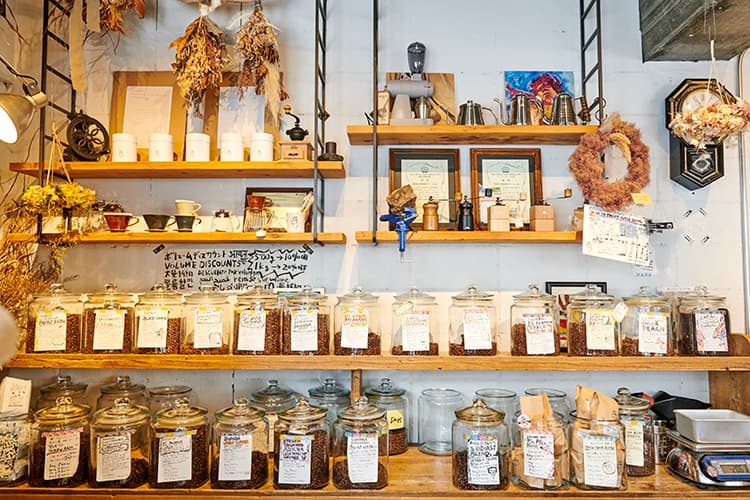
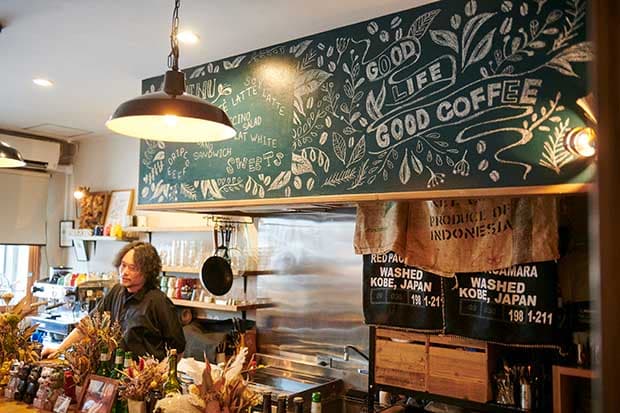
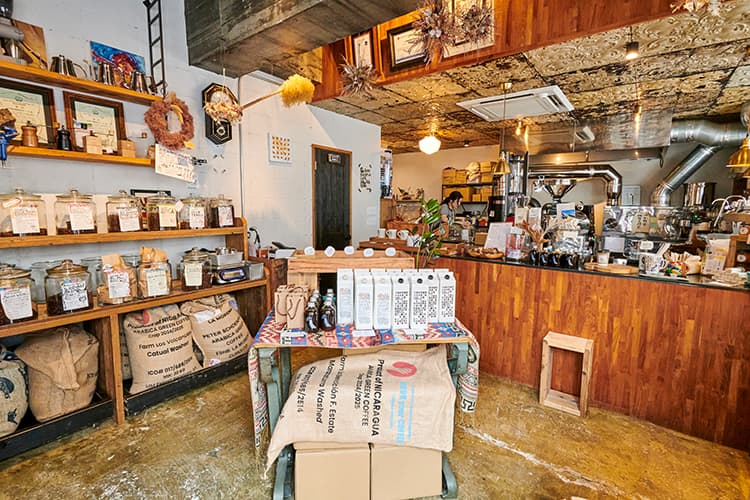
Shelves lined with rows and rows of coffee beans. Customers often ask staff for advice.
Bagtown Coffee regularly stocks twenty to thirty varieties of coffee beans. While quite a few roasteries offer only a limited lineup of beans, Atsushi is committed to providing the broadest selection possible.
“I’m interested in roasting all kind of beans. I like to get creative, asking myself how a particular variety of bean will turn out if I roast them in a particular way. A 100-percent perfect roast is almost impossible to achieve, which is why I keep experimenting — like, next time let’s try this or let’s try that. That’s the fun of it. It’s an awfully inefficient way to run a business, though, and it creates a lot of work for my staff,” Atsushi says with a laugh, looking like he’s having the time of his life.
That spirit of fun is evident on the label on each jar of beans.
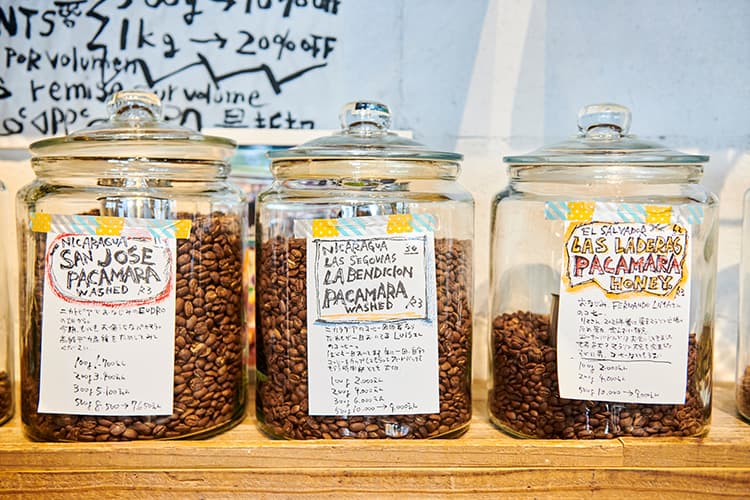
Each jar of coffee beans bears a description peppered with humor.
“Many places explain the characteristics of different beans with a chart showing how acidic or bitter each is. But before when coffee didn’t interest me that much, I didn’t know what it all meant. A label that makes you chuckle or gets a conversation going with the customer, I figure, fits much better with who we are as a store.”
Atsushi hopes that customers will leave with a smile.
“It’s really gratifying when they come back and say, ‘The beans you recommended before were just excellent. Give me another batch.’ I don’t think it would really be like us if the first thing we told customers was a bunch of abstruse facts. There are people who want to know such things, though, and it’s not easy to share what the flavor is like, so store staff need to know their stuff and be effective communicators. You have to study really hard in this business. I believe in getting customers thinking, ‘It might be interesting to buy from this guy.’”
We want to be the kind of place that caters to various customers’ needs.
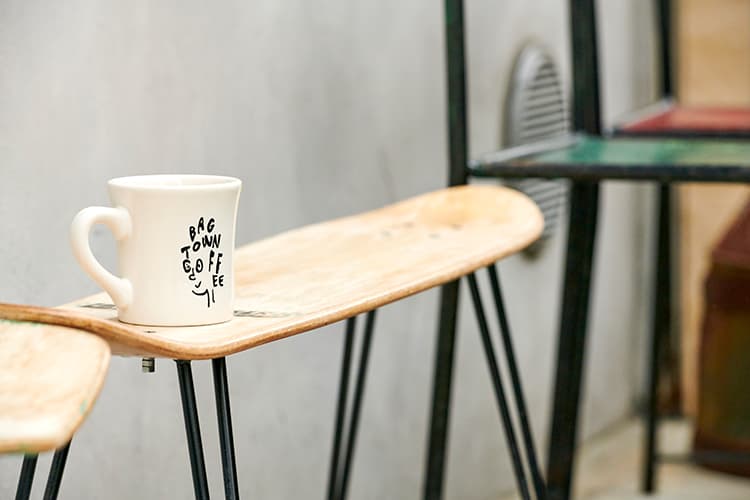
Among the products that line the store’s shelves are coffees processed using fermentation technology.
“Coffee beans are by their nature fermented during processing, and these days a lot of coffee beans are fermented using various scientific approaches. We stock some ourselves. I didn’t use to be very fond of the flavor of such coffees, but growers have been unrelenting in their efforts, and more and more great-tasting products are now available.”
Atsushi compares it to becoming really good at applying makeup. Fermentation enhances the fruitiness without overdoing it, so the taste is more natural.
“This new fermentation technology holds out great hope for growers. Brand-name coffee beans that sell at a premium can only be grown if all the conditions are in place: the right soil, the right climate, the right quality control technology. But using new fermentation technology can boost the potential of ordinary beans and improve their flavor. Beans processed using fermentation technology are the latest trend, and because they’re much in demand, growers are experimenting with various approaches as they work to achieve higher quality.”
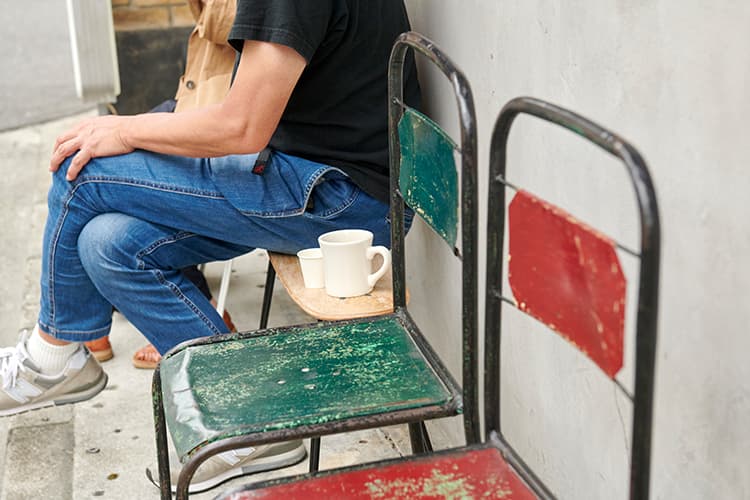
But there are various concerns about the trend going too far, says Atsushi.
“Some people prefer their beans makeup-free, as it were, and debate often flares up about what coffee is in the first place. I myself don’t think growers should go overboard just because the demand exists, and I’d hate it if beans fermented using a scientific approach were the only beans left. Still, rather than arguing over what’s acceptable and what’s not, I’m more interested in stocking a wide selection of beans that I myself think taste good. Bagtown Coffee wants to be the kind of place that offers a varied lineup, whether you’re looking for everyday beans or something special, light roast or dark roast.”
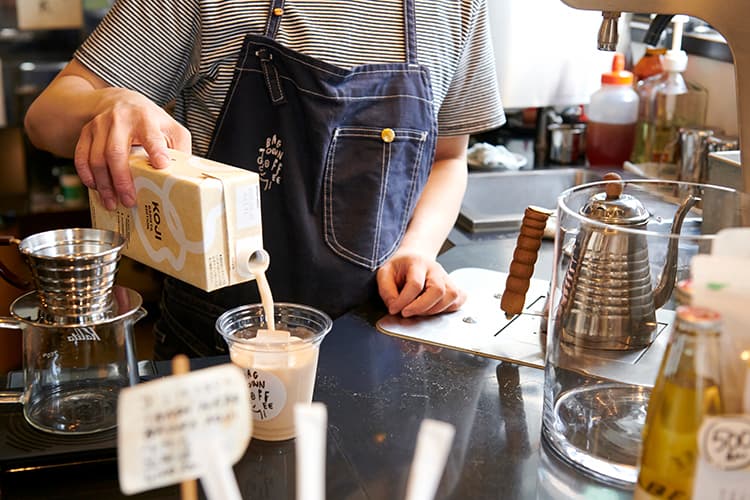
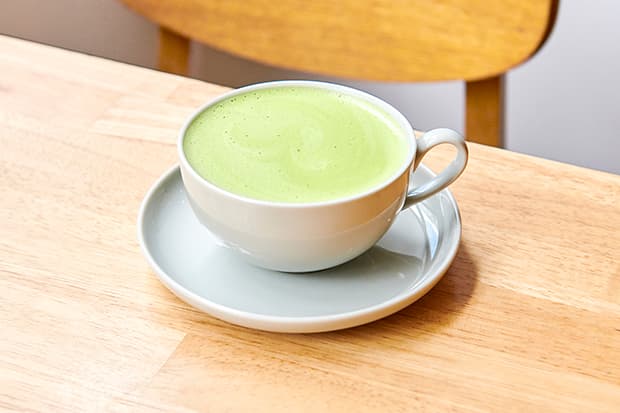
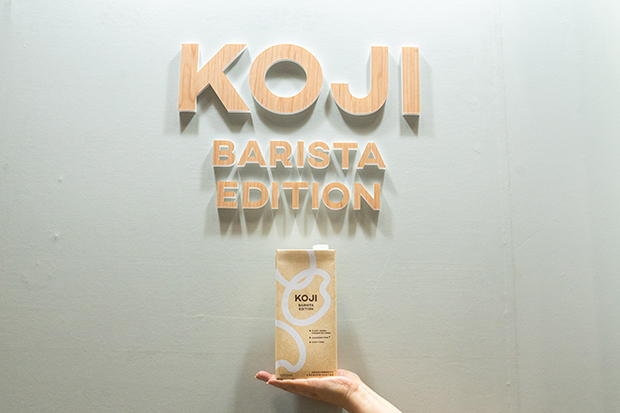
Bagtown Coffee attracts a wide range of customers with many different preferences, and one way that it caters to them is by serving latte made with Koji Barista Edition, a plant milk derived from koji (rice malt).
It offers drinks to go like coffee and caffè latte, but many people who order the caffè latte are vegan or have food allergies. Besides oat milk, such customers also have the option of Koji Barista Edition.
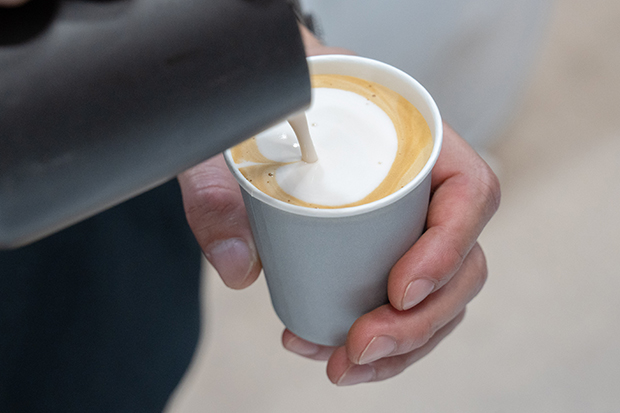
“We offer a latte consisting of medium-roast Italian espresso combined with Koji Barista Edition. I really like Koji Barista Edition’s slightly thick, creamy consistency. I find it goes wonderfully with coffee. Visitors from abroad often opt for the latte with koji milk in place of regular latte. They’re even familiar with the Japanese word koji. ‘Oh right, koji!’ they’ll say.”
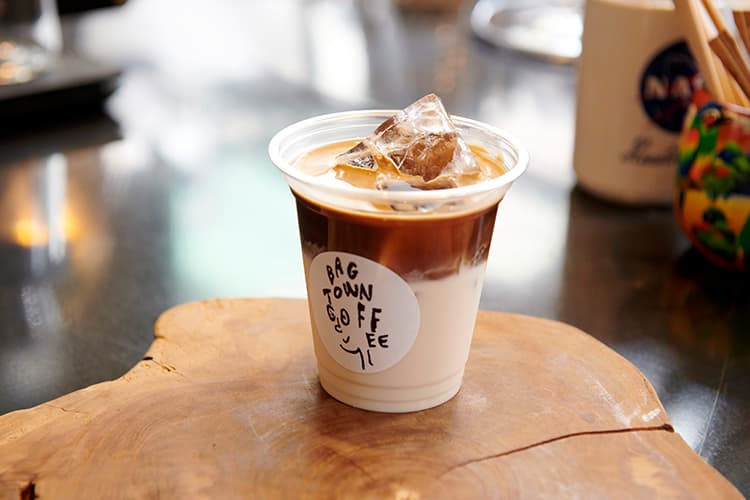
Koji Latte made with Koji Barista Edition
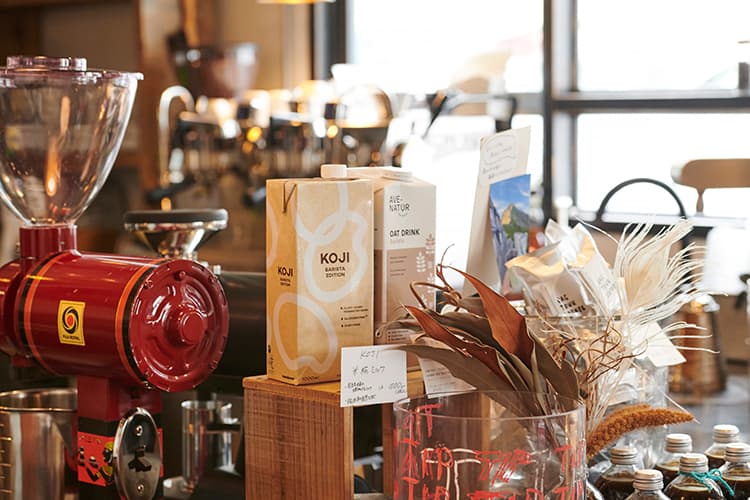
Mothers of children with allergies sometimes buy Koji Barista Edition.
Remaining committed to our ideals
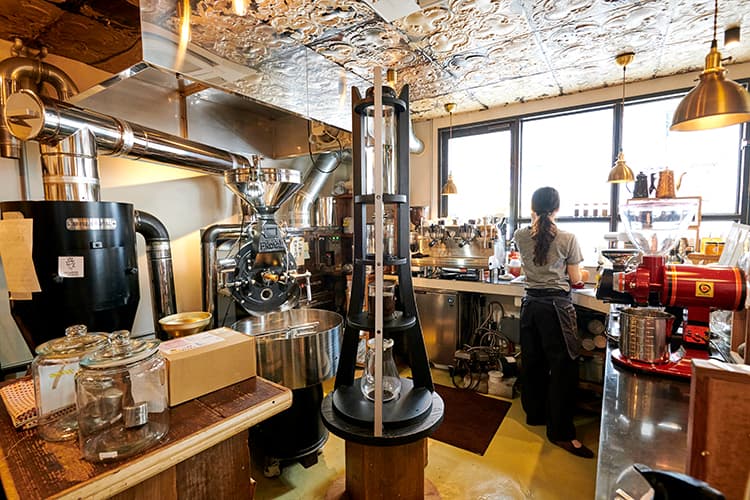
Finally, we asked Atsushi what the future holds for Bagtown Coffee. Here’s how he answered.
“A coffee place I admire propounds the values of Quality, Sustainability, Traceability, and Transparency. All four really strike a chord with me. Like any sector, the coffee industry isn’t all roses. Unfortunately, there are realities that can’t be glossed over with pretty words. Still, I think it’s really important to be committed to these four ideals.”
That conviction is not unrelated to Atsushi’s desire to keep the store going for many years to come.
“It’s not just about coffee. Our relationship with customers, our relationship with our employees and business partners—we’re committed to them all. We plan to continue operating right here in this neighborhood by remaining true to that commitment.”