Wild Plants and Fermentation: Wisdom for Living
Sep 10,2026
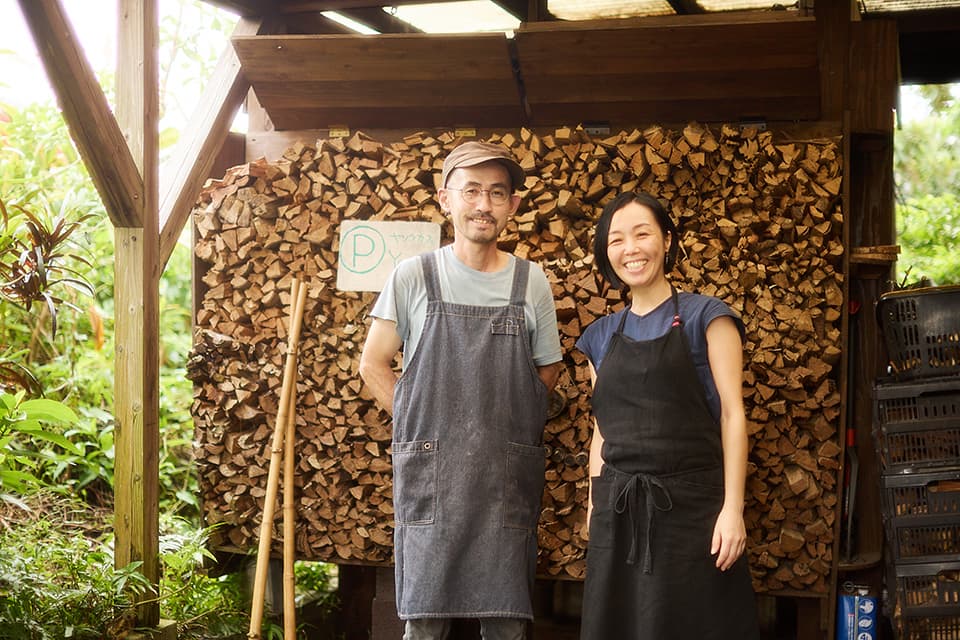
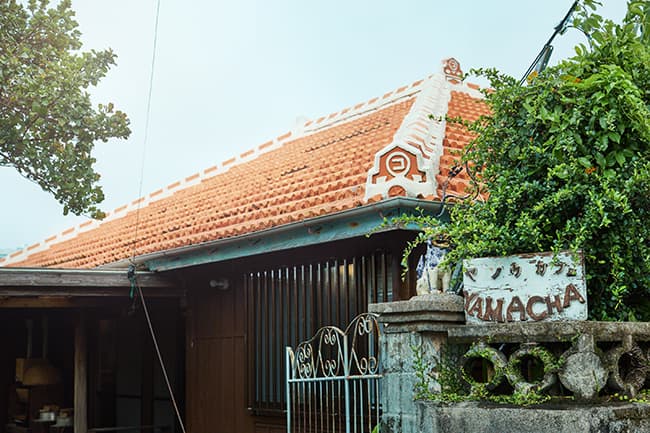
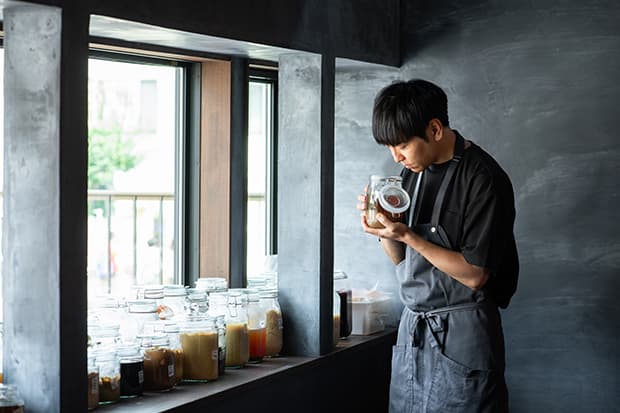
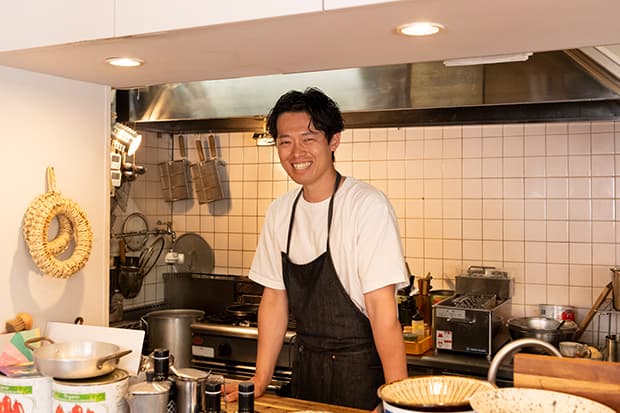
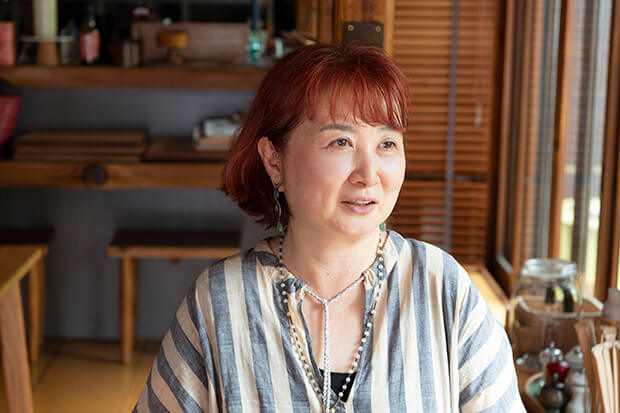
Yasou Café is situated in a quiet residential neighborhood in Okinawa City. On entering the premises, you’ll find seasonal wild herbs growing untamed in the garden, while the restaurant’s interior is lined with carefully prepared fermented condiments such as miso, salted koji [malted rice], and soy sauce koji. What sets Yasou Café apart is that most of the meals it serves feature ingredients nurtured by Okinawan soil. From brown rice cooked in a wood-fired oven to kachuyu — a traditional Okinawan soup made with freshly shaved bonito flakes and homemade miso, the flavors evoke a sense of nostalgia and provide a deep sense of comfort from within. We spoke with owner Kato Ritsuko.
Ritsuko was introduced to fermentation through her grandmother’s narrated teachings
“I don’t feel like we’re doing anything special. To me, these are just daily activities that we’ve always carried out at home for ages.”
This is how Ritsuko, owner of Yasou Café, explains her work. What she cherishes most is the wisdom of everyday life passed down to her from her grandmother — fermentation, wild herbs, making the most of ingredients without waste: all of it stems from the wisdom of ancestors, who lived in harmony with nature. Ritsuko is determined to keep this legacy alive in Okinawa.
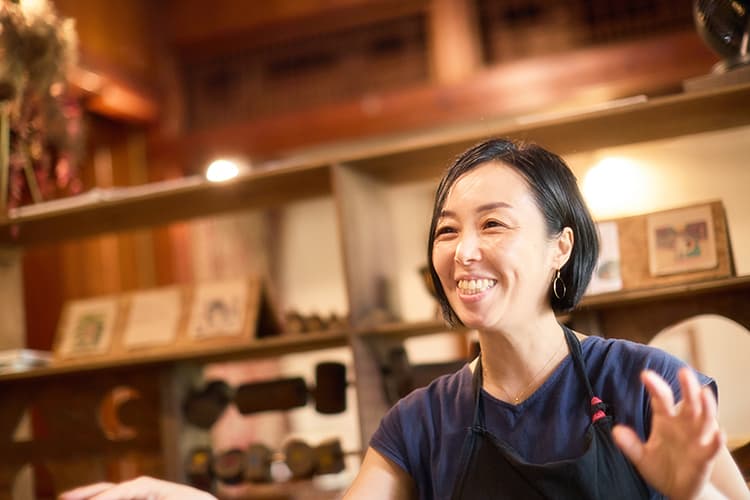
Her grandmother, who lived deep in the mountains of Fukushima, is the person who introduced her to fermentation.
“My grandmother was born in the Taisho period (1912 to 1926) and never went school. Because of that, she couldn’t write, so everything she taught me she told me orally. Nevertheless, she knew all the essentials one needs for daily living.”
Ritsuko’s grandmother grew her own rice, wheat, and soybeans and prepared her own miso and soy sauce. She did her tasks meticulously as the seasons turned, such as looking after her koji indoors during the winter months. She didn’t explain these things as fragmented knowledge; rather, she instilled them as skills for life through her daily routines.
“I understood things on the level that if you did such and such, this would happen. But I wanted to know why things would turn out that way: I wanted to understand the reasons behind it all.”
Ritsuko’s inquiring mind drove her to study fermentation in depth. After she moved to Okinawa, she could no longer get the miso her grandmother used to share with her, so she decided to make it herself. Each time she returned to Fukushima, she would learn a little more from her grandmother and seek out preparation methods that would translate to Okinawa’s climate.
“The temperature and humidity in Fukushima and Okinawa are completely different. At first, it was nothing but a series of failures. But as I kept at it over the years, I became able to sense how the koji was doing with just my hands.”
She has now been making koji in Okinawa for over a decade.
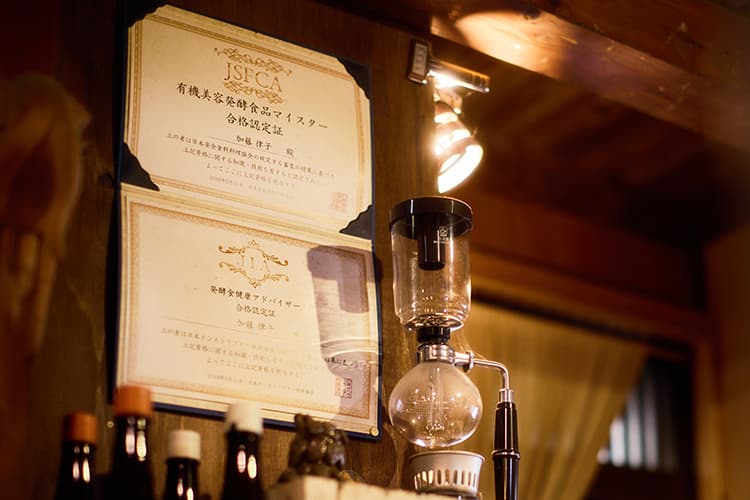
Ritsuko is a certified Beauty-Enhancing Fermented Products Specialist and a qualified Fermented Foods Health Advisor. “I got these qualifications simply because I love studying and enjoy learning new things,” she says with a laugh.
“Raising” koji takes time, effort, and care
Ritsuko has been holding miso-making workshops at Yasou Café for many years. Although koji, the star of the fermentation process, is invisible to the eye, its presence and vitality are undeniable. The bacteria’s demeanor varies with temperature and humidity, and so how one approaches it must also change from moment to moment.
“Sometimes I talk to the koji when I’m making it, like ‘Come on, try a little harder’. [laughs] I’ll slip in a hot water bottle if the temperature isn’t warm enough, or I’ll cool it off, if it gets too hot. What’s crucial is judging how much attention to give to the koji.”
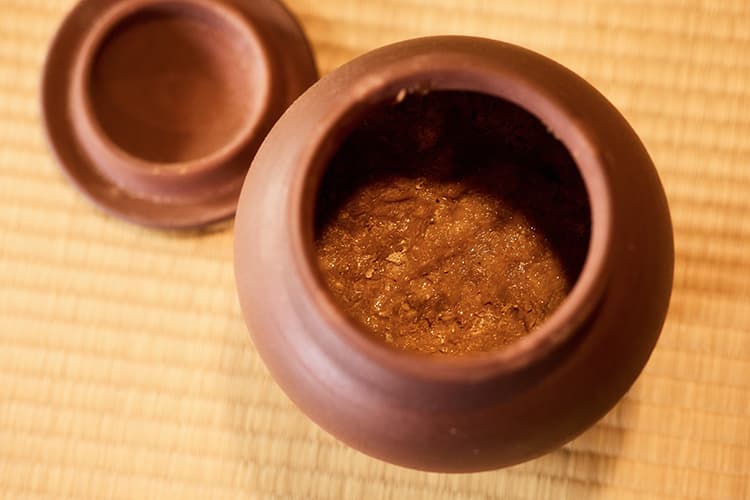
She says the process is like raising children.
“You can’t micromanage the koji, but you also have to keep watch over it. This is because both koji and kids need time to grow and develop under their own power. Even when you prepare koji with the same ingredients in the same environment, the taste will still vary depending on the person making it. This itself is what makes fermentation so deep and complex. One person told me that the miso she made during a family argument tasted different than usual. That’s why I believe fermentation is truly a living process.”
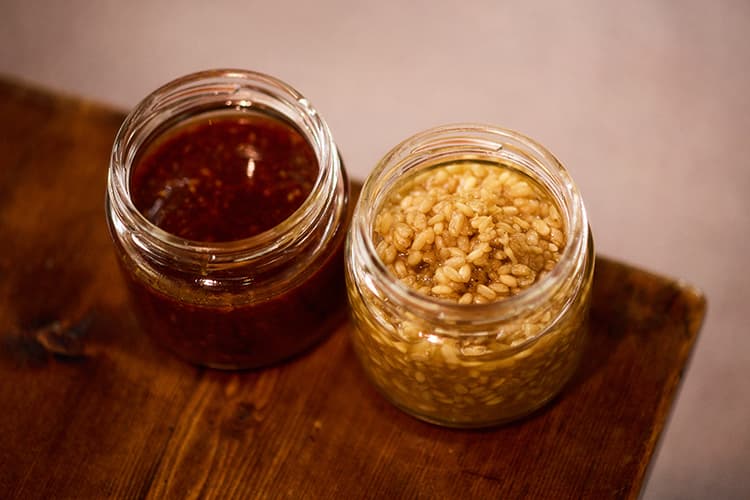
A fermentation-centric lunch that engages all five senses as you savor the bounty of Okinawa
Over 90 percent of the ingredients in Yasou Café’s fermentation-forward lunch are grown in Okinawa Prefecture. This includes Agu pork [pork from a small island pig bred in Okinawa], Yanbaru chicken [chicken raised in the Yanbaru region], seasonal Okinawan vegetables, locally produced salt, and homemade fermented seasonings. Ritsuko adjusts the composition of the lunch special every day in order to serve those particular seasonal ingredients that are at the very peak of their flavor.
“Even with fish, I’ll get a call from a fisherman friend about buying some of the day’s catch. That’s how I can offer fresh, shinkei-jime processed fish [shinkei-jime is a specialized method of harvesting fish while preserving its texture and quality].”
Yasou Café’s charm lies in how Ritsuko uses the ingredients available on the day to prepare a singular meal, rather than cooking large quantities of predetermined dishes with predetermined ingredients.
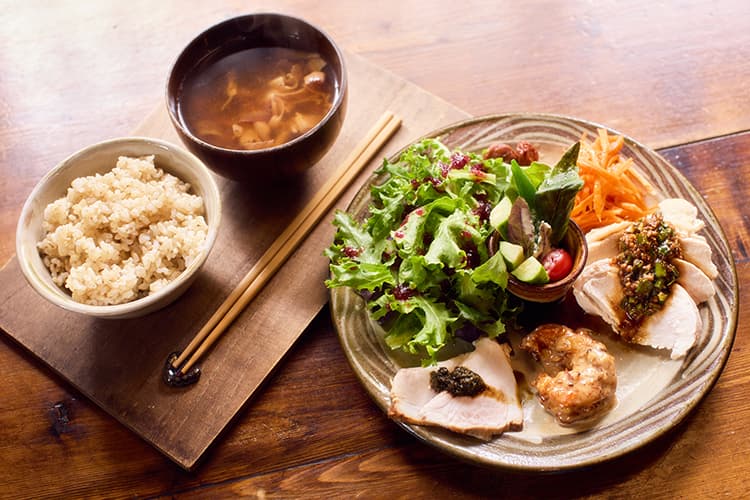
Yasou Café’s meticulously prepared fermentation-centric lunch is limited to just five servings a day
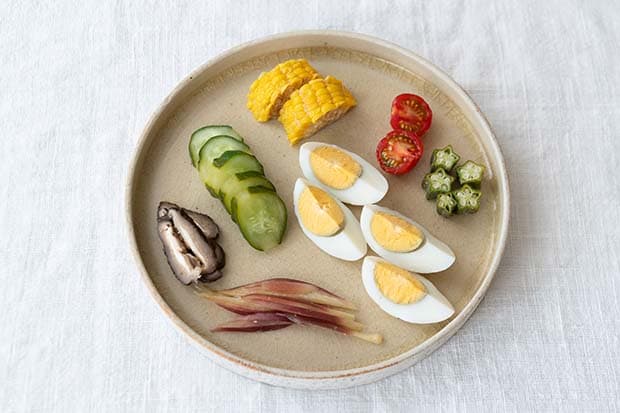
“This fermented plate is designed to be enjoyed alongside pesticide-free brown rice cooked in a cast-iron pot and kachuyu, an Okinawan-style miso soup made with homemade brown rice miso. Starting from the back, we have homemade umeboshi [pickled plums] made with naturally grown plums from Nakijin Village and pickled in salt from Okinawa’s Hamahiga Island; carrot namul [Korean-style seasoned vegetables] with salted koji; and Yanbaru boiled chicken with soy sauce koji. At the front, the EM Yui shrimp [shrimp produced through the Yui mutual cooperation initiative; EM stands for Effective Microorganisms] is served with a nut sauce prepared by adding miso to homemade mayonnaise, while the Agu pork slice is paired with a sauce flavored with shiso leaves and soy sauce koji. In addition to a salad dressed with fermented roselle, the centerpiece is salted koji bagna cauda dip with a generous assortment of vegetables.”
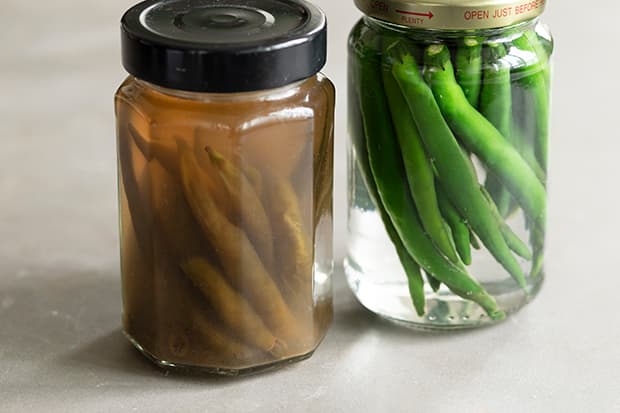
Ritsuko turns the ever-changing lineup of seasonal vegetables into preserves with the power of fermentation. The café relies on this age-old wisdom so guests can enjoy the flavors of winter in winter and the flavors of summer in summer. Similarly, the lunch special is limited to just five servings a day to ensure each plate is prepared with the care and attention it deserves.
Food draws people together, creating warmhearted moments
The café’s very name reflects Ritsuko’s love for wild herbs — yasou in Japanese. Her fascination began with plants that grew wild in her garden.
“A kid in my neighborhood pointed at a plant and told me, ‘You know you can eat this’. Although not entirely convinced, I tried it and it tasted amazingly good. From that point on, I began researching the wild herbs in my area little by little. In the old days on Okinawa, wild herbs were both food ingredients and occasionally the wisdom that sustained daily life. Unfortunately, this kind of knowledge is slowly being lost amid the conveniences of modern life. I think it’s better to at least know about this wisdom than to be oblivious to it. I hope that when kids have minor ailments or injuries, people will recall, ‘Come to think of it, such-and-such plant might help with this’. The name Yasou Café embodies my wishes to preserve this wisdom of living in harmony with nature for future generations.”
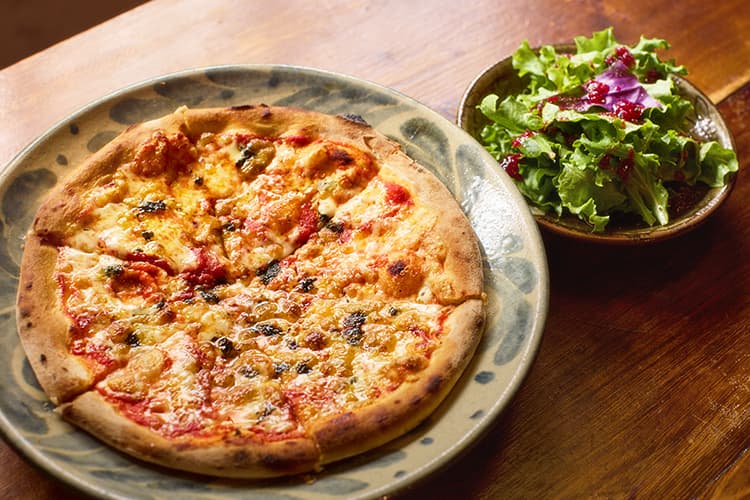
A signature dish is the wild herb Margherita pizza. A paste made with Okinawan wild herbs is kneaded into the dough, which is then topped with a homemade tomato sauce, a second wild-herb paste blended from several seasonal varieties, and 100-percent additive-free raw milk cheese. While you can still sense the aroma and robust flavor of the wild herbs, the final taste is mild enough for kids to enjoy.
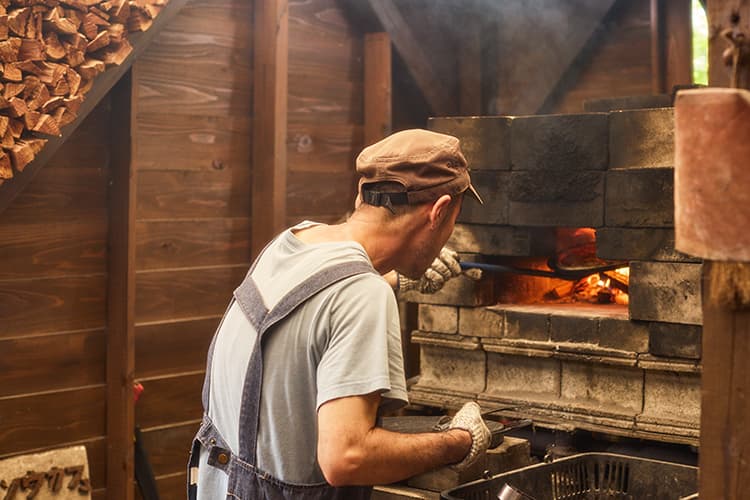
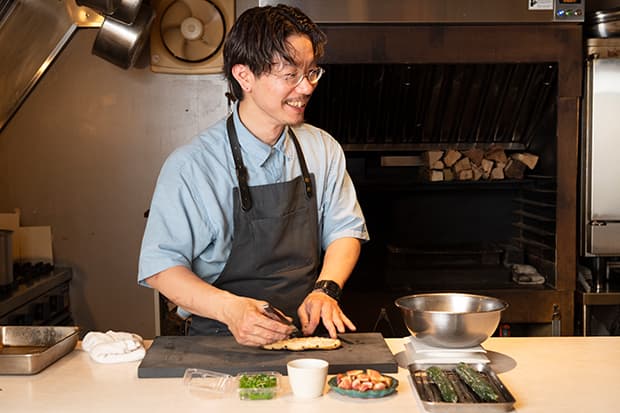
The handmade stone oven in the garden is the secret to the pizza’s deliciousness. Yuji makes each pizza fresh when ordered and bakes it over a wood fire, resulting in a crispy, aromatic crust and a soft, chewy interior.
Ritsuko opened Yasou Café in 2011 after renovating part of her home. At that time, there weren’t many places in the area where parents could feel comfortable bringing along their kids.
“I didn’t want a restaurant where people had to apologize every time their kids got a little noisy. I wanted to create a place where both moms and kids could feel at ease.”
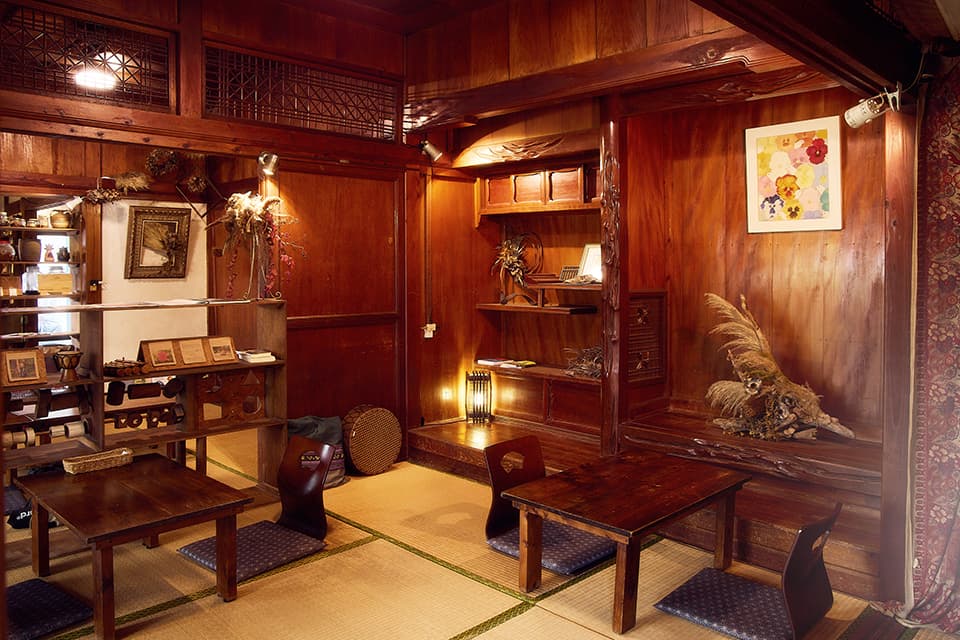
Ritsuko is now expanding on her original vision by running activities that connect people through the power of food. These activities include fostering communication through food, organizing team-building events for companies, and creating spaces for people to interact while sharing meals.
“Eating and cooking are things anyone can do together. I believe those moments when people turn to each other and say, ‘This is delicious’, are what connect people. My aim is a future society in which kids can live with peace of mind. I hope that by the time my daughter grows up, the world will have become a little kinder. To that end, I want to keep developing the modest activities I can do now.”
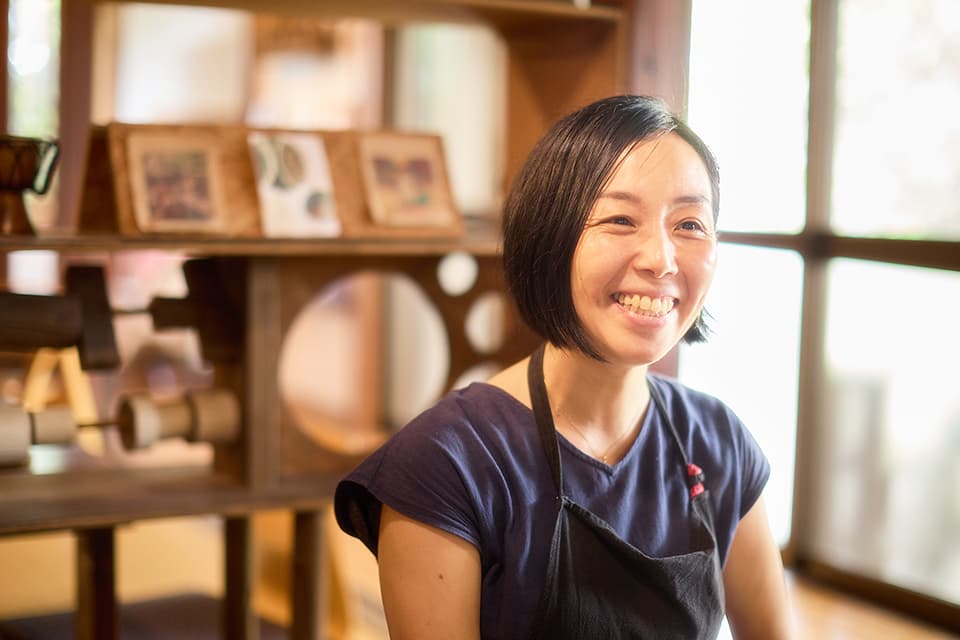
The wisdom of miso-making passed down from her grandmother. Wild herbs and ingredients grown in Okinawa’s abundant nature. And connections between people formed through food. These qualities make Yasou Café a small hub of fermentation in Okinawa — a center where the wisdom of traditional living is passed on to future generations.