White Miso Fermented White Sauce: Dairy-Free & Gluten-Free
Sep 17,2026
The Kitchen Calendar series features popular culinary experts sharing recipes for their favorite make-ahead dishes and preserves made with seasonal foods and fermented ingredients. This installment showcases fermented white sauce, which pairs beautifully with autumn ingredients.
If you like white sauce but find it heavy on the stomach, you’re certainly not alone. Here culinary expert and food stylist Eguchi Keiko shares a white sauce recipe made with just three simple ingredients — soymilk, shiro miso (white miso), and kudzu powder. She also tells us how to enjoy it with a wide array of autumn foods.
Something else you won’t want to miss: Keiko’s recipe for homemade rice koji amazake, which she makes regularly, and her easy, delicious ideas for using it in your cooking.
A light, wholesome recipe I’ve been making for over 20 years
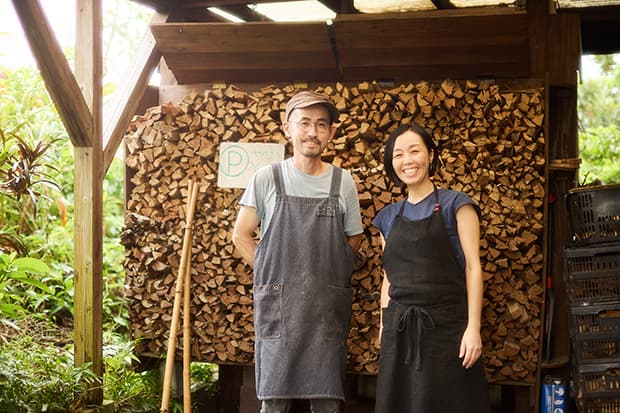
Keiko, whose twin passions are cooking and interior design, began her career as an interior stylist. She was constantly on the run, however, until eventually she suffered a physical breakdown. At that point in her life she rethought her diet. She started studying macrobiotics and cut oils, wheat flour, and dairy out of her meals, and after a while, her condition took a turn for the better.
Keiko discovered white sauce made with soymilk, white miso, and kudzu powder in the course of following a macrobiotic lifestyle. Besides being gentle on the body, it also tastes good, which is why she’s been making it for so long.
“Your garden-variety white sauce made with butter, flour, milk, and salt is heavy on the stomach. But when I tried soymilk-based white sauce enriched with white miso and thickened with kudzu powder, it was so light and delicious by contrast that I actually preferred it. It’s a cinch to make and doesn’t get lumpy, plus it’s oil-free, which makes washing up afterwards easy.”

White miso yields the same richness and umami as dairy.
“This sauce is so simple, yet it tastes so good. The secret lies in the white miso,” Keiko explains. “Adding white miso gives it a cheesy richness and umami, yet it has a pleasingly light, clean taste too. I think only white miso with its short fermentation and aging time can deliver a flavor like that. It also keeps the sauce a natural white.”
Another nice thing about this white sauce is that it will keep for about a month in the freezer. For Keiko, it’s a godsend at mealtimes on busy days.
“Even since my children were little, I’ve been using this white sauce to rustle up a quick pilaf on a busy day. For me it’s a big timesaver in the kitchen, but my kids love it. They think it’s a real treat [laughs]. You can use this sauce straight off the stove or put it away for later, which is handy.”
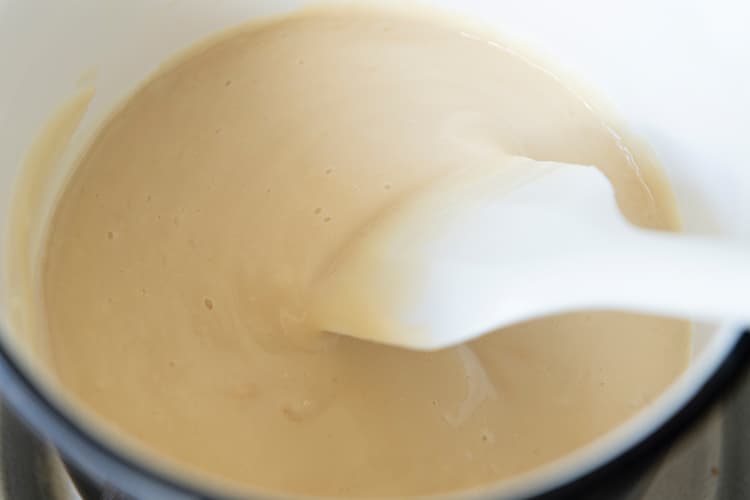
A creamy, mild-tasting sauce thickened with kudzu powder. “Unlike potato starch, which can be treacly, kudzu powder gives the sauce a smooth, elegant consistency. I strongly recommend it.”
Recipe for fermented white sauce
-
- Ingredients
- 250 ml soymilk (unhomogenized)
- 40 g shiro miso (white miso)
- 20 g kuzuko (kudzu powder)
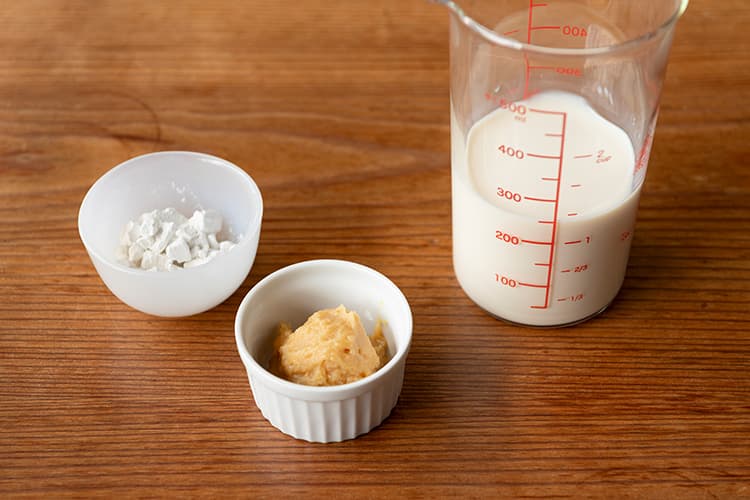
You can use whatever variety of white miso you like. The kudzu powder should preferably be genuine kudzu powder (hon kuzuko). “Genuine kudzu powder is made from kudzu root starch, whereas the so-called kudzu powder you usually see is made from the starch of sweet potatoes or something similar. You can use either.”
-
- Instructions
-
1.Add the soymilk to a pan and warm over extremely low heat until it starts bubbling at the edges. Add the white miso and dissolve well while mixing it in with a rubber spatula or similar.
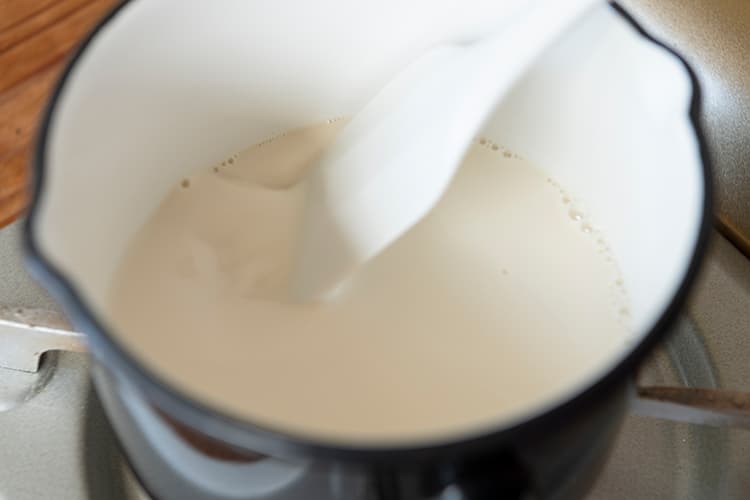
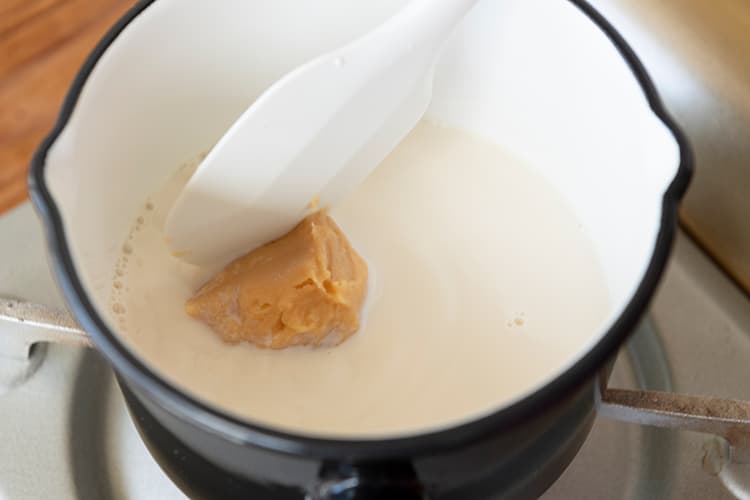
Keep the heat as low as possible, as soymilk will separate if you bring it to a boil. “White miso tastes better if you heat it first to remove the harsh soybean flavor,” says Keiko. “That’s a tip I got from someone at a store that sells it.”
-
2.Dissolve the kudzu powder in an equivalent amount of water (20 ml) until smooth. Add to the mixture from Step 1 and mix in well so that no lumps form.。
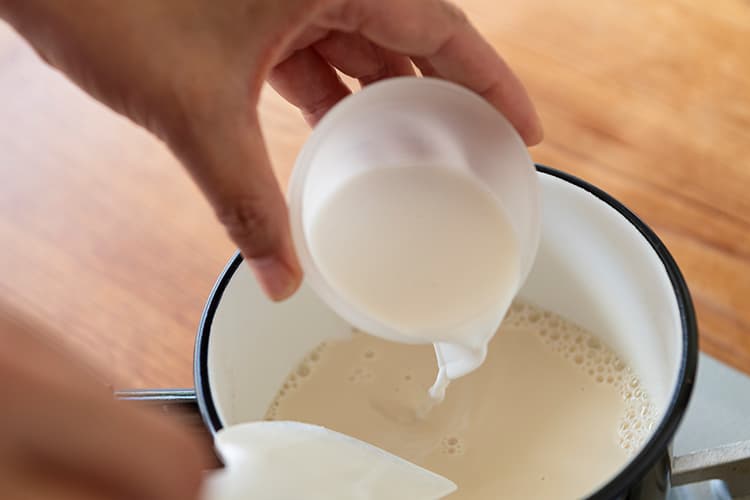
A handy thing to remember: dissolve the kudzu powder in an equivalent amount of water. Dissolve it before making the sauce, then give it an extra stir before adding it to the pan.
-
3.Once all the ingredients are smoothly mixed together and the sauce has a nice thick consistency, it’s ready.
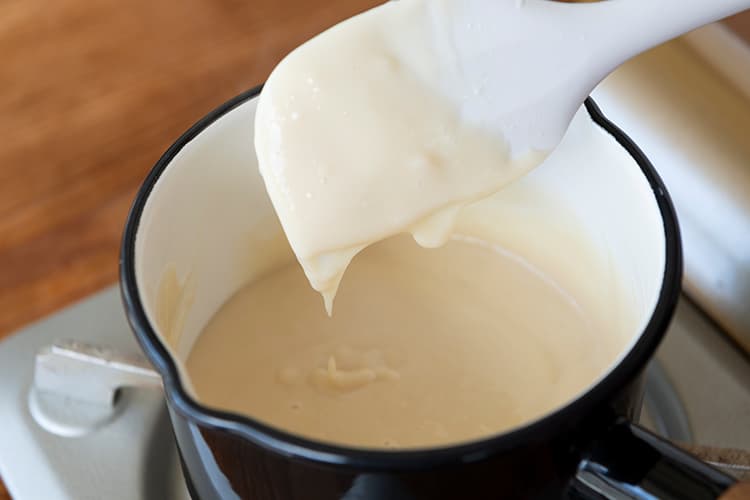
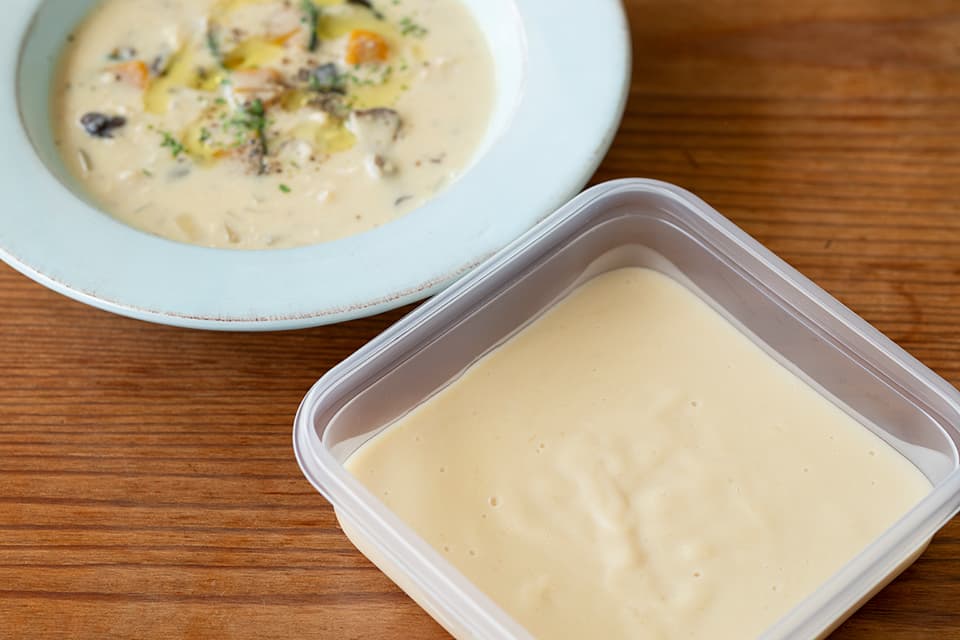
Fermented white sauce can be made in a jiffy! It’s got a nice thick consistency without being overly heavy. Adjust the flavor with salt and pepper to taste.
-
4.Let cool slightly, then remove to a storage container. Use up in 2–3 days if refrigerated or in 3 weeks to a month if kept in the freezer.
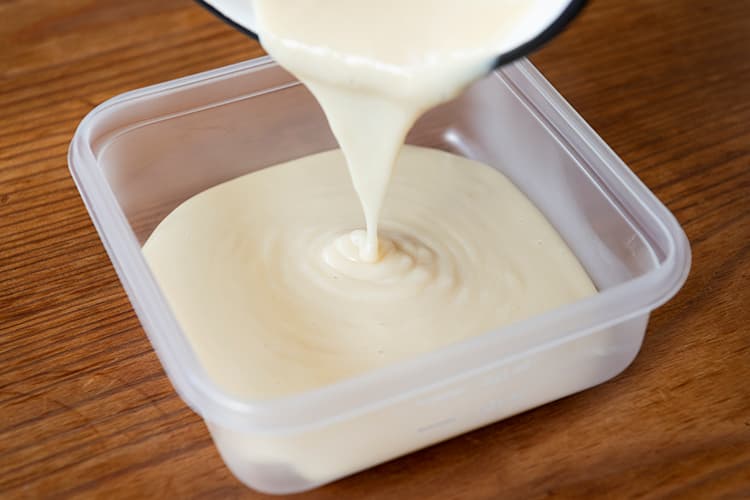
The beauty of this sauce is that it can be frozen. Let thaw in the refrigerator when defrosting.
Delicious ways to serve fermented white sauce
Fermented white sauce can be used in a wide range of recipes: pilafs, gratins, creamed vegetables, stews, you name it.
“This creamy white sauce pairs well with autumn ingredients like squash, sweet potatoes, and mushrooms, so I hope you’ll get plenty of mileage out of it. You can also use it for soups. Because the sauce itself is so light, it results in a light, mild-tasting soup that’s goes down easily.”
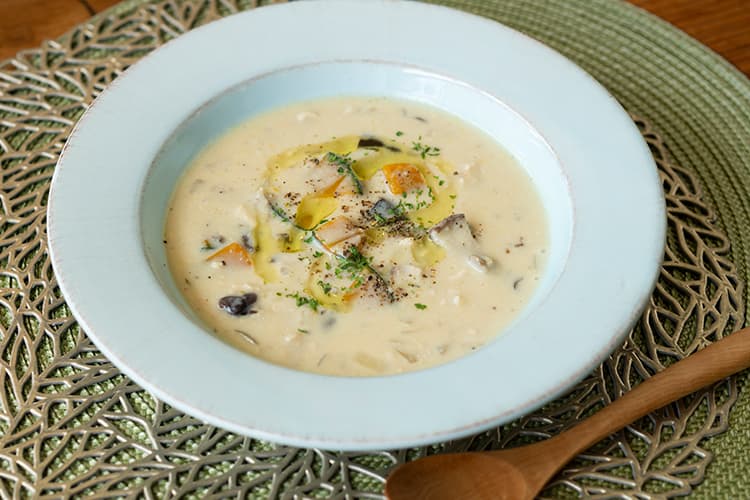
Keiko made this mushroom and squash soup for us. Here’s how to prepare it. Stir-fry ground chicken and finely chopped onions, add mushrooms and diced squash, cover, and cook over low heat. Add 100 ml unhomogenized soymilk and all the fermented white sauce. Once the soup comes to a boil, it’s ready to serve. “Instead of salt, try adding half a teaspoon of umezu (ume vinegar) as a hidden twist. It gives the flavor extra depth.”
Homemade rice koji amazake leaves you feeling pleasantly light.
One fermented item that Keiko makes regularly is the sweet rice beverage amazake.
“Rice koji has long had a place in my pantry, since I’ve been given miso-making classes for many years. I figured there must be something else I could do with it, and so I tried making amazake. It was easier than I expected, and I feel that drinking amazake has improved the condition of my skin and bowels, so I’ve gotten into the routine of making it several times a year.”
Not only is it good to drink as is; Keiko also uses it as a sugar substitute in her cooking.
“One really easy thing to make is a vinegar-, oil-, and soy sauce-based dressing with a dash of amazake. You can create all kinds of variations on it too. Add grated carrots, say, or turn it into a Chinese-style dressing by adding sesame oil and ground sesame seeds.”
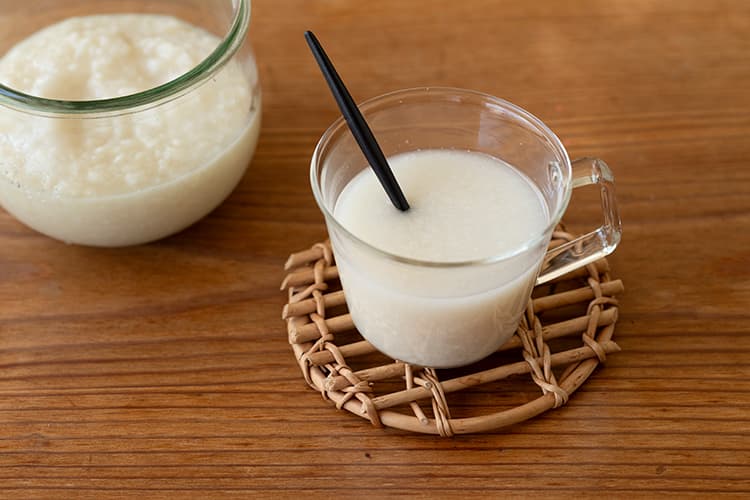
Add 200 g dried rice koji, 300 g cooked rice, and 500 ml water to a saucepan. Heat for 6–8 hours on an induction cooktop with adjustable heat settings, maintaining the temperature at 55℃. “You can also make amazake in your rice cooker. If you’re looking for a sweeter taste, try using rice porridge made with sticky rice.”
If you really want to get fancy, you can enjoy amazake with fresh fruit.
“A great idea for autumn is lightly stewing apples with amazake. For another delicious treat, add lemon juice and soymilk to amazake to make it thick like yogurt, then add your favorite fruits. In summer you can chill it. It makes for a snack that kids love.”
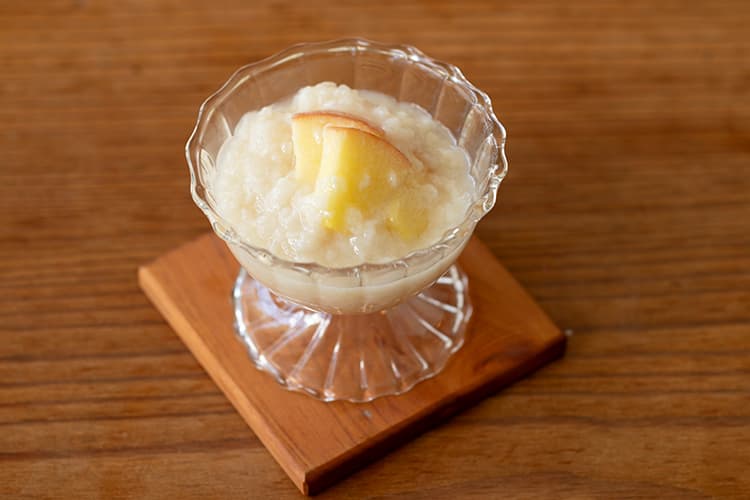
The autumn version of Keiko’s amazake dessert. It’s made by cutting an unpeeled apple into thin quarter circles, then gently warming them and some amazake in a small saucepan.
This article has showcased a light-tasting fermented white sauce that’s dairy- and gluten-free. It’s perfect for autumn, easy to make, and fridge- and freezer-friendly, so why not give it a try? It will be a welcome addition to your dining table as the summer slowly gives way to autumn and winter.