Fermented Takana Pickles and Glass Noodle Stir-Fry Recipe
Jan 15,2026
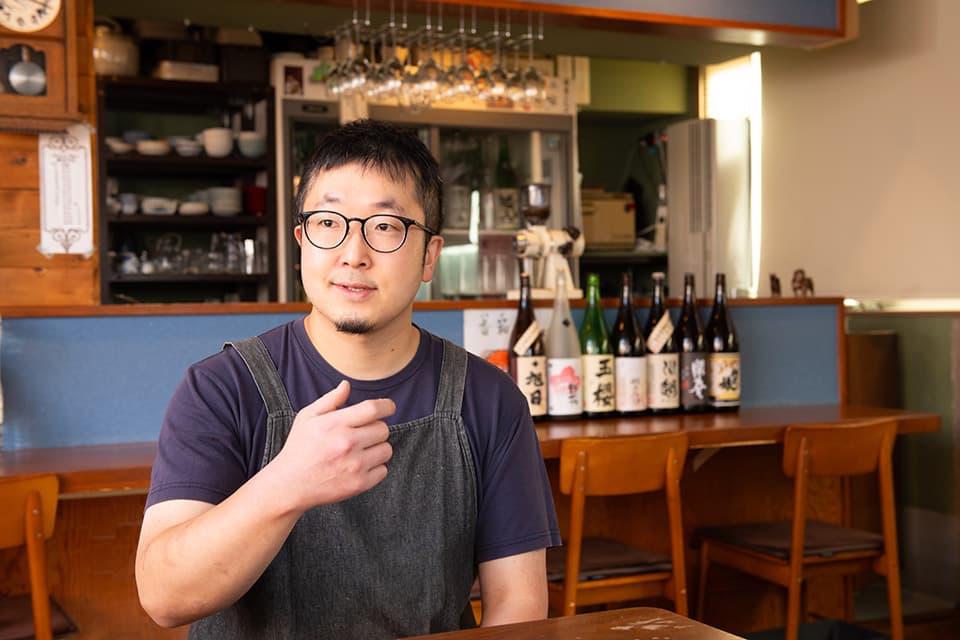
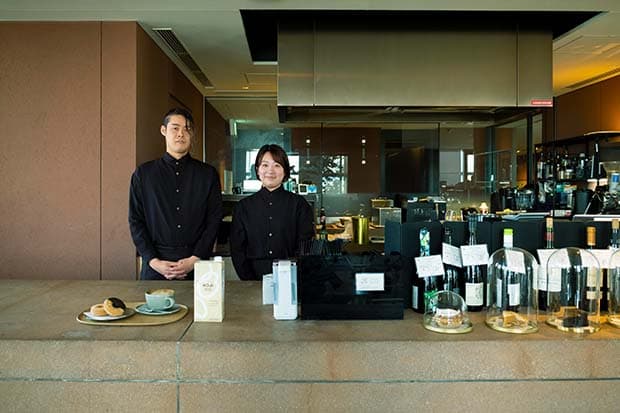
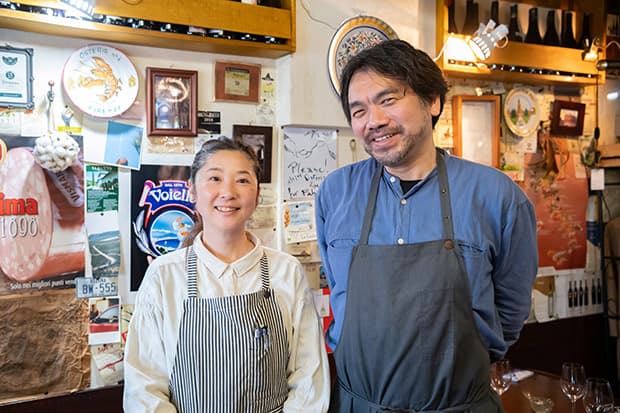
In this ongoing series, we ask food professionals for their top recommended fermented foods. For this installment, we visited a popular izakaya pub in Tokyo’s Asagaya district called Sugar Sake & Coffee.
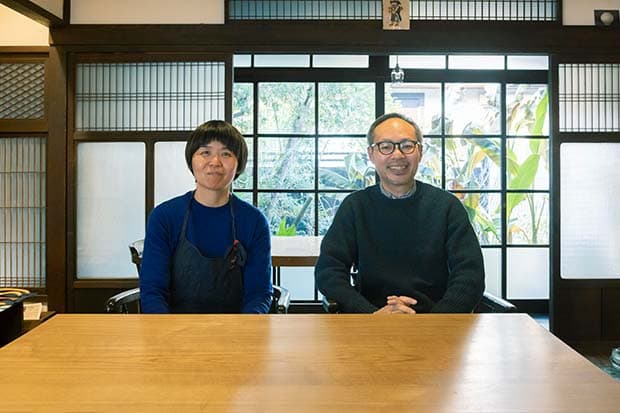
The izakaya’s owner, Sato Kenichi, is a former systems engineer originally from Aomori. Having grown up in a region where fermented foods are deeply rooted in daily life, he chose takana-zuke [pickled mustard greens] as his recommended fermented food. Sato shared his recipe for homemade fermented takana-zuke as well as a simple yet authentic-tasting stir-fry. Takana-zuke is perfect as a side dish to accompany rice and fantastic as a snack that goes with saké. The best time to prepare takana-zuke is during the harsh winter cold.
Aomori’s food culture formed my taste preferences

Sato moved to Tokyo after graduating from high school. He recalls how surprised he was by not being able to find in Tokyo many of the commonplace dishes in his hometown.
“One example is sugume, a dish made from pickled flaked shark head meat. Shark heads were regularly sold in Aomori and were often used in home cooking. The word sugume is said to derive from the expression ‘wrapped in vinegar’, as the boiled shark meat is seasoned in vinegar and miso. My parents also added boiled cabbage to our sugume at home. Some other dishes are kasube (dried skate), a vinegared dish, and the New Year’s dish kenoshiru [a miso soup cooked with root vegetables and deep-fried tofu]. The flavors I ate at home without ever considering them to be a regional cuisine formed the basis of my favorite tastes today.”
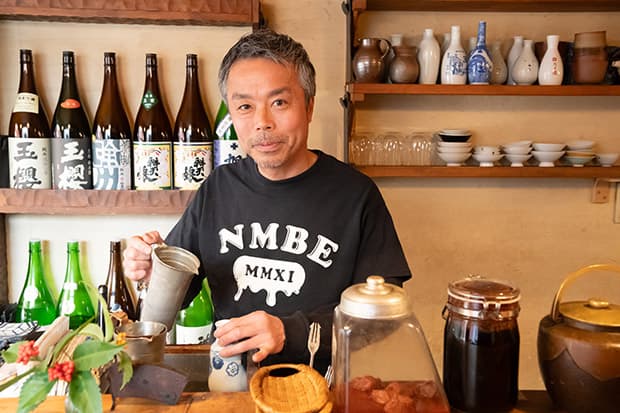
Coincidentally, Sato attended the same high school as Takaya Kenichi, owner of Nihonshu-ya, which appeared in Part 16 of this series. Their career paths also overlap: both started as engineers before transitioning to the food and beverage world. Sato even honed his skills under Takaya for a time.
“Takaya also has a deep interest in regional cuisine. My experience at Nihonshu-ya played a big part in my rediscovery of my hometown flavors. Even after starting my own place, I often find myself thinking, ‘Oh, I used to eat this,’ and expand on ideas taken from Tsugaru cuisine [a western region of Aomori] to create new menu items.”
Fermented takana-zuke features the addictive umami flavor of lactic acid fermentation
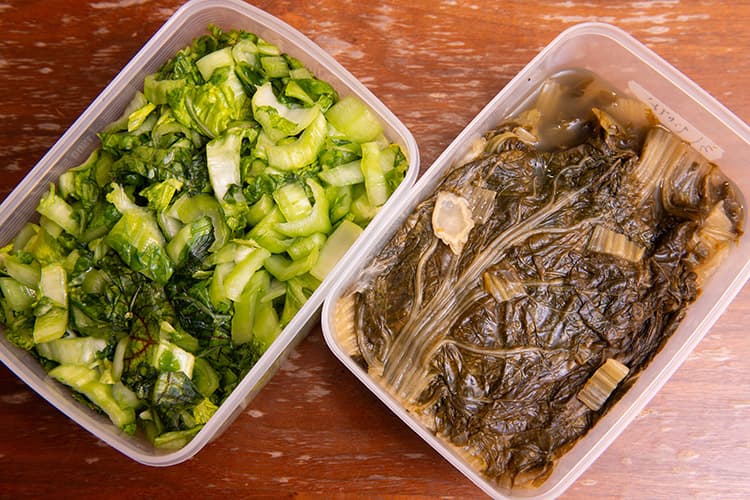
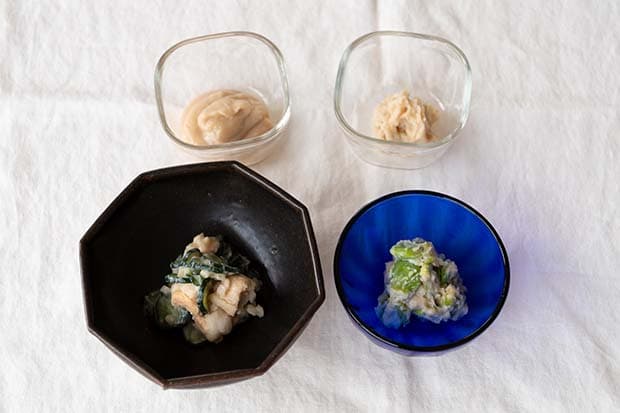
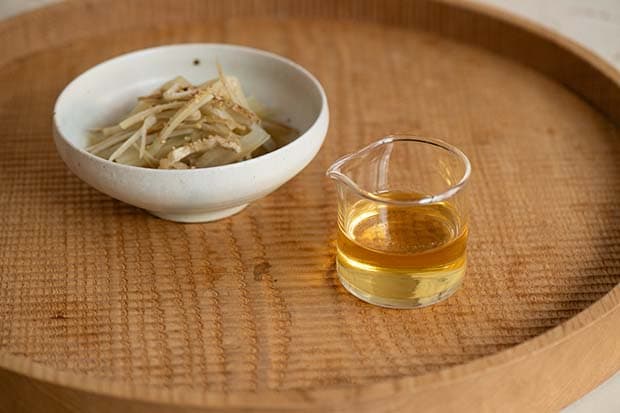
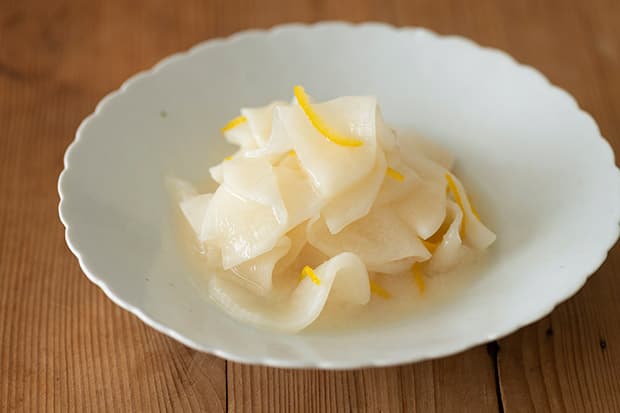
Freshly pickled takana-zuke on the left, and takana-zuke three weeks after pickling on the right. Fermentation continues slowly even when refrigerated.
Sato started making his own takana-zuke after seeing takana by chance at a nearby greengrocer.
“You probably rarely see fresh takana greens at supermarkets. However, many Nepalese live in Asagaya, where my restaurant is located, and takana is a common ingredient in their food culture. Gundruk [an unsalted dish made of sun-dried and fermented leafy green vegetables], an essential Nepalese side dish, is often made with takana. This is why some local greengrocers carry it.”
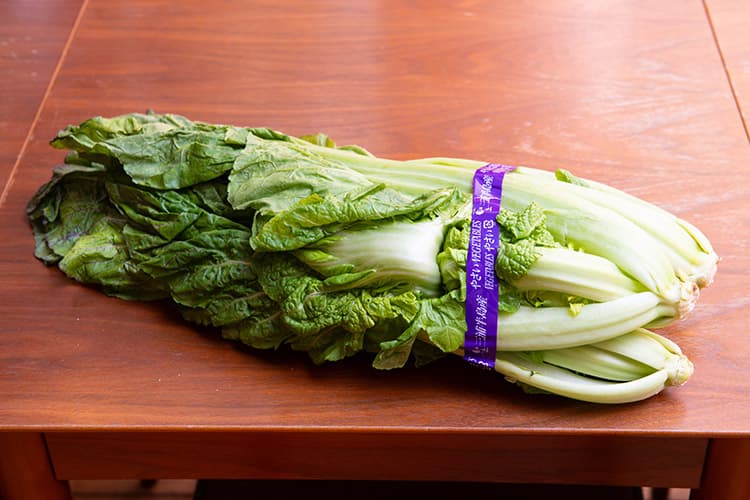
Thick, weighty takana greens are in season from winter to spring
“Fermented Chinese cabbage is often used in Chinese cooking, and I pickle it at my izakaya too. I wondered whether takana could be pickled the same way, so I tried it and that’s how it started. After beginning to make takana-zuke, I learned about a dish in Aomori where they stir-fry and simmer takana-zuke with horse meat and about the tradition of adding takana-zuke to kasu-jiru [saké lees soup] to make up for the scarcity of green vegetables in winter.”
-
- [Ingredients (easy-to-prepare amount)]
- Takana
Two to three bunches (approx. one kilogram)
- Salt
Two percent of the total weight of takana
- Vinegar
As needed
-
- [Directions]
- 1. Separate the takana leaves one by one, thoroughly wash off any soil from the root ends, and chop into one-centimeter-wide pieces.
- 2. Place the chopped takana from Step 1 in a bowl and add two percent of its weight in salt. Toss the leaves to ensure all are coated evenly in salt, and then let sit for about one hour.
- 3. Once the takana leaves have wilted, transfer them to a clean, airtight container. Add a splash of vinegar, mix quickly, cover, and leave at room temperature for about three days.
- 4. Taste the pickles and if they have a pleasant sourness, they are ready. Transfer to a refrigerator for storage.
“Adding a small amount of vinegar at the end helps suppress bacterial growth while gently promoting lactic acid fermentation. This results in a mild, easy-to-eat flavor. If takana greens are unavailable, you can make it with Chinese cabbage following the same method.
“Water will gradually rise from the pickled takana greens. Cover the greens with plastic wrap or similar material to keep them submerged beneath the liquid surface and seal the container. This allows the pickles to keep in the refrigerator for two to three months.”
Takana-zuke and pork belly stir-fry with glass noodles
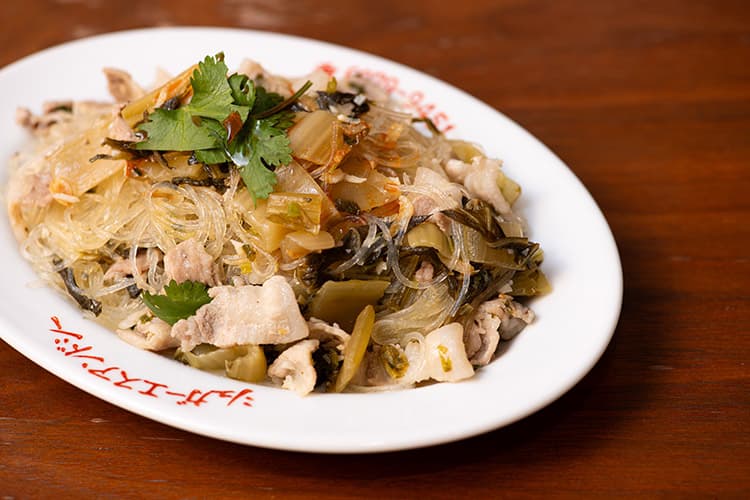
While many people associate pickles as side dishes for rice, Sato’s takana-zuke also works well as a seasoning.
“Thinking of takana-zuke as a mild kimchi might help you visualize how to use it to season your cooking. It’s not just for stir-fries; it’s also handy in fried rice, soups, and many other dishes.”
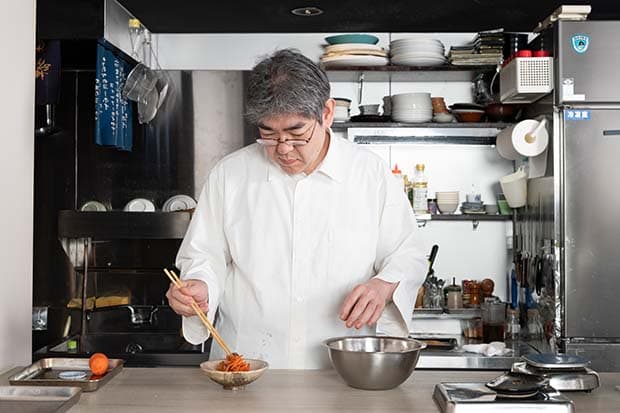
Its mellow acidity, umami, and light, fragrant aroma elevate everyday dishes to restaurant-grade tastes. Sato shares the recipe for a very popular dish at Sugar Sake & Coffee — glass noodles infused with the savory umami of takana-zuke and pork belly.
-
- [Ingredients (for a two-person serving)]
- Takana-zuke
75 grams
- Thinly sliced pork belly
45 grams
- Glass noodles
30 grams
- Garlic (minced)
One clove
- Dried shrimp
One teaspoon
- Cilantro (minced)
One tablespoon
- Shaoxing wine (or saké)
One tablespoon
- Fish sauce
1.5 teaspoons
- Pork broth
120 mL*
- Salad oil and sesame oil
One teaspoon each
*Broth made by boiling a chunk of pork (such as belly or shoulder loin) in water.
Alternatively, mix 100 grams of ground pork into 400 mL water, bring to a boil, then simmer over low heat to extract the broth. Or use one teaspoon of chicken bouillon granules dissolved in hot water. In this case, adjust the recipe by using one teaspoon of fish sauce.
-
- [Directions]
- 1. Cut the pork into two-centimeter-wide pieces.
- 2. Bring water to a boil in a pot and parboil the glass noodles according to the package instructions. Drain and cut into bite-sized lengths with kitchen scissors.
- 3. Heat the salad oil in a frying pan. Quickly stir-fry the pork from Step 1 together with the garlic and dried shrimp. Add the takana-zuke and cilantro and stir-fry further.
-
4. Add the broth, Shaoxing wine, fish sauce, and glass noodles from Step 2. Simmer over medium heat until the liquid is almost gone. Drizzle with the sesame oil and mix roughly. Taste and adjust the seasoning with salt, fish sauce, and pickling liquid from the takana-zuke.
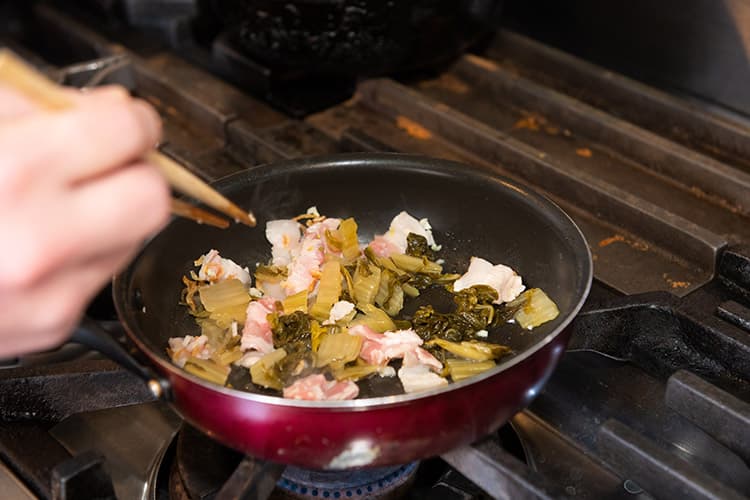
You can cut the takana-zuke into bite-sized lengths as well
“I recommend pork that is on the fatty side. The sweetness of the melted fat blends in with the umami of the takana for a rich, deep flavor.”
Warmed saké pairs perfectly with aromatic dishes — Savor the flavors as they develop in your mouth
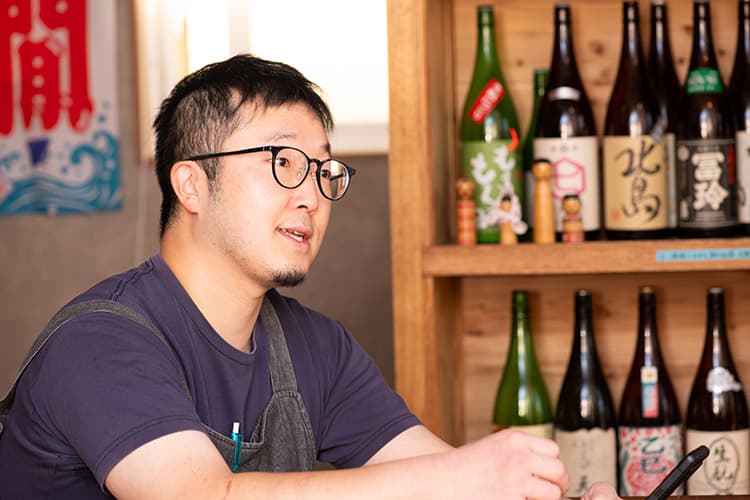
Enjoying Sato’s creative cooking informed by Chinese cuisine together with saké is a large part of Sugar Sake & Coffee’s charm. Of course, the pairing of the takana stir-fry and warmed saké is an unbeatable match too. The lactic acid fermentation-derived acidity and umami of the takana-zuke, the richness of the pork belly, combined with the gentle aroma and refreshing sweetness of warmed saké, create a pleasant harmony in your mouth.
“Saké contains its own umami components, so it pairs seamlessly not only with Japanese cuisine but also with world cuisines. I think of it as a seasoning for your mouth. When you sip warmed saké while the flavors of a dish still linger on your tongue, you can enjoy the sensation of the taste blooming even further.”
Indeed, glancing at Sugar Sake & Coffee’s menu reveals a multinational lineup: not just Chinese cuisine, but also regional Tsugaru dishes, Thai food, and dishes incorporating elements of French and Italian.
“I absolutely love Italian and Thai food too. When I’m dining out, I often think, ‘This would definitely work well with saké’. That’s why I serve these dishes in my own place.”
Sato laughs innocently. Visitors to his izakaya experience surprises and make new discoveries precisely because he expresses his ultimate passion — what he wants to eat — in his dishes. Above all, his cooking directly conveys the pure joy of food.
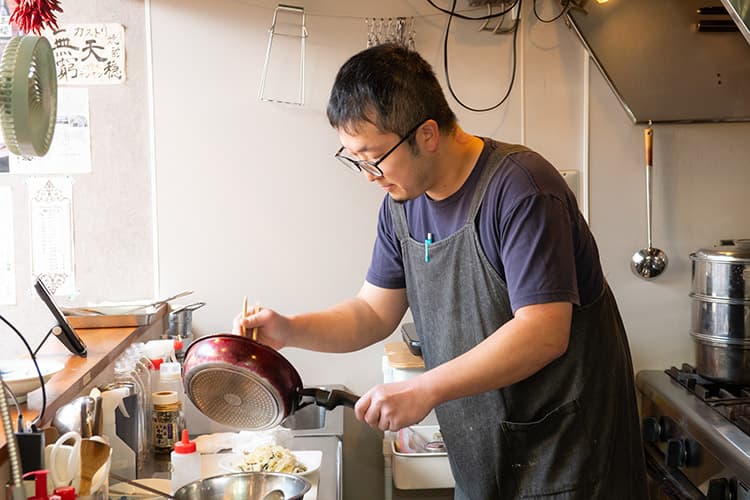
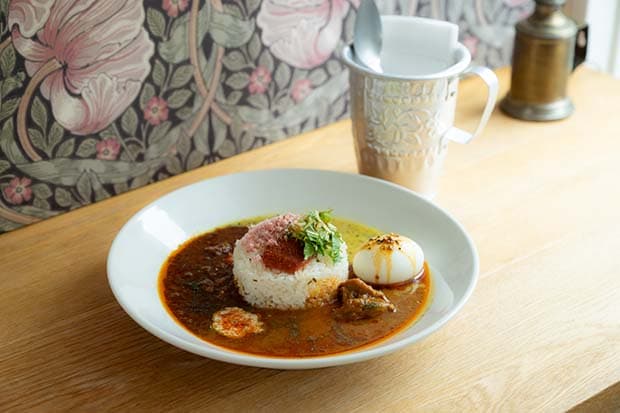
“I think aromatic dishes in particular go incredibly well with warmed saké. A senior colleague of mine runs a place specializing in Indian curry and warmed saké, and the spices and herbs go amazingly well with the saké. The takana-zuke stir-fry we made today is also a delightfully aromatic offering. Saké and cheese is another phenomenal pairing. You can savor an almost magical palate, as the warmed saké seems to further melt the cheese’s umami in your mouth.”
Unconcerned with categories, Sato continues to expand the possibilities of saké and food. His joy is evident in his facial expression.
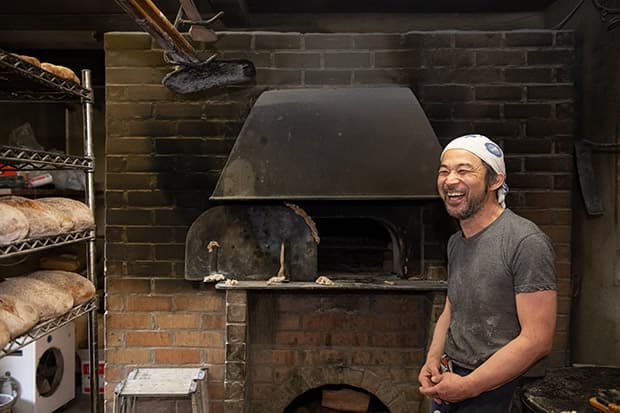
“Right now, the type of fermentation I’m fascinated by is bread. I’ve been daydreaming about serving simple bread made with just flour, water, and salt together with curry, and pairing this with warmed saké.”
Sato’s explorations into saké and food seem likely to only grow without bounds.
For our next article, we will visit a favorite saké bar of Sato’s called Sakefuku in Ichikawa, Chiba. Be sure to stay tuned.