The Kitchen Calendar series features popular culinary experts sharing recipes for their favorite make-ahead dishes and preserves made with seasonal foods and fermented ingredients.
This installment features food director, culinary expert, and fermented-food lover Teramoto Rieko, who has written an entire book on nukazuke — vegetables pickled in rice bran. She tells us how to make a fermented rice-bran bed or nukadoko, pickle vegetables in it, and maintain it day to day. She makes it so easy that you can’t go wrong, even if you’re a novice.
Besides cucumber pickled in rice bran, the classic form of nukazuke, Rieko also shares her techniques for making less conventional varieties of nukazuke with summer vegetables like okra and corn — and even with eggs. Further, she answers our questions about maintaining a nukadoko pickling bed during the summer heat, when fermentation proceeds more quickly but extra care is in order.
Nukazuke: a great stamina booster in the hot summer months and year-round
“Many people start making nukazuke as the summer approaches. Indeed, some people only make nukazuke in the summer.”
Nukazuke pickles are attracting attention for their benefits in preventing heat sickness during summer — not to mention as a delicious way to enjoy summer vegetables.
“The pickled ingredients absorb the vitamin B1 and salt contained in the nukadoko, both of which are essential to preventing heat sickness. Plus, being vegetables, they’re also a source of vitamins and minerals in their own right, making nukazuke perfect for the sweltering summer months.
“What’s more, you can rely on nukazuke to regulate your gut microbiome with plant-derived lactic acid bacteria. In addition, pickling vegetables reduces their bulk by drawing out their moisture, so they have a higher fiber content per serving. That makes them a more efficient source of fiber than fresh vegetables, which is great news for your gut.”
Rieko has experienced nukazuke’s impressive health-boosting benefits firsthand.
“I first started making nukazuke for a brand I launched in 2013 to champion vegetables grown in Miyazaki, the part of Japan I’m from. It all began when I started selling good old-fashioned fermented foods.
“That was before fermented foods became the rage they are today. We made our own nukazuke at my family home, along with many other kinds of pickles. I loved pickling myself. I was fascinated by fermented foods.
“I was sickly back then, which was a constant worry. But after I started eating nukazuke every day, I got much better. In fact, I haven’t been seriously ill in a decade. A wonderful thing about nukazuke is their comforting flavor, like they’re what your body’s been craving all along.”
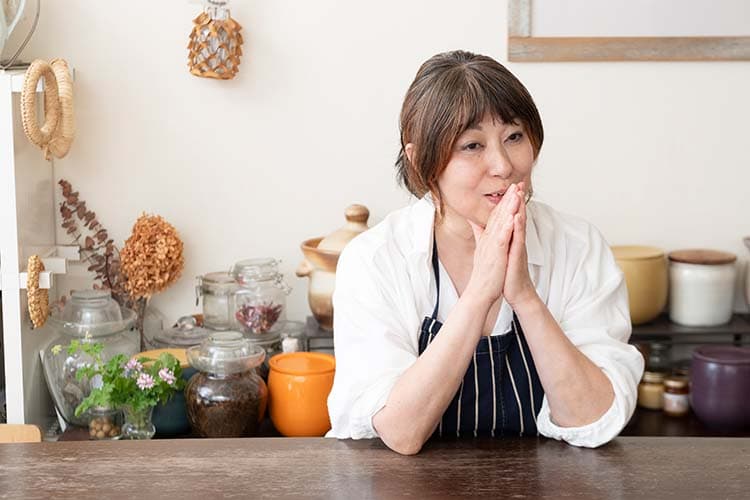
A nukadoko pickling bed is a living thing. Nurture it with loving care, and your pickles will taste delicious.
You often hear people talk about how they tried their hand at making nukazuke, only to botch it. So what’s the secret to successfully keeping it up? “Love your nukadoko. Don’t forget that it’s a fermenting, living thing,” comes the reply.
“A fermented nukadoko contains not only lactic acid bacteria but also butyric acid bacteria. Butyric acid bacteria are known to help lactic acid bacteria multiply, as well as conditioning the intestinal environment and boosting the number of immune cells. And they’re only found in nukazuke, I’m told. Starting at the surface and working downwards, a nukadoko is divided into three layers — yeast on top, lactic acid bacteria in the middle, and butyric acid bacteria at the bottom — depending on how much each of them likes air. Mix the nukadoko well once a day, turning it over completely so that the microorganisms switch places.
“Foods like dried shiitake mushrooms and kombu (dried kelp) are added to the nukadoko to give it umami. People add all kinds of things. Avoid anything that could damage the nukadoko, though. For example, there was someone who squeezed lemon into their nukadoko. Well, the acid in lemon stops fermentation in its tracks. You should also avoid anything juicy that could burst at some point, such as ripe tomatoes.”
The best way to tell whether your nukadoko is properly fermented and well maintained, says Rieko, is to actually taste it. It’s important to remember how it tastes when it’s at its most delicious, then monitor its saltiness and acidity accordingly.
“A nukadoko is made of rice bran, so you can eat it as is, of course. A well-made nukadoko tastes good in itself, with just the right level of saltiness, umami, and acidity. If it doesn’t turn out right, just have another go at making it. That’s how laid back you need to be when working rice bran.”
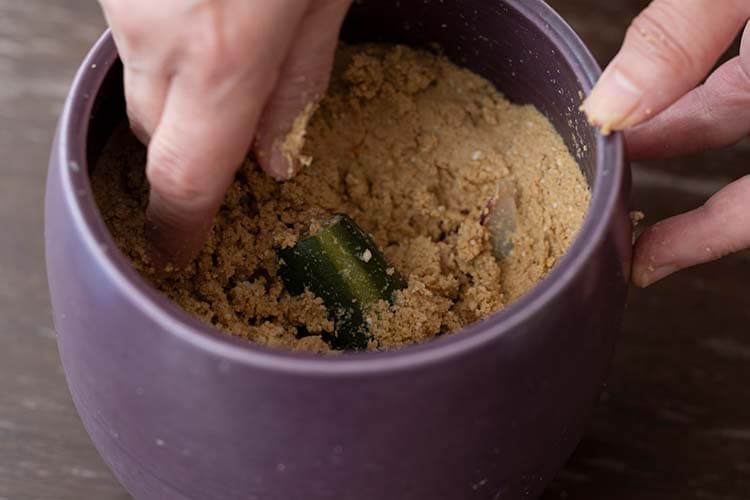
Rieko’s nukadoko (rice-bran pickling bed). Try a mouthful, and it strikes a perfect balance between salty, umami, and acidic. It smells delicious too. You just want to keep eating it. Cucumber pickled in this mixture has a noticeably acidic flavor, with plenty of umami.
How to make your own “nukadoko” rice-bran pickling bed
-
- Ingredients for a handy 1 kg batch
- 500 g raw rice bran
- Brine (prepared by dissolving 50 g salt in 500 ml hot water)
- 5 cm kombu (dried kelp) cut into thin strips
- 1 red chili pepper, seeded and sliced into rounds
- 1 dried shiitake mushroom, torn by hand
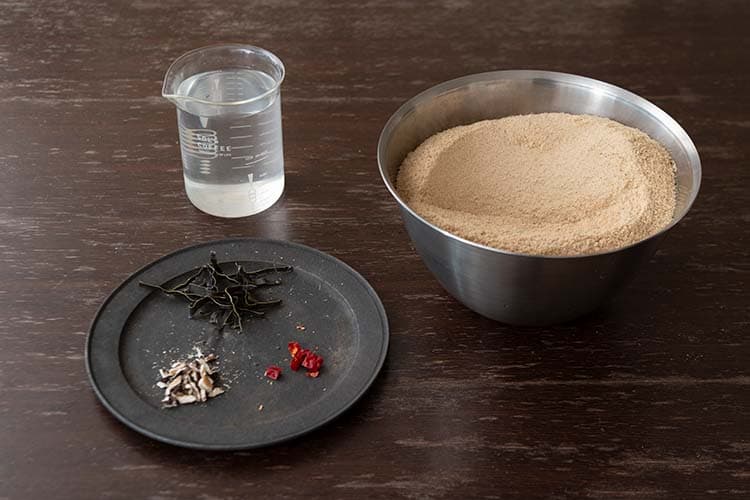
Rieko uses “raw” or unheated rice bran. “It ferments more easily and yields a delicious flavor that subtly differs from what you get with roasted rice bran. Of course, if you can’t get hold of raw rice bran, roasted bran is perfectly acceptable as well.”
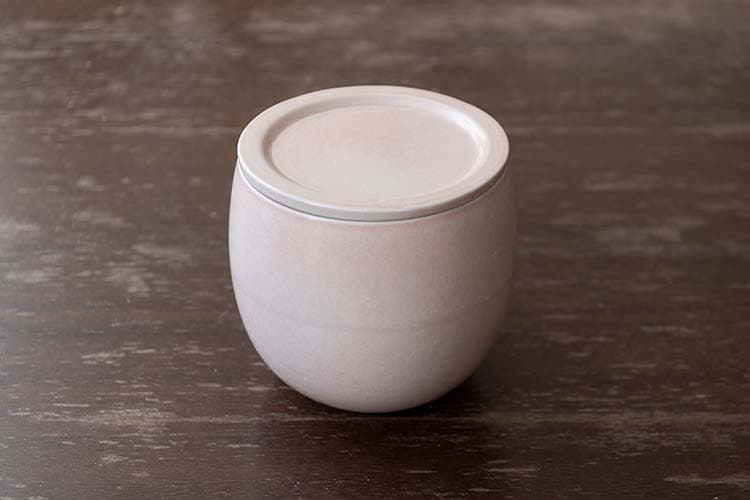
Another important factor is the container in which the nukadoko is kept. “Lactic acid bacteria and butyric acid bacteria prefer the bottom of the nukadoko to the surface. The container should therefore preferably be of the just right depth — about 15 cm tall. A rounded bottom makes it easier to turn over the nukadoko.” The photo shows a nukatsubo (“bran jar”) produced by Meizan Kiln under Rieko’s supervision.
-
- Instructions
-
1.Place the rice bran in a bowl and pour in two-thirds of the brine. Using clean hands, mix well while adding all but 50 ml of the rest of the brine. Mix together well until the floury texture is gone.
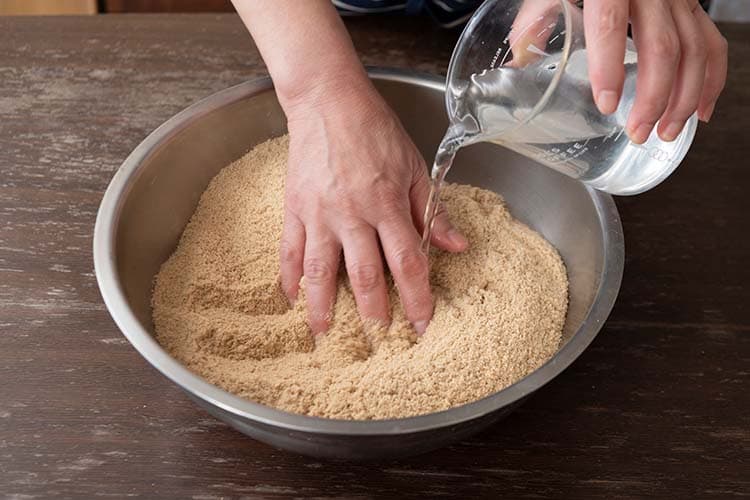
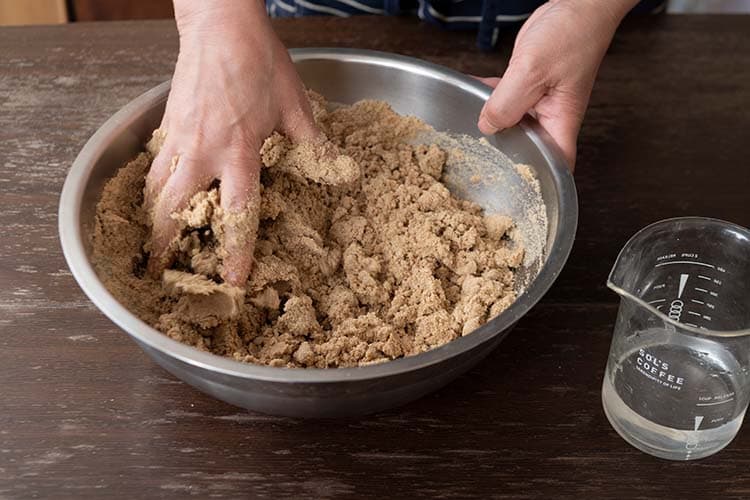
Don’t pour in all the brine at once. Add a little at a time, setting some aside for adjusting afterwards (right).
-
2.Add the rest of the brine a little at a time, adjusting the mixture until it’s just wet enough that the moisture oozes through your fingers when you squeeze the bran in your hand.
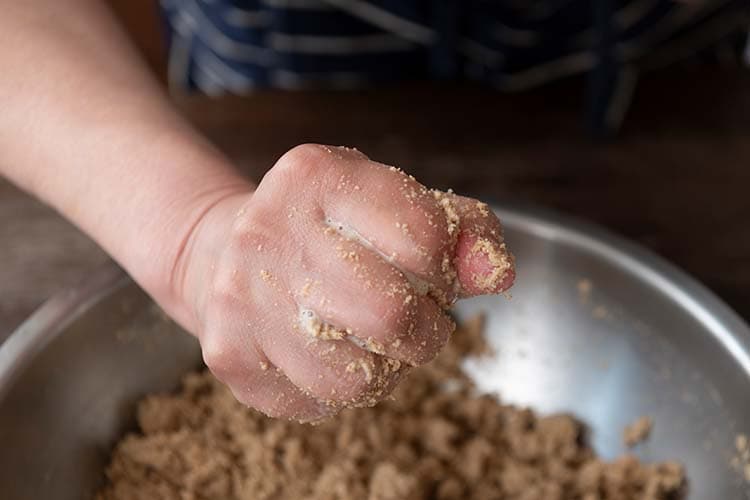
To determine whether the nukadoko contains the right amount of moisture, scoop up some of the mixture in your hand. The moisture should be barely visible between your fingers, without seeping through.
-
3.Add the kombu, red chili pepper, and dried shiitake mushroom and give everything a light mix.
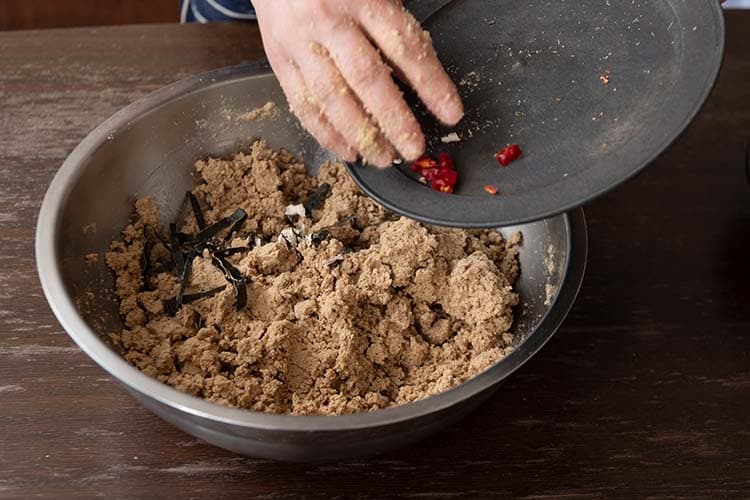
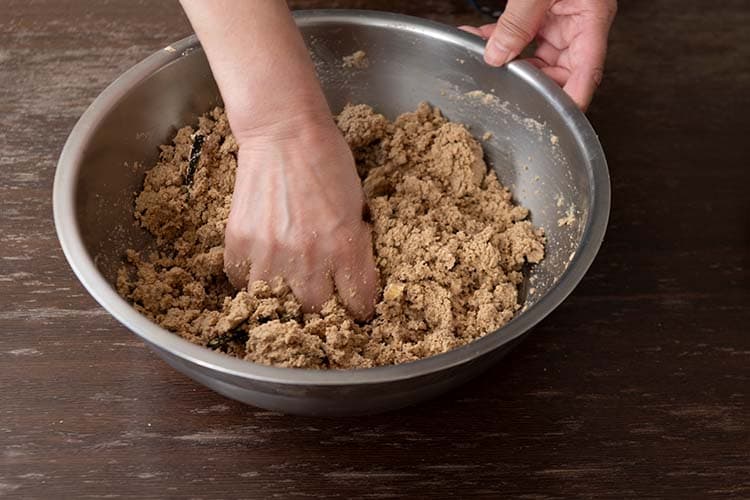
Kombu and dried shiitake are added to the nukadoko to give it umami. Red chili pepper is added to keep away insects and prevent spoilage and mold.
The sutezuke (“throwaway pickle”) process
-
-
1.Spread a small amount of nukadoko in a pickling vessel and place vegetable scraps on it. Then cover the vegetables with nukadoko until hidden.
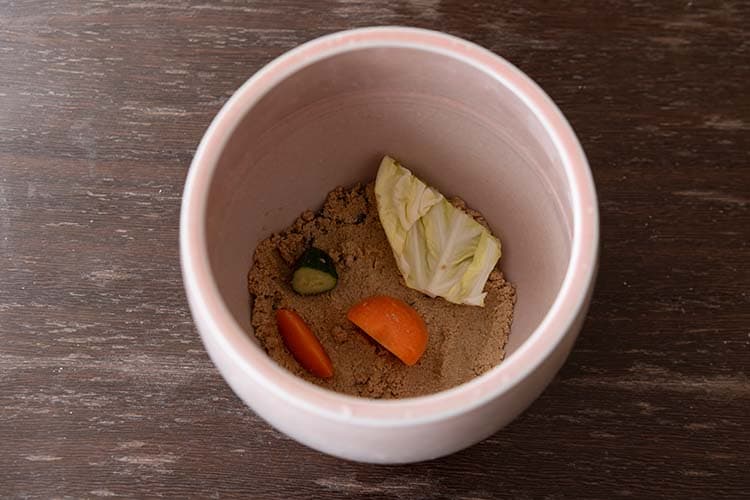
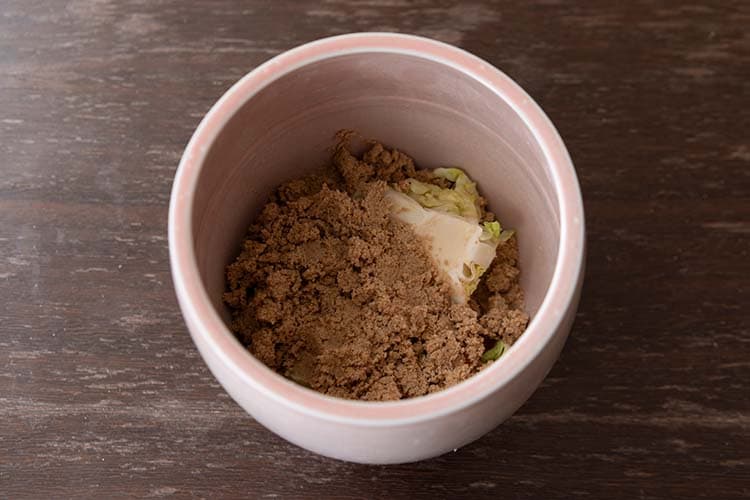
Vegetable scraps you can use include the leaves or core of a cabbage and carrot or cucumber stems and peel. “I’d particularly recommend cabbage, which is a rich source of lactic acid bacteria.”
-
2.Repeat Step 1 several times. Finally, cover the surface with nukadoko and smooth flat. Let the scraps pickle for a day and a half to two days.
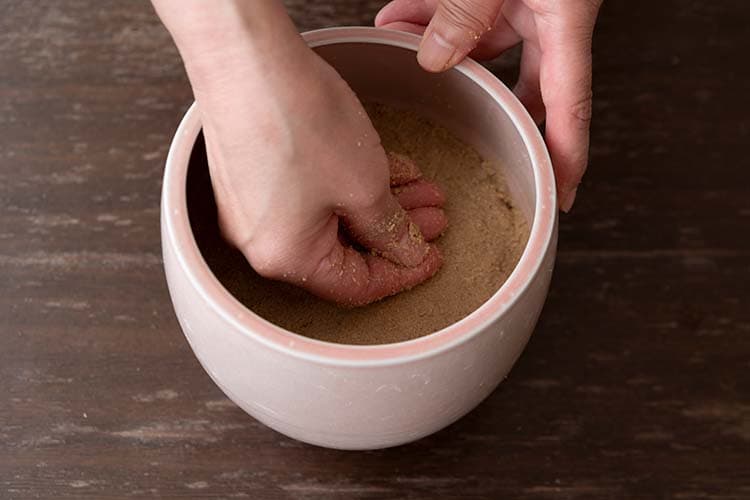
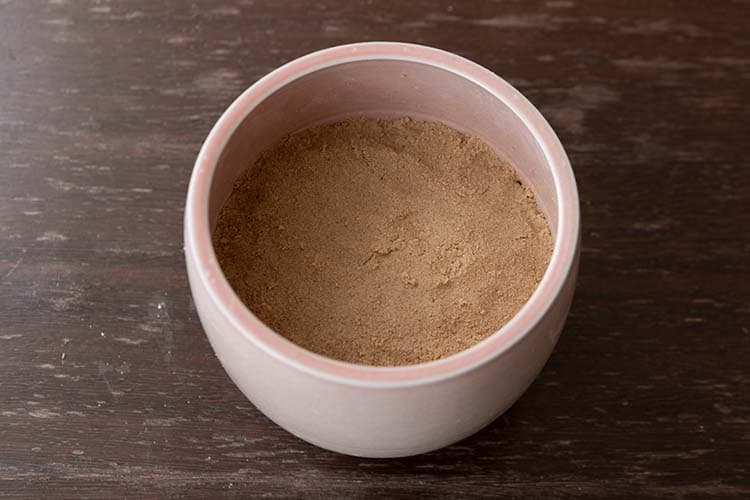
While eliminating any air pockets, smooth out the nukadoko (left) until flat (right).
-
3.Remove the vegetable scraps after a day and a half to two days. Repeat Steps 1 and 2 with new vegetable scraps and remove within a day and a half. Then repeat Steps 1 and 2 every day for a week. The nukadoko is ready to use once it’s soft and spongy with a noticeable scent and sour flavor (give it a taste).
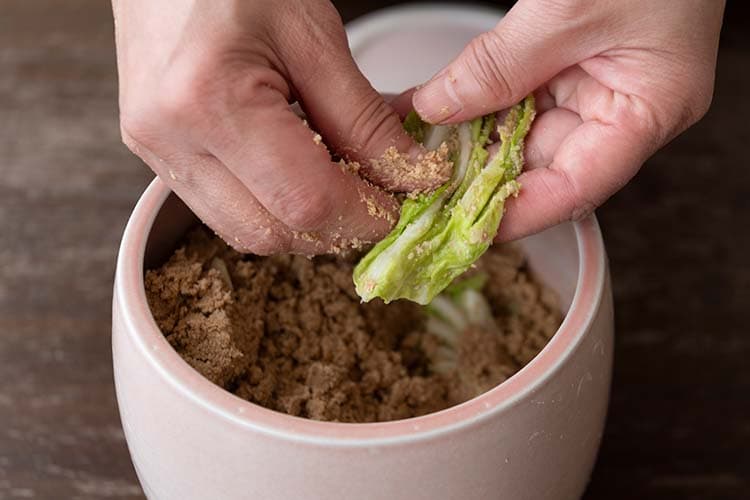
Be sure to remove all the old vegetable scraps before pickling any new ones. Scrape off any bran adhering to the scraps. What a shame to let it go to waste!
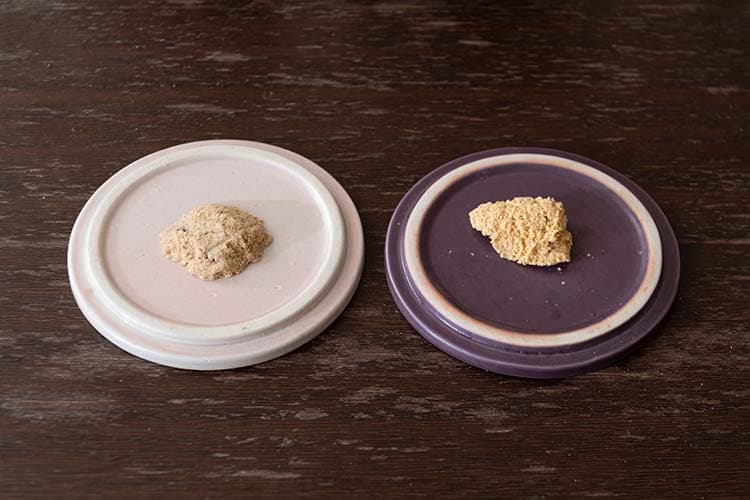
Freshly made nukadoko (left) and fermented nukadoko (right). Fermented nukadoko has a somewhat deeper color with a soft, spongy texture.
Basic pickling technique
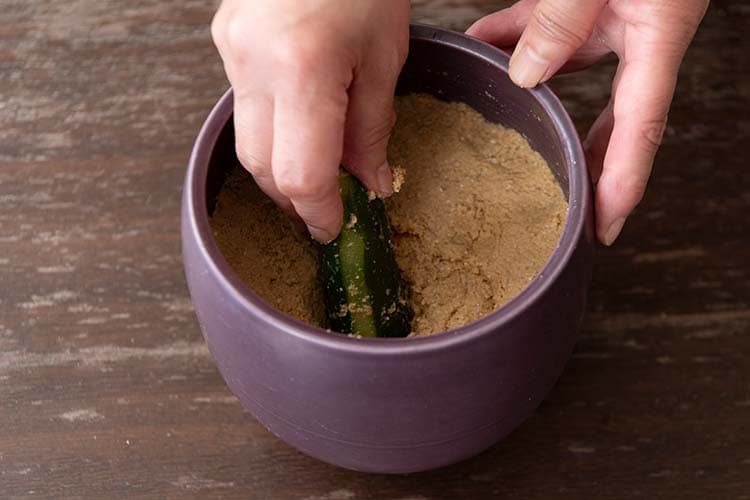
Vegetables to be pickled in the nukadoko should be about the thickness of a cucumber. When pickling, separate the vegetables so they aren’t touching and bury them completely in the nukadoko so they don’t protrude from the surface. Let pickle for about 12 hours.
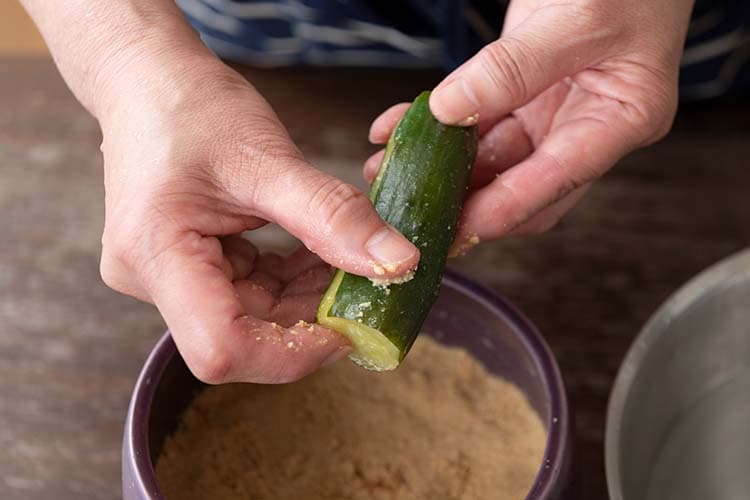
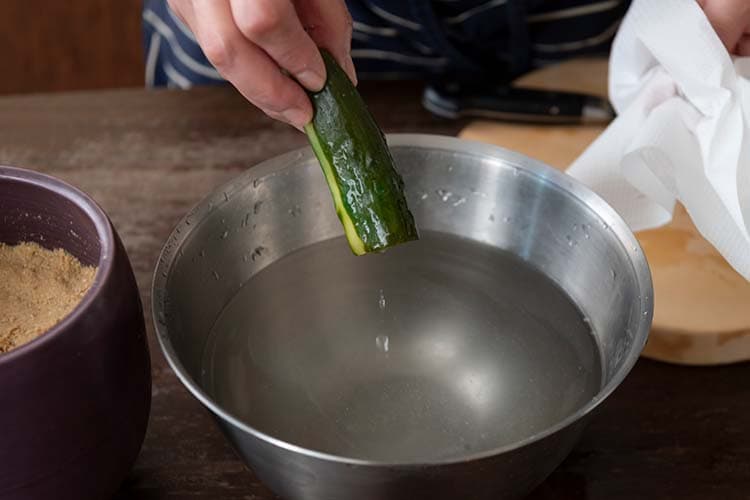
When removing the pickled vegetables, use your fingers to scrape off any rice bran adhering to the surface (left). Then give them a quick rinse in a bowl of water — just for a second or two so they don’t lose any of their flavor or nutrients (right). Immediately wipe dry.
Maintaining your nukadoko day to day
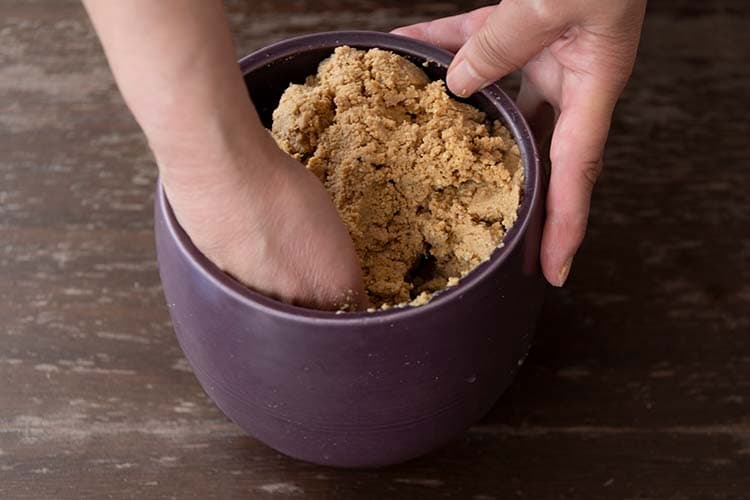
Thoroughly mix your nukadoko once every day without fail by scooping it up from the bottom and turning it over. Then smooth the surface flat again.
Give your nukadoko an occasional taste to check how salty and sour it is. If it starts to get soggy, adjust by adding extra rice bran and salt. If it’s not salty enough, add one teaspoon of salt per 100 g of rice bran. Then [IC2.1]let the nukadoko sit and ferment at room temperature for one to three days, depending on the amount added.
The 4 secrets to not ruining your nukadoko in summer
1. Keep it in the fridge.
During summer when it gets hot inside, keep your nukadoko in the fridge, preferably in the crisper. Fermentation proceeds more slowly there because of the lower temperature. When storing your nukadoko in the fridge, pickle vegetables in it for 24 hours rather than the usual 12.
2. Use clean hands or gloves when mixing your nukadoko.
Be hygiene-conscious year-round, especially in summer when unwanted bacteria tend to proliferate. If using your bare hands, wash them thoroughly first. Alternatively, you can use poly gloves.
3. If the nukadoko’s surface turns white, take appropriate steps.
The white substance that forms on the surface of a nukadoko isn’t mold. It’s what’s called “film yeast.” It’s particularly common in summer when it’s hot indoors. If there’s only a little of it, you can simply mix it into the nukadoko. If, however, it forms a membrane, remove the surface layer: otherwise it will detract from the flavor. If red, blue, or black spots appear, that’s mold, so make an entirely new nukadoko.
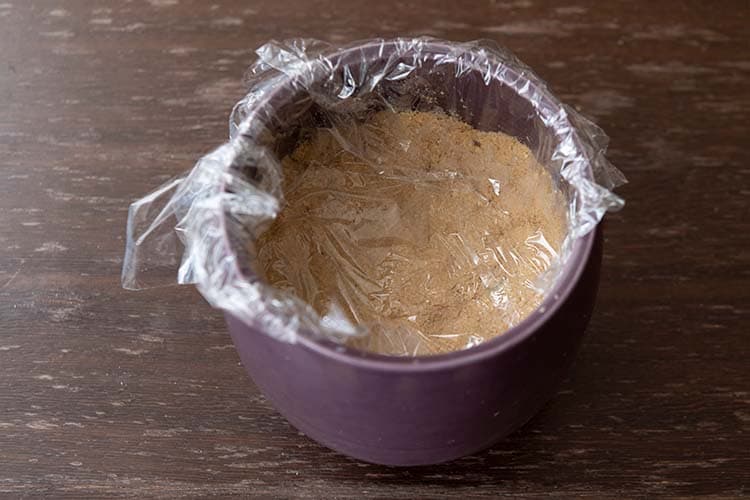
4. When going away for a while, cover the surface with plastic wrap.
If you’re going to be away for three days to a week, remove any ingredients you’re currently pickling and put the nukadoko in the fridge. Cover the surface tightly with plastic wrap to prevent exposure to air. If going away for longer, place the nukadoko in a ziplock freezer bag and store it in the freezer. After defrosting, adjust the moisture level by adding extra rice bran and salt.
Variations on nukazuke: Summer vegetables and other unconventional ingredients you can pickle in rice bran
“One good reason to make nukazuke is to enjoy the vegetables of the season,” says Rieko. Besides old standards like cucumber, many different vegetables taste excellent pickled in rice bran. Here’s how to pickle several common summer vegetables, as well as two other ingredients Rieko particularly recommends: eggs and dried shiitake mushrooms.
“Myoga ginger, okra, and dried shiitake can be pickled in the nukadoko without further preparation. For cherry tomatoes, make six to eight pricks in the surface with a toothpick. For corn, cut it to five-centimeter lengths, steam or boil for five to eight minutes, then, once it cools slightly, wipe dry. For eggs, hard-boil in boiling water for ten minutes, then peel and let cool. Then bury each in the nukadoko.”
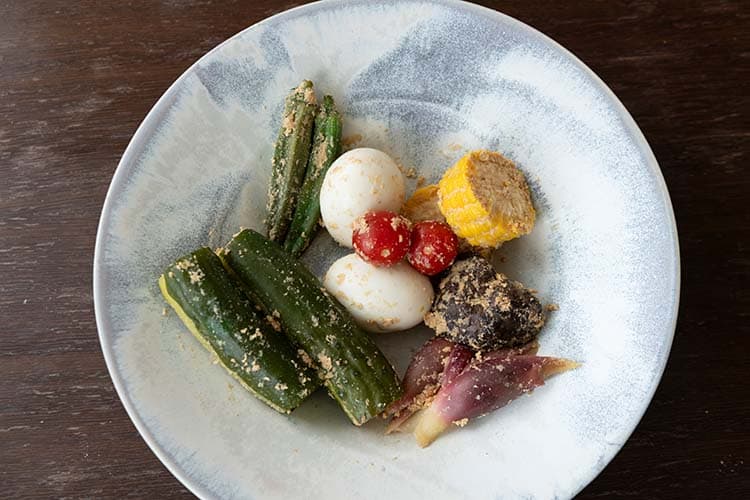
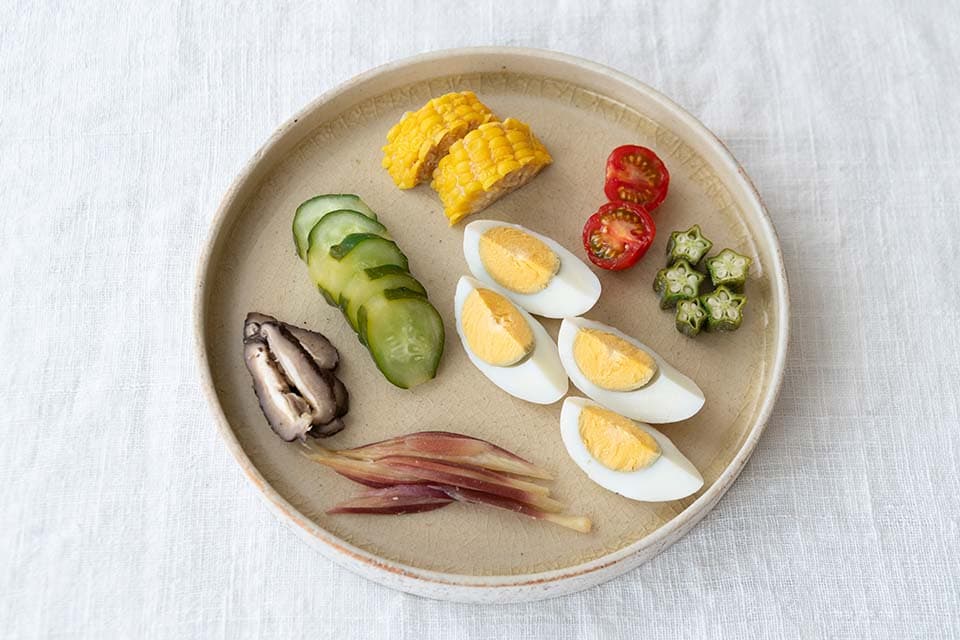
A riot of color. Clockwise from the top: eggs, cherry tomatoes, corn, dried shiitake mushroom, myoga ginger, cucumber, and okra. “They make tasty toppings for somen noodles when cut to bite-size.”
Nukazuke pickles are a great way to enjoy the fine flavor of seasonal vegetables, plus they’re bursting with nutrients. So stay in top form this summer by munching on nukazuke pickled in your very own nukadoko.