Thailand’s Regional Thai Fermented Foods
Mar 05,2026
The secret to the great taste of Thai cuisine lies in its fermented foods. So says culinary expert Hashimoto Kanako, who has been exploring Thailand’s fermented foods for many years. In Part 1 of this feature, she talked about the magic of fermentation. Here in Part 2, she takes us on a tour of the fermented foods and dishes typical of Thailand’s four major regions: the north, the northeast, central Thailand, and the south.
<Northern Thai fermented foods>
Thua nao phaen (fermented soybean disks) and nam phrik ong
The mountainous north of Thailand, where the ancient capital of Chiang Mai is located, was once the thriving kingdom of Lan Na. The region retains its own distinctive culinary culture influenced by Myanmar, Laos, and India. The cuisine makes extensive use of salt, dried chilies, and spices, rather than nam pla. Among the hill tribes, preserved foods such as fermented soybeans, pickles, and fermented tea leaves are also common.
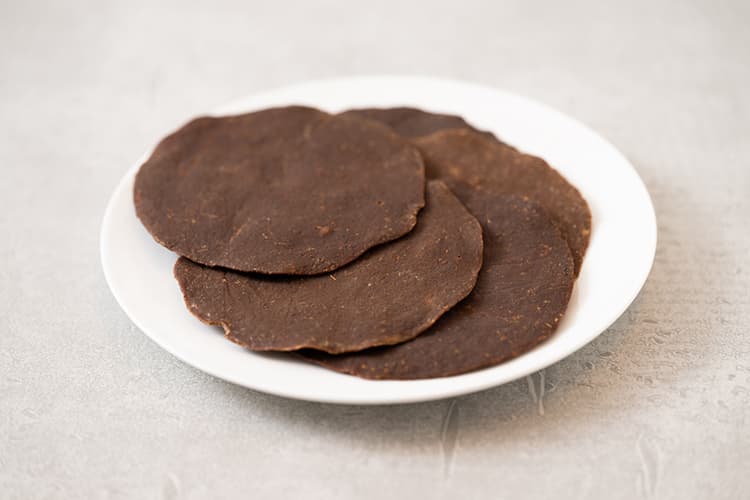
Thua nao phaen (fermented soybean disks). It’s made by mashing soybeans into a fine paste, then flattening and drying it.
Among the most typical fermented foods of the north is thua nao or fermented soybeans —which also happened to awaken Kanako to the importance of fermentation to Thai cuisine. Thua nao is produced chiefly in northern Thailand.
“Thua means ‘beans’ and nao means ‘rotten.’ It’s made by wrapping boiled soybeans in leaves and fermenting them with B. subtilis (the hay bacillus). It’s formed into flat disks shaped like rice crackers, which are called thua nao phaen. These disks are lightly roasted and used as a seasoning or to make soups. There’s a soup made with rapeseed greens and thua nao phaen that evokes the taste of home, like miso soup for the Japanese.”
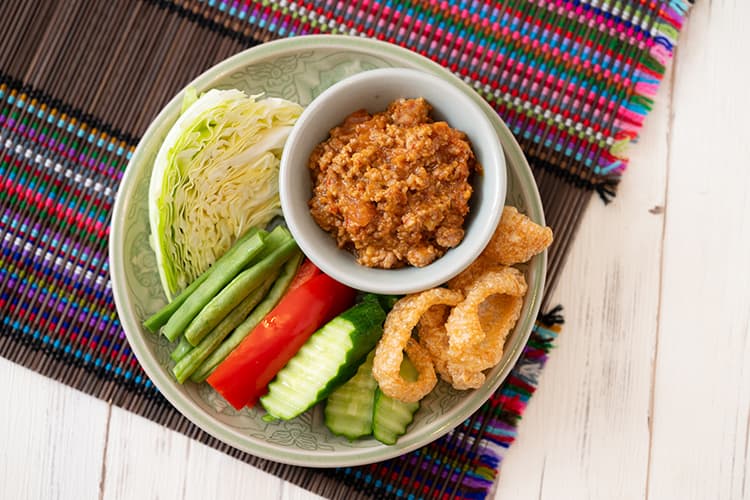
Nam phrik ong, a meat sauce-like dip.
Nam phrik ong is a well-known dish of northern Thailand. It’s a meat sauce-like dip made by lightly roasting thua nao phaen soybean disks until deliciously fragrant, grinding them into a powder, stir-frying them with ground meat and tomatoes, and then simmering. It’s eaten with vegetables and khaep mu — deep-fried pork crackling. It’s spicy with umami undertones from the fermented soybeans
<Northeastern Thai fermented foods>
Som khai pla (fermented fish roe) and lon som khai pla
Northeast Thailand, or the Isan region as it’s known, borders on Laos, from which it’s separated by the Mekong River. Here it’s customary to eat insects as a source of protein. Giant water bugs, ants’ eggs, frogs, and dried freshwater fish are all consumed as part of the diet.
“There’s a well-known fermented seasoning called pla ra, which is made by fermenting freshwater fish with rice bran. One popular Thai dish is som tam, or green papaya salad. Originally eaten in the Isan region, this refers to a dish flavored with pla ra. Another delicious food from the region is sai krok Isan, a type of sausage made by lacto-fermenting pork with sticky rice.”
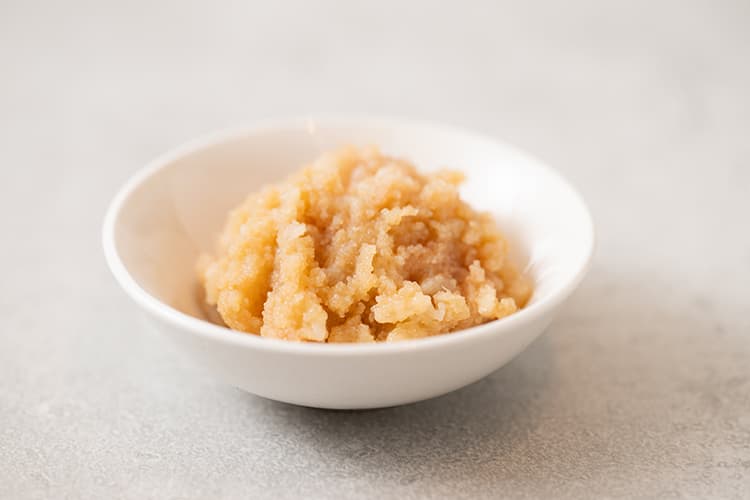
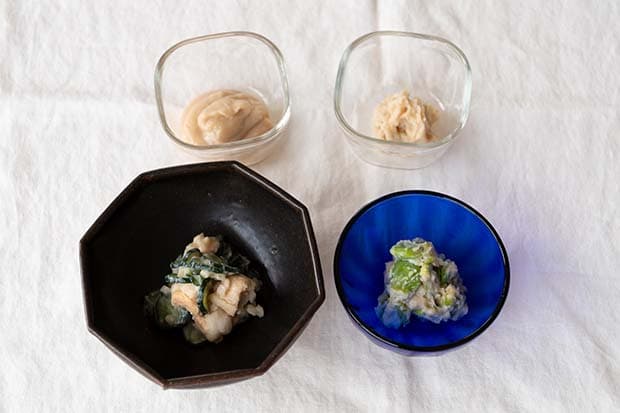
Som khai pla. Because freshwater fish roe is not available in Japan, this version has been made with cod roe instead.
Another celebrated food of this region is som khai pla or the fermented roe of freshwater fish. It’s typically eaten on vegetables or sticky rice or used as a filling in omelets.
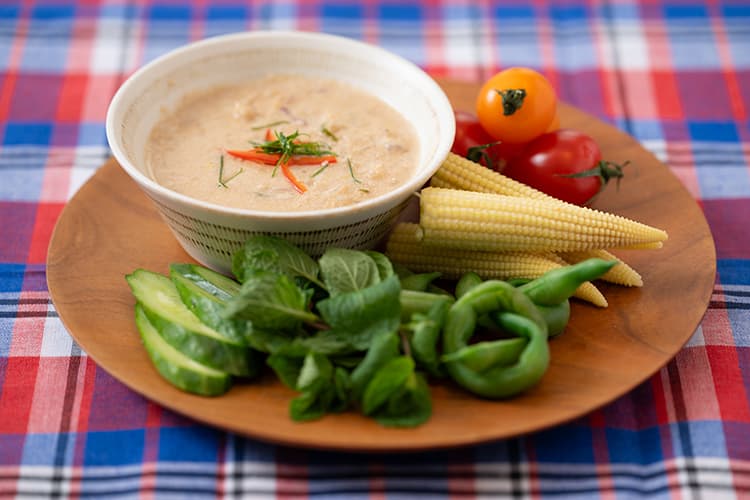
Lon som khai pla, a fermented roe dip with a mellow flavor.
Lon som khai pla, which is made by stewing som khai pla in coconut milk, is mellow with a very salty flavor and lots of umami. Dip vegetables in it, and it’s positively addictive. It would make a nice snack with a drink.
<Central Thai fermented foods>
Kapi (fermented shrimp paste) and khao khluk kapi
Central Thailand, where the capital Bangkok is located, forms the country’s economic heartland. A land of rivers and fertile plains bounded by the ocean, it has an abundance of foodstuffs. Being the main hub of trade, it also displays overseas influences. It’s home to many Thais of Chinese heritage — hence the multitude of dishes made with oyster sauce.
“Green curry, yum woon sen, tom yum kung, poo pad pong curry, and many of the other dishes people usually associate with Thai food come from central Thailand. The classic Thai seasoning nam pla and si-io khao soy sauce are also produced in central Thailand.”
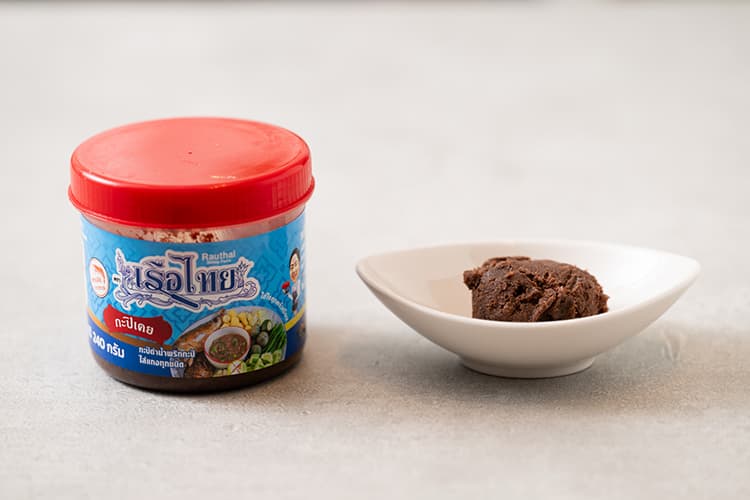
Kapi fermented shrimp paste, which is basically used as a seasoning.
One of the most iconic central Thai fermented foods is kapi, a seasoning made with fermented saltwater shrimps such as krill. Besides central Thailand, it’s also produced in several neighboring countries, including Myanmar, Laos, and Vietnam. An essential umami ingredient in Thai curry paste, it’s also eaten as is on vegetables.
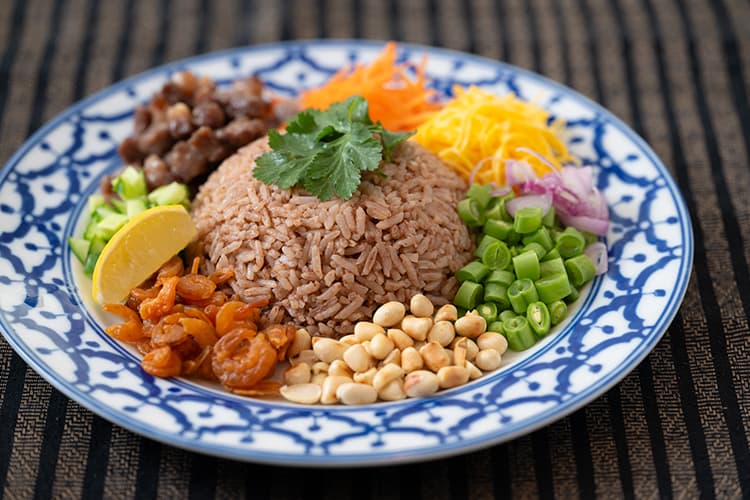
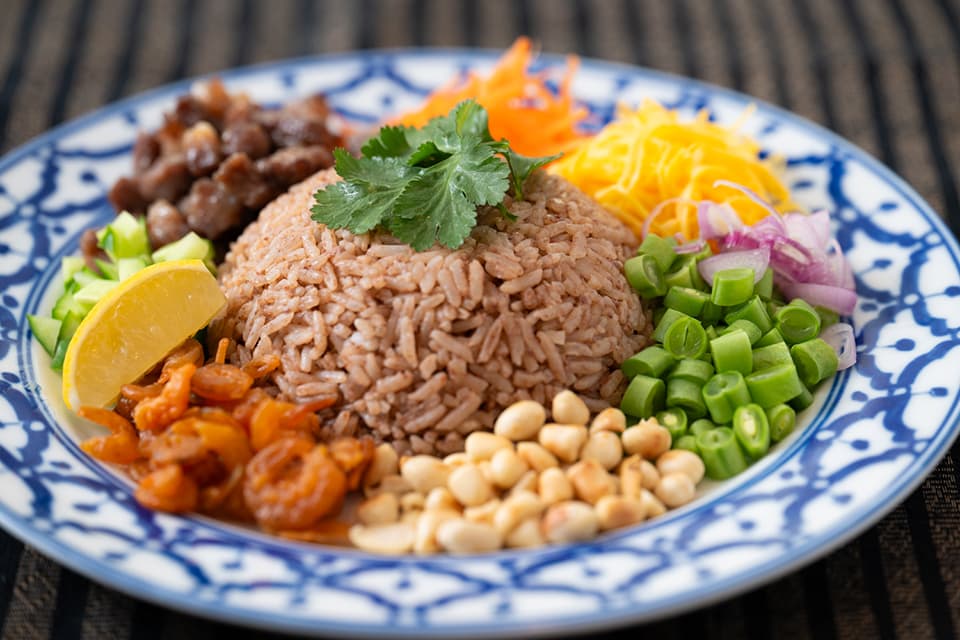
Khao khluk kapi: fried rice mixed with shrimp paste and served with a colorful variety of side ingredients.
A great way to enjoy kapi shrimp paste is in khao khluk kapi. Khao means “rice” and khluk means “mixed,” so it’s literally “rice mixed with kapi.” This dish consists of jasmine rice flavored with shrimp paste and served with mu wan sweet pork, dried shrimps, nuts, and a colorful variety of vegetables. You mix the ingredients together as you eat. The various toppings produce a kaleidoscope of flavors on the tongue, accentuated by the complex umami of fermented shrimp.
<Southern Thai fermented foods>
Tai pla (fermented fish entrail sauce) and kaeng tai pla
Southern Thailand is on a long, narrow isthmus dotted with beach resorts like Phuket. Here the seas are teeming with fish and shellfish, and a fair number of the dishes are hot and spicy. Different areas are inhabited by different ethnic groups — Malay, Chinese, Muslim — and the food culture is correspondingly diverse.
“In the south, I once ate a dish consisting of horseshoe crab eggs served with mango. Because the region produces so much seafood, many fermented foods serve as a way of preserving what’s left over from a huge catch. Tai pla, one of the most typical products of the south, is a fish sauce made by mixing the entrails of small skipjack tuna, horse mackerel, or sardines with salt and sugar, then letting them ferment. This seasoning was created, I imagine, because it would have been a waste to throw away the fish.”
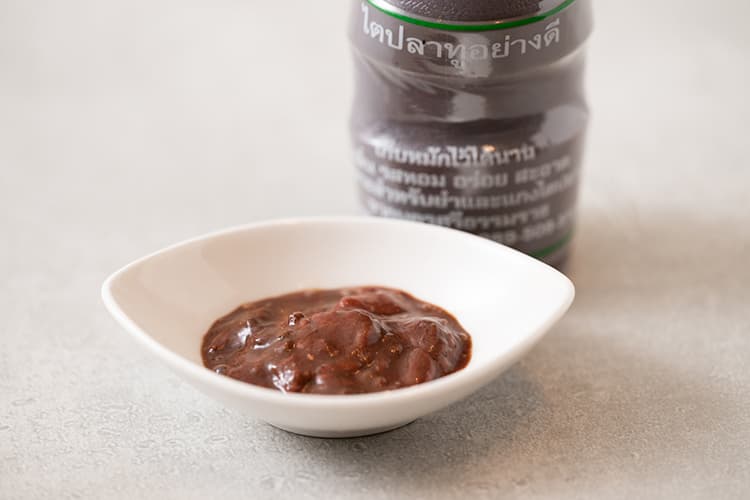
Tai pla, a sauce made by fermenting the entrails of saltwater fish. Used in curries and soups, it is something of an acquired taste.
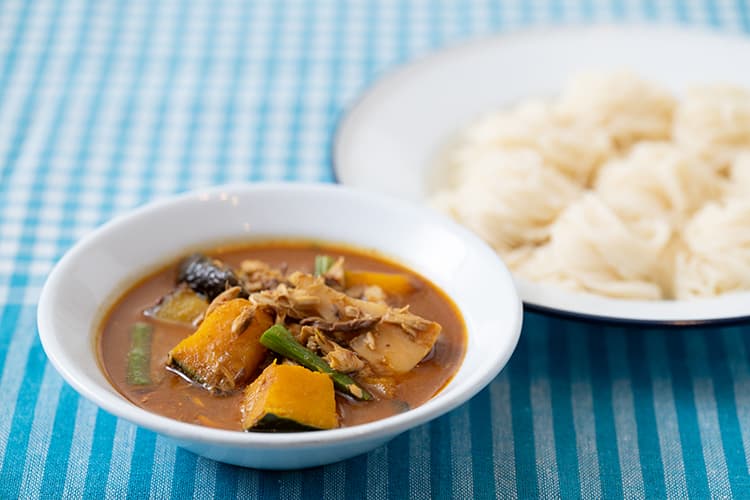
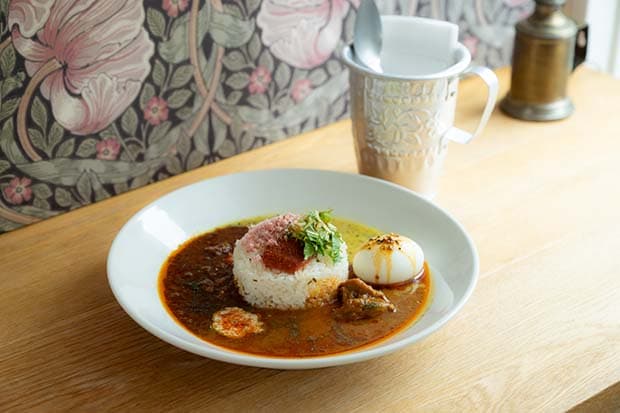
Kaeng tai pla, a southern Thai curry eaten on fermented noodles or rice. In Japan, somen noodles are substituted.
Tai pla is a sauce made from the fermented entrails of saltwater fish. It has a thick, gooey consistency and tastes a lot like Japanese shiokara (fermented squid viscera). A typical dish made with tai pla is the mackerel curry kaeng tai pla. Thais often eat it on fermented rice noodles. It’s made with coconut milk, which imparts a rich, mellow flavor that is quite addictive.
The complex interplay of flavors that characterizes Thai food is rooted in the traditional knowledge of fermentation that lives on in each region of the country. As you enjoy Thai fermented foods, you might want to give a thought to the role that Thailand’s climate, topography, and lifestyles have played in their evolution.